

How to Open a Forex Account?
Many people imagine that opening a Forex account is complicated, time consuming, and exclusively for professionals, but the reality is that with the right information and choosing a suitable broker, you can activate your account in less than an hour and gain access to the world's largest financial market. Whether you want to start with a small capital or are looking for a serious investment opportunity, having a secure and legitimate trading account is your first and most important step. In this practical guide, we will walk you through the entire registration process in Forex step by step: from selecting a reputable broker and submitting identity documents to funding the account and starting your first trade. Even if you are Iranian and concerned about restrictions, there are practical and secure solutions that we will address later. So, if you are ready to begin your trading journey with complete confidence and awareness, stay with us.
Choosing a Reliable Broker and Checking Licenses
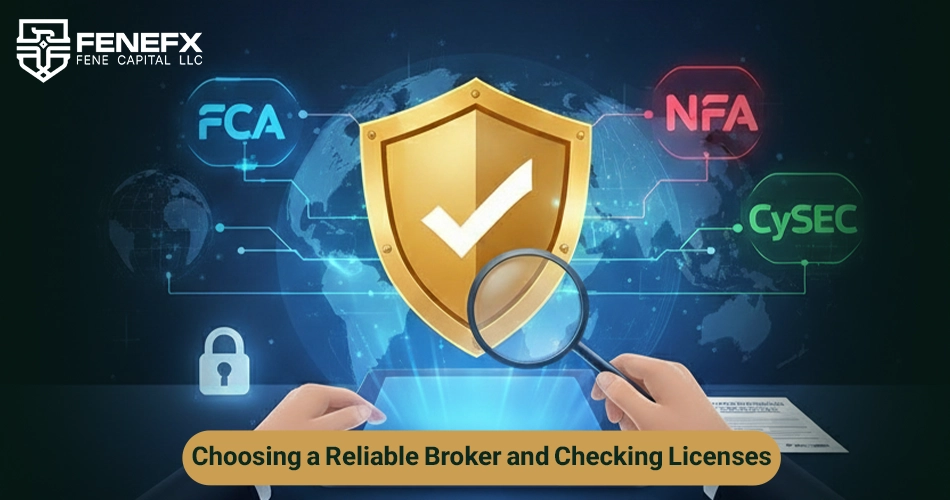
The first and most crucial step in entering the Forex market is choosing a trustworthy broker. A Forex broker acts as the intermediary that provides you access to the global currency market. Given the abundance of brokers and the differences between them, identifying a reliable option plays a major role in protecting your capital and ensuring a high quality trading experience.
A reliable broker must operate under the supervision of a reputable regulatory authority. Organizations such as the UK’s FCA, the NFA in the U.S., or CySEC in Cyprus impose strict rules to protect clients and prevent fraud.
Reviewing Regulators and Their Importance for Iranian Users
Each international regulatory authority has its own specific set of rules. The most notable include:
- FCA (UK): One of the most reputable regulators with strict oversight over assets, ideal for professional traders.
- NFA (USA): Features more complex regulations and stricter restrictions for non-U.S. users.
- CySEC (Cyprus): More flexible for international clients. Most brokers serving Iranian users operate under this regulator.
- IFSC, FSA, and other offshore regulators: Offer easier conditions but usually provide lower security.
For Iranian users who face international restrictions, it is advisable to choose brokers regulated by CySEC or FSA, as long as they also have a proven performance track record.
In addition to regulatory oversight, factors such as spread size, order execution speed, quality of customer support, account type variety, and deposit/withdrawal security should also be considered. A broker that operates transparently and clearly discloses its fees, account conditions, and risk policies is a sign of professionalism.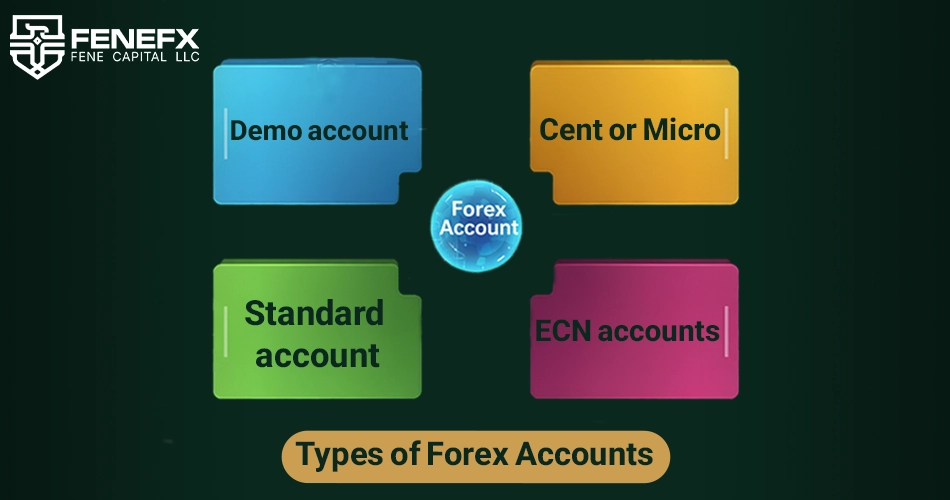
Types of Forex Accounts and Choosing the Right One
After selecting a broker, the next step is to choose the appropriate trading account type. Brokers usually offer several account types, each tailored to specific groups of traders. The right account depends on your experience level, capital size, and trading style.
A demo account is a very suitable option for beginners who are new to Forex. This type of account uses virtual money and simulates all real market conditions. With a demo account, you can learn the trading platform, test strategies, and become familiar with the market structure without any risk.
For real trading, brokers usually offer several main types of accounts: Cent or Micro, Standard, and ECN accounts.
A Cent or Micro account allows trading with very small volumes, making it suitable for those with limited capital or those who want to start with lower risk.
A Standard account is a common choice for intermediate traders, offering average spreads and more stable conditions.
ECN accounts, which are connected to interbank liquidity, are designed for professional traders or scalpers. These accounts usually offer ultra low spreads but charge a separate commission per trade.
By understanding these account types and evaluating your financial and psychological readiness, you can choose the most suitable Forex account and start on the right path from the very beginning.
Required Documents and Information for Account Opening
After selecting the account type, to complete the process of opening a real Forex account, you must provide the broker with identity documents and certain information. This step is intended for identity verification and ensuring user activity complies with anti money laundering laws. It is enforced by all reputable brokers.
The information typically required in the registration form includes your full name, email address, country of residence, date of birth, and financial details such as estimated income and trading experience. Some brokers may also ask you to specify your trading goals and risk tolerance to offer more tailored services.
Documents required for account verification include a valid identification document such as a national ID card, driver’s license, or passport. Additionally, to verify your address, you need to submit a document like a utility bill or a bank statement that includes your address. These documents must be clear, unedited, and if possible, officially translated into English to speed up the verification process.
A key point in this stage is to ensure the security of your personal information. Always upload documents only through the official broker’s platform and avoid sending them via messaging apps or unofficial channels. Also, it’s best to consult with the broker’s support team beforehand regarding the file format and specific requirements for document approval.
Online Registration and Initial Account Setup
After choosing a broker and preparing your documents, the next step is to register online on the trading platform. This process is completed entirely on the broker’s official website and usually takes less than ten minutes. Accurate and proper registration is the first step in creating a secure and trustworthy account.
Step by Step Form Completion (Email, Password, Country, KYC)
On the broker’s homepage, you’ll typically find an option labeled “Open Account” or “Register.” Clicking on this will bring up a form where you need to enter your basic information, including a valid email address, a strong password, your country of residence, and your initial account type selection.
Next, you’ll enter the KYC stage or “Know Customer” which is a mandatory step for legal activity and compliance with international regulations. At this point, you’ll be asked to provide more detailed information such as your date of birth, level of education, trading experience, employment status, and sources of income. Filling out this form accurately helps prevent issues during verification or withdrawal.
Account Verification and Approval Waiting Period
After submitting your details, the verification process begins. Here, you’ll need to upload the documents you previously prepared a valid identification document and proof of address. Some brokers may also request a selfie or a short verification video. Once submitted, the approval process may take anywhere from a few hours to several days, depending on the broker. You’ll be notified of your account status via email or your client dashboard.
Platform Download (MT4/MT5) and Initial Login
Once your account is verified, you can proceed to access the trading platform. Most brokers offer the widely used MetaTrader 4 (MT4) and MetaTrader 5 (MT5) platforms. Download links are usually available in your user dashboard. After installing the software, simply log in using the credentials sent to your email including your account number and password to connect your account. From this point on, you’ll have full access to the Forex market.
Funding the Account and Payment Methods

To start real trading in Forex, you need to fund your trading account. While deposit methods have become increasingly simple and diverse, Iranian users may still face challenges such as sanctions and currency exchange.
Common Deposit Methods: Bank, Card, E-Wallet
Most brokers offer several deposit options, including international bank cards (Visa, MasterCard), digital wallets like Skrill, Neteller, or WebMoney, and in some cases, cryptocurrencies like Bitcoin or Tether. Some brokers also work with local representatives to provide IRR deposits or exchange based transfers specifically for Iranian users.
Fees and Currency Conversion Tips for Iranian Users
When making deposits, pay close attention to transfer fees, currency conversion rates, and transaction processing times. Some methods, like Tether or other cryptocurrencies, are faster and have lower fees but they require familiarity with crypto wallets. Rial based methods, if done through an official broker representative, are generally reliable and cost effective. Always ask your broker about conversion rates and any possible charges before making a deposit.
Budgeting and Depositing an Amount Suited to Your Initial Risk
Getting started in Forex doesn’t require a large investment, but it’s important to act based on your risk tolerance and experience. Many beginner traders start with amounts between $50 and $500. It’s recommended to begin with a small deposit, test your strategy, and gradually increase your trading volume as your skills improve. Capital management at this stage is key to long term success.
Starting to Trade and Basic Tips
Now that your account is verified, funded, and connected to the platform, it’s time to start your first trades. However, before taking any action, it’s essential to understand the trading environment and make use of available tools.
Familiarizing Yourself with the Platform and Placing Your First Trade
On the Meta Trader platform, you’ll see currency pair price charts, a toolbar, an order panel, and a trade history section. To place your first trade, simply right click on a trading symbol and choose New Order. Then set your trade volume, order type (buy or sell), stop loss, and take profit levels before executing the order. It’s advisable to begin with small trade sizes and avoid rushing.
Using a Demo Account for Practice
If you’re not yet confident about trading in a live environment, it’s better to start with a demo account. A demo account is a risk free environment that operates with virtual funds but replicates real market conditions. Using it allows you to get familiar with actual market dynamics, price fluctuations, and order executions without losing your capital.
Initial Risk Management: Stop Loss, Trade Size, Psychology
Success in Forex depends not only on analytical skills but also on risk management and emotional control. Every trade should have a clearly defined stop loss to limit losses if the market moves against you. Your trade volume should also match your account size; for accounts under $1,000, using a volume of 0.01 to 0.05 lots is sensible. Additionally, managing your emotions avoiding greed, fear, or impulsive decisions is crucial at this stage.
Advanced Tips and Avoiding Common Issues
Many traders overlook critical details at the beginning of their journey, which can later lead to irreversible mistakes. In this section, we’ll highlight lesser discussed but essential points that can make your registration and start in Forex more professional and secure.
The Difference Between "Minimum Deposit" and "Recommended Starting Balance"
Brokers usually set a minimum deposit amount to open a real account. However, this number does not necessarily reflect the ideal starting balance for trading. For example, a broker may allow account opening with just $10, but such a small amount is unlikely to support proper risk management. Traders should consider not only the broker's minimum deposit requirement but also their trading style, position sizes, and risk tolerance to determine a reasonable starting budget.
Common Registration and Verification Mistakes
One of the most frequent mistakes when opening an account is submitting incomplete documents or incorrect information. Blurry photo uploads, name mismatches between documents, expired IDs, or incorrect addresses are all reasons why the verification process might be rejected. It's best to carefully review your documents before submission and consult with the broker's support team for guidance if needed.
Security measures such as two factor authentication and not sharing information.
Your trading account is like a bank account and must be protected accordingly. Enabling two factor authentication (2FA) via email or apps like Google Authenticator significantly boosts your account’s security. Additionally, never share your login credentials, identification documents, or account access with anyone, even if they claim to be from the broker.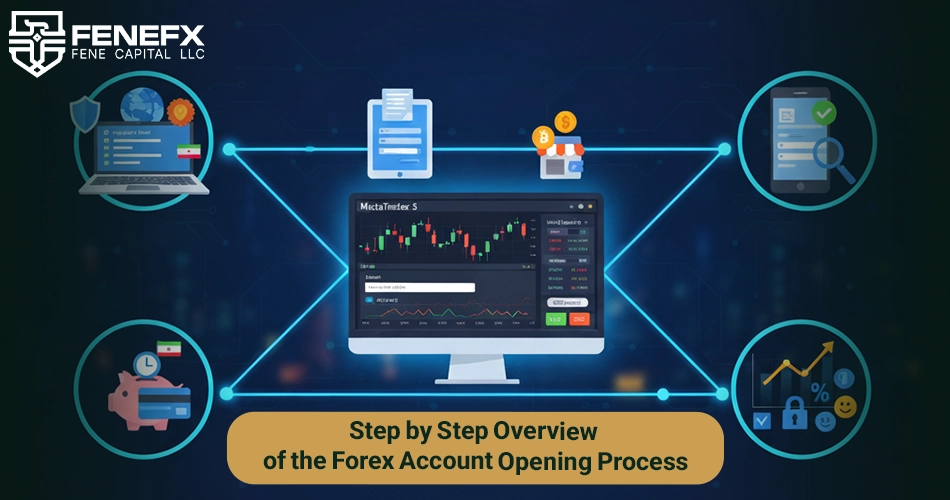
Step by Step Overview of the Forex Account Opening Process
To give you a complete and clear overview, this section walks through the entire Forex account opening process in an organized step by step format:
- Choose a reliable broker: one that operates under trusted regulatory oversight, offers diverse account types, and supports Iranian users.
- Register on the broker’s official website: this includes providing your basic details, creating a user account, and completing the KYC form with accurate personal and financial information.
- Submit identity documents and proof of address: after proper upload, the broker’s verification team will review your documents and inform you of the account status via email or your user dashboard.
- Download and install MetaTrader (MT4 or MT5): log in to the trading platform using your account credentials and get access to the market environment.
- Fund your account: choose from available deposit methods such as cryptocurrency, digital wallets, or local transfers. Deposit the desired amount and take your first step into real trading.
If you’re not yet confident, it’s recommended to start with a demo account to practice and get used to the trading environment. After that, you can enter the real Forex world by applying proper capital management, using stop loss orders, and controlling your emotions.
Conclusion
Opening a Forex account is a crucial and determining step for entering the world of currency trading. With the right knowledge and careful planning, it can open up a secure and profitable path for you. Choosing a reputable broker with international licenses, correctly completing the identity verification process, using a demo account to gain experience, and adhering to risk management principles from the very start form the foundation for success in this volatile market. For Iranian users who face specific restrictions, paying attention to reliable deposit methods, selecting brokers compatible with regional conditions, and familiarizing themselves with security tips is doubly important. Remember that Forex is a continuous learning process; don't rush, start with proportional capital, and always prioritize education and self-improvement so that you can be a stable and professional trader in the long term.
Frequently Asked Questions
1. Do I need any specific documents other than my national ID card to open a Forex account?
Yes, in addition to an identity document like a national ID card or passport, you also need a Proof of Address document (such as a utility bill or bank statement) dated within the last three months to verify your account.
2. How much capital is enough to start trading Forex?
Many brokers allow account opening with a minimum of $10 to $50, but for logical trading and proper risk management, starting with $50 to $500 is recommended to allow you to adequately protect yourself from market fluctuations.
3. Is using a demo account essential for learning?
Yes, a demo account is an excellent environment for familiarizing yourself with the platform, testing strategies, and understanding market behavior without financial risk, and its use is highly recommended before entering real trading.
4. How can I ensure the security of my Forex account?
You can ensure your account security by activating Two Factor Authentication (2FA), using a strong password, never sharing your login details with any person or channel, and conducting transactions only through the broker's official panel.
Comments
One tip from experience: test the broker's withdrawal process with a small amount before scaling your deposit. A smooth deposit means nothing — withdrawals are where you learn who you're dealing with.
Was honestly intimidated by the KYC process but this walkthrough made it painless. Account approved the same day, thanks!
Would you recommend starting on a demo account first, or going straight to a small live one? Maybe worth its own article — demo psychology is so different.
Clear step-by-step, exactly what a guide should be.
My first verification got rejected twice because my utility bill was 'too old'. Funny how nobody warns you about the boring paperwork side of trading.