

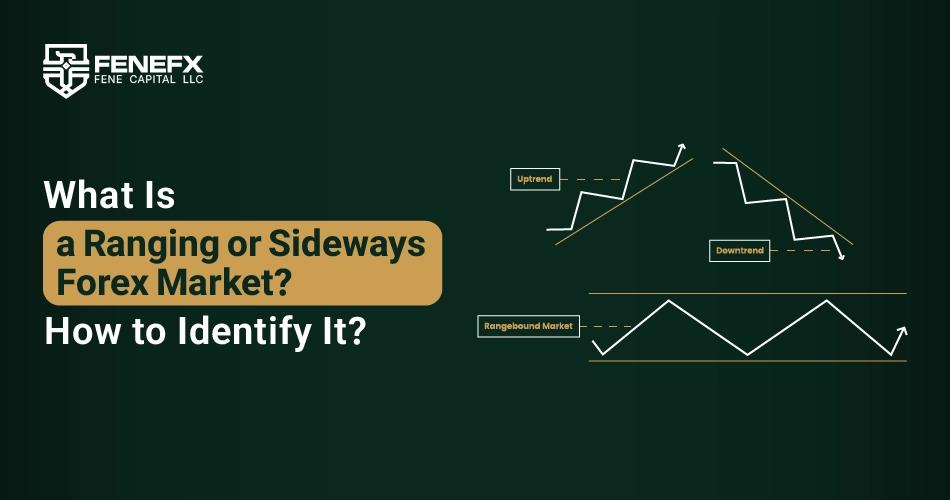
What is a Ranging or Sideways Forex Market and How to Identify It?
The forex market, as the largest financial market in the world, is constantly evolving and changing. Among these conditions, the ranging or sideways market is one of the key situations that traders must be familiar with. Unlike trending markets that have a clear direction, a ranging market is characterized by limited fluctuations and price movements within a defined range. Understanding this market condition and how to identify it is crucial for traders, as trading strategies in this environment differ from those in trending markets.
Definition of a Ranging or Sideways Market
A ranging or sideways market refers to a situation in the forex market where prices move within a specified range between two levels of support and resistance without a distinct upward or downward trend. In this type of market, prices do not experience significant fluctuations and generally move in a horizontal or sideways pattern. In other words, a ranging market occurs when the power of buyers and sellers is nearly equal, and neither side is able to establish a strong trend.
This condition may arise due to the absence of significant economic news, low market volatility, or traders awaiting a specific event. In such conditions, traders tend to buy at support levels and sell at resistance levels because the market is inclined to reverse from these points.
The Importance of Identifying Ranging Markets in Forex Trading
Identifying ranging markets is crucial for forex traders, as this type of market presents unique opportunities and challenges. Proper understanding of these markets can help traders adopt suitable strategies to manage their trades effectively.
Trading Opportunities:
In ranging markets, traders can capitalize on minor price fluctuations between support and resistance levels. This condition is particularly useful for short term strategies, where traders can use technical analysis and chart patterns to identify appropriate entry and exit points.
Risk Management:
Ranging markets allow traders to manage their risk better since support and resistance levels act as key points for setting stop loss and take profit levels. This enables traders to enter trades with greater confidence and avoid significant losses.
Forecasting Market Changes:
Understanding ranging markets can help traders better predict potential market changes. Ranging markets often occur before major trend shifts, and recognizing these patterns can assist traders in identifying suitable times to enter or exit the market.
Adapting Strategies:
Traders in ranging markets need to adjust their strategies. For example, trend based strategies are ineffective in these conditions, and traders should focus on strategies that capitalize on minor fluctuations.
Ultimately, understanding the ranging or sideways market allows traders to approach their trades with greater preparedness and take advantage of available opportunities. This knowledge can improve overall trading performance and reduce potential risks.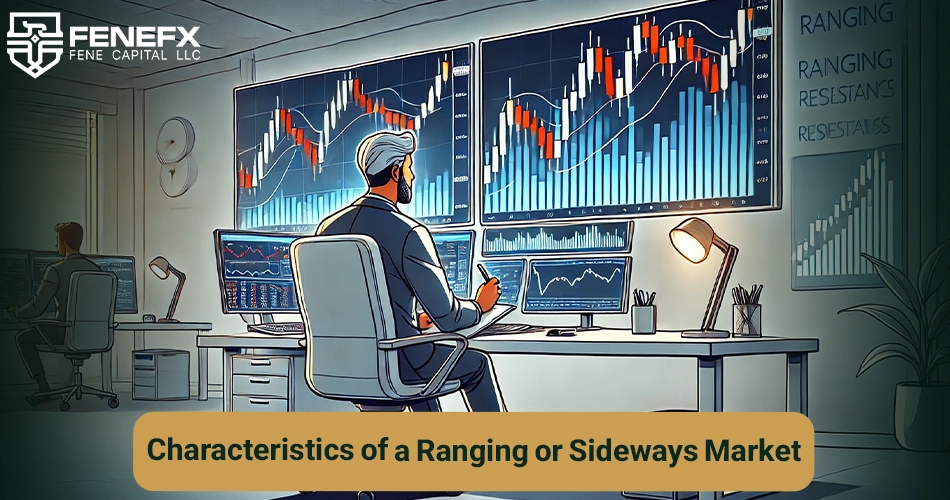
Characteristics of a Ranging or Sideways Market
Price Fluctuations in Ranging Markets
A ranging or sideways market refers to a market in which prices fluctuate within a specific range and continuously move between two key upper and lower levels. In this type of market, there is no clear upward or downward trend. Price fluctuations in ranging markets are usually due to the balance between the power of buyers and sellers, where neither side can dominate the other.
These fluctuations typically occur within shorter time frames and in defined price ranges. Traders can take advantage of these fluctuations by buying at the lower boundary of the range and selling at the upper boundary. This strategy is particularly attractive to short term and day traders, as they can profit from small price movements.
In ranging markets, the use of technical indicators such as Bollinger Bands and the Relative Strength Index (RSI) can help identify overbought and oversold points. These indicators show traders whether the price is moving near the upper or lower boundaries of the range, thus identifying potential entry and exit points.
Support and Resistance Levels
Support and resistance levels are among the most important features of ranging and sideways markets. These levels are areas on the price chart where price behavior changes and, in a way, act as barriers to price movement in a particular direction.
A support level refers to a zone where the price tends to stop and start rising. This level forms due to the entry of buyers and increased demand. In ranging markets, the support level is the point where traders typically choose to buy, expecting the price to rebound upward.
Conversely, a resistance level refers to an area where the price tends to stop and start declining. This level forms due to increased supply and the entry of sellers. In ranging markets, traders sell at the resistance level, anticipating the price will decrease.
By identifying and analyzing these levels, traders can adopt more effective trading strategies. For example, placing stop loss orders just below the support level or above the resistance level can help reduce risk.
In ranging markets, one of the main challenges for traders is identifying potential breakouts of these levels. A breakout above the resistance level may indicate the start of a new upward trend, while a breakout below the support level could signal the beginning of a new downward trend. Therefore, traders must carefully monitor volume changes and other technical indicators to react swiftly in the event of a breakout.
Ultimately, a deep and precise understanding of price fluctuations and support and resistance levels in ranging markets allows traders to approach their trades with greater confidence and capitalize on available opportunities. This knowledge can improve overall trading performance and reduce potential risks.
Methods for Identifying a Ranging Market
A ranging market can be identified using the following methods:
Using Oscillator Indicators
Identifying a ranging market in forex can help traders adopt more optimal strategies. One effective method for recognizing this type of market is using oscillator indicators such as Bollinger Bands and the Average True Range (ATR) indicator.
Bollinger Bands
Bollinger Bands consist of three lines: a simple moving average and two upper and lower bands calculated based on standard deviation. In ranging markets, the distance between the bands narrows due to reduced price volatility. When prices approach the upper or lower bands, it signals a potential return to the average. This feature helps traders determine suitable entry and exit points.
Average True Range (ATR)
ATR provides traders with information about the level of price volatility over a specified period. In ranging markets, ATR values typically decrease because the price fluctuation range becomes narrower. Traders can use this information to set stop loss orders and identify market conditions.
Identifying Chart Patterns
Chart patterns are another tool for identifying ranging markets. These patterns help traders analyze price behavior and identify potential trend reversal points.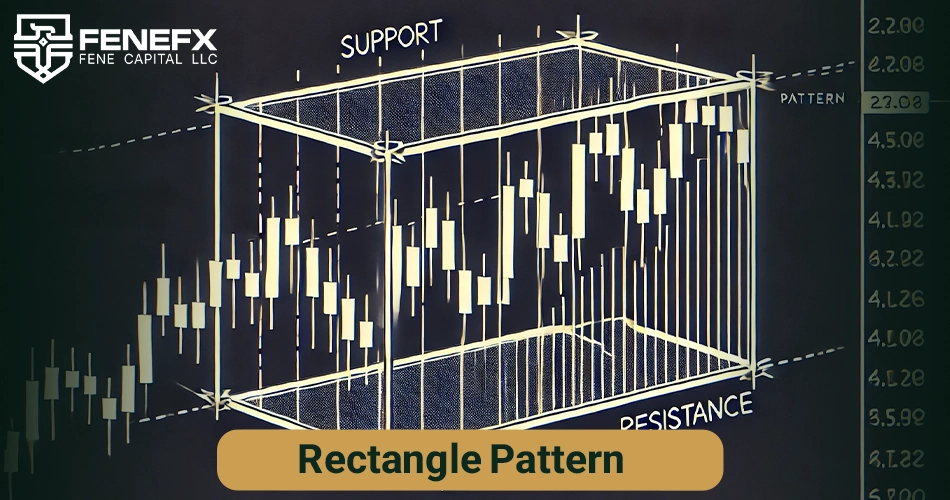
Rectangle Pattern
A rectangle pattern forms when prices move horizontally between two support and resistance levels. This pattern indicates a ranging market, and traders can buy near the support level and sell near the resistance level.
Triangle Pattern
Triangles, including symmetrical, ascending, and descending triangles, can indicate periods of price consolidation that lead to a ranging market. For example, in a symmetrical triangle, prices fluctuate between converging trend lines and remain within a range until a breakout occurs.
Flag and Pennant Patterns
These patterns represent short term periods of price consolidation that usually follow a strong price movement. Although these patterns generally signal trend continuation, the market behaves in a ranging manner during the formation period.
Combining Methods for Greater Accuracy
Combining indicators and chart patterns can improve the accuracy of identifying a ranging market. For example, if Bollinger Bands tighten and prices move within a rectangle pattern, the market is likely in a ranging condition.
Identifying ranging markets using oscillator indicators and chart patterns can help traders make better trading decisions and capitalize on available opportunities. These methods enable traders to approach their trades with greater confidence and manage potential risks. By developing a precise understanding of these tools and techniques, traders can improve their performance in ranging markets.
Trading Strategies in a Ranging Market
Buying and Selling at Support and Resistance Levels
A ranging or sideways market presents a favorable opportunity for traders to earn profits by employing specific strategies. One of the most effective methods is buying and selling at support and resistance levels.
Buying at Support Level
The support level refers to a zone where prices tend to stop and rebound upward. When the price approaches the support level, traders can consider buying with the expectation of a price rebound. This strategy is based on the assumption that demand increases at this level, causing the price to reverse from this point.
Selling at Resistance Level
The resistance level is a point where prices tend to stop and reverse downward. When the price approaches the resistance level, traders can sell with the anticipation of a price drop. This strategy is based on the idea that supply increases at this level, causing the price to decline from this point.
Using Stop Loss and Take Profit Orders
In ranging markets, the use of stop loss and take profit orders is of particular importance. These orders help traders manage risk and secure their profits.
Stop Loss Orders
A stop loss order helps traders minimize their losses if key levels are breached. For example, when buying at the support level, a trader can place a stop loss order slightly below the support level. If the price unexpectedly moves below the support level, the trade will automatically close, limiting potential losses.
Take Profit Orders
A take profit order helps traders lock in their profits at specific levels. In ranging markets, traders can place a take profit order near the resistance level. This ensures that profits are automatically secured when the price reaches the resistance level.
Combining Strategies for Greater Efficiency
Combining buying and selling at support and resistance levels with stop loss and take profit orders can improve the effectiveness of trading strategies. This combination allows traders to operate with greater confidence in ranging markets and reduce potential risks.
Position Sizing Management
Position sizing management is also crucial in ranging markets. Traders should adjust the size of their positions to align with the market’s low volatility. This approach helps minimize risk and preserve capital.
Using Technical Indicators
Technical indicators such as Bollinger Bands and RSI can be used to confirm entry and exit points in ranging markets. These indicators help traders identify whether the price is moving near the upper or lower boundaries of the range, thus identifying potential entry and exit points.
Trading strategies in ranging markets are built around buying and selling at support and resistance levels and using stop loss and take profit orders. These methods help traders approach their trades with greater confidence and capitalize on available opportunities. By gaining a precise understanding of these strategies and techniques, traders can perform better in ranging markets and manage potential risks effectively.
Advantages and Disadvantages of Trading in a Ranging Market
Advantages:
Profit Opportunities
Trading in a ranging market can provide traders with suitable profit opportunities. In these markets, prices move between support and resistance levels, and traders can capitalize on these fluctuations.
Exploiting Small Price Movements
One of the benefits of a ranging market is the ability to profit from small price fluctuations. Traders can buy at the support level and sell at the resistance level to earn profits in short term timeframes. This strategy is particularly suitable for day traders and short term investors.
Greater Predictability
Ranging markets are generally more predictable due to their limited fluctuations and price movement within a defined range. Traders can use technical analysis and identify chart patterns to determine suitable entry and exit points.
Reduced Need for Fundamental Analysis
In ranging markets, the need for fundamental analysis is reduced, as price changes are primarily driven by technical analysis and market behavior. This allows traders proficient in technical analysis to focus on charts and indicators for more successful trades.
Disadvantages:
Risks and Limitations
Alongside profit opportunities, trading in a ranging market also carries risks and limitations that must be managed carefully.
Risk of Key Level Breakouts
One of the most significant risks in a ranging market is the risk of support and resistance level breakouts. If prices break through these levels, they may transition into a strong upward or downward trend, potentially resulting in substantial losses for traders.
Trading Costs
In ranging markets, traders may face higher trading costs due to the increased number of trades and minimal price fluctuations. These costs include spreads, commissions, and other fees that can reduce overall profits.
Limited Profit Potential
While ranging markets provide profit opportunities, these gains are typically confined to small price fluctuations. In other words, traders cannot benefit from large price moves and strong trends in these markets.
Need for Quick Reaction
Trading in a ranging market requires quick reactions to price changes. Traders must closely monitor entry and exit points and respond rapidly to market shifts. This may pose a challenge for novice traders.
Risk Management and Performance Improvement
To succeed in ranging markets, traders must pay special attention to risk management. Utilizing stop loss and take profit orders, adjusting position sizes, and applying technical indicators can help reduce risks.
Additionally, traders should continuously evaluate and refine their strategies. Ongoing education and thorough market analysis can help traders identify better opportunities and improve their overall trading performance.
Trading in a ranging market comes with its unique opportunities and challenges. By capitalizing on small fluctuations and benefiting from greater predictability, traders can achieve profits. However, they must carefully manage risks and limitations to avoid potential losses. With a precise understanding of these markets and the use of suitable strategies, traders can achieve greater success.
Supportive Tools for Traders in Ranging Markets
In a ranging market, using appropriate trading software and platforms can help traders make better decisions and achieve greater profits.
Popular Trading Platforms
Meta Trader 4 and 5 (MT4/MT5):
These platforms are among the most popular choices for forex traders due to their user friendly interface and extensive technical analysis tools. MT4 and MT5 also support automated trading through Expert Advisors (EA).
Trading View:
This platform is highly popular among traders for its interactive charts and advanced technical analysis tools. Users can share their ideas and analyses while benefiting from others' insights.
Ninja Trader:
This platform is particularly suitable for active and professional traders, offering extensive technical analysis and risk management tools.
Key Features of Trading Platforms
Access to Advanced Indicators:
Trading platforms typically offer a variety of indicators such as Bollinger Bands, MACD, and RSI, which help identify ranging markets.
Customization Options:
Traders can customize platforms according to their needs and use scripts and specific algorithms to improve their trading strategies.
Support for Automated Trading:
Executing automated trades using trading robots is possible, which can enhance trading speed and accuracy.
Training in Using Technical Analysis Tools
Technical analysis in ranging markets helps traders identify patterns and optimal entry and exit points. Proper training in using these tools is essential for trading success.
Bollinger Bands:
This indicator displays three lines: a moving average and upper and lower bands, helping traders identify market volatility. In ranging markets, when the price approaches the upper or lower bands, there is a higher probability of a price reversal.
Relative Strength Index (RSI):
The RSI shows traders whether the market is in an overbought or oversold condition. In ranging markets, the RSI can help identify potential reversal points.
Moving Averages:
Using simple or exponential moving averages can help traders better identify short term trends and market changes.
Using appropriate trading software and platforms, along with proper training in technical analysis tools, is essential for success in ranging markets. By utilizing these tools, traders can make better decisions, manage risks, and capitalize on market opportunities. Continuous education and practical training also contribute to improving trading performance and boosting traders' confidence.
The Impact of Psychology in Ranging Market Trading
Psychology plays a crucial role in trading decisions, especially in ranging markets where limited fluctuations and sideways price movements can challenge traders' emotions. Understanding and managing trading psychology can help traders act with greater confidence and capitalize on available opportunities.
Managing Emotions
Fear and Greed:
In a ranging market, traders may experience fear of missing out on opportunities or greed for greater profits. These emotions can lead to irrational decisions. It is important for traders to stick to their trading strategies and make decisions based on analysis and planning.
Patience and Discipline:
Ranging markets require patience and discipline. Traders must wait for suitable entry and exit points and avoid entering trades without a clear plan. Discipline in executing strategies and adhering to the trading plan can contribute to success.
Confidence:
Having confidence in decision making can help reduce stress and anxiety. This confidence should be built on knowledge and experience, stemming from past trades and continuous learning.
Developing a Trading Plan
A written trading plan can help reduce the influence of emotions on trading. This plan should include entry and exit strategies, risk management, and profit targets. Traders must adhere to this plan and avoid sudden changes in their decisions.
Learning from Past Experiences
Analyzing and reviewing past trades can help traders identify their strengths and weaknesses. This learning process allows traders to refine their strategies and learn from past mistakes.
Creating a Suitable Trading Environment
Having a calm and distraction free environment can improve focus and reduce stress. Traders should also pay attention to their physical and mental well being, ensuring sufficient rest and exercise to enhance overall performance.
The Role of Psychology in Ranging Market Trading
Psychology plays a vital role in trading ranging markets. Managing emotions, developing a trading plan, and continuous learning can help traders operate with greater confidence and success in these markets. By focusing on trading psychology, traders can improve and achieve better results in the long term.
Recommendations for Beginner Traders
Ranging or sideways markets can present unique challenges, but with appropriate strategies and risk management, beginner traders can succeed in these markets. Here are some key recommendations to get started:
Continuous Education and Learning:
Gaining knowledge and continuously learning about technical analysis and using indicators is crucial. Use online educational resources, books, and workshops to improve your skills.
Practice with a Demo Account:
Before entering live trades, practice using demo accounts. This method allows you to gain experience with different strategies and tools without financial risk.
Risk Management:
Always use stop loss orders to minimize potential losses. Determining position sizes based on your account balance and risk tolerance is also important.
Using Simple Strategies:
Start with simple and practical strategies. The strategy of buying at support and selling at resistance can be a suitable starting point.
Controlling Emotions:
Controlling emotions and making decisions based on analysis and planning rather than emotional reactions is crucial. Having a trading plan and sticking to it can help reduce the impact of emotions on decision making.
Market Monitoring:
Monitor the market closely and respond to its changes. Using technical analysis tools can help identify appropriate entry and exit points.
By following these recommendations, beginner traders can gradually build the confidence and skills necessary for success in ranging markets. With consistent practice and analysis, they can improve and evolve into professional traders.
Comments
Good stuff, clean and to-the-point explanation.
Any chance of a follow-up on how to trade the range itself? Entries at support/resistance, oscillator settings, that kind of thing.
I'd add one thing: ranges are where mean-reversion setups shine. Fading the extremes with an oscillator works well — until the breakout, so always keep a hard stop.
The ADX tip alone was worth the read — never knew below 25 usually means ranging. Thanks for keeping it beginner-friendly.
Blew through half an account in 2022 trying to trade breakouts in what was clearly a range on EURCHF. Learning to just sit out sideways markets was the best 'strategy' I ever adopted.