

Stop Hunting in Forex
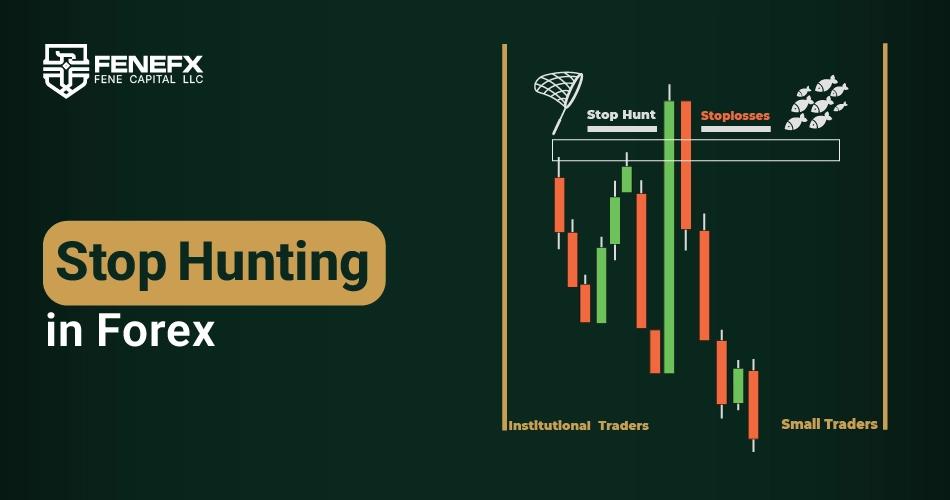
In the Forex market, stop hunting is a technique used by banks and large hedge funds to trigger clusters of retail traders’ stop loss orders by pushing the price to key levels typically round numbers like 1.2500. This tactic can cause price volatility to surge by up to 30% within seconds and result in losses for more than 80% of retail traders before the market reverses. Meanwhile, professional traders take advantage of this forced volatility to generate consistent profits.
Definition and Concept of Stop Hunting
Stop hunting is a sophisticated technique in financial markets aimed at activating the stop loss orders of retail traders. In this method, major market players such as investment banks and hedge funds steer the price of an asset toward predetermined stop loss levels of retail traders. As a result, hundreds or even thousands of stop loss orders are executed simultaneously, leading to sharp and temporary price fluctuations fluctuations engineered to profit from the opposite direction. This strategy, by using the predictable behavior of small traders, creates short term profit opportunities for professionals while inflicting unexpected losses on inexperienced traders.
History and Background of Stop Hunting
The origins of stop hunting trace back several decades to the early days of electronic trading when transactions were still recorded manually, and market data on volume and real prices offered only limited transparency. As electronic systems and online trading platforms evolved, access to real time data improved, but so did the complexity of automated stop hunting tools. While stop hunting is not only legal in many jurisdictions but also considered a standard tactic in highly liquid markets like Forex, certain regulatory bodies in securities and commodities markets have introduced strict rules to prevent "price manipulation." Nonetheless, due to the deep liquidity of the Forex market, even the most rigorous regulations have been insufficient to fully curb this strategy.
Stop hunting becomes more prominent in neutral or ranging market conditions, where psychological price levels such as round numbers serve as common zones for clustered stop loss orders and short term targets of many retail traders. Professionals, by analyzing market depth and volume at these levels, can enter positions ahead of stop loss triggers or widen the range of volatility in their favor by provoking retail trades. Consequently, intelligently placing stop losses at a safe distance from popular levels, combined with dynamic risk management techniques, helps retail traders minimize the chances of falling victim to stop hunting.
Stop Hunting Mechanisms
Stop hunting is based on identifying support and resistance levels where the majority of retail traders place their stop loss orders. Major market participants including investment banks and hedge funds use technical analysis and historical volume data to locate these sensitive areas. They then push the price toward these levels by injecting large volumes of orders in the opposite direction of the prevailing trend, triggering a wave of stop loss executions. The result is sudden volatility and a dynamic surge in supply and demand, causing short term price movements of 10–20 pips (in major currency pairs) or even more.
Execution in the Forex Market
The abundance of liquidity and availability of high leverage in Forex creates an ideal environment for stop hunting. Professional traders start by analyzing market depth and the order book to determine the concentration of stop loss orders around round price levels. Next, they orchestrate a calculated price movement using increased volume to reach that specific level. Once the price hits the retail traders’ stop losses, those orders are triggered, releasing liquidity into the market. This liquidity is then pumped toward the professionals’ open positions, fueling the stop hunting setup and allowing them to enter in the opposite direction of the price movement and profit.
Psychological Impact on Traders
The sudden activation of stop loss orders can cause confusion and anxiety among retail traders. The feeling of losing capital in an instant undermines confidence in trading strategies and often drives traders to re-enter the market out of frustration or emotional pressure. In such conditions, a wave of impulsive decisions such as increasing trade volume to recover losses emerges, frequently resulting in further losses. Some traders even prefer to set their stop losses far from popular levels to avoid stop hunting induced fear. While this approach may reduce the chance of accidental stop activation, it also increases overall trade risk.
Ways to Counter Stop Hunting
To withstand this tactic, traders must go beyond simple technical analysis and prioritize risk management. Placing stop loss orders at less obvious levels chosen through order book analysis and market depth evaluation can help prevent unexpected triggers. In addition, using dynamic stop loss tools like trailing stops that adapt to price volatility can mitigate the risk of price manipulation. Learning market psychology and practicing self discipline techniques also equip traders to respond calmly after a stop hunting event, helping them avoid emotional decisions and stick to well structured strategies.
Stop Hunting in Ranging Markets
In markets where price fluctuates within a confined channel such as between 1.2000 and 1.2100 for approximately 60% of the time, the natural clustering of retail stop loss orders near psychological levels creates opportunities for stop hunters. Research shows that under such conditions, up to 70% of stop loss orders are concentrated around support and resistance levels. As a result, a liquidity injection as small as 0.05% of daily volume (approximately $3.75 billion in the Forex market) can swiftly push the price toward these levels and trigger a wave of stop loss executions.
Once these stops are activated, the price temporarily moves 15–20 pips, after which large players with sufficient capital to absorb the newly released liquidity enter positions in the opposite direction (i.e., back into the range channel). This cycle, often completed in under 30 seconds, repeats frequently and can yield up to 0.5% profit per instance. In the first quarter of 2025 alone, reports indicated a 25% increase in this behavior in the EUR/USD pair, as the market sought short term opportunities. To avoid falling into this trap, retail traders should use dynamic stop loss strategies and place their stops further from common levels.
Identifying Stop Hunting on Charts
Recognizing stop hunting on charts requires a combination of technical analysis and attention to visual cues. Experienced traders can effectively detect stop hunting using these tools and techniques, allowing them to capitalize on the resulting trading opportunities. This process not only helps reduce losses but also enhances trading strategies and improves performance.
Common Patterns in Stop Hunting
Stop hunting, as a strategy used in financial markets, creates recognizable patterns that can be identified on charts. One such pattern is a rapid and sudden price movement toward key support or resistance levels. These movements are typically accompanied by high trading volume, indicating an attempt to trigger stop loss orders.
Another common pattern is false breakouts. In these cases, the price temporarily breaches a support or resistance level but quickly returns to the previous range. Such false breakouts can mislead traders and activate their stop loss orders.
Additionally, candlestick patterns such as the Hammer or Hanging Man near key levels may signal stop hunting activity. These formations indicate a price reversal after a sharp move and can serve as warnings for traders.
Visual Cues and Technical Analysis
To detect stop hunting on charts, traders can rely on visual indicators and technical analysis tools. One clear visual sign is a sudden spike in trading volume. When volume increases sharply near critical levels, the probability of a stop hunting event rises.
Technical indicators like moving averages, Bollinger Bands, and the Relative Strength Index (RSI) can also assist in identifying stop hunting scenarios. For example, if the price approaches the upper Bollinger Band while the RSI indicates overbought conditions, the market may be primed for a reversal potentially signaling stop hunting.
Furthermore, analyzing support and resistance levels helps traders pinpoint areas where stop loss orders are likely clustered. Closely studying charts and identifying repetitive patterns can aid traders in anticipating price movements and avoiding stop hunting traps.
Candlestick analysis is also a crucial tool for spotting stop hunting. Patterns like the Doji or Morning Star near support and resistance levels may indicate potential market reversals and alert traders to possible stop hunting activity.
Methods to Prevent Stop Hunting
To counter stop hunting, place mental or unregistered stop losses at less obvious levels, outside of short term price fluctuations. Using a trailing stop based on ATR not only makes stop hunting more difficult but also helps preserve profits.
Additionally, combine fixed, mental, and trailing stop losses across position sizes that align with market volatility, and regularly review and update your exit strategies.
Using Mental Stop Losses
In this method, the trader determines an exit level mentally without recording it in the trading system. This way, the stop loss location is hidden from market makers and other participants. Successfully implementing this technique requires a high level of personal discipline and the ability to react quickly to real time price movements. The trader must know exactly when to exit a trade and must strictly adhere to the pre-defined plan without deviation.
Setting Stop Loss Based on Technical Analysis
Determining the appropriate stop loss level should be based on precisely identifying key support and resistance zones. The best approach is to use tools like Bollinger Bands or moving averages to distinguish unstable areas from valid market zones and place the stop loss beyond short term volatility. Indicators such as ATR (Average True Range) can serve as a benchmark for current market volatility, helping traders define a logical distance between the entry price and the stop loss. Additionally, analyzing reversal candlestick patterns allows traders to set exit points where the likelihood of price hitting them is minimal.
Trailing Stop Loss and Diversified Risk Management
Using a trailing stop loss enables the stop level to move in tandem with a favorable market direction, which helps avoid accidental activation and secures realized profits. Alongside this, diversifying risk management tools by combining mental, fixed, and trailing stop losses, and adjusting position sizes to match market volatility helps reduce overall portfolio risk. After each trading period, the trader should review stop loss performance and, if necessary, readjust exit strategies based on changing market conditions.
Advantages and Disadvantages of Stop Hunting
| Advantages | Disadvantages | Ethical and Legal Considerations | ||||
| • Short term profit opportunities by exploiting sudden price volatility | • Potential for increased returns with high trade volumes | • Requires substantial capital to influence price | • Complexity in accurately identifying stop loss clusters • Risk of significant losses if the market moves unexpectedly | • Considered market manipulation in many markets | • Regulatory violations may result in fines or trading bans | • Ethically viewed as exploiting the knowledge gap of retail traders |
Identifying Key Levels with Technical Analysis
In the first step, professional traders use technical analysis tools such as trend lines, moving averages, and pivot points to identify support and resistance zones. These levels often areas where a large number of stop loss orders are clustered serve as price anchors. Once these points are identified, traders plan to guide the price precisely toward them to trigger a wave of stop loss orders.
Volume Pressure and Price Steering
To execute the setup, a substantial volume of buy or sell orders is directed just below or above the key level, driving the price toward that zone in the short term. This volume pressure, by abruptly shifting supply and demand, can move the price 10–20 pips in just a few seconds, activating stop losses in a chain reaction.
Creating False Breakouts
Once the price reaches the support or resistance boundary with high volume, a false breakout usually occurs meaning the chart temporarily breaches the zone, leading retail traders to believe a new trend is forming. At that moment, stop losses are triggered, and once this liquidity sweep is completed, the price typically returns to its original range.
Mastering Retail Trader Psychology
Stop hunting is rooted in inducing fear and anxiety in the market. The sudden activation of stop losses causes retail traders to respond emotionally and open new positions without proper analysis, trying to recover previous losses. Professionals, aware of these reactions, can enter opposite positions at the right moment and profit from the corrective price movement.
Leveraging Algorithms and Automation
In today’s electronic markets, stop hunting has become faster and more precise with the help of bots and advanced algorithms. These systems analyze market depth and volume patterns in fractions of a second and execute orders without human error. This enables stop loss hunting to occur with minimal slippage and maximum efficiency.
Who Engages in Stop Hunting?
Stop hunting, as a complex and advanced strategy, is primarily carried out by entities with access to significant financial resources and advanced technologies. Retail traders must be aware of this reality and design their strategies in a way that avoids falling into these traps. Education, thorough analysis, and proper risk management are essential tools to navigate these conditions.
Professional Traders and Financial Institutions
Stop hunting is predominantly executed by professional traders and large financial institutions. These entities possess the capital and sophisticated market analysis tools needed to implement this strategy effectively. By initiating significant price movements, institutions can trigger retail stop loss orders and capitalize on the resulting volatility.
Hedge Funds
Hedge funds are among the major players that may utilize stop hunting. These funds aim for high returns through complex and aggressive strategies. By leveraging technical analysis and advanced trading algorithms, hedge funds can anticipate market movements and seize opportunities for executing stop hunting tactics.
Algorithmic Traders
Algorithmic traders use automated systems and algorithms to execute trades. These systems can rapidly and accurately analyze market data and respond in real time. By employing such technology, algorithmic traders can effectively engage in stop hunting and profit from short term market volatility.
Large Brokerages
Some large brokerage firms may also be indirectly involved in stop hunting. Given their access to client order flow and trade data, they may potentially utilize this information to execute trading strategies. However, such practices raise ethical and legal concerns
Recommendations for Traders Facing Stop Hunting
Education and Awareness
Traders should understand the mechanisms of stop hunting and how it operates. Ongoing education and improved knowledge of technical analysis and price patterns can help identify and counteract this strategy effectively.
Use of Hidden Stop Losses
Instead of placing stop loss orders directly in trading platforms, traders can opt for mental stop losses. This approach reduces the likelihood of being targeted by large players in the market.
Proper Stop Loss Placement
Using technical analysis, place stop loss orders at less predictable levels. Indicators such as moving averages and Bollinger Bands can assist in identifying optimal stop loss zones.
Risk Management
Apply risk management techniques such as setting a maximum acceptable loss and diversifying the trading portfolio. This helps mitigate the negative impact of potential stop hunting events.
Market Psychology Analysis
Understanding the psychological effects of price movements on retail traders and anticipating their reactions can help in making more strategic decisions.
Utilizing Technology
Leverage automated trading systems and algorithms to enhance both the speed and accuracy of trading decisions.
Ultimately, success in financial markets requires a combination of knowledge, experience, and intelligent strategy. Traders must continuously review their strategies and adapt to changing market conditions. By following these recommendations, they can seize available opportunities while avoiding the risks posed by stop hunting.
Comments
Painfully relatable topic, well written.
Could you do a follow-up on liquidity zones and how smart money concepts relate to this? Feels like the natural next article.
Got wicked out at the exact low of the day on GBPJPY once, then watched it rally 150 pips without me. That trade taught me more than any course.
The fix isn't a tighter stop, it's a smarter one. Put it beyond the obvious swing point where everyone else's sits, and size down to afford the extra room.
For the longest time I was convinced my broker was hunting me personally. This finally explained what's actually going on with liquidity. Thank you.