

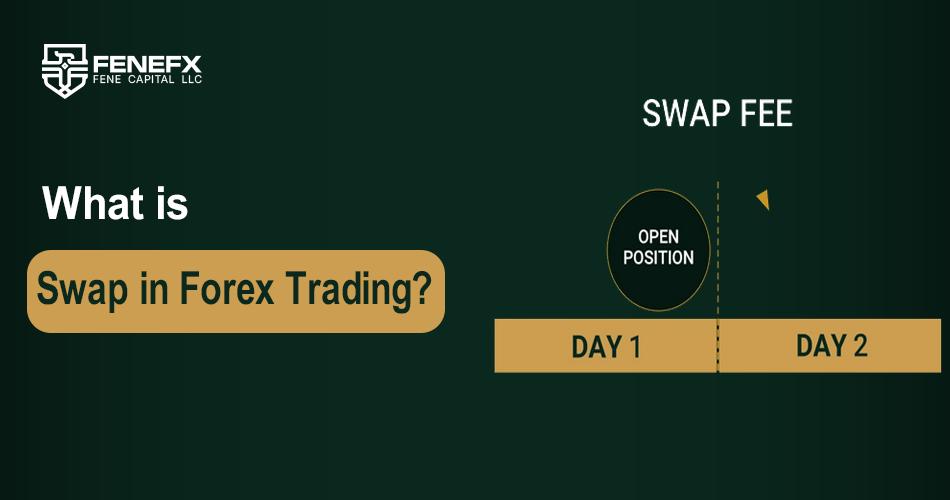
What is Swap in Forex Trading?
In Forex trading (Foreign Exchange market), there is a concept known as "Swap," which is essential for traders who intend to keep their positions overnight.
A swap in Forex refers to the cost that a trader pays or receives for holding a trading position overnight. This cost arises due to the difference in interest rates between the currencies in a currency pair. When a trader trades a currency pair, they are essentially selling one currency and buying another. Therefore, this action is similar to taking a loan in a currency with a lower interest rate and depositing in a currency with a higher interest rate.
The Importance of Swap for Traders
The swap amount in Forex trading is generally insignificant compared to spreads. However, if traders hold positions for several days or weeks, swaps can have a significant impact on their profits and losses. Therefore, traders should always be aware of the swap rates for the currency pairs they plan to trade and how these affect their positions.
A swap in Forex is a nightly fee that occurs due to the difference in interest rates between the currencies in a currency pair. The amount of the swap depends on several factors, including position size and the interest rates of the currencies involved. For day traders who open and close positions within a single trading day, swaps are generally not significant.
History of Swap in Forex
Swap, as an important concept in currency trading, has undergone many changes and transformations throughout the history of the Forex market.
Emergence of the Swap Concept
In the early decades of the Foreign Exchange market (1960s and 1970s), trades were often conducted with immediate delivery of currencies. However, as technology advanced and trading became more complex, a concept called "rollover" was introduced.
A rollover meant that if a trader intended to keep their position open for more than one day, the position would automatically be closed, and a new position would be opened at an updated rate.
This process led to complex calculations and accounting issues. To resolve this, the concept of swap was introduced to compensate for the interest rate differences between two business days.
Stabilization of Swap in Forex Trading
In the 1980s and 1990s, with the increase in trading volumes in the Forex market, the concept of swap became a standard. This increased transparency in trades and allowed traders to calculate profits and losses while considering the swap.
Changes in Swap Rates
Initially, swap rates were relatively stable and did not change much. However, over time, with increased market volatility, swap rates have become dynamic, changing based on market conditions and central bank policies.
Triple Swap (Tuesday Swap)
In Forex trading, there are several terms and concepts that can challenge new traders. One such term is "Triple Swap," which is particularly important for Forex traders.
Triple Swap refers to the change in interest rates on three specific days of the week: Tuesday, Thursday, and Saturday. This phenomenon occurs due to differences in the settlement calendars between banks and financial markets.
Typically, Forex trades settle on Tuesdays, Thursdays, and Saturdays. Due to differences in settlement times between banks and brokers, discrepancies can occur in the interest rates applied to open positions.
To address this issue, the Triple Swap system is used. In this system, the interest rate for open positions on these three days is temporarily adjusted to align with the standard market rate.
The impact of Triple Swap on a trader's profits and losses depends on the type of trade, the interest rates of the related currencies, and the trader's trading strategy. Traders should be aware of the effect of Triple Swap on their open positions and factor it into their profit and loss calculations.
One significant change in the past was that the calculation of swaps shifted from "once per night" to "three times per night" on Wednesdays (due to the weekend settlement). This means that for positions held on Wednesday, the swap is calculated as equivalent to the three day weekend.
Importance of Understanding the History of Swap
While swap in Forex may not be crucial for short term trades, it is highly important for traders who hold their positions for a longer period (Swing Trading, Position Trading). Understanding the history of swaps, the reasons for their creation, and the factors affecting swap fluctuations can help traders make more informed decisions.
The concept of swap continues to evolve, and more changes may come in the future. However, understanding its history and the factors influencing it helps traders make better trading decisions.
Objectives of Swap in Forex
Swap in Forex trading is a concept that often raises questions among traders, especially beginners. This nightly cost (or sometimes income) can significantly impact medium and long term trades and has been created for specific purposes.
Compensating for Interest Rate Differences
The primary goal of swaps is to compensate for the interest rate differences between two currencies traded in a currency pair. When trading Forex, traders essentially sell one currency with a fixed interest rate and simultaneously buy another currency with a different interest rate. To prevent arbitrage from exploiting these differences, the swap is calculated based on the overnight interest rate difference.
Preventing Interest Rate Arbitrage
Without swap costs, traders could profit from interest rate differences by simultaneously holding high interest rate positions while selling low interest rate currencies, all without market risk. The swap creates a balancing cost that prevents such arbitrage.
Facilitating Physical Currency Delivery
Initially, most Forex trades led to the physical delivery of currencies. However, as markets became more complex, the concept of swap was introduced as a substitute for actual currency delivery in settling open positions from the previous day.
Enhancing Market Liquidity
One of the lesser known objectives of swaps is to help increase liquidity in the Forex market. The presence of swaps can encourage traders to hold positions overnight, which in turn increases market liquidity.
While swaps may be insignificant in terms of amount for short term trades, having a comprehensive understanding of their objectives and how they are created is crucial for traders who operate with medium and long term approaches. Paying attention to swap costs when planning trades can significantly impact profitability and prevent losses.
Swap Relevance for Forex Traders
The concept of swaps in Forex is important for all traders, but some groups feel the impact of this nightly cost (or income) more than others in their trading portfolios. This post addresses groups that need a deep understanding of swaps.
Medium and Long Term Traders (Swing and Position Traders)
For traders who hold their positions for several days, weeks, or even months, swaps become a very important factor in evaluating profits and losses. The swap costs or earnings can significantly affect the final profits in these types of trades.
Interest Rate Arbitrage Traders
There is a more specialized group of traders whose primary strategies focus on exploiting interest rate differences between currencies. Swaps are the key tool that neutralizes the profits from this type of arbitrage, so a complete understanding of how swaps are calculated and related strategies is crucial for these traders.
Traders Dealing with High Interest Rate Currency Pairs
Even if a trader does not consciously seek to exploit interest rates, the impact of swaps can become more significant when trading currency pairs with large interest rate differentials. Therefore, paying close attention to swap rates when selecting such pairs is essential.
Traders Active at Rollover Time
The rollover time (around 5 PM New York time) is when settlement and swap calculation for open positions occur. Price fluctuations around this time can be related to swap related trades, and being aware of this is necessary for short term traders.
Even day traders, who close their trades before rollover, should understand the concept of swaps, especially since significant news events and end of week (Wednesdays) can lead to fluctuations in swap rates.
Swap is a key mechanism in the Forex market. While the swap amount may be negligible for short term trades, ignoring it over longer periods or for certain traders can lead to deviations from the expected profits in trades.
Key Definitions Related to Swap
A proper understanding of the concept of swap in Forex requires a deep understanding of the related terms and concepts. In this article, we provide you with key definitions to build a comprehensive understanding of swaps.
Swap: The overnight cost or income that is either deducted from or credited to a trader's account for holding Forex positions for more than one trading day.
Swap Rate: The amount of swap for each standard lot, usually expressed in "pips." Swap rates vary among brokers for different currency pairs.
Long Swap: A swap received due to holding a long position on a currency pair with a positive interest rate differential (where the base currency has a higher interest rate).
Short Swap: A swap deducted due to holding a short position on a currency pair with a positive interest rate differential.
Rollover: The process of closing positions at the end of one trading day and opening an equivalent position for the next trading day. Swaps are calculated and applied during rollover.
Triple Swap: On Wednesdays, swaps are applied for three trading days to account for weekend transactions.
Base Currency: The first currency listed in a currency pair. For example, in EUR/USD, the Euro is the base currency.
Quote Currency: The second currency in a currency pair, which is traded against the base currency. For example, in EUR/USD, the US Dollar is the quote currency.
Remember that swap rates, both in terms of amount and timing of calculation, are constantly changing. Traders should regularly check the swap rates for their traded currency pairs on their broker's trading platform.
How Swap is Calculated in Forex
Swap, or overnight interest rate, is the cost paid or received for keeping a position open for more than one day in Forex. This cost arises due to the interest rate differential between the two currencies in the currency pair being traded.
The calculation of swap includes several factors:
- Interest rate of each currency: The fundamental difference in calculating the swap.
- Position size: Directly affects the amount of swap received or paid.
- Direction of the trade (buy or sell): Determines whether you pay or receive the swap.
Traders can find the swap rates for different currency pairs on their broker's trading platform.
Swap Calculation Formula: Swap = (Trade volume * Swap rate * Number of days) / 100
Notes on Swap Calculation:
- Trade volume: Refers to the number of units of the currency being traded.
- Swap rate: The rate set by your broker, which depends on the interest rates of the central banks of the two currencies in the currency pair being traded.
- Number of days: The number of days your trade remains open.
Example: Suppose you bought 1000 lots of the EUR/USD currency pair. The swap rate for this pair is 0.5%, and you intend to keep the trade open for 3 days. Swap = (1000 * 0.5 * 3) / 100 = 15 In this example, you will have to pay 15 dollars as a swap for your trade.
Example: Suppose a trader has opened a long position on the EUR/USD currency pair. At this time, the Euro interest rate is lower than the US Dollar interest rate. Therefore, the trader must pay an overnight swap. However, if this position were a short, the trader would receive a swap due to the interest rate differential.
Types of Swaps in the Forex Market
The concept of swap in Forex is applied in various ways, each having its own features and applications. In this post, we will explain the main types of swaps.
Overnight Swap
The most common type of swap that most traders encounter. An overnight swap is the cost or income that is calculated for holding positions overnight. The overnight swap rate is based on the interest rate differential between the currencies in the currency pair being traded.
Tomorrow Next Swap (Tom Next)
A type of swap applied to settle transactions on the currency delivery day. The Tom Next swap is used when the value date of a transaction is more than one business day after the trade date.
Spot Swaps
This type of swap is generally used by central banks or large institutions for specific purposes, not by the general traders. The goal of this swap is typically to exchange or swap loans with various foreign currencies by large financial institutions.
Forward Points Swap
Forward points swaps, which are sometimes listed separately on trading platforms, represent the difference between the current spot rate and the forward price of a currency pair. This swap is related to the interest rates and the contract duration.
Moreover, to properly understand interest rates, one must gain comprehensive knowledge and awareness, requiring credible and high level resources for learning. Education is a fundamental key to success in any field, including Forex. In this context, the "Zero to Hero Forex" course by Mohammad Ahangari plays a vital role as one of the prominent free educational resources for Iranian traders. This course provides a comprehensive and complete presentation of both basic and advanced Forex trading concepts, offering a significant step in enhancing their knowledge and skills in this field.
Practical Example
For example, a trader holds a long position on the EUR/USD currency pair for two days. At the end of the first day, the overnight swap is applied based on the broker's swap rate. At the beginning of the second day, in order to transfer the trade from that day to the next (T+2), the Tom Next swap is also calculated and accounted for.
Knowing the types of swaps helps in better understanding the bills and calculations related to trades. While the overnight swap has a more direct impact on the profits and losses of general trades, other types of swaps are also part of the overall structure of the Forex market, and being aware of them helps a smart trader.
Rollover: A Key Part of Swap in Forex
The concept of swap in Forex is directly related to the term "rollover." Rollover is essentially the closing and opening process at the end and beginning of each trading day in the Forex market, playing an important role in swap calculation.
What is Rollover?
At the end of each trading day (around 5 PM New York time), Forex brokers automatically close all open positions of traders. Then, an equivalent of these positions is opened with a new rate for the next trading day. This process of extending trades into the next day is called rollover, and its main goal is to settle positions cash wise at the end of each trading day.
The Connection Between Rollover and Swap
At rollover time, the swap for the completed trading day is calculated. The swap is determined and applied based on the interest rate differential between the two currencies in a currency pair, as well as the duration of the trade and its direction (buy or sell).
Tuesday Swap
Due to the market closure over the weekend, the rollover on Wednesday includes a 3 day swap (Friday, Saturday, and Sunday). This means that the cost (or income) associated with swaps in the mid week days has a significantly lesser impact on positions.
The Importance of Rollover for Traders
Understanding rollover along with swaps is crucial for traders who hold positions overnight and for several days. Additionally, during rollover, sudden price changes in currency pairs can occur, which must be taken into consideration in short term strategies like scalping.
The rollover process and swap calculation are behind the scenes activities but have a significant impact on the Forex market. Informed traders, by understanding how and when these events occur, can plan more profitable trades and avoid price surprises.
What is Triple Swap?
As mentioned earlier, Triple Swap is a concept that Forex traders, especially those whose strategies involve holding positions for multiple days, must fully understand.
Why Triple Swap?
The Forex market is closed on Saturdays and Sundays. However, in Forex trading, the value date for settlement can be one or several business days after the trade date. To settle overnight transactions over the weekend and to account for the holidays, the equivalent of a three day swap is calculated at the end of the trading day on Wednesday and is either deducted from or added to the trader's account.
How Triple Swap Affects Trades
Triple Swap can have a noticeable impact on trades that are kept open from Wednesday onward. The extent of this effect depends on the swap rate, the direction of the trade (buy or sell), and the position size. Therefore, traders should make informed decisions when planning trades, considering the timing of the Triple Swap.
Example
Suppose a trader opens a long position on the EUR/USD pair on Tuesday. If this position is held past the end of Wednesday’s trading day, the swap for Thursday, Friday, and Saturday will be deducted from or added to the trader's account, depending on the interest rate differential between these two currencies and the swap rate set by the broker.
Triple Swap is an inevitable phenomenon for settling weekend transactions in the Forex market. Every Forex trader must be familiar with this concept and know the swap rates of their broker to avoid hidden costs. Paying special attention to the timing of Triple Swap in medium and long term trades allows traders to accurately predict the profits and losses caused by the swap factor.
Comparing Swap in Forex and Cryptocurrency
Although swap exists in a different form in the Forex and cryptocurrency markets, both are considered important concepts in investing and trading.
Swap in the Forex Market
- Nature: A cost (or income) calculated due to the difference in interest rates of the currencies in a currency pair when holding positions overnight.
- Calculation: Based on the swap rate announced by brokers and the duration of holding the trading position.
- Goal: To compensate for the interest rate differential and prevent arbitrage using this rate difference.
Swap in the Cryptocurrency Market
- Nature: A fee or interest charged to liquidity providers and received from traders (takers).
- Calculation: Typically calculated hourly based on the trading volume on each cryptocurrency exchange.
- Goal: To encourage the deposit of digital assets to provide liquidity in exchanges and trading platforms.
Similarities
- Both types of swaps are calculated based on the duration of the position.
- Both can either generate income for investors or incur costs for traders.
- Both act as key mechanisms in providing liquidity in the markets.
Differences
- Forex swaps are based on the economic nature of interest rate differences, while crypto swaps have an operational nature for financing exchanges.
- Forex swaps are relatively smaller in value compared to spreads, whereas crypto swaps may have higher values than spreads.
- Forex swaps are a well established and standardized concept, while swaps in cryptocurrencies are a newer and different phenomenon in various platforms.
Understanding the concept and how swaps are applied in both markets is essential for traders looking to enter either Forex or crypto trading. Failure to consider swap rates or misconceptions about how they work can lead to unexpected losses.
Advantages of Using Swap in Forex
Swap, at first glance, may seem like just an additional cost for Forex traders. However, swap has its benefits that can work in favor of traders.
Earning Income from Interest Rate Differentials
The primary purpose of swap is to compensate for the difference in interest rates between the currencies in a currency pair, but this mechanism in itself can result in income for the trader. When a long position is opened on a currency with a high interest rate against a currency with a lower interest rate, the trader receives a swap for holding that position.
Enabling Longer Position Holding
Swap facilitates holding trading positions for mid term and long term periods (from a few days to several months) by compensating for the costs caused by interest rate differentials. Without swap, traders would not be able to maintain their positions against low interest rate currencies for long periods without incurring substantial costs.
Increasing Market Liquidity
One of the lesser known goals of swap is to help increase liquidity in the Forex market. The existence of swap can encourage traders to keep their open positions overnight. This, in turn, increases market liquidity, leading to narrower spreads and better trading conditions for all traders.
Utilizing in Specific Strategies
Some experienced traders create specific trading strategies that systematically profit from swaps and interest rate differentials. One such strategy, known as "Carry Trade," involves opening long positions on high interest rate currencies and short positions on low interest rate currencies.
Although swap may sometimes be seen as an additional and unavoidable cost, the reality is that swap has undeniable benefits. A full understanding of how swaps are calculated and identifying currency pairs with potential for swap income gives traders a competitive edge, especially for those looking to profit from every angle of the Forex market.
Stats and Figures Related to Swap in Forex
Swap is one of the influential yet often under discussed mechanisms in the Forex market. To better understand the scale and impact of swaps on trading, let's look at some important statistics related to swaps.
- Estimated Daily Swap Volume: According to estimates, the daily swap trading volume in the Forex market is approximately $3 trillion. This figure represents a significant portion of the overall $6.6 trillion daily trading volume in the global Forex market.
- Swap and Major Currency Pairs: Currency pairs composed of major currencies with large interest rate differentials tend to exhibit significant swap fluctuations. Currency pairs like AUD/JPY (Australian Dollar/Japanese Yen) or NZD/JPY (New Zealand Dollar/Japanese Yen) often have some of the highest and lowest swap rates among major Forex pairs.
- Broker Income: A significant portion of a Forex broker's income is derived from spreads and swap fees.
- Swap Volatility: The amount and level of swaps change dynamically and are influenced by several factors, including central bank policies, the global economic situation, and market liquidity. Significant changes in swap rates for certain currency pairs can occur during major news events or monetary policy shifts.
- Swap Calculation Software: Given the complexity and formulas required for calculating swaps, using tools like swap calculators is highly beneficial for traders, particularly those involved in medium and long term trading. These tools are often available for free on various websites, including brokers' platforms.
Such statistics and figures highlight the crucial role swaps play in trading. While swap amounts might seem small compared to spreads, over extended periods and particularly in large trading volumes, they can significantly affect profit and loss.
How Swap Works in Forex
In order to enter the Forex investment market, understanding the concept of swap is essential as it is one of the significant overnight costs (or incomes). Although swaps might be negligible for short term trades, they can become significant for traders with medium and long term strategies. Let’s break down how swap functions in simple terms.
Swap: A Hidden Loan Behind Forex Trades
Essentially, every Forex trade involves borrowing one currency to buy another. Swap is considered the cost of this overnight "loan." For example, when you buy the EUR/USD currency pair, you are essentially buying euros and selling U.S. dollars. In other words, you are borrowing dollars to buy euros.
Additionally, entering this market requires a deep understanding of the inherently risky nature of financial markets, where investing surplus capital is crucial. If you are looking for an opportunity to enter the exciting and profitable world of financial markets, Fenefx prop trading might be an ideal choice. This platform offers multiple benefits, allowing significant earnings without requiring initial capital, relying solely on your knowledge and skills.
Factors Determining Swap
- Interest Rates: The basis for calculating swap is the difference in interest rates between the currencies in the trading pair.
- Trade Direction (Buy or Sell): Long and short positions have different swaps.
- Position Size: The larger the trade volume, the higher the swap, whether as income or as a cost.
A Simple Example
Let’s assume you open a long position on the EUR/USD currency pair where the interest rate for the euro is 1% and for the dollar, it is 1.5%. Since the U.S. dollar has a higher interest rate, the cost of this "loan" will be deducted from your trading account. However, if this trade were a short position, you would receive the interest rate differential.
When Swap is Calculated
Swap is usually calculated at the end of each trading day (around 5 PM New York time) and is applied to the trader’s account. On Wednesdays, due to the weekend market closure, a triple swap for three days (Friday, Saturday, and Sunday) is applied.
Tools for Calculating Swap
In the world of Forex trading, accurate swap calculation is critical for risk management and proper trade planning. Fortunately, there are various tools available to help traders calculate swaps easily and accurately.
- Swap Calculators: Many brokers and financial websites offer online swap calculators. These tools allow you to quickly and accurately calculate the swap by entering details such as the currency pair, trade volume, interest rates, and trade date.
- Swap Calculation Software: Some brokers and financial service providers offer downloadable swap calculators. These tools can be used offline without an internet connection.
- Swap Rate Tables: Brokers and financial websites typically provide tables showing the swap rates for different currency pairs. These tables can help you estimate swaps and compare swap rates for various pairs.
- Trading Platforms: Many Forex trading platforms come with built in swap calculation tools. These tools enable you to calculate the swap for any currency pair directly in the trading platform without needing separate tools.
- Excel: You can manually calculate swaps using Excel formulas. This method is suitable for more experienced traders who seek more precise or customized calculations.
Tips for Choosing the Right Tool
- Ease of Use: The tool you choose should have an intuitive and easy to understand user interface, so you can use it effortlessly.
- Accuracy: Accurate swap calculations are crucial. Ensure the tool you use is reliable and provides accurate results.
- Additional Features: Some tools offer extra features such as calculating profit and loss based on swaps or comparing swap rates across different brokers.
Also, to fully understand and calculate interest rates, a comprehensive knowledge of the subject is necessary, and you will require high quality and credible resources to learn from. Education is a key element in the success of any field, including Forex. In this regard, the "Zero to Hero in Forex" course by Mohammad Ahangari is a vital resource for Iranian traders. This course offers a comprehensive and complete overview of Forex trading from basic to advanced concepts, making a significant contribution to enhancing traders' knowledge and skills.
Types of Swap Trading Strategies
Financial markets provide traders with various tools for investment and profit generation. One of these tools is swap contracts. Swap refers to the exchange of cash flows between two parties based on different assets. The swap rate is the cost or income that is calculated when holding a position overnight.
Given the importance of the swap rate in trading, various strategies have been developed to take advantage of this rate and manage the associated risks. Let's review some of the most important swap trading strategies:
Carry Trade Strategy
This strategy is based on the interest rate differential between two currencies. In this method, a trader borrows a currency with a low interest rate and buys a currency with a higher interest rate. By closing this position, the trader can earn a profit from the interest rate differential between the two currencies. However, this strategy comes with risks such as the potential depreciation of the purchased currency.
Swing Trading Strategy
This strategy focuses on short to medium term market fluctuations. Swing traders use technical analysis to identify suitable entry and exit points to profit from these fluctuations. In this strategy, the swap rate can be used as a tool for risk management and optimizing returns.
Position Trading Strategy
This strategy focuses on long term market trends. Position traders use both fundamental and technical analysis to buy and hold assets for an extended period. In this strategy, the swap rate plays a lesser role, but it should still be considered in calculations and risk management.
Swap and Fly Strategy
This strategy combines swap contracts with options. By using this strategy, a trader can earn profits from the swap rate while also providing some protection against market fluctuations through options.
Choosing the right trading strategy depends on various factors, including your risk tolerance, investment horizon, and financial goals.
A thorough understanding of how to calculate and the impact of the swap rate on trade returns is essential for each of the strategies mentioned.
Using these strategies requires sufficient knowledge and experience in financial markets. It is recommended to practice and develop your skills on a demo account before entering real trades.
Strengths and Weaknesses of Each Strategy
Strategy | Strengths | Weaknesses |
Carry Trade | – High profit potential from interest‑rate differentials– Relatively simple to implement | – Currency risk if the funded currency appreciates– Requires diligent risk management |
Swing Trading | – Captures short‑ to mid‑term price swings– Highly adaptable to changing market conditions | – Demands continuous market monitoring and analysis– Entry/exit timing errors can be costly |
Position Trading | – Suited for long‑term outlooks– Lower exposure to short‑term volatility | – Requires patience and a long investment horizon– Risk of trend reversals over time |
Swap and Fly | – Combines swap income with volatility hedging via options– Good for moderate risk appetites | – Structurally and operationally complex– Higher costs due to option premiums |
There are various strategies for taking advantage of swap contracts in financial markets. Each of these strategies has its own strengths and weaknesses, which are important to consider when deciding on the most suitable strategy.
Carry Trade Strategy:
Strengths:
Potential for high profit from interest rate differentials.
Relatively simple execution.
Weaknesses:
High risk from currency fluctuations (depreciation of the purchased currency).
Requires careful risk management and market monitoring.
Swing Trading Strategy:
Strengths:
Ability to profit from short to medium term market fluctuations.
High flexibility to adapt to changing market conditions.
Weaknesses:
Time consuming for technical analysis and identifying the right entry and exit points.
Potential loss from incorrect market analysis.
Position Trading Strategy:
Strengths:
Suitable for long term investors.
Lower risk compared to short term trading.
Weaknesses:
Requires high patience and time to achieve profits.
Potential market trend changes over extended time periods.
Swap and Fly Strategy:
Strengths:
Profiting from the swap rate while covering market risk with options.
Suitable for traders with moderate risk tolerance.
Weaknesses:
More complex compared to other strategies.
Higher cost due to the use of options contracts.
Choosing the appropriate trading strategy depends on the strengths and weaknesses of each method, as well as your risk tolerance and financial goals. Remember that success in any of these strategies requires sufficient knowledge of financial markets, proper risk management, and practice and skill development.
Comments
Held a EURUSD long for almost three weeks last year and the swap quietly ate a third of the profit. Lesson learned — now I check swap rates before every swing trade.
Short and to the point, exactly what I needed.
Worth adding that most brokers charge triple swap on Wednesdays to cover the weekend. Caught a few of my swing trades off guard before I learned that.
So THAT'S why my balance kept dropping a few cents every night. I honestly thought my broker was skimming me lol. Thanks for clearing it up.
Good intro. Could you write a follow-up on swap-free (Islamic) accounts and what brokers actually charge instead? That part always feels hidden.