

What is a trading strategy?
A trading strategy is a set of well defined rules, approaches, and structured activities that help investors develop a clear and precise roadmap for buying, holding, and selling their assets. By relying on predetermined rules, this approach shields traders from emotional decision making during sensitive market conditions and assists them in executing their trades and investments consciously and in alignment with their risk tolerance and expected returns while maintaining focus and peace of mind.
Advantages of a Trading Strategy
Having a clear trading strategy creates a vital distinction between a professional trader and an amateur. When you enter the market with a roadmap, your decisions are based on logic, analysis, and experience not on momentary emotions such as fear, greed, or excitement. A strategy helps you know when to enter a trade, at what point to exit, and how to control your risk. This structure and discipline significantly increase your chances of long term success, even in highly volatile markets.
In contrast, trading without a strategy is like being thrown into the market without a compass. Such behavior usually results in scattered trades, emotional decisions, continuous losses, and psychological burnout. With a defined strategy, you can consistently evaluate your performance, identify weaknesses, and make improvements.
Therefore, having a trading strategy not only enhances profitability but also provides the trader with mental clarity and a realistic perspective of the path ahead.
Before Entering This Field
Before stepping into this field, you must thoroughly understand the inherently risky nature of financial markets and only use surplus capital for trading.
If you are seeking an opportunity to enter the exciting and potentially profitable world of financial markets, FeneFx Prop Trading is the ideal choice for you. By taking advantage of this platform’s benefits, you can achieve substantial income without the need for initial capital relying solely on your knowledge and skills.
Why Do You Need a Trading Strategy?
Entering financial markets without a trading strategy is like setting out on a journey to an unknown destination without a map. Many novice traders make buy or sell decisions based solely on emotions, scattered news, or others' recommendations.
Such trading behavior not only reduces the chances of success but also leads to heavy losses, mental confusion, and capital erosion.
A well defined strategy provides you with a clear framework for action and prevents impulsive and emotionally driven decisions.
Here are three main reasons why having a strategy is essential:
Emotion Control
Fear, greed, doubt, and excitement are the four main enemies of a trader. When prices suddenly drop or surge, traders without a strategy often resort to emotional reactions: premature exits, late entries, or revenge trading.
A precise strategy with predefined rules removes emotions from the decision making process and enables rational responses in critical situations.
Rational Decision Making
A trading strategy helps you enter the market based on data, analysis, and specific scenarios not on guesswork. With predefined entry and exit points, stop loss levels, and profit targets, you know exactly when to act.
This decision making approach increases both accuracy and confidence in the trading process.
Evaluability and Optimization
One of the greatest advantages of having a strategy is the ability to evaluate your performance. By recording and reviewing your trade results, you can identify weaknesses and improve your strategy.
This feedback and optimization cycle is the key to long term success in financial markets.
Key Rules for Using a Trading Strategy
A trading strategy is recognized as a roadmap for decision making in financial markets. To succeed in trading, having an effective strategy is essential.
In this section, we’ll explore several key rules for using trading strategies that help traders make better decisions and reduce risks.
Consistency and Discipline in Strategy Execution
One of the most important rules in using trading strategies is maintaining discipline and executing the strategy consistently.
Traders must adhere to their strategy under all market conditions and avoid emotional or impulsive changes.
Sticking to the strategy prevents large losses and promotes steady performance.
Risk Management
Risk management is one of the fundamental principles of trading strategies. In every trade, the level of risk must be clearly defined. Using a Stop Loss and measuring the Risk/Reward ratio are among the most important tools for minimizing potential losses.
Setting Realistic Goals
Trading goals should be realistic and achievable. Setting unrealistic targets can lead to frustration and increased risk.
Successful strategies must include both short term and long term goals to help the trader progress steadily and systematically.
Ongoing Analysis and Strategy Evaluation
No trading strategy is permanent. Market conditions are constantly changing, and to remain successful, you must continuously evaluate your strategy.
Reviewing its performance and making necessary adjustments can enhance your trading outcomes.
Patience and Discipline
Patience and discipline are crucial when executing trading strategies. You should avoid entering trades when market conditions aren’t favorable and act only when your strategy provides clear signals.
These key rules form the foundation of a successful trading strategy and help you operate in financial markets with greater confidence.
The “Zero to One Thousand” course by Mohammad Ahangari is a valuable resource for learning foundational to advanced concepts, such as technical analysis, fundamental analysis, trading psychology, and strategy development.
This course equips you to trade logically in financial markets by using technical analysis tools and techniques.
Types of Trading Strategies
Now that we are familiar with the principles and rules of designing and applying a trading strategy, let’s briefly introduce some of the most well known strategies used in financial markets.
This overview will help you gain a comprehensive understanding of various strategies so you can choose the one that best suits your needs and personalize it for your trading style.
MAA Strategy
The MAA Strategy is a comprehensive trading system designed by Master Ahangari for various markets, including Forex, cryptocurrencies, and stocks. This strategy assists traders at all levels in achieving consistent profitability by combining market behavior analysis, trading psychology, and capital management.
The core foundation of this strategy lies in identifying precise entry and exit points, utilizing appropriate stop losses, and analyzing market psychology.
In this method, the trader applies principles such as identifying divergences, candlestick patterns, and minor confirmations before entering a trade.
Additionally, capital management and a focus on trading psychology play a crucial role in its success.
Ultimately, the MAA system enables traders to prevent major risks and secure profits by adhering to precise rules and a disciplined approach.
HOLD Strategy
The “HOLD” or “HODL” strategy is one of the most well known long term investment approaches in financial markets especially in the cryptocurrency space. In this method, the investor buys an asset and holds it for an extended period, regardless of short term market fluctuations, based on the belief that its value will significantly increase in the future.
This strategy, which is simple and does not require complex analysis, is ideal for individuals who have strong faith in the future of a particular market or project and prefer long term returns through patience and consistency rather than active trading.
Despite its apparent simplicity, HODLing is not without risk. Markets like cryptocurrencies are extremely volatile, and holding an asset long term without proper fundamental analysis can lead to significant losses.
HODLers must also have the psychological resilience to endure sharp market downturns and should only invest capital they can afford to lose.
Overall, the HODL strategy is suitable for investors with a long term vision, high risk tolerance, and strong belief in future value appreciation.
Arbitrage Trading Strategy
The arbitrage strategy is a classic and relatively low risk trading method that aims to profit from price differences of an asset across two or more markets. In this approach, the trader buys an asset in a market where the price is lower and simultaneously sells it in another market where the price is higher.
Although the price difference may be small, it can result in significant profit when traded in large volumes.
Arbitrage is most commonly executed in markets such as cryptocurrencies, Forex, or international stock exchanges where disparities in liquidity or slight delays in price synchronization create short lived trading opportunities.
Although arbitrage may appear risk free on the surface, successful execution requires high speed, advanced technical infrastructure, and a clear understanding of hidden costs such as transaction fees, transfer delays, and platform limitations.
Arbitrage opportunities often vanish in fractions of a second, so traders need to be equipped with automated tools, trading algorithms, or bot traders.
Overall, this strategy is best suited for traders with strong technical knowledge, access to multiple markets, and the capability to execute trades with speed and precision.
Dollar Cost Averaging (DCA) Strategy
The Dollar Cost Averaging (DCA) strategy is a popular and low risk method for consistent investing in financial markets. Instead of investing the entire capital at once, the investor allocates a fixed amount at regular intervals (e.g., weekly or monthly) to purchase a specific asset, regardless of the current market price.
The outcome of this approach is a long term average purchase price, which helps reduce the impact of sharp price fluctuations on the overall investment.
DCA is an ideal strategy for individuals who prefer to avoid market timing or who lack extensive experience in analysis.
It promotes financial discipline, reduces emotional decision making, and allows for gradual and smart entry into the market. However, in bearish markets, DCA may not yield profits for an extended period, so selecting the right asset and having a long term outlook is crucial.
Overall, DCA is a simple yet effective option for long term investors with moderate risk tolerance.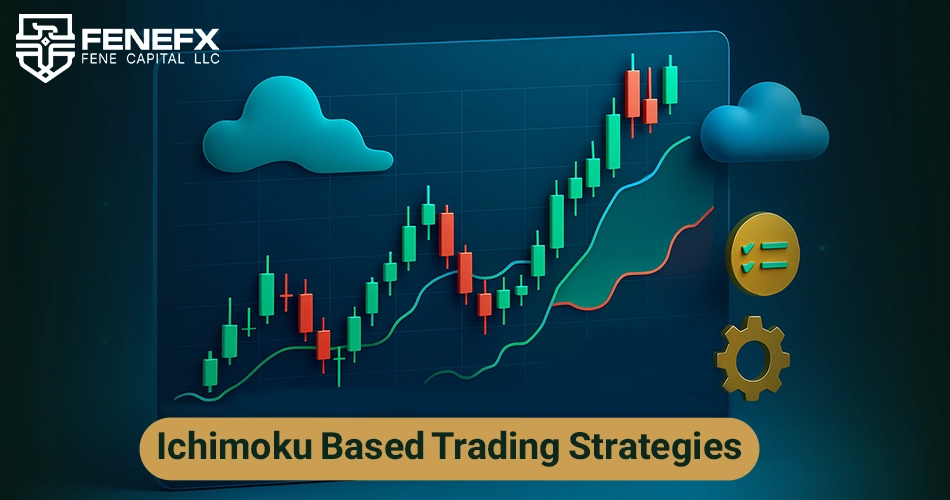
Ichimoku Based Trading Strategies
Ichimoku based strategies are widely used in technical analysis and involve identifying buy and sell signals using the comprehensive Ichimoku indicator.
This tool helps traders gain a clear view of the market trend and identify key support and resistance zones by analyzing three main components of market behavior.
The Ichimoku indicator consists of five primary lines: Tenkan-sen, Kijun-sen, Senkou Span A, Senkou Span B, and Chikou Span.
Using these lines, traders can determine their entry and exit points.
Some common Ichimoku strategies include:
• Tenkan-sen/Kijun-sen Crossover: A buy signal is generated when Tenkan-sen crosses above Kijun-sen; conversely, a sell signal appears when it crosses below.
• Tenkan-sen and Kijun-sen Zones: When the price is above these zones, it indicates a bullish trend.
• Price vs. Ichimoku Cloud: If the price is above the cloud, the trend is bullish; if it's below, the trend is bearish.
Ichimoku strategies are highly practical and can be used to identify trends, reversal zones, and trading signals.
They help traders make more accurate decisions in the market by offering a structured and visual framework for analysis.
Candlestick Based Trading Strategies
Candlestick based trading strategies are among the most effective methods in technical analysis. They enable traders to identify precise entry and exit points by studying various candlestick patterns. Candlesticks display crucial information about price movement within a specific time frame and can generate strong buy or sell signals.
Some common candlestick based strategies include:
• Doji Pattern: A candlestick with a small body and long wicks, indicating market indecision. This pattern can signal a potential trend reversal.
• Hammer and Inverted Hammer: These patterns, when they appear at the end of a downtrend, can indicate a reversal to an uptrend.
• Morning Star: A three candle reversal pattern that signals a transition from a downtrend to an uptrend.
• Dark Cloud Cover: A two candle pattern seen in an uptrend, often interpreted as a bearish reversal signal.
Candlestick based strategies allow traders to enter the market with clearer and stronger signals, helping to reduce risk. These strategies are simple yet powerful and are particularly effective in volatile markets.
Price Action Trading Strategy
Price action trading is a market analysis approach that focuses on price behavior itself rather than relying on indicators or complex tools. In this strategy, traders make decisions based on price patterns, support and resistance levels, and key reversal zones.
The underlying belief is that all necessary market information is already reflected in price movements making additional indicators unnecessary.
Key principles and strategies in price action include:
• Identifying Support and Resistance Levels: One of the most critical tools in price action, these levels are where price often reacts or reverses. They serve as effective points for entering or exiting trades.
• Price Patterns: Well known patterns such as triangles, cup and handle, head and shoulders, and rectangles can signal trend continuation or reversal and are useful for identifying trade setups.
• Trend Analysis: Recognizing market trends is a core component of price action. If the trend is upward, the trader looks for buying opportunities; if it’s downward, selling is preferred.
• Retracement Zones: In strong trends, retracement levels (often near support/resistance or Fibonacci levels) can be ideal points to enter trades.
Price action is a straightforward and practical strategy that allows traders to perform detailed analysis using just the price chart.
It is suitable for all levels of traders from beginners to professionals and can be applied in any market and on any time frame.
Trading Strategy with Mohammad Ahangari’s “Zero to One Thousand” Course
The “Zero to One Thousand” course by Mohammad Ahangari is a true educational masterpiece, designed for both beginner and experienced traders. With a modern and practical approach, this comprehensive course guides you toward mastery in trading.
In this all in one program, you will:
• Learn the complete principles and rules of trading.
• Get introduced to various forms of technical and fundamental analysis.
• Discover powerful trading strategies.
• Master capital and risk management in a structured way.
• Understand trading psychology and learn how to overcome mental challenges.
Mohammad Ahangari, a seasoned trader and entrepreneur shares his knowledge and experience in a clear and accessible language, helping you become a successful and profitable trader.
The “Zero to One Thousand” course is a unique opportunity for structured, practical learning that will put you on the path toward financial independence .
Types of Trading Strategies Based on Analytical Tools
The world of trading strategies is vast, and within it exists a wide variety of approaches that can be categorized based on market type, trading style, and the analytical tools used.
Each trader can, depending on their experience, goals, and resources, choose strategies that best align with their personal trading style.
Broadly speaking, trading strategies can be divided into different categories. In this article, we focus on two primary types: strategies based on analytical tools.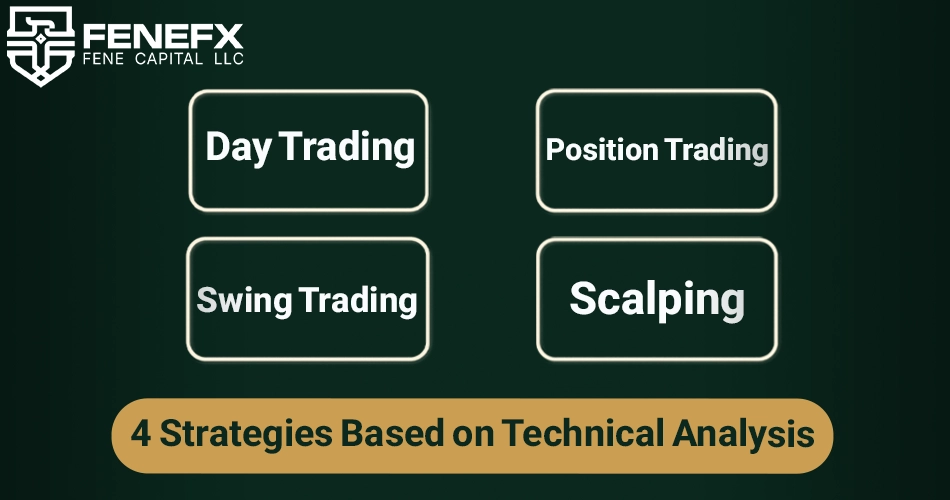
4 Strategies Based on Technical Analysis
Technical analysis based strategies primarily focus on price movements and chart patterns.
These strategies use tools such as indicators, candlestick patterns, support and resistance levels, and trendlines to forecast future price movements.
Technical analysts believe that price history and past market behavior can effectively predict future trends.
These strategies are especially useful in volatile and short term markets, and they allow traders to make decisions without relying on news or fundamental factors.
Here are 4 popular strategies based on technical analysis:
• Day Trading: Involves opening and closing trades within the same day to capitalize on intraday price movements.
• Position Trading: Focuses on holding trades for weeks or months, based on longer term trends and technical signals.
• Swing Trading: Targets medium term market swings by entering trades that typically last from a few days to a few weeks.
• Scalping: A very short term strategy that involves making numerous trades within minutes or hours to capture small price changes.
4 Fundamental Analysis Based Trading Strategies
Fundamental analysis based strategies focus on examining economic, financial, and social factors that influence price movements. In this approach, traders use economic news, company financial reports, interest rates, and political events to assess market conditions.
Fundamental analysts believe that, in the long run, asset prices tend to converge toward their intrinsic value, and such analyses can help identify potential buying or selling opportunities.
Fundamental strategies are generally more suitable for long term trading, and they typically respond to significant price changes driven by macroeconomic factors.
Four popular fundamental analysis based trading strategies include:
• Value Investing
• News Based Trading
• Macro Trend Trading
• Supply and Demand Analysis
Comments
Spent a year strategy-hopping every two weeks. Only started seeing consistency when I forced myself to run one system for 100 trades no matter what. Painful but worth it.
I used to think a strategy was just an indicator setup. The part about entry, exit AND risk rules being one package was an eye-opener, thank you.
How many trades do you need before you can trust a backtest? Would love an article on sample size and strategy validation.
Concise and practical, well done.
Good foundation. I'd add that a strategy isn't complete without an invalidation point — knowing when your edge stops working matters more than the entry rules.