

What is Binance Coin?
In the complex and dynamic world of cryptocurrencies, Binance Coin (BNB) plays a prominent role in the transformation of the decentralized financial ecosystem as an innovative and multi purpose token. Launched by the world’s largest exchange, this digital currency goes beyond being just a simple trading tool and covers a wide range of services, including transaction fee reduction, blockchain project development, participation in decentralized finance (DeFi), and the NFT market. In this article, we will provide a comprehensive analysis of the various aspects, features, challenges, and strategic importance of Binance Coin in the cryptocurrency ecosystem.
Introduction to Binance Coin (BNB) and Its Role in the World of Cryptocurrencies
Binance Coin (BNB) is one of the leading cryptocurrencies in the crypto world, created by Binance, the largest cryptocurrency exchange in the world. This digital currency was designed as the native token of the Binance ecosystem and has broad applications both within the platform and beyond. Initially introduced as a tool to reduce trading fees on the Binance exchange, its use has expanded over time, making it one of the most widely used cryptocurrencies globally.
Binance Coin holds a special place in the cryptocurrency world due to its key role in maintaining and managing the Binance blockchain network. Not only does it allow Binance exchange users to reduce transaction fees, but it is also used in various projects such as online payments, investment in new projects, and even purchasing goods and services. Additionally, features such as the token burn mechanism to control supply and demand have contributed to the growth of BNB’s value and popularity.
Introduction to Binance: The World’s Largest Cryptocurrency Exchange and the Role of BNB in It
Binance was established in 2017 with the goal of creating a fast and secure platform for cryptocurrency trading. It quickly became the largest exchange in the world in terms of trading volume. The exchange offers a wide range of services, including spot trading, futures, staking, and access to DeFi projects. Binance Coin (BNB) plays a key role within this exchange and is recognized as its native token.
One of the most important features of BNB is the discount on trading fees. Binance users can significantly reduce their trading costs by paying fees with BNB. Although these discounts have gradually decreased over time, they remain one of the main reasons for using BNB in trading. Moreover, BNB gives users access to special services such as participation in Initial Exchange Offerings (IEOs) and access to new products.
The role of BNB within Binance is not limited to trading. This cryptocurrency acts as a key tool in the Binance ecosystem, allowing users to pay various fees, invest in new projects, and even use it within Binance’s blockchain networks such as the BNB Smart Chain. For this reason, BNB has become a symbol of Binance’s power and expansion.
The History of Binance Coin and Its Development Path from the Beginning Until Now
Binance Coin was introduced to the market in July 2017 through an Initial Coin Offering (ICO). At this stage, BNB was created as an ERC 20 token on the Ethereum blockchain, and each unit was priced at just $0.11. The main goal of the BNB offering was to raise capital for the development of the Binance exchange. In this ICO, 100 million BNB tokens were made available to the public, and these tokens sold out quickly, raising $15 million in capital.
After the success of the ICO, BNB quickly became one of the most popular cryptocurrencies. In 2019, Binance launched its own blockchain, called Binance Chain, and BNB was transferred from the Ethereum blockchain to this new chain. This transfer marked a significant step in the development of Binance Coin, enabling it to continue as a native token with better performance.
One of the key aspects of BNB’s history is the token burn mechanism. Every three months, Binance buys back and burns a portion of BNB tokens from the market to reduce the total supply. This process will continue until the number of available tokens reaches 100 million. This mechanism helps balance supply and demand and has increased the value of BNB.
BNB has evolved from a simple tool for reducing fees to a multi purpose cryptocurrency used in various DeFi projects, decentralized applications (dApps), payments, and even NFTs. This development path has made BNB one of the leading cryptocurrencies in the market.
Key Features of Binance Coin: From Fee Reduction to Versatile Applications
Binance Coin (BNB) holds a special place in the cryptocurrency ecosystem due to its unique features. One of its most important characteristics is the reduction of trading fees on the Binance exchange. Users of the exchange can significantly lower their transaction fees by using BNB, which directly saves on their trading costs.
In addition to fee reduction, BNB has various applications, including payments for online services, purchasing goods, and even booking hotels and airline tickets. Many platforms and businesses have adopted BNB as a payment method, helping expand its use in the real world.
Another standout feature of BNB is its token burn mechanism. This process automatically removes a portion of existing tokens from circulation to reduce the total supply. This mechanism helps increase the token's value and effectively manages demand pressure.
Within the Binance ecosystem, BNB is used as a primary tool on the BNB Smart Chain blockchain. This blockchain, which supports smart contracts and decentralized applications (dApps), provides an ideal environment for the development of DeFi projects and blockchain innovations. Developers can use BNB to pay for gas fees, helping reduce operational costs compared to blockchains like Ethereum.
Another key feature of BNB is its use in various investment opportunities. Users can utilize BNB to participate in Initial Exchange Offerings (IEOs) and new blockchain projects. This feature has made BNB an attractive tool for investors.
Finally, due to its flexibility and wide range of applications, Binance Coin has become one of the leading cryptocurrencies in the market. This token is not only recognized within the Binance ecosystem but also as a key tool in the broader crypto world.
BNB Blockchain: Structure, Components, and Functionality of Different Chains
The BNB blockchain is designed as a core infrastructure within the Binance ecosystem, providing a fast, scalable, and reliable platform for executing transactions and developing decentralized applications (dApps). This blockchain consists of several chains, each with its own specific functions and features. Let’s take a closer look at each of these chains and their roles within the BNB ecosystem:
BNB Beacon Chain
BNB Beacon Chain, previously known as Binance Chain, is a part of the Binance blockchain system specifically designed for managing network governance. This chain is responsible for staking, voting on network changes, and managing user assets. In essence, BNB Beacon Chain acts as a governance layer, enabling user interaction with Binance’s governance structure. It is important to note that according to Binance’s roadmap, this chain will be retired in 2024, with its responsibilities being transferred to the BNB Smart Chain.
BNB Smart Chain (BSC)
BNB Smart Chain, also known as the Binance Smart Chain, is one of the most important parts of the BNB blockchain. This chain supports smart contracts and has created an ideal environment for developing decentralized applications (dApps) and decentralized finance (DeFi) projects. One of the standout features of BSC is its compatibility with the Ethereum Virtual Machine (EVM), which allows developers to easily port their projects from Ethereum to BSC. Due to its low fees and high transaction speed, BSC has become popular among developers and users alike.
opBNB
opBNB is a Layer 2 solution built on top of BNB Smart Chain, designed to enhance transaction speed and reduce costs. This chain uses Optimistic Rollups technology, allowing users to process transactions off chain and then send the final results to the main chain. opBNB is particularly suited for applications that require high transaction throughput, such as blockchain based gaming and DeFi projects.
zkBNB
zkBNB is another Layer 2 solution that utilizes Zero Knowledge Proofs (ZKPs). This technology enables users to conduct transactions privately and at a lower cost. zkBNB is particularly ideal for applications like blockchain gaming and social networks, where high transaction volumes are required. This chain combines security and scalability, helping the BNB ecosystem compete with other blockchain networks.
BNB Greenfield
BNB Greenfield is a new solution within the Binance ecosystem that focuses on decentralized data storage. This chain allows users to securely and controllably store their data, using it to build data driven applications. BNB Greenfield also enables users to tokenize their data assets and participate in the decentralized data economy.
Comparing Binance Chain with Ethereum: Differences and Similarities
Binance Chain and Ethereum are two of the largest and most influential blockchains in the market, but they have fundamental differences in structure and functionality. Let’s examine these differences and similarities in more detail:
Structure and Objectives
Ethereum was designed as a non profit project with the primary goal of creating a fully decentralized blockchain for executing smart contracts and decentralized applications (dApps). In contrast, Binance Chain was created by a private, centralized company with the aim of providing a fast and efficient blockchain to support the Binance exchange and its related projects.
Consensus Model
Ethereum transitioned to the Proof of Stake (PoS) consensus model in September 2022, placing more emphasis on decentralization. On the other hand, Binance Chain uses the Proof of Stake Authority (PoSA) model, which involves a limited number of validators, resulting in a more centralized structure.
Scalability and Costs
Binance Chain, utilizing the PoSA model and fewer validators, has achieved higher scalability and significantly lower transaction fees. In contrast, despite Ethereum's greater decentralization, it faces challenges such as high gas fees. However, Layer 2 solutions like Arbitrum and Optimism have somewhat mitigated this issue.
Developer Community
Ethereum, with its longer history and broader support, has a larger developer community and a higher number of dApps and projects running on its network. In contrast, Binance Chain has gained increasing popularity due to its lower costs and faster transaction speeds.
Proof of Stake and Authority (PoSA) Consensus Mechanism in Binance Coin
Binance Chain uses the Proof of Stake and Authority (PoSA) consensus mechanism, which combines Proof of Stake (PoS) and Proof of Authority (PoA). This mechanism is designed to strike a balance between security, speed, and scalability.
In this model, validators must stake at least 10,000 BNB to be eligible. Additionally, validators operate publicly and must disclose their identity, which helps enhance trust and reduce the likelihood of malicious behavior. Ordinary users can also delegate their tokens to validators and share in the rewards.
One of the key benefits of this model is the high transaction processing speed and low fees. However, the concentration of power among a limited number of validators has led to criticisms regarding the reduced decentralization of the network.
Smart Contracts and Their Role in the BNB Ecosystem
Smart contracts are a key component of the BNB ecosystem and are executed on the BNB Smart Chain. These contracts allow developers to create and manage decentralized applications (dApps) and DeFi protocols. Smart contracts execute automatically and without intermediaries based on predefined conditions.
Due to its compatibility with the Ethereum Virtual Machine (EVM), BNB Smart Chain facilitates the easy transfer of projects from Ethereum. Additionally, the lower fees and higher transaction speeds make it an attractive option for developers.
Smart contracts within the BNB ecosystem have various applications, including:
- Creating decentralized financial (DeFi) protocols such as decentralized exchanges (DEXs) and lending platforms.
- Developing blockchain based games and entertainment applications.
- Creating and issuing NFTs.
- Managing assets and tokenizing real world assets.
These capabilities have made BNB Smart Chain one of the most popular platforms for blockchain project development.
Advantages and Disadvantages of Binance Coin: From Low Fees to Security Concerns
Binance Coin (BNB) is one of the key tokens in the blockchain and cryptocurrency ecosystem, offering notable features and use cases. However, like any other cryptocurrency, it has both advantages and disadvantages, which are discussed below.
Advantages
Reduced Transaction Fees:
One of the main advantages of BNB is the discount on trading fees on Binance exchange. Users can lower their costs by paying fees with BNB. This feature is especially attractive to active traders.
Token Burn Mechanism:
Binance periodically burns a portion of the BNB tokens to reduce the total supply. This burn mechanism helps prevent inflation and increases demand for the token, potentially contributing to its value preservation and growth.
Diverse Use Cases:
BNB is not only used within the Binance exchange but also has various applications across other sectors. From online payments and travel service bookings to participating in token sales and decentralized finance (DeFi), this token holds a special place in the cryptocurrency ecosystem.
High Speed and Low Fees:
BNB Smart Chain, utilizing the Proof of Stake Authority (PoSA) consensus mechanism, offers high transaction processing speeds. This speed, coupled with low fees, makes it more attractive to both developers and users.
Disadvantages
Centralization:
One of the main criticisms of BNB is its centralization. The PoSA consensus model and the control of the network by a limited number of validators make this blockchain less decentralized, which may be a concern for blockchain purists who prioritize decentralization.
Security Challenges:
Despite the high security of blockchain technology, Binance, as the world's largest exchange, has been a frequent target of cyberattacks. This could undermine investor confidence in the BNB ecosystem.
Dependence on Binance's Performance:
The value of BNB is heavily tied to the performance and success of Binance exchange. Any crisis or legal issue surrounding Binance could have a direct and negative impact on the value and popularity of BNB.
How to Buy, Sell, and Store Binance Coin
To buy BNB, you can use the following methods:
Trusted Exchanges
Binance is the primary platform for purchasing BNB. Additionally, other exchanges also offer this token. Users can sign up and complete identity verification on these exchanges, and then purchase BNB using credit cards or bank transfers.
Mobile Applications
Some mobile apps and wallets also allow direct purchases of BNB.
Selling BNB
Converting to Other Cryptocurrencies:
Users can exchange their BNB for other cryptocurrencies, such as Bitcoin or Ethereum.
Cash Out to Fiat Currency
Some exchanges allow users to sell BNB and withdraw the funds directly to their bank accounts.
Storage
To securely store BNB, the following methods are recommended:
Cold Wallets:
These wallets are not connected to the internet and are considered the most secure option for long term storage. Hardware wallets like Trezor or Ledger are popular choices in this category.
Hot Wallets:
These wallets are connected to the internet and are suitable for daily use. Mobile or desktop apps such as Trust Wallet or MetaMask are examples of this type.
Custodial Solutions:
Some users prefer to store their assets in custodial wallets managed by exchanges. This method is simpler but comes with higher risks, as users do not have full control over their assets.
Safety Tips
Use Two Factor Authentication (2FA):
Enabling 2FA on wallets and exchange accounts is essential to enhance security.
Avoid Storing on Exchanges:
It is recommended to store assets in personal wallets and only transfer them to exchanges when trading.
By following these guidelines and selecting the appropriate method, you can make the most of your BNB and ensure the security of your assets.
Binance Coin and Its Role in Decentralized Finance (DeFi) and Asset Tokenization
Binance Coin (BNB), as a key component of the Binance ecosystem, plays a significant role in the expansion of Decentralized Finance (DeFi). The DeFi space enables users to access financial services without relying on intermediaries like banks. These services include lending, borrowing, staking, insurance, and decentralized exchanges. BNB, as the native token of the BNB Smart Chain, has several applications in this domain:
Applications of BNB in DeFi
- Transaction Fees:In DeFi, BNB is used to pay transaction fees on decentralized applications (dApps). Due to the low fees on the Binance blockchain, users prefer utilizing this platform for conducting decentralized financial transactions.
- Lending and Borrowing:DeFi lending platforms, such as Venus, use BNB as collateral for loans or to provide loans. This feature allows users to access liquidity without having to sell their digital assets.
- Staking:Users can stake BNB in DeFi protocols to earn rewards. This process helps increase network security and improves the return on investment.
- Compatibility with Other Protocols:BNB plays a central role in many DeFi protocols, such as decentralized exchanges (DEX) like PancakeSwap. Users can exchange BNB for other cryptocurrencies or use it for liquidity provisioning in financial pools.
Asset Tokenization with BNB
Asset tokenization is the process of registering a physical or digital asset as a token on the blockchain. BNB Smart Chain, with its high speed and low transaction fees, provides an ideal platform for this process.
- Physical Assets:Assets like real estate, artwork, or precious metals can be tokenized on the Binance blockchain. These tokens represent ownership or shares in those assets.
- Digital Assets:In the digital space, BNB is used to create tokens for innovative projects or assets such as movie or music royalties.
- Transparency and Security:Using BNB for asset tokenization provides transaction traceability and enhances transparency. This feature helps attract investors and increases trust in the market.
By leveraging the advantages of BNB in DeFi and asset tokenization, users can participate in the growing ecosystem with greater efficiency and security.
NFTs and Binance Coin: A New Revolution in the Binance Blockchain Space
Non fungible tokens (NFTs) have become one of the hottest trends in the blockchain space, attracting the attention of artists, gamers, and investors. The Binance blockchain, with its unique capabilities, has played a key role in the development of the NFT market.
The Role of BNB in the NFT Market
- Low Transaction Fees:One of the main advantages of BNB in the NFT space is the reduced fees associated with creating, buying, and selling non fungible tokens. This feature allows artists and new users to engage in the market without worrying about high costs.
- Creating NFTs:Users can create NFTs using BNB on platforms like Binance NFT. These tokens can represent digital artworks, in game items, or unique collectibles.
- Buying and Selling Markets:Binance has created an NFT marketplace where users can buy and sell their NFTs. BNB is used as the primary currency in this marketplace, making transactions faster and cheaper.
Binance Blockchain Capabilities in the NFT Space
- Support for zkBNB:The Binance blockchain utilizes zkBNB, a Layer 2 solution based on Zero Knowledge Proofs (ZKPs), to enhance transaction speeds and reduce fees in NFT transactions. This solution is particularly effective for gaming and social applications.
- Easy Access:The Binance blockchain infrastructure is simpler and faster for NFT developers and users compared to other platforms. This has led to an increased adoption of the Binance blockchain among artists and developers.
- High Security:Despite cybersecurity attacks on Binance's exchange, its blockchain infrastructure remains highly secure. This security increases user trust in the NFT marketplace.
The Future of BNB in the NFT Space
The Binance blockchain continues to grow the NFT space by providing innovative tools and services. With the technical capabilities and extensive use cases of BNB, it is expected that this token will continue to play a pivotal role in the expansion of NFT markets.
With its central role in DeFi and the NFT market, BNB has become one of the most valuable tokens in the blockchain ecosystem. The use of this token in decentralized finance and asset tokenization, alongside the innovations in the NFT market, signals a bright future for BNB and the Binance ecosystem.
Binance Coin and Security Challenges: From Cyber Attacks to Centralization
Security is a critical aspect of the cryptocurrency ecosystem, and Binance Coin (BNB) is no exception. Despite the popularity and value of BNB, this digital asset and its associated ecosystem have faced several security challenges, which can be broadly categorized into two main issues: cyber attacks and centralization concerns.
. Cyber Attacks
Binance Exchange, the world's largest cryptocurrency exchange and the primary host of BNB, has been the target of several cyber attacks throughout its operational history. One of the most notable attacks occurred in 2019, when hackers managed to steal approximately 7,000 Bitcoins worth over $40 million using phishing and malware techniques. This incident raised concerns about the security of user assets and Binance’s systems. However, Binance used its SAFU (Secure Asset Fund for Users) to compensate users for the losses, preserving its reputation.
Additionally, attacks targeting networks associated with BNB, including the BNB Smart Chain, present another security challenge. These networks, hosting decentralized finance (DeFi) projects and smart contracts, are attractive targets for hackers. In some cases, technical issues in smart contracts have led to the loss of assets.
. Centralization Concerns
Another challenge related to BNB is the criticism around the centralization of its network and ecosystem. Unlike cryptocurrencies such as Bitcoin, which emphasize complete decentralization, Binance and its associated blockchains operate in a relatively centralized manner. This centralization stems from Binance’s control over the BNB chain and the transaction validation process.
Critics argue that centralization makes the network vulnerable to censorship, manipulation, and internal attacks. However, Binance argues that this level of centralization is necessary to maintain the speed, security, and efficiency of the network, and efforts are being made to gradually decentralize the process.
Binance Coin Founder: Changpeng Zhao (CZ) and His Role in the Development of BNB
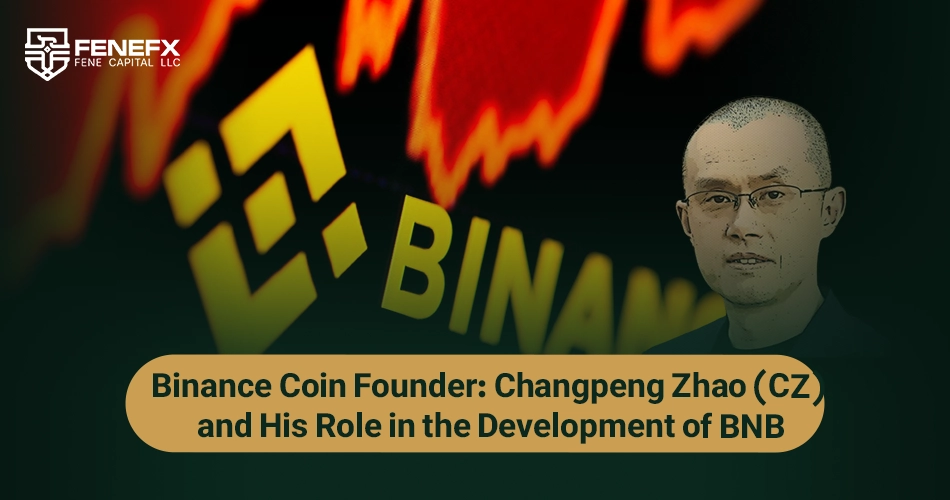
Changpeng Zhao, commonly known as CZ, is one of the most prominent figures in the world of cryptocurrencies. He is the founder and CEO of Binance, which has quickly become the world's largest cryptocurrency exchange. CZ has played a crucial role in the development of Binance Coin (BNB) and its ecosystem.
. CZ's Life and Background
CZ was born in 1977 in Jiangsu, China, and immigrated with his family to Canada during his teenage years. He completed his studies in computer science at McGill University in Canada before working in the finance and technology sectors. One of his significant experiences was working with Blockchain.info as the development manager, which introduced him to the world of cryptocurrencies.
. Establishing Binance and Creating BNB
In 2017, CZ founded Binance, which rapidly grew to become one of the leading players in the cryptocurrency market. One of CZ’s innovative moves was the introduction of Binance Coin (BNB) as the exchange's native token. Initially, BNB was launched on the Ethereum blockchain under the ERC 20 standard, but it was later moved to Binance’s own blockchain.
BNB plays multiple roles within the Binance ecosystem, including reducing transaction fees, participating in investment projects, and facilitating payments. Through smart management of Binance and BNB, CZ has transformed BNB into one of the most valuable digital assets.
. Vision and Management Approach
CZ is known as a pragmatic and innovative leader, constantly seeking new ways to grow and develop the Binance ecosystem. He believes that cryptocurrencies should be used as tools for financial freedom. However, his approach to regulations and collaboration with governments is also noteworthy, as Binance, under his leadership, has made efforts to comply with global financial laws and build public trust.
Challenges and Future
Despite numerous successes, CZ and Binance face challenges such as strict regulations in various countries and criticism surrounding centralization. However, CZ continues to pursue the expansion of Binance services and strengthening BNB’s position in the cryptocurrency market. The future of Binance and BNB largely depends on CZ’s ability to manage these challenges and adapt to market changes.
Comments
I only knew BNB as 'that coin on Binance' — didn't realize it started as an ERC-20 token and has its own chain now. Great primer.
Concise and useful, thanks for this one.
Could you do a piece on the quarterly BNB burns? I've never been sure how much the burn actually supports the price.
Fair summary, but remember BNB carries concentrated exchange risk. Its fate is tied to Binance itself — regulatory news about the exchange hits the coin directly, unlike more decentralized assets.
Been paying my trading fees in BNB since 2021 — the discount genuinely adds up if you trade a lot. That's actually how I first ended up holding it.