




What is buy stop orders?
A buy stop order is one of the fundamental tools in managing buy orders in financial markets. This order is used when a trader wants to buy an asset at a price higher than the current market price, provided that the market reaches that level. Simply put, a buy stop is an order that only gets triggered when the price rises above the current market level and reaches the price specified by the trader. The reason traders use a buy stop is that they anticipate a strong upward trend if the price breaks through a certain resistance level. So instead of buying too early and potentially getting caught in short-term fluctuations, they prefer to enter the market only when the price has confirmed its upward movement. This order is widely used in trend-based trading strategies, particularly when the trader intends to benefit from breakouts. For this reason, the buy stop is not merely an entry tool,it’s also considered a confirmation tool for trend continuation.
How Buy Stop Orders Are Executed on Trading Platforms
The functionality of a buy stop order in trading platforms is based on a conditional mechanism. In this type of order, the trader specifies a price higher than the current market level. As long as the price hasn't reached that level, no trade is executed. But once the market hits or surpasses the specified price, the order is automatically triggered and the buy position is executed instantly.
For example, if the current price of a currency pair is 1.1000 and technical analysis suggests that an upward trend will form if the price rises above 1.1050, the trader can place a buy stop order at 1.1050. In this scenario, the trader only enters the market if the price breaks above this resistance.
In platforms like MetaTrader, placing this order is done through the order window. You simply set the order type to “Buy Stop” and enter your desired entry price. You can also set a take profit and stop loss alongside this order, which greatly helps in risk management.
How Buy Stop Orders Are Used in Real Market Scenarios
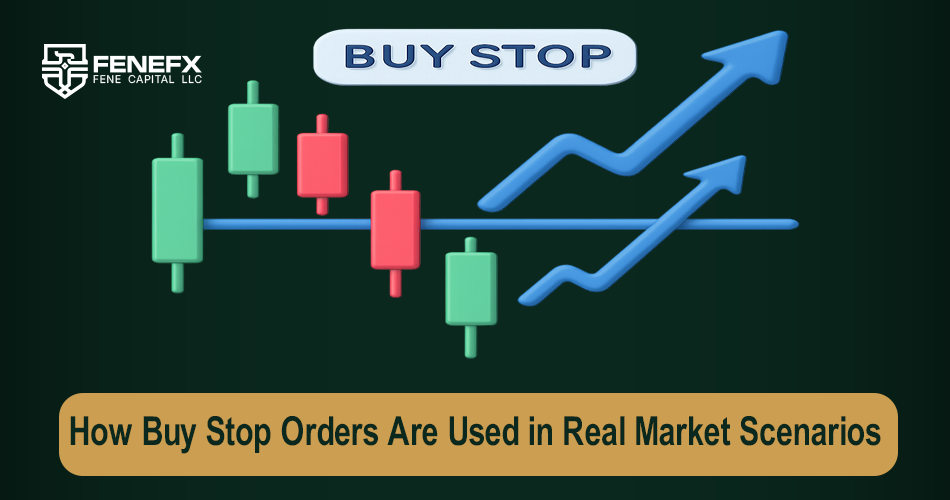
In practice, traders use buy stop orders as a smart way to enter the market especially when they want to avoid getting involved in temporary or deceptive fluctuations. One of the most common uses of a buy stop is during the breakout of key resistance levels or major price ceilings on the chart.
Imagine gold is fluctuating around $1950 and your technical analysis indicates that if the price breaks above $1960, there's a high chance it will continue rising to $1980. In this case, instead of buying at the current price, you place a buy stop at $1960, so you only enter the trade if the market begins the upward move you anticipated.
This order is also useful in news-based trading. For example, if an interest rate announcement is expected that could cause a sudden jump in a currency's price, a buy stop can be a way to enter the market quickly after the direction is confirmed. In such cases, the buy stop lets the trader observe the market’s reaction and only enter if the price movement aligns with their analysis.
Buy Stop vs. Buy Limit: Which One Should You Use?
One of the most common questions among traders is the difference between buy stop and buy limit orders. Both are used to enter long positions, but their structure and logic are entirely different.
A buy limit order is used when a trader wants to purchase an asset at a price lower than the current market price. In other words, the trader expects a temporary decline in price, followed by a rebound. This order is mainly used in reversal-based strategies and assumes that a drop in price offers a good entry opportunity.
In contrast, a buy stop order is ideal when the trader expects the price to continue rising, but doesn’t want to enter before the resistance is broken. It’s a suitable tool for trend-based entries because it links entry to actual price movement and only activates if the trend is confirmed.
Choosing between these two orders depends on the trader’s analysis. If your analysis is based on a bounce from support, a buy limit is the better choice. But if you're looking to enter after a resistance breakout and confirmation of a trend, a buy stop is the more logical option.
When Is It More Reasonable to Use a Buy Stop Order?
Understanding the right time to use a buy stop order is especially important for traders looking to enter during the continuation of an upward move. A buy stop is essentially a conditional entry tool, it means the trader will only enter the market if an upward trend has formed and the price has broken through a key resistance.
The best time to use a buy stop is when the market is on the verge of breaking a critical level. This could be a technical resistance, a previous high, or even a psychologically significant price zone. In such cases, instead of entering directly, the trader places a buy stop slightly above this level, ensuring that the market has confirmed the breakout before entering.
Buy stop orders are also logical choices in markets that react sharply to economic news such as Forex or gold. After positive data is released, for instance, a buy stop allows the trader to wait and see how the market responds, only entering if the move aligns with the anticipated direction.
In strategies such as breakout trading or news trading, using a buy stop is not just reasonable, it’s essential. This type of order lets traders enter only after the right conditions have been confirmed, reducing the risk of early or misinformed entries.
Key Considerations When Setting a Buy Stop Order
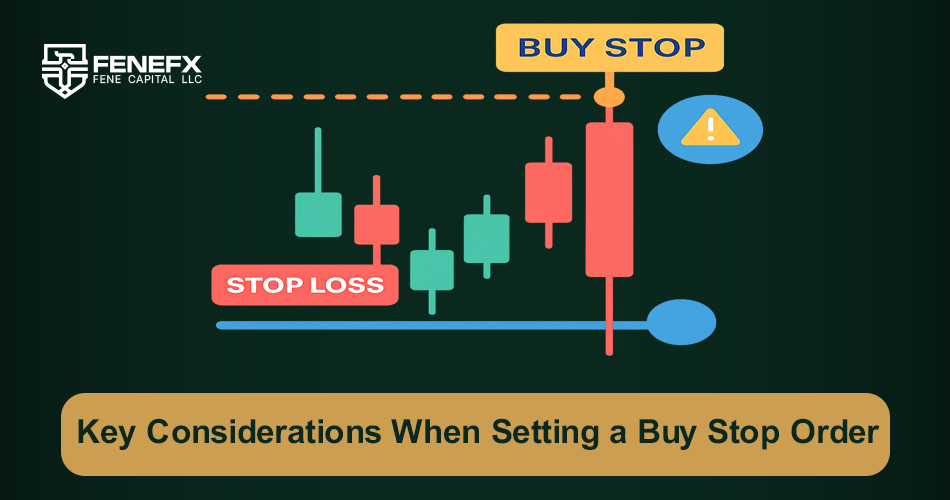
Using a buy stop order effectively goes beyond understanding its definition, correct configuration of the order is crucial for successful trading. Here are several key factors to keep in mind when placing a buy stop:
A Reasonable Distance from Resistance
A common mistake is placing the buy stop exactly at the resistance level. If the price only touches that level and then pulls back, the trade will quickly move into loss. It's better to place the buy stop slightly above the resistance to confirm the breakout.
Setting a Stop Loss
You should never enter a trade without a stop loss. For buy stop orders, it's usually wise to place the stop loss below the same resistance level the market is expected to break. That way, if the breakout turns out to be fake, the trader incurs only a limited and controlled loss.
Be Aware of Slippage
In volatile markets or during important news releases, the actual execution price may differ from the one you set. This slippage can lead to unexpected losses. When selecting your entry level, always consider the possibility of slippage.
Avoid Placing Buy Stop and Buy Limit Near the Same Level
Using both orders too close together can lead to confusion and uncoordinated trades. Each order is designed for a specific market condition, and using them together often disrupts strategy consistency.
Common Mistakes When Using Buy Stop Orders and How to Avoid Them
Buy stop orders may seem simple, but mistakes in using them can lead to losses or missed opportunities. Recognizing these mistakes helps traders act more professionally:
Entering Before a Confirmed Breakout
Many traders place buy stops exactly at the resistance level, triggering the order as soon as the price touches it. This increases the risk of entering during fake breakouts or temporary pullbacks. The solution is straightforward: place the entry slightly above the resistance zone.
Ignoring Market Context
If the market is ranging or lacking clear direction, using a buy stop can result in poor entries. It's better to assess the broader structure trend, volume, prior levels before placing the order.
Not Aligning with a Strategy
Some traders use buy stop orders just because others recommend them, without aligning them to their own trading approach. This leads to inconsistent and potentially harmful entries. The order must be used within the framework of a specific, well-defined strategy.
Failing to Set Take Profit or Stop Loss
Placing a buy stop without defining your exit points is a recipe for uncertainty. If the market reverses, the trader may hesitate or exit poorly. Always plan both your loss limits and profit targets in advance.
The Role of Technical Analysis and Trading Strategy in Buy Stop Success
No order guarantees success on its own, it must operate within a solid analytical and strategic framework. The buy stop order is no exception. Technical analysis plays a vital role in determining where to place the buy stop and how reliable the entry point is.
Using tools such as resistance zones, continuation patterns, moving averages, or price action can help traders pinpoint ideal entry points. If the market is about to break a historical high or cross a key technical level, technical analysis will clearly indicate that a buy stop may be the right tool to use.
At the same time, the trading strategy is what determines the context of the buy stop. Traders who follow breakout strategies often use the buy stop as their main entry mechanism. In contrast, reversal traders rarely use it and prefer buy limit orders instead.
The synergy between technical analysis, market structure awareness, risk management, and proper timing forms the foundation for effective buy stop usage. The more professionally this synergy is built and aligned with the trader's personality and method, the more effective the results will be.
The Impact of Trader Psychology on Using Buy Stop Orders
One often overlooked but critical factor in trading performance is the trader’s mental and emotional state when using conditional orders like the buy stop. Unlike market orders that are executed on the spot, a buy stop requires patience, trust in one’s analysis, and the ability to accept uncertainty.
Traders who act out of fear of missing out (FOMO) often avoid using buy stop orders. Instead, they may rush into a trade without confirmation, leading to premature entries. However, a buy stop is specifically designed to allow thoughtful entry detached from the noise and emotion of immediate price action. Proper use requires mental discipline, pre-planned setups, and strict adherence to one’s strategy.
On the other hand, some traders become anxious or doubtful when their buy stop doesn’t trigger and the market moves without them. This can lead to impulsive decisions, such as manually entering the market without proper signals. These reactions often undermine the original analysis and risk management plan. In such cases, developing psychological resilience and practicing acceptance of different market scenarios can help a trader stay grounded and focused.
Ultimately, using a buy stop effectively is not just about technical skill, it also requires psychological maturity. The ability to wait for confirmation, manage expectations, and avoid emotional overreactions is key to using this order type successfully.
The Role of Buy Stop Orders in Capital Management and Account Growth
A buy stop order is more than just a conditional entry tool, it plays an important role in capital management strategies as well. Many professional traders use buy stops to scale into positions or add to their trades only if the trend continues.
For example, imagine a trader enters a position with 2% of their capital and plans to add more if the price breaks through a specific level. A buy stop can be set to automatically trigger this additional entry only after confirmation, allowing the trader to participate in stronger moves without exposing too much risk upfront.
In accounts focused on consistent and sustainable growth, buy stop orders can help ensure that capital is only deployed when conditions are validated. This filtering mechanism eliminates emotional or speculative entries, allowing capital to be invested where probability and momentum are aligned.
Combined with tools like ATR, moving averages, or Fibonacci levels, the buy stop becomes a dynamic part of account growth strategies. Especially in prop firm accounts or risk-controlled investment structures, this type of order plays a key role in balancing opportunity and protection.
Comments
Clean explanation, thumbs up from me.
Decent intro. One caveat — buy stops parked right above round numbers get eaten by false breakouts constantly. Either add a buffer or wait for a close above the level.
How far above resistance should the buy stop actually go? A pip? Ten? Would love a follow-up on pending order placement.
I use buy stops all the time since I can't watch charts during work hours. Set it above resistance in the morning, check at lunch. Changed my trading life honestly.
Wait, so buy stop goes ABOVE the current price? That's the bit that always confused me and the breakout example explained it perfectly. Thanks a lot.