

What is the Silver Symbol in Forex and the Best Time to Trade Silver
The silver symbol in Forex is represented by XAG/USD. In this symbol, XAG stands for silver and USD is the US dollar. This means that when you trade XAG/USD, you are essentially buying and selling the price of one ounce of silver in terms of the US dollar.
Silver trading in Forex is conducted through CFD (Contract for Difference) contracts. In CFD trading, you do not actually own the silver; instead, you speculate on its price movements. This type of trading allows you to profit from both rising and falling silver prices without physically buying it.
Compared to gold (XAU/USD), silver has higher volatility and is generally more attractive to traders with a higher risk appetite. Additionally, because each ounce of silver is cheaper than gold, it is considered a suitable option for smaller accounts.
The Importance of Silver Trading in the Forex Market
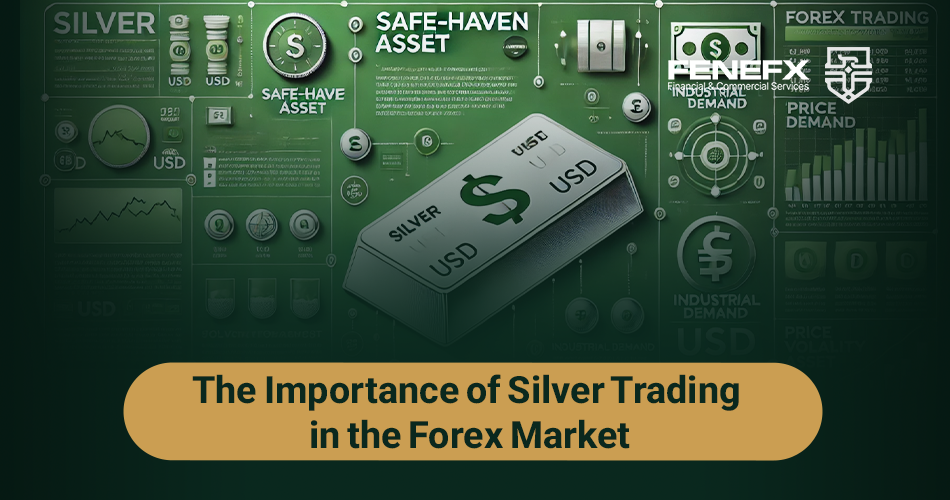
Silver is one of the most popular trading instruments in the precious metals market. Its importance lies in its unique combination of industrial usage and investment value.
The Industrial Role of Silver and Its Connection to the Real Economy
Unlike gold, which is mostly seen as a store of value, silver has many industrial applications. It is used in the electronics industry, solar energy, electric vehicles, and medical equipment. For this reason, the price of silver is closely tied to global economic growth, and changes in its industrial supply and demand have a direct impact on its price.
Advantages of Investing and Trading (Diversification, Liquidity, Leverage)
Silver trading can serve as a tool for portfolio diversification. Since silver is both linked to the real economy and considered a safe haven asset, it can behave differently compared to currencies or stocks.
Also, the high liquidity in the Forex market makes XAG/USD trading smooth, allowing for quick entries and exits. Many brokers offer high leverage for silver trading, which must, of course, be used with caution.
Volatility Differences: Silver vs Gold
Due to its smaller market size and greater industrial usage, silver is more volatile than gold. This volatility offers greater profit opportunities but also requires careful risk management. For this reason, silver is more often favored by active and day traders rather than long term investors.
Factors Affecting the Price of Silver in Forex
Price fluctuations of silver (XAG/USD) in the Forex market result from a combination of fundamental, monetary, and technical factors. Understanding these factors helps traders better interpret price trends.
Fundamental Factors: Industrial Supply and Demand + Economic Data
Unlike gold, silver has widespread industrial applications. The electronics industry, solar panels, automotive manufacturing, and medical equipment make up a large portion of global silver demand. Any increase or decrease in industrial production in countries like China and the United States can directly impact the price of silver.
On the other hand, macroeconomic data such as GDP growth, industrial production index, Purchasing Managers’ Index (PMI), and employment reports also influence silver demand. A decline in industrial production leads to reduced demand for silver and, consequently, a drop in price.
Monetary Factors: Interest Rates, Dollar Index
U.S. monetary policy and the Federal Reserve’s decisions on interest rates play a key role in determining silver prices. When interest rates rise, holding non yielding assets like silver becomes less attractive, and its price tends to fall.
Moreover, silver is priced in U.S. dollars. Therefore, the Dollar Index (DXY) has an inverse relationship with silver prices. When the dollar strengthens, silver becomes more expensive for non U.S. buyers, and demand decreases.
Technical Factors: Trading Volume and Chart Analysis
In addition to fundamental and monetary elements, trader behavior and chart structures play an important role in price movements. Support and resistance levels, candlestick patterns, and trading volume are key elements in the technical analysis of silver.
Psychological levels such as $25 or $30 also act as significant mental barriers. Many silver traders in the Forex market rely on tools like Moving Averages (MA), the Relative Strength Index (RSI), and Bollinger Bands to identify trends and corrections.
Technical and Fundamental Analysis of Silver
Effective analysis of silver in the Forex market requires a combined understanding of technical tools and a thorough examination of fundamental factors. A successful trader is someone who knows when to rely on charts and when to pay special attention to economic data.
Common Chart Tools (Bollinger, RSI, MACD) for XAG
Common tools such as Bollinger Bands are used to assess price volatility and breakout points. When the price of silver moves outside the band, it usually signals a potential reversal or continuation of the trend.
The Relative Strength Index (RSI) is also helpful in identifying overbought or oversold conditions in silver. If RSI is above 70, a price correction is likely; if it is below 30, the price may be ready to rise.
MACD also provides entry and exit signals for silver trades through crossovers between the signal line and the MACD line. These indicators are often used alongside short term and long term moving averages.
Using the Economic Calendar and Correlation with Other Metals
Fundamental analysis for silver includes tracking the U.S. economic calendar, particularly data on inflation, interest rates, industrial production, and trade balance. In addition, studying the correlation between silver and gold (XAU/USD), as well as other industrial metals like copper, can be useful in market analysis.
When silver and gold move in the same direction simultaneously, the trend is more likely to continue. Conversely, divergence between the two may serve as a warning for a potential trend reversal.
The best Trading Times for Silver
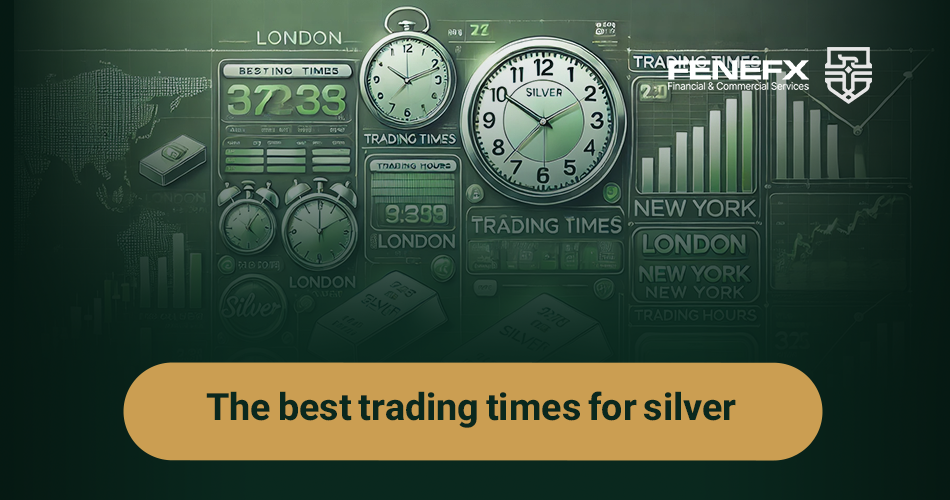
Silver price volatility varies throughout the day, and knowing the right times to enter the market can play a significant role in optimizing trades. The highest trading volume for silver occurs during specific hours that coincide with the activity of major global markets.
Understanding Market Liquidity and Volatility
Like other Forex assets, the silver market operates 24 hours a day, but its liquidity and volatility fluctuate throughout the day. Trading during periods of higher market activity leads to tighter spreads, better order execution, and more opportunities for profit.
London - New York Session Overlap
The best time to trade silver is between 16:30 and 20:30 Tehran time, when the London and New York markets are open simultaneously. This period sees the highest trading volume and volatility. Due to the simultaneous presence of both European and American participants, market reactions to economic news are faster and pricing is more accurate.
Release of Key Economic Data
Silver is highly sensitive to U.S. economic data especially reports such as CPI (Consumer Price Index), NFP (Non Farm Payrolls), and decisions by the Federal Reserve. The release of such data is often accompanied by sharp movements in the price of XAG/USD. Trading during these times requires precise risk management.
Geopolitical Events and Tensions
During times of heightened political or economic tensions (such as wars, sanctions, or financial crises), silver attracts more attention as a safe haven asset. This can cause sudden price spikes. Therefore, traders should also closely monitor the geopolitical calendar.
Gold to silver ratio + trading metric
One of the widely used tools in silver analysis is the Gold/Silver Ratio. When this ratio approaches historical highs or lows, it may signal a potential correction in the price of one of the two metals. Professional traders often use this ratio to identify entry or exit points.
Advantages and Challenges of Trading Silver
Trading silver in the forex market offers specific advantages that make it a popular instrument among traders. However, there are also challenges that must be understood for better risk management.
Advantages - Diversification, Liquidity, Trading Tools
Silver is a suitable instrument for diversifying a trading portfolio, as its behavior sometimes differs from currencies or stocks. High liquidity in the silver market especially in the XAG/USD pair allows traders to enter and exit positions instantly.
Reputable brokers also offer various tools for trading silver, such as leverage, limit orders, stop loss, etc., which enhance control and strategy implementation in trades.
Risks - High Volatility, News Impact, Broker Risk
Unlike gold, silver exhibits greater volatility and sharper price movements, which can lead to high profits or heavy losses. Additionally, the release of economic news especially from the U.S. can have immediate and significant effects on silver prices.
On the other hand, the quality of the broker in executing silver trades is very important. High spreads, requotes, or price slippage can affect a trader’s profit. Therefore, choosing a secure broker with suitable spreads for trading XAG/USD is crucial.
Table of Pros and Cons of Trading Silver in Forex
| Advantages | Disadvantages |
| High liquidity | High volatility and greater risk |
| Suitable instrument for portfolio diversification | High sensitivity to economic news |
| Possibility of using leverage for small trades | Requires precise risk management and adherence to stop loss |
| Easy access via reputable trading platforms | Poor execution by low quality brokers can lead to losses |
| Analytical correlation with gold, the dollar, and industrial metals | Requires simultaneous understanding of technical and fundamental analysis |
How to Choose the Right Broker for Trading Silver?
Choosing the right broker for trading silver (XAG/USD) is one of the most important decisions for any trader. The quality of trade execution, cost levels, asset security, and overall user experience all depend on choosing the right broker. Below are the key criteria for selecting a suitable broker for silver:
Symbol Support + Spread + Order Execution
The first requirement in choosing a broker is support for the XAG/USD symbol or other silver derivatives such as CFDs or physical metal. Check whether the broker offers silver in spot, futures, or CFD form.
A low spread in silver trading is especially important for day traders. Silver inherently has high volatility, and a wide spread can significantly reduce potential profit. Also, the speed and quality of order execution must be free of delays, slippage, or requotes to avoid possible losses.
Regulation, Leverage, Micro Accounts
Always choose a broker that operates under a reputable regulatory authority (such as FCA, ASIC, CySEC). This not only ensures your financial security but also promotes transparency in the broker’s operations.
In silver trading, the leverage ratio is very important. Some brokers offer leverage up to 1:100 for silver, but note that high leverage, alongside the potential for high profit, can also lead to heavy losses.
Having micro or cent accounts is very useful for beginners. These types of accounts allow you to experience the real market with a small investment and practically learn risk management.
Popular Platforms and Mobile Version
Most reputable brokers support global standard platforms like MetaTrader 4 or 5. These platforms enable the execution of various order types, technical analysis, customization tools, and expert advisor programming.
Having a mobile version with a user friendly interface allows you to monitor and manage your trades anytime and anywhere. Choose a broker that offers a mobile app that is smooth, secure, and practical.
Customized Strategies for Trading Silver
To succeed in silver trading, technical knowledge alone is not enough; precise trading strategies, emotional control, and sound risk management are also essential. Below, we explore the most common individual approaches to trading silver.
Day Trading vs. Swing Trading
Short term traders or day traders typically take advantage of silver’s daily volatility for quick profits. In this style, tools such as Bollinger Bands, RSI, and oscillators are used in time frames ranging from 5 minutes to 1 hour. Precise management of entry and exit points and setting a tight stop loss are essential.
In contrast, swing traders focus on larger market movements, and their trades may remain open for several days or even weeks. In this method, fundamental analysis such as examining interest rates, inflation data, and Federal Reserve policies plays a greater role. This style is suitable for those who do not want to follow the chart every moment.
Using Correlation with Gold and the Dollar Index
Silver often has a strong correlation with gold (e.g., if gold rises, silver is likely to rise as well). Additionally, both silver and gold have an inverse relationship with the Dollar Index (DXY) meaning when the U.S. dollar strengthens, silver prices typically drop, and vice versa.
Professional traders monitor these correlations and enter silver trades when, for example, a bullish signal from gold coincides with weakness in the Dollar Index. The Gold/Silver Ratio is also used as an analytical tool to determine optimal entry or exit points.
Professional Risk Management (Stop Loss, Proper Position Sizing)
Due to silver’s sharp price swings, it can generate both high profits and heavy losses. Setting a stop loss in every trade is not optional it is a necessity. This stop should be based on technical analysis, support and resistance zones, and the ATR indicator.
Using appropriate trade size is also critical. Entering trades with large volume under high leverage, without a logical risk management plan, is a direct path to loss. A golden rule for many traders is: risk no more than 1 to 2 percent of total capital on any single trade.
In the end, a successful trader is one who, through a deep understanding of the silver market, analytical tools, and a sustainable and testable strategy, manages their trades effectively. Adapting your strategy to your personality and lifestyle is another key factor for long term success.
Comments
Short, useful, no fluff. The FeneFX blog is quietly becoming my go-to.
I trade silver mostly in the London/NY overlap like you suggested and honestly it's the only window where the moves feel clean.
Fair article, but be warned: silver is much thinner than gold. Slippage during US news can be brutal, size down compared to your XAUUSD positions.
Would love a follow-up on the gold/silver ratio and whether it's actually tradeable or just a chart curiosity.
Finally! I kept typing 'silver' into my platform search and finding nothing. XAG makes so much more sense now, thanks.