
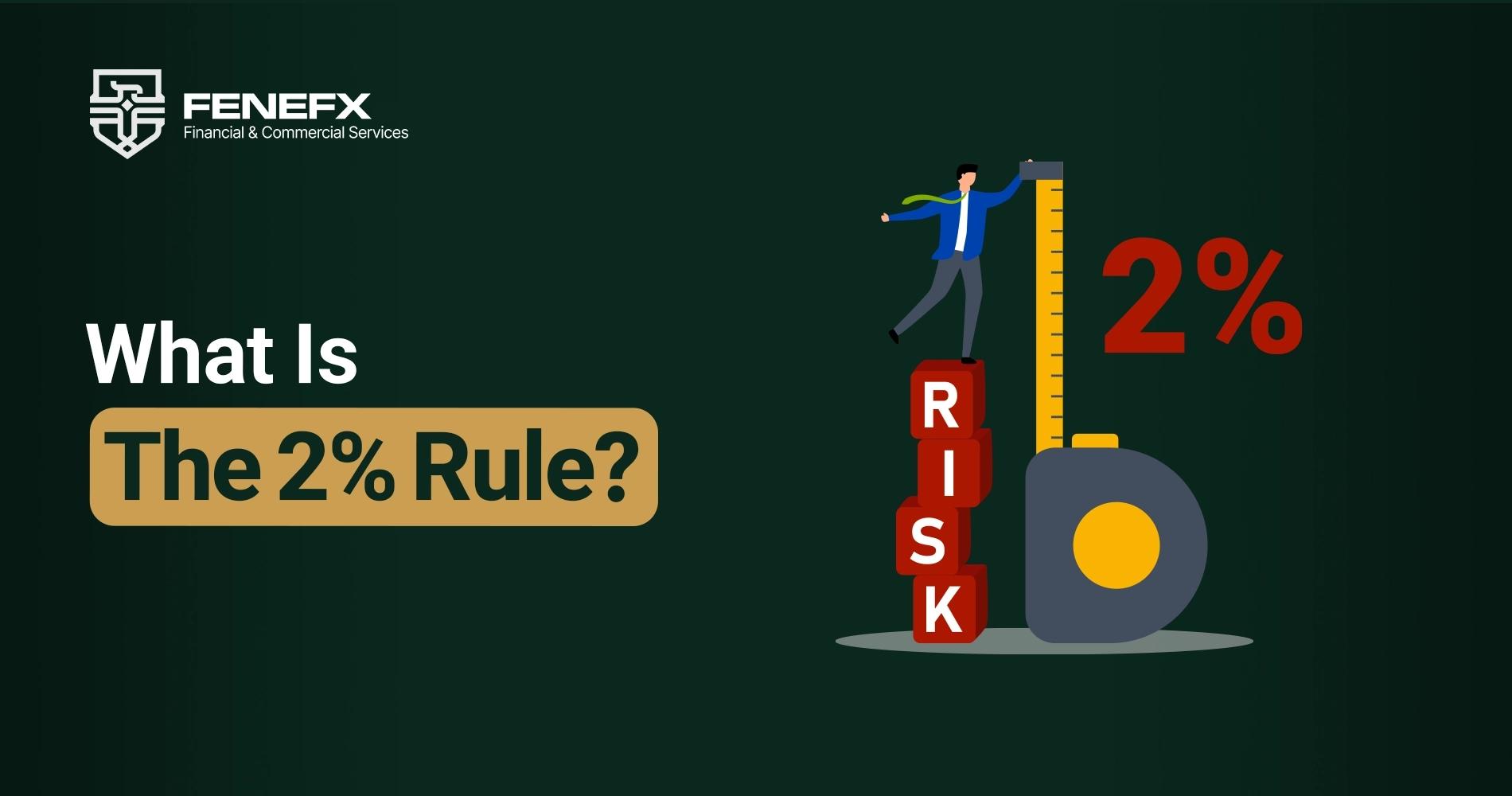
What is the 2% Rule in Trading?
In trading, whether in Forex, stocks, cryptocurrencies, or real estate, there are countless opportunities and challenges. To become a successful trader, one must have knowledge, skills, and an effective trading strategy. One of the most widely recognized strategies among professional traders is the "2% Rule." In this article, we will explore the concept and application of this rule in trading.
What is the 2% Rule?
The2% Ruleis arisk management principlein trading. It states thata trader should never risk more than 2% of their total capital on a single trade. In simple terms, the amount you invest in any one trade should not exceed2% of your total account balance.
Why is the 2% Rule Important?
Financial markets areinherently risky, and even experienced traders can face losses. The2% Rulehelps traders manage risk andavoid significant losses that could jeopardize their entire capital. By limiting the risk per trade to2%, traders ensure that even after multiple consecutive losses, they still havesufficient capital to continue trading.
How to Apply the 2% Rule in Trading?

To use the2% Rule, follow these steps:
- Determine yourtotal trading capital.
- Calculate2% of your capital—this is themaximum amount you should risk on a single trade.
For example, if your total capital is100 million tomans, applying the2% Rulemeans thatthe maximum risk per trade should be 2 million tomans.
It is important to note thatrisk per trade does not necessarily mean the entire investment amountin a trade. Risk is also determined based onyour stop-loss level.
Astop-lossis a price level at which the trade isautomatically closedto prevent further losses. Ensuring thatyour stop-loss is set in a way that keeps your risk per trade within the 2% limitis crucial forlong-term trading success.
Precise Calculation of Trade Volume Using the 2% Rule
So far, we have understood the general concept of the2% Rule. However, the important question ishow can we use this rule to determine the exact trade volume?
To calculatetrade volumeusing the 2% Rule, follow these steps:
1. Determine Total Capital
The first step is to determine yourtotal risk capitalin the market. This amount could be yourentire account balanceor just the portion allocated for trading activities.
2. Calculate Risk per Trade
According to the2% Rule, calculate2% of your total capital. This amount represents themaximum risk you are willing to take on a single trade.
3. Set a Stop-Loss (Risk Management)
As mentioned earlier,trade risk does not necessarily mean your total investment amount. Instead, by setting aproper stop-loss, you can effectivelymanage the risk of each trade.
Astop-lossis a price level at which the tradeautomatically closesto prevent further losses. Therefore, you shouldadjust the 2% risk per trade based on your stop-loss level.
Example Calculation
Let’s assume yourtotal risk capital in the market is 100 million tomans. By applying the2% Rule, the maximum risk per trade is2 million tomans.
Now, if you set yourstop-loss at 5 tomans per unitfor a particular stock, thetrade volumebased on the2% Rulecan be calculated as follows:
Trade Volume = Risk per Trade / Stop-Loss
Trade Volume = 2,000,000 tomans / 5 tomans = 400 units
Thus, in this example, you canbuy up to 400 unitsof that stock.
Keep in mind that this is asimplified example, andtrade volume may vary depending on your trading strategy and market conditions.
Application of the 2% Rule
The2% Rulecan be applied to various types of trades, includingstock markets, Forex (foreign exchange), and futures trading. This rule is particularly beneficial forbeginner traderswho are still learning and gaining experience. By implementing this rule, traders can effectivelycontrol their riskandprevent heavy lossesthat might force them out of the market.
In addition torisk management, the2% Rulehelps traders develop adisciplined trading mindset. When you know thateach trade has a limited risk, you enter the market with more caution and avoidemotional and impulsive decisions.
Advantages and Disadvantages of Using the 2% Rule in Trading
The2% ruleis a key principle inrisk managementthat helps traders preserve their capital and avoid significant losses. However, like any other strategy, this rule also hasboth advantages and disadvantagesthat should be considered.
Advantages
- Reduces overall risk:Limiting risk per trade to2% of total capitalprevents losing the entire account due to consecutive losses.
- Preserves capital for future trades:Even if a trader experiences a few losing trades, they will still haveenough capital to find new opportunities and re-enter the market.
- Encourages disciplined trading:This rule forces traders toplan their trades carefullyand avoidemotional decision-makingbased on fear or greed.
- Reduces trading stress:Knowing that each trade carries a limited risk helpslower anxiety and prevent impulsive decisions.
- Builds confidence:Consistently applying this rule allows traders toapproach the market with greater confidence and make better trading decisions.
Disadvantages
- Limits short-term profit potential:Some traders believe that restricting riskcan reduce profits in high-risk, high-reward trades.
- Lacks flexibility in certain market conditions:In some situations, such aslow volatility or sudden trend reversals, traders may need toadjust their risk percentage.
- Requires a larger account for bigger trades:If the initial capital is small,2% risk per trade may result in a very small position size, limiting potential profits.
- Complexity for beginner traders:Calculating trade size based on the 2% rulemight be challenging for new traderswho are still learning risk management techniques.
Suitability of the 2% Rule for Different Types of Investors
So far, we have discussed the general concept of the2% Rule, how to calculate trade volume using this principle, and its applications. However, one question that may arise is:Is the 2% Rule suitable for all investors?
The2% Ruleis ageneral risk management strategythat can be beneficial for various types of investors. However, the way it is applied may vary depending on an individual’sinvestment conditions and objectives. Let's examine how this rule fits different types of investors:
1. Beginner Traders
The2% Ruleis highly suitable fornew traderswho are just starting to learn about financial markets. By applying this rule, they cansignificantly reduce riskin their initial trades and gain experiencewithout excessive financial stress.
2. Low-Risk Traders
Investors who generally have alow-risk tolerancecan use the2% Ruleas abasic framework for managing risk. In some cases, they may even choose toreduce risk per trade to less than 2%to ensure greater security for their capital.
3. Professional Traders
Althoughprofessional tradersmay use morecomplex risk management strategies, the2% Rulecan still be useful as a supplementary tool. For example, they may apply this rule tomanage risk in swing trades, which have alonger-term nature.
4. Long-Term Investors
Investors who enter the market with along-term perspectiveand intend tohold stocks or other assets for an extended periodmaynot directly apply the 2% Ruleto their trades. However, if theyallocate a portion of their portfolio to short-term trading, they can use this rule tomanage risk in that segment of their investments.
Optimizing and Adjusting the 2% Rule for Better Results

The2% Ruleis a great starting point forrisk management, but this does not mean that itlacks flexibility. You can adjust and optimize this rulebased on your trading strategy and market conditionsto achieve better results. Here are some key ways to refine this rule:
1. Adjusting the Risk Percentage
- Risk tolerance varies from trader to trader.
- Investors with alower risk appetitecanreduce their risk per trade to less than 2%.
- Moreexperienced traders, who usehigh-probability strategies, mayincrease their risk slightly above 2%.
2. Considering Account Size
- The2% Rulegenerally applies to yourtotal risk capital.
- However, traders withlarger trading accountscan apply this rule based onposition sizing, meaning they calculate therisk per position rather than their total capital.
3. Combining with Other Risk Management Tools
The2% Rulecan be used alongside otherrisk management tools, such as:
- Stop Loss– To limit potential losses.
- Take Profit– To secure profits and prevent early exits from winning trades.
This approach helps traderslimit risk while maximizing profits.
Optimizing the2% Rulerequiresexperience and a solid understanding of the market. It is recommended that tradersstart with a lower risk percentageandstrictly follow this rule. As yougain experience and improve your market knowledge, you can graduallyadjust and refine your risk management strategy.
Key Tools for Success in Trading
Mastering the2% Rulealone is not enough to become a successful trader. In this section, we will discuss three other key factors that, when combined with the2% Rule, can significantly improve your performance in financial markets.
1. Setting a Precise and Dynamic Stop Loss
AStop Lossis the price level at which a trade automatically closes to prevent further losses. Setting anappropriate Stop Lossplays a crucial role inrisk managementaccording to the2% Rule. However, this Stop Loss should not bea fixed and static number.
Professional tradersusedynamic Stop Lossesthat adjust according toprice fluctuations and market conditions. For example, you may set yourStop Loss just below a key support levelfor a specific asset. However, if the price suddenly experiences a sharp decline, theStop Loss can be adjusted slightly lowerto preventheavier losses.
Technical analysis toolscan help you determineoptimal and dynamic Stop Loss levels. By learningprice patterns and using technical indicators, you can identifylogical pointsfor setting your Stop Loss.
2. Patience and Discipline in Trading
The world of trading isfast-paced and highly dynamic.Sudden price fluctuationscan trigger emotions and tempt traders toexit trades too early. However, asuccessful tradermustcontrol their emotionsand remain disciplined in following theirtrading strategy.
The2% Ruleallows you to tradewith greater peace of mind, knowing that each trade carries alimited risk. However,patience and disciplineare essential to fully benefit from thisrisk management strategy. Stick to yourtrading planandpredefined Stop Loss, and do not letfear or excitementpush you into makingpremature exits.
3. Enhancing Technical Analysis Skills
Technical analysisis a crucial tool forexamining price trends and predicting potential future price movements. By improving yourtechnical analysis skills, you can identifybetter entry and exit signalsfor your trades.
There are various tools available fortechnical analysis, including:
- Price charts
- Price patterns (Price Action)
- Technical indicators
Mastering these toolsenables you to trade with more confidencewhile reducing therisk of making emotional decisions.
However, it is important to remember thattechnical analysis is not an exact scienceandcannot guarantee future market movements. Nonetheless, bycombining technical analysis with sound risk management (such as the 2% Rule) and maintaining patience and discipline, you can significantlyincrease your chances of success in trading.
Comments
Good rule, though I'd argue 2% is too high for beginners on live accounts. Start at 0.5% until you have a 100-trade track record, then scale up.
I used to risk 10% per trade thinking I was being bold. Three losers in a row cured me. Been at 1-2% ever since and still recovering mentally, lol.
Risk management always sounded abstract until this. The worked example with position sizing finally made the math click for me, thanks.
How does the 2% rule interact with prop firm daily drawdown limits? Feels like you'd need to risk way less than 2% there. Article idea?
Simple rule, well explained. More people need this.