




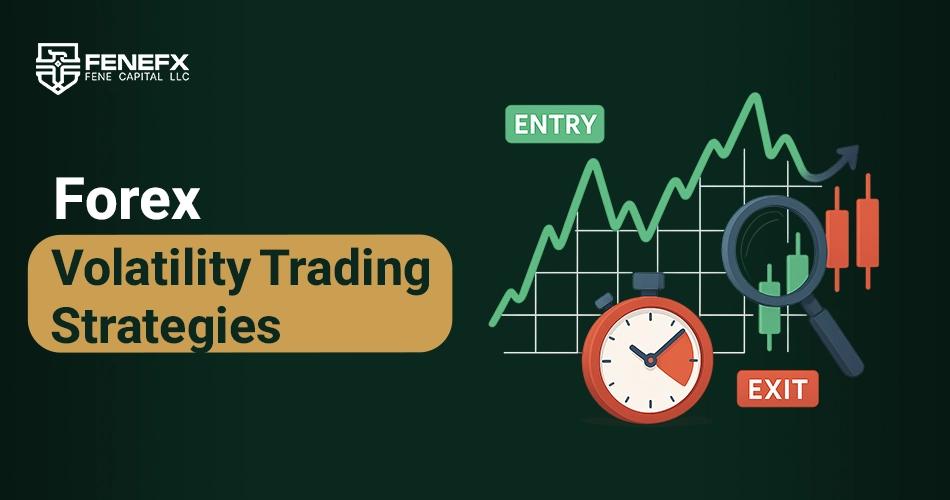
Volatility trading methods in Forex
Volatility trading in Forex refers to capitalizing on short term price fluctuations in currencies through methods such as scalping, day trading, swing trading, price action, technical analysis, and even news based trading. In fact, there is no “one absolute best method” for Volatility trading; rather, the choice of strategy entirely depends on the trader's available time, individual personality, and risk tolerance. For example, those with quick decision making abilities may succeed with scalping and news driven trades, while more patient traders benefit more from day trading or swing trading. What is fundamentally important is the simultaneous use of risk management (stop loss, proper position sizing, emotional control) and the smart combination of tools and methods, so that the trader can ultimately develop a stable and profitable system for Volatility trading in Forex.
What Is Volatility trading in Forex and What Is Its Role?
Volatility trading in Forex is one of the most popular methods among traders, aiming to profit from short to medium term price fluctuations. In reality, Forex is a market with a daily trading volume of several trillion dollars, and this high volume creates rapid movements and numerous opportunities for buying and selling. For this reason, Volatility trading in Forex is not only recognized as a trading method but has also become a lifestyle and core strategy for many traders.
Definition ofVolatility tradingand Its Difference from Long Term Investing
Volatility trading, simply put, refers to the attempt to capture small to medium price movements within limited timeframes. While a long term investor may hold a stock or currency for months or even years, a Volatility trader prefers to capitalize on short term price changes, and their trades usually remain open from a few minutes to a few days. This distinction leads Volatility traders to focus more on technical tools, short term news, and market behavior analysis, whereas long term investors concentrate on fundamentals and macroeconomic conditions.
Why Are Traders Interested inVolatility trading? (Advantages and Limitations)
One of the main reasons traders are drawn to Volatility trading is the speed of results. Unlike long term investments, this method allows individuals to earn significant profits within a short period of time. Additionally, the high flexibility of the Forex market and its 24 hour accessibility provide numerous opportunities for Volatility traders. However, Volatility trading comes with its own set of limitations and risks. High psychological pressure, the need for precise risk management, and the possibility of capital loss due to rapid decisions are among the major challenges of this approach. Therefore, although Volatility trading can be profitable, it requires substantial experience, focus, and discipline.
Scalping
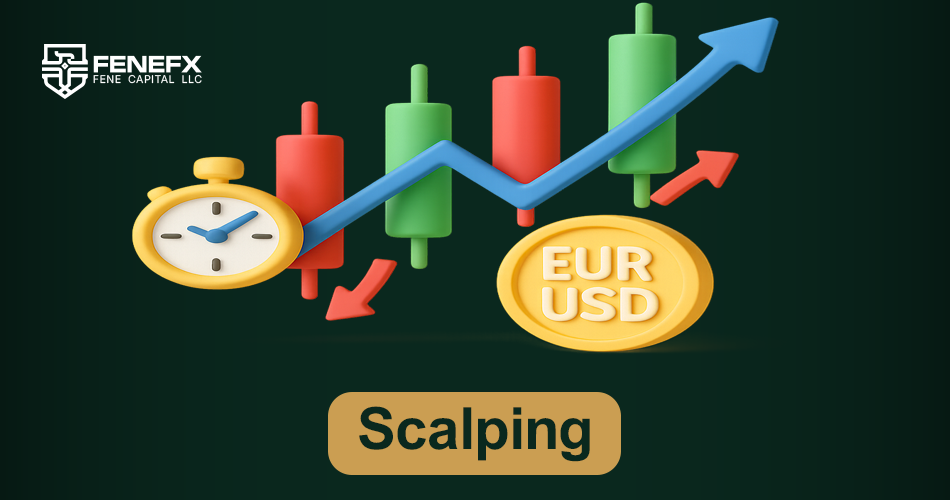
Scalping is one of the most well known Volatility trading methods in Forex, based on executing a large number of trades within very short timeframes. Scalper traders, instead of waiting for large price movements, aim to collect small profits from minor fluctuations of just a few pips. This strategy requires high precision, quick decision making, and access to a broker with low spreads and fast order execution.
The Concept of Scalping and Its Execution in Short Timeframes
Scalping is typically carried out on timeframes such as 1 minute or 5 minute charts. The trader’s goal is to profit from small price movements, for example, 5 to 10 pips. To implement this method, the trader must continuously monitor the market and make decisions in real time. Therefore, scalping is more suitable for those who have enough time to watch the market closely and can respond quickly.
Common Tools and Indicators in Scalping
Scalpers typically use indicators such as Moving Averages (MA), Relative Strength Index (RSI), Bollinger Bands, and MACD to identify more precise entry and exit points. Additionally, price action and candlestick analysis play a significant role in scalpers’ decision making processes. One of the key requirements in scalping is using brokers that offer the lowest spreads and the highest execution speed, as any delay or added cost can eliminate the small profit margin of a trade.
Strengths and Weaknesses of Scalping for Traders
Among the main strengths of scalping are the ability to generate quick profits, access to numerous trading opportunities, and reduced exposure to long term market volatility. On the other hand, the primary weaknesses of scalping include high levels of stress, the need for constant focus, and dependency on fast infrastructure. Furthermore, the risk to reward ratio in scalping is generally lower, and a single mistake can wipe out several previous small gains.
Swing Trading
Swing trading is another popular method of trading in Forex that, unlike scalping, focuses on medium term timeframes. In this approach, the trader typically keeps positions open for several days or even weeks, aiming to capture larger price movements compared to scalping.
Definition of Swing Trading and Its Difference from Scalping
Swing trading essentially refers to trading based on market price waves. Unlike scalping, which targets very small movements, swing traders seek stronger trends and fluctuations spanning several dozen or even hundreds of pips. This distinction means fewer trades, but with higher potential profit per trade. Moreover, swing trading requires more in depth technical analysis and, in some cases, consideration of fundamental factors.
Entry and Exit Strategies in Swing Trading
To enter swing trades, traders commonly use tools such as trendlines, price patterns, support and resistance levels, and indicators like Fibonacci retracements. Swing traders often wait for price breakouts or reversals to initiate positions. For exits, stop loss and take profit levels are typically set based on medium term price fluctuations. This method allows traders to monitor the market with more composure compared to scalping and to make more rational decisions.
Advantages and Disadvantages of Swing Trading for Traders
Swing trading offers advantages such as less need for constant presence at the chart, the potential for higher profit from each trade, and suitability for those with limited time. On the other hand, it carries a higher risk of encountering unexpected events overnight or during market holidays. Additionally, the need to withstand temporary fluctuations and to have sufficient capital to maintain open positions are other challenges of this approach.
Day Trading as a Type of Daily Volatility trading
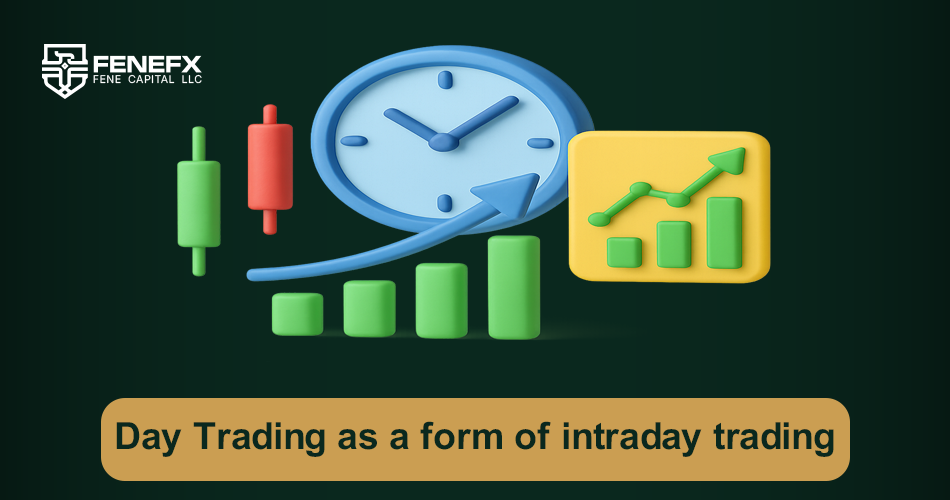
Day trading is one of the most common methods of Volatility trading in the forex market, in which the trader opens and closes all positions within the same day and does not carry any positions overnight. The main goal of day traders is to profit from daily price movements; therefore, they must be able to identify opportunities within short timeframes such as 15 minute, one hour, and at most four hour charts. This style is suitable for traders who can dedicate a significant portion of their day to monitoring the market and can handle the high psychological pressure of fast paced trading.
Definition of Day Trading and Its Trading Structure
The trading structure of day traders is usually based on precise daily planning. Before the trading day begins, the trader identifies key support and resistance levels, economic news, and the probable direction of the market. Then, throughout the day, they make entry and exit decisions based on price movements. Unlike scalpers who trade within a few minutes, day traders have slightly longer opportunities and often hold positions from several minutes to several hours. This method requires discipline, quick decision making, and strict adherence to risk management.
Common Tools and Strategies Used by Day Traders
Day traders typically use a combination of short term technical and fundamental analysis. Indicators such as the Moving Average are used to identify the daily trend, RSI to detect overbought or oversold conditions, and MACD to confirm the trend are commonly employed. Additionally, tools like Fibonacci retracement and pivot points are useful for determining key entry and exit levels. Many day traders also incorporate daily economic news such as the release of NFP data or central bank decisions into their strategies, as these events can cause significant intraday volatility.
Advantages and Disadvantages of Day Trading Compared to Scalping and Swing Trading
The main advantage of day trading compared to scalping is the reduced need for extremely high execution speed. The trader has more time for analysis and decision making. On the other hand, unlike swing trading, day traders do not face the risk of holding positions overnight and are not exposed to price gaps or sudden market changes during off market hours. However, the constant psychological pressure and the need for high concentration throughout the day are among the drawbacks of this method. Additionally, since trades typically last no more than a few hours, the potential profit is generally lower compared to swing trading.
Price Action in Volatility trading
Price action is one of the most popular Volatility trading methods, which operates without the need for complex indicators and relies solely on price movements and candlestick patterns. This approach helps traders read the actual behavior of the market and enter or exit trades in a timely manner without the lag of indicators. Due to its simplicity, speed, and flexibility, price action holds a special place among short term strategies in Volatility trading
The Role of Price Action in Identifying Entry and Exit Points
Using price action, traders can identify more precise entry and exit points compared to other methods. For example, spotting a pin bar pattern near a resistance level can be a strong signal to enter a sell trade. Or, the breakdown of a support level with a strong bearish candle can indicate the continuation of a downward trend. This method encourages traders to focus on reading the raw language of the market and to concentrate on supply and demand behavior, rather than relying on external tools.
Candlestick Patterns and Support/Resistance Levels
Price action relies heavily on candlestick patterns such as pin bars, inside bars, engulfing patterns, and doji candles. These patterns, when combined with key support and resistance levels, create strong analytical power. For example, when a bullish engulfing pattern forms at a support level, the likelihood of a price reversal and the beginning of an upward trend increases. Combining these patterns with supply and demand zones helps traders enter trades with greater confidence.
Advantages and Challenges of Price Action forVolatilityTraders
The advantage of price action lies in its simplicity and lack of lag, as the trader works directly with raw price data. This method is also applicable across all markets and timeframes. However, its major challenge is the need for extensive experience and practice to accurately interpret the patterns. Many beginners may misread the signals or make decisions driven by market emotions. Additionally, price action alone can sometimes generate conflicting signals, so it is best used alongside strong risk management or complementary tools.
Volatility trading with Indicators
Indicators are among the most commonly used tools in Volatility trading strategies. They help traders better identify trends, momentum, and specific market conditions. Many traders use indicators as filters or confirmations for trade entries and exits. Although indicators are based on historical data and inherently have some lag, their proper combination can form a powerful strategy.
Using RSI, MACD, and Bollinger Bands
RSI (Relative Strength Index) is one of the most popular indicators, used to identify overbought and oversold conditions. For example, when the RSI drops below 30, it may signal a potential buying opportunity. MACD is another tool used to detect trend and momentum, with the crossover of its lines often considered a sign of trend reversal. Bollinger Bands are used to identify volatility zones and price pressure; when the price touches the upper band, a potential downward reversal may occur, and vice versa.
Combining Indicators for Stronger Signals
Professional traders usually do not rely on a single indicator, as each tool has its own limitations. Combining indicators can enhance the accuracy of analysis. For instance, if RSI indicates oversold conditions and MACD simultaneously gives a bullish signal, the probability of a price reversal increases. Additionally, using Bollinger Bands to confirm breakout or reversal points can add more strength to the strategy.
Limitations of Relying on Indicators inVolatility trading
Despite the advantages of indicators, it’s important to remember that these tools always operate with a delay and merely reflect past data. In the highly volatile forex market, indicators may generate many false signals, potentially leading to trader confusion. Therefore, it is recommended that indicators be used only as supplementary tools rather than the primary method. Combining them with price action or short term fundamental analysis can create a more reliable strategy.
Volatility trading with News and Short Term Fundamental Analysis
In the forex market, many sharp and sudden price movements are driven by the release of major economic news and shifts in political or geopolitical conditions. Professional Volatility traders know how to take advantage of these short term opportunities and generate profits from news driven moves through precise risk management. Unlike long term fundamental analysis, short term fundamental analysis focuses on the market's immediate reaction to news and data releases.
Reacting to Economic Data Releases (NFP, Interest Rates, etc.)
Some of the most critical moments for Volatility traders are the release of data such as the U.S. Non Farm Payrolls (NFP) report, changes in interest rates by the Federal Reserve or the European Central Bank, and inflation figures like the Consumer Price Index (CPI). These events often cause significant volatility within seconds in currency pairs such as EUR/USD or GBP/USD. A successful Volatility trader must anticipate various scenarios before the news is released and precisely set stop loss and take profit levels. Quick reactions to the initial candlestick formations and trading volume during these moments are crucial, as entering too late can expose the trader to a high risk of price reversal.
News Based Strategies and Decision Making Speed
In news driven Volatility trading, strategies such as Breakout Trading (trading based on the breakout of support or resistance levels) and the Fade Strategy (trading against the market’s initial reaction) are commonly used. In a Breakout strategy, the trader enters a position upon observing high volume and a rapid break of a key level. In contrast, the Fade strategy is applied when the market’s initial reaction is overly exaggerated, and a reversal is likely. In both approaches, decision making speed and the use of fast trading platforms are critical. Many professional traders rely on real time news feeds and economic calendars to prepare in advance.
Risks and Opportunities of News Based Trading
News based trading can generate significant profits in a short period, but it also carries high risk. Widening spreads during news releases, price slippage, and even server disconnections can lead to unexpected losses. On the other hand, when traders are well prepared, such news events can provide some of the best opportunities for earning returns several times higher than in normal market conditions. The key to success in this approach lies in managing higher unpredictability and applying stronger risk management compared to other strategies.
Risk Management in Volatility trading
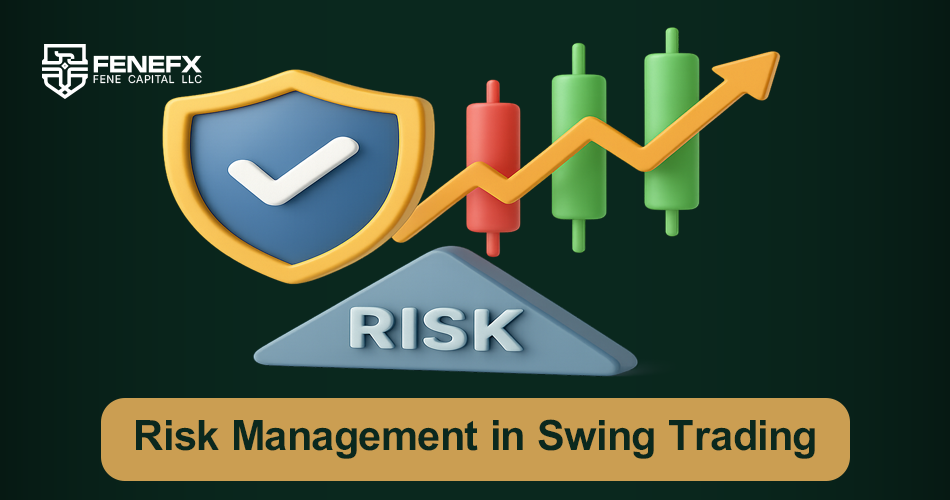
Risk management is the cornerstone of survival in Volatility trading. While many traders focus solely on finding the best entry signals, it is ultimately risk management that determines whether a trader will succeed in the long run.
The Importance of Stop Loss and Take Profit in Short Term Trades
One of the key tools for Volatility traders is the use of Stop Loss and Take Profit orders. In the highly volatile forex market, even the best analyses can be invalidated in an instant. Setting a logical stop loss protects the trader from unbearable losses. On the other hand, having a predetermined take profit level helps prevent greed and allows the trader to secure small but consistent gains. Professional Volatility traders typically follow a minimum risk to reward ratio of 1:2.
Position Sizing and Leverage Management inVolatility trading
Using leverage in forex can multiply profits, but it equally increases risk. Successful Volatility traders never commit their entire capital to a single trade; instead, they allocate only a portion of their funds with an appropriate level of leverage. Choosing the right position size based on total capital, risk tolerance, and stop loss distance is one of the most critical principles of risk management.
Emotional Control and Trader Psychology
Volatility trading, due to the high number of trades and the fast pace of decision making, is heavily influenced by the trader's emotions. Fear of missing out (FOMO), greed for bigger profits, and stress from consecutive losses can lead to overtrading and poor decision making. A professional Volatility trader always operates based on a pre-defined trading plan and remains committed to their rules even during critical moments. A calm mind and strong personal discipline are the most important traits for managing trading psychology in Volatility trading
Who Is the Best Volatility Trading Method Suitable For?
Choosing the best Volatility trading method depends on the trader’s personality, the amount of time they can dedicate, and their level of experience. No single strategy is universally the best each one is better suited to a specific type of trader.
Choosing a Method Based on Available Time and Trader Personality
If someone has plenty of free time to monitor the market continuously, methods like scalping or day trading may be suitable. However, if a trader only has a few hours a day, swing trading or price action could be a better fit. Personality also plays a key role risk tolerant individuals are often drawn to scalping, while more patient traders tend to prefer swing trading.
Combining Strategies for Consistent Results
Many professional traders don’t rely on a single fixed method; instead, they combine strategies. For example, a trader may use a news based approach during major economic releases but rely on price action and indicators under normal market conditions. This flexibility allows the trader to remain profitable across different market scenarios while reducing overall risk.
Comments
Really practical stuff, more of this please.
Thanks for this! I never understood why my trades kept getting stopped out during London open. The part about session volatility explained exactly what I was doing wrong.
One thing I'd add: volatility isn't your friend by default. High ATR also means wider stops, so position sizing has to shrink accordingly. Lots of newer traders miss that trade-off.
Would love a follow-up on which pairs suit volatility strategies best. Is GBPJPY still the classic choice or are there better options now?
I blew a small account scalping news spikes before I understood volatility cycles. Now I check ATR before every session and it's changed everything for me.