




The Impact of OPEC on Crude Oil Prices
OPEC (Organization of the Petroleum Exporting Countries) was established in 1960 in Baghdad by five founding countries: Iran, Iraq, Kuwait, Saudi Arabia, and Venezuela. The primary goal of this organization was to coordinate oil policies among its members and ensure fair and stable prices for both producing and consuming countries. The organization also sought to protect the collective interests of its members against pressures from consuming countries, especially Western economic powers that controlled the oil market. In its early decades, OPEC played an important role in stabilizing the oil market and was able to keep prices at desired levels by regulating oil supply. However, over time, various factors such as global economic developments, technological growth, and increased oil production from unconventional sources, including U.S. shale, created challenges for the organization.
Formation of OPEC+ and Its Reasons
In 2016, OPEC formed an alliance with 10 non member countries under the name OPEC+ to increase its influence in the global oil market. This alliance includes countries such as Russia, Kazakhstan, Azerbaijan, Mexico, and Oman. The purpose of forming OPEC+ was to strengthen the members’ ability to regulate the oil market and counter independent producers who could lower prices by increasing production.
Russia, as one of the world’s largest oil producers, plays a key role in this alliance. Cooperation between OPEC, Russia, and other non member countries has increased this group’s share of global oil production to about 41 percent and enhanced its impact on oil prices.
OPEC and OPEC+: Structure and Members
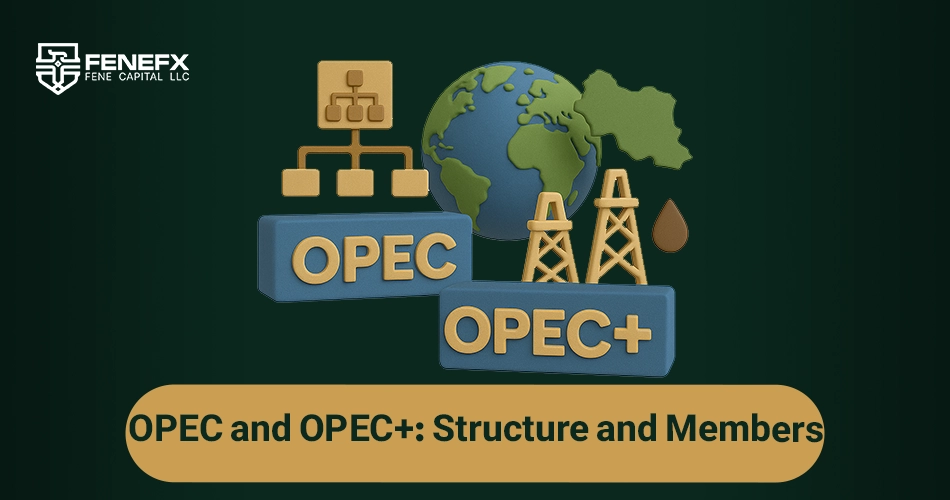
OPEC currently includes 12 members from the Middle East, Africa, and South America, namely: Saudi Arabia, Iran, Iraq, Kuwait, United Arab Emirates, Algeria, Libya, Nigeria, Congo, Equatorial Guinea, Gabon, and Venezuela. These countries account for more than 30 percent of global oil production.
On the other hand, OPEC+ includes 10 non OPEC member countries, which are: Russia, Kazakhstan, Azerbaijan, Bahrain, Brunei, Malaysia, Mexico, Oman, Sudan, and South Sudan. These countries cooperate with OPEC to regulate the global oil market by reducing or increasing production.
The Role of Saudi Arabia and Russia as Leaders of OPEC+
Saudi Arabia and Russia, as the largest oil producers in OPEC+, play a central role in the decision making of this alliance. Saudi Arabia, producing about 9 million barrels per day, and Russia, producing 9.3 million barrels per day, are considered the main leaders of this group.
Saudi Arabia, given its vast oil resources and historical role in OPEC, seeks to guide the policies of the organization. Russia, as a key producer, plays an important role in balancing the decisions of OPEC+. However, disagreements between these two countries, such as those in 2020, sometimes complicate OPEC+ decision making.
Membership Changes in OPEC (Exit of Countries Such as Qatar and Ecuador)
In recent years, some countries have left OPEC for various reasons. Qatar exited in 2019, Ecuador in 2020, and Angola in 2024. The reasons for these departures include disputes over production quotas, focus on gas resources (such as Qatar), and financial pressures. These changes reflect the challenges OPEC faces in maintaining unity among its members.
Goals of OPEC and OPEC+: Regulating Supply and Demand
The primary goal of OPEC and OPEC+ is to regulate oil supply in the global market. This regulation aims to maintain a balance between supply and demand to prevent severe price fluctuations. When global demand decreases, OPEC+ reduces production to avoid a sharp drop in prices. Conversely, when demand rises, production is increased to prevent excessive price surges.
The Impact of OPEC’s Share of Global Oil Production and Reserves on Its Power
OPEC controls about 40 percent of global oil production and over 80 percent of the world’s proven oil reserves. This situation enables the organization’s decisions to have a direct and significant effect on global oil prices. Additionally, OPEC members account for a substantial share of global oil exports (around 49 percent), which enhances the organization’s economic and political power.
How Does OPEC Affect Global Oil Prices?
OPEC and OPEC+ control oil prices by adjusting the production levels of their members. When oil prices fall due to supply exceeding demand, the organization cuts production to balance the market. Similarly, if prices rise excessively, production is increased to prevent negative effects on global demand.
The Impact of OPEC Decisions on Global Prices
OPEC’s decisions typically have an immediate effect on global oil prices. For example, the production cuts in 2022 aimed at countering reduced demand during an economic downturn led to a temporary rise in oil prices. However, these impacts are usually influenced in the long term by market forces such as independent producers or changes in demand.
Examples of the Impact of Production Cuts on Increasing Oil Prices
A prominent example of OPEC’s impact on oil prices was the 1973 oil crisis, when Arab OPEC members banned oil exports to the United States and some other countries. This action caused a sharp increase in oil prices and an energy crisis in the West.
Another example is the historic production cut in 2020 due to the COVID 19 pandemic. OPEC+ reduced its output by 10 million barrels per day to prevent a severe price collapse. This production cut had a positive effect on stabilizing prices, although the market ultimately remained under pressure due to reduced demand.
Historical Developments and Economic Impacts
The 1973 oil crisis, the COVID 19 pandemic, and the Ukraine war are among the most significant historical events that have highlighted the role of OPEC and OPEC+ in the global oil market. These events had widespread economic effects such as rising oil prices, global inflation, and shifts in energy policies of consuming countries.
The 1973 Oil Crisis and the Impact of OPEC’s Oil Embargo
The 1973 oil crisis was one of the most important milestones in OPEC’s history, with profound effects on the global economy. During the Arab Israeli war, several Arab OPEC member countries decided to halt oil exports to the United States and other countries supporting Israel.
This embargo caused a sharp increase in oil prices, pushing the price per barrel from $3 to $12. This action not only led to a fuel crisis in the United States and many Western countries but also exerted severe economic pressure and intensified global inflation. This event demonstrated that OPEC could use oil as a powerful political and economic tool.
OPEC Decisions During the COVID 19 Pandemic
In 2020, with the emergence of the COVID 19 pandemic and a steep decline in global oil demand, OPEC and its allies (OPEC+) faced one of their greatest challenges. In March 2020, global oil demand dropped sharply due to lockdowns and halted economic activities, causing oil prices to fall to their lowest levels in two decades.
To prevent further price collapse, OPEC+ decided to reduce production by a historic 10 million barrels per day, equivalent to 10 percent of global production. This production cut, the largest in OPEC’s history, helped partially restore relative stability to the oil market, though prices remained under pressure due to reduced demand.
The Impact of the Ukraine War on OPEC+ Policies
The Russian military invasion of Ukraine in 2022 had significant effects on the global oil market and OPEC+ policies. The war raised concerns about supply disruptions, as Russia is one of the world’s largest oil producers and exporters.
In response to Western sanctions against Russia, OPEC+, led by Saudi Arabia and Russia, decided to reduce production to support prices. While these decisions helped maintain the member countries’ revenues, they also created tensions with the United States and other Western countries, which called for increased production to lower prices.
Challenges Facing OPEC in the Oil Market
OPEC faces increasing challenges such as intense competition from U.S. shale oil, political pressures from consuming countries, and the global transition toward clean energy. These factors have weakened OPEC’s traditional power to regulate the oil market and cast uncertainty over its future role.
Competition with U.S. Shale Oil Producers
The rise of the shale oil industry in the United States has been one of OPEC’s main challenges in recent decades. Shale oil producers, leveraging advanced technologies, have rapidly increased their output and captured a significant share of the global oil market.
Unlike OPEC, shale producers are not bound by organizational restrictions or international commitments and can quickly adjust their production according to market demand. This flexibility challenges OPEC’s ability to control supply and oil prices, creating intense competition.
Political Pressures from Countries Like the United States
OPEC and OPEC+ have repeatedly faced direct political pressures from the United States and other countries. Especially during periods of rising oil prices that negatively affect consuming economies, governments urge OPEC to increase production.
For example, in 2022, following OPEC+’s announcement of production cuts, the Biden administration called the decision “short sighted” and sought to pressure OPEC through diplomatic negotiations. These pressures highlight the significant impact of OPEC’s policies on the global economy.
The Impact of the Shift Toward Clean Energy on OPEC’s Dominance
Another major challenge for OPEC is the global move toward renewable energy and reducing reliance on fossil fuels. Many countries have implemented policies to cut oil and gas consumption, which could reduce long term demand for oil.
This shift poses a serious threat, especially for OPEC member countries whose economies heavily depend on oil revenues. Consequently, OPEC must develop long term strategies to address these changes in order to maintain its influence.
The Role of OPEC in the Global Economy
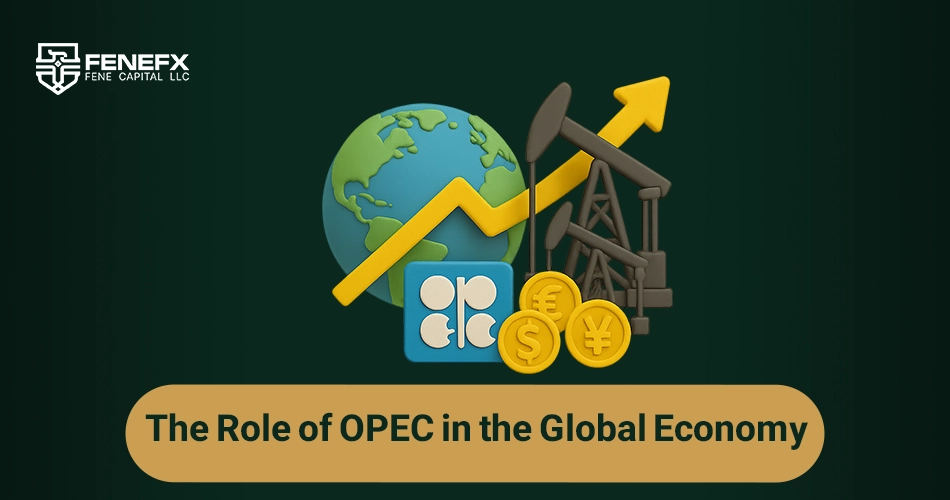
By influencing oil supply, OPEC plays a crucial role in determining the global price of this vital resource and, consequently, in shaping inflation and economic growth. The organization’s decisions directly affect the economies of both oil exporting and oil importing countries.
The Impact of Oil Prices on Global Inflation
Oil is a fundamental commodity in the global economy, and fluctuations in its price can have widespread effects on inflation. Rising oil prices directly increase transportation, production, and energy costs, which ultimately lead to a general rise in price levels. For example, during the 1973 oil crisis, the surge in oil prices was one of the main drivers of global inflation.
Economic Consequences of Rising or Falling Oil Prices for Countries
For oil exporting countries, such as OPEC members, higher oil prices mean increased foreign revenues and a strengthened economy. However, for oil importing countries, these price hikes result in higher production costs, trade deficits, and slower economic growth. Conversely, falling oil prices can reduce costs and stimulate economic growth in consumer countries but create challenges like revenue loss and budgetary problems for producing countries.
The Relationship Between Oil Prices and PPI and CPI Indicators
Changes in oil prices have a direct impact on the Producer Price Index (PPI) and the Consumer Price Index (CPI). Rising oil prices increase the PPI because producers face higher costs for energy and raw materials.
These increased costs can then be passed on to the CPI, affecting the prices of consumer goods and services. However, in recent decades, the U.S. economy and many developed countries have reduced their dependence on oil, which has lessened the impact of oil prices on the CPI.
Internal Disputes and Coordination Challenges Among Members
One of OPEC’s perennial issues is the disputes among members over production quotas. Member countries usually desire to receive larger production quotas to increase their oil revenues. These disputes can make internal coordination within OPEC difficult and sometimes lead to a reduced impact in the global market.
Impact of Disputes Between Saudi Arabia and Russia on OPEC+ Policies
Saudi Arabia and Russia, as two major oil producers in OPEC+, play a key role. However, disputes between these two countries, especially when their national interests conflict with OPEC+ policies, can lead to instability in OPEC+ decision making. For example, in 2020, disagreement between these two countries over production cuts caused Saudi Arabia to increase its output, resulting in severe volatility in the oil market.
Debate Over Production Capacity and Quota Allocation
Another challenge for OPEC is determining the actual production capacity of its members. Member countries often report their production capacity higher than reality to receive larger production quotas. This issue can lead to reduced transparency and increased complexity in OPEC’s decision making processes.
Comments
Held a WTI long through an OPEC meeting once thinking I was clever. Never again — the spread widened so much my stop got jumped.
One nuance: markets often price in OPEC cuts weeks before the meeting, so the actual announcement can turn into a 'sell the news' moment. The surprise matters more than the decision itself.
Didn't realize production quotas were the main lever. I always assumed it was just sanctions and wars moving oil, thanks for clearing that up.
Really clear breakdown, enjoyed this one.
Good overview. Any chance of a piece on how OPEC+ decisions spill over into CAD pairs? That's where I actually trade the news.