




What is the interest rate?
The interest rate is essentially the cost of borrowing money. When you take out a loan from a bank or another financial institution, in addition to the principal amount of the loan, you are required to pay an additional amount called interest. This cost is the fee charged by the bank for providing you with its money. In other words, interest is the profit earned from depositing money in a bank. When you deposit your money in a bank, the bank lends these funds to individuals or businesses that need loans and, in return, charges them interest. A portion of this interest is then paid to you as the depositor.
What are the different types of interest rates?
Fixed Interest Rate
A fixed interest rate is a constant percentage that remains unchanged over the duration of the loan or investment. This means the borrower or investor knows exactly how much interest they will pay or receive from the beginning, without worrying about economic changes or market fluctuations.
Floating Interest Rate
A floating interest rate is a percentage that may change over time and is usually adjusted based on economic indicators such as the inflation rate or the central bank’s interest rate. This type of interest aligns the cost or return of a loan with market conditions and may increase or decrease accordingly.
Simple Interest Rate
A simple interest rate is applied only to the principal amount of the loan or investment. The interest calculated in each period is based solely on the original principal, without adding any previously accrued interest.
Compound Interest Rate
A compound interest rate includes not only the principal amount but also the interest from previous periods. This means that the interest for each period is calculated based on the principal plus the accumulated interest from earlier periods. As a result, compound interest leads to faster growth of investments or higher costs for loans.
How is the interest rate determined?
Interest rates are usually set by major financial institutions such as the central bank, which decide the appropriate rate based on economic conditions, inflation, economic growth, and national monetary policies.
Central Bank
The central bank of each country is primarily responsible for determining the interest rate. This financial institution increases or decreases interest rates according to the country’s economic conditions. The central bank’s main goal is to control inflation and ensure economic stability.
In addition to the central bank, financial markets and the supply and demand for money also influence interest rate determination. When the demand for loans rises, banks usually increase interest rates to manage higher risk and ensure appropriate returns. Conversely, in times of low demand or when the economy needs stimulation, interest rates are lowered to encourage borrowing.
Role of Banks and Financial Institutions
Each bank or financial institution sets its own interest rate based on the borrower's risk profile, the repayment period, and market conditions. For example, if an individual or company has good credit, they are usually offered a lower interest rate. The loan term and amount also influence the interest rate.
Why do interest rates change?
Monetary Policies
The central bank uses monetary policy tools, such as adjusting the base interest rate, to control inflation and steer economic growth. When the central bank raises interest rates, the goal is typically to curb inflation and slow down economic expansion. On the other hand, reducing interest rates is intended to stimulate the economy and encourage borrowing.
Economic Conditions
The overall state of the economy such as production growth, unemployment rates, and the health of financial markets plays a major role in interest rate changes. During economic booms, interest rates usually rise because the demand for money increases and banks adopt stricter lending conditions. In times of recession, interest rates are lowered to motivate businesses and consumers to invest and spend.
Inflation Expectations
When people and investors expect prices to rise in the future (inflation), interest rates tend to increase to preserve the real value of money over time. Higher interest rates compensate for the anticipated loss in purchasing power.
Money Supply and Demand
The money supplied by banks and the demand from borrowers directly affect interest rates. If the demand for money is high but the supply is low, interest rates rise. If the demand is low and the supply is high, interest rates decrease.
Risk and Uncertainty
The greater the risk of loan default, the higher the interest rate banks charge to compensate for that risk. Also, in situations of economic or political uncertainty, interest rates may experience greater volatility.
External Factors
Domestic interest rates may also be influenced by external factors such as global interest rates, economic developments in major countries, currency exchange rate fluctuations, and the monetary policies of other nations. These factors can put pressure on domestic interest rates..
Interest Rates and Their Impact on the Forex Market
When a country’s interest rate increases, investment in that country typically becomes more attractive, as the returns on investments rise. This increased return potential draws in foreign investors and brings capital into the country. As a result, demand for that country’s currency rises, leading to an increase in its value in the forex market.
Low Interest Rates and devaluation of the Currency
Conversely, if the interest rate decreases, investors may move their money to markets with higher interest rates. This capital outflow leads to reduced demand and a decline in the value of the country’s currency. Therefore, changes in interest rates can cause significant fluctuations in currency pairs.
Impact of Interest Rate Expectations in the Forex Market
The forex market is highly sensitive to expectations about future interest rate changes. Even before the central bank actually adjusts the rate, rumors and forecasts can influence prices. Analysts and traders closely follow economic news and data in an effort to predict possible rate moves and adjust their trading positions accordingly.
The Role of Interest Rate Differentials Between Countries
The relative interest rate, or the difference in interest rates between two countries, is also highly significant. This interest rate differential is one of the key factors influencing the direction of currency pairs. For example, if U.S. interest rates are higher than those in Europe, the U.S. dollar usually strengthens against the euro, as investors move their funds toward higher returns.
Shifts in Investment Strategies with Rising Interest Rates
An increase in interest rates is one of the most significant economic events that can swiftly influence investment strategies. As a financial market participant or analyst, paying attention to how investors react to such changes is essential for predicting market trends and making informed decisions.
Tendency Toward Fixed Income Assets
When interest rates rise, investments in assets such as bonds, bank deposits, and other fixed income instruments become more attractive. This is because their returns increase and the risk to return ratio improves. As a result, many investors shift toward these types of assets to benefit from guaranteed income.
Decline in the Appeal of Stocks and Riskier Assets
Rising interest rates typically increase the cost of financing for companies and may reduce their profit growth. At the same time, as the returns on low risk investments increase, stocks and high risk assets become relatively less appealing. For this reason, during periods of interest rate hikes, many investors reallocate a portion of their portfolios away from equities and toward lower risk investments.
Currency Market Changes
An increase in interest rates typically strengthens the currency of the respective country. This is particularly important for investors active in global markets, as they may need to adjust their investment strategies in response to currency fluctuations.
The Importance of Diversification and Risk Management
In a rising interest rate environment, portfolio diversification becomes increasingly important. Professional investors often combine different asset classes to mitigate the risks associated with interest rate changes while maintaining desirable returns.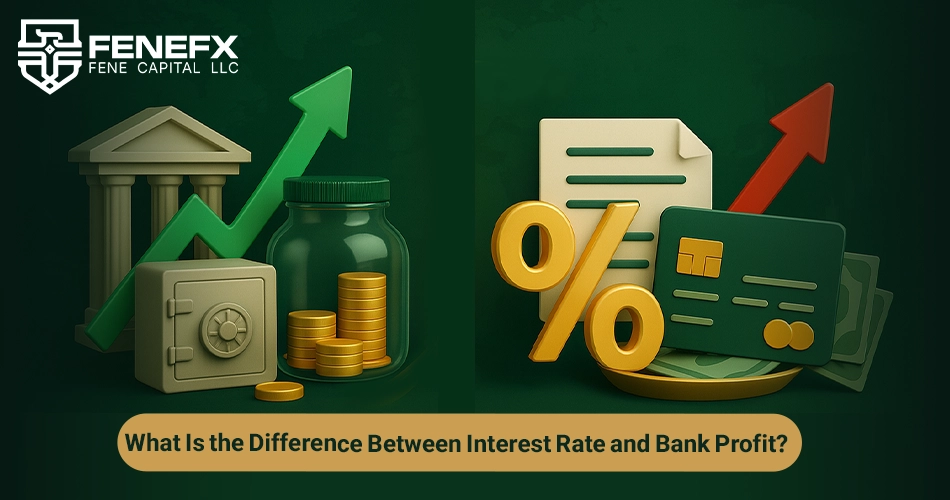
What Is the Difference Between Interest Rate and Bank Profit?
Interest rate and bank profit are two closely related concepts frequently encountered in financial and banking contexts, but they have key differences that are essential to understand for sound financial decision making.
Bank Profit (Deposit Rate) refers to the income an individual or business earns by depositing money in a bank. This return is paid as a percentage of the deposited amount and is considered a form of low risk investment return.
Interest Rate, on the other hand, is the percentage that indicates how much must be paid in addition to the principal amount when borrowing money. This rate is broadly used across various financial markets and can apply to bank loans, bonds, investments, and other forms of financing.
Key Differences
• Direction of Payment: The interest rate generally refers to the cost that a borrower must pay, whereas bank profit (deposit rate) is usually the income that a depositor receives.
• Application: The interest rate applies to various types of loans and financial instruments, while bank profit is specific to bank deposits.
• Market Level: The interest rate is a broader and more general concept used across different financial markets, while bank profit is limited to banking services.
Overall Impact of Interest Rates
The interest rate is one of the most important monetary policy tools used by central banks to control inflation and stimulate or slow down economic growth. As the cost borrowers must pay to use borrowed money, the interest rate directly influences the demand for money and, consequently, economic activity.
In this article, we explore the overall impact of interest rates on the economy, inflation, the stock market, currency values, and gold.
Impact of Interest Rates on the Economy
In general, an increase in interest rates leads to a decrease in demand for money and loans. This, in turn, reduces investment and slows down economic growth. On the other hand, a decrease in interest rates boosts demand for money and credit, which can stimulate economic activity.
Key Points on the Impact of Interest Rates on the Economy:
• Lower Interest Rates:
• Encourage investment and increase production
• Boost demand for goods and services
• Promote job creation
• Higher Interest Rates:
• Reduce demand for investment and production
• Decrease demand for goods and services
• Help lower inflation
The Relationship Between Inflation and Interest Rates
One of the main responsibilities of central banks is to control inflation. Raising interest rates can help reduce inflation by decreasing the demand for money and loans. Conversely, lowering interest rates can lead to increased inflation by stimulating borrowing and spending.
Key Points on the Inflation Interest Rate Relationship:
• Higher Interest Rates:
• Reduce demand for money and loans
• Decrease inflation
• Lower Interest Rates:
• Increase demand for money and loans
• Raise inflation
Impact of Interest Rates on the Stock Market
Interest rates are a significant factor in determining stock prices. Generally, higher interest rates lead to lower stock prices, as investors shift from equities to higher yielding bank deposits. Conversely, lower interest rates can support higher stock prices by making equities more attractive relative to low yield savings.
Key Points on the Impact of Interest Rates on Stocks:
• Higher Interest Rates:
• Decrease corporate profitability
• Lower stock prices
• Lower Interest Rates:
• Increase corporate profitability
• Raise stock prices
Impact of Interest Rates on Currency Values
Interest rates are one of the key factors influencing currency values in the foreign exchange market. Generally, an increase in a country's interest rate leads to higher demand for that country's currency, which supports its value. Conversely, a decrease in interest rates may lead to a drop in currency value.
Key Points on the Impact of Interest Rates on Currencies:
• Interest Rate Increase
• Higher demand for the currency
• Appreciation of the currency
• Interest Rate Decrease:
• Lower demand for the currency
• Depreciation of the currency
Frequently Asked Questions (FAQ) About Interest Rates and Related Concepts
What is an interest rate and why is it important?
An interest rate is the percentage paid on top of the principal when borrowing money. It represents the cost of using money and plays a key role in balancing the supply and demand for funds in financial markets, directly affecting economic decisions by individuals and businesses.
What is the difference between a fixed and a floating interest rate?
A fixed interest rate remains unchanged throughout the term of a loan or investment, giving the borrower certainty about payment amounts. A floating interest rate, however, can rise or fall depending on market indicators or economic conditions.
What’s the difference between simple and compound interest?
Simple interest is calculated only on the principal amount, while compound interest includes both the principal and accumulated interest from previous periods, leading to faster growth over time.
What factors influence the determination of interest rates?
Interest rates are affected by many factors including central bank monetary policy, overall economic conditions, inflation expectations, money supply and demand, credit risk, and global economic trends.
Why do interest rates change?
Interest rates change in response to inflation, economic growth, and monetary policy goals. For example, central banks raise rates to control inflation and lower them to stimulate the economy.
How are interest rates related to the forex market?
Interest rates directly impact a currency’s value. Higher rates attract investors, boosting currency strength, while lower rates can reduce currency attractiveness and value.
How do interest rate changes affect investment strategies?
When interest rates rise, investors tend to shift toward lower risk, fixed income assets like bonds and away from stocks and higher risk assets. Rate changes also lead to volatility in currency markets.
What is the difference between interest rate and bank profit (deposit return)?
The interest rate is what a borrower pays to use money, while bank profit (or deposit interest) is the return a depositor earns by keeping money in a bank. Interest rate is a broader concept that includes various types of loans, while bank profit applies only to bank deposits.
Comments
Textbook topic explained like a human wrote it. Nice.
Small addition: markets move on expectations, not the number itself. A hike that's fully priced in can still drop the currency. Watch the forward guidance more than the decision.
Could you follow up on how to trade the actual rate announcement days? Enter before, after, or just stay flat?
Held a JPY short through a surprise BoJ decision once. One press conference erased three weeks of gains. Been reading everything on rates since — this one's a solid start.
Interest rates always sounded like something only economists cared about. The link to currency strength finally clicked reading this, especially the carry trade example. Thanks!