
What is Live Trading in Forex?
Today, the Forex market has become one of the most attractive yet complex investment fields. Live trading in this market offers an opportunity for individuals to profit from global currency fluctuations. However, success in this domain requires comprehensive knowledge, skills, and preparation. Contrary to popular belief, live Forex trading is not a quick way to accumulate wealth but rather a professional path requiring continuous learning, consistent practice, and precise risk management.
The Concept of Live Trading in the Forex Market: An Overview
Live trading in the Forex market refers to conducting real financial market transactions using actual capital. Unlike demo accounts that use virtual money for simulated experiences, live trading directly exposes your capital to profits or losses. This type of trading provides a real-time opportunity to leverage market volatility and benefit from price changes.
Live trading demands awareness of actual market conditions, data analysis, and quick decision-making. It involves all the real market elements, such as spreads, commissions, momentary price fluctuations, and potential execution delays, which can significantly affect trader performance.
As a result, live trading requires traders to be both analytically skilled and psychologically prepared, as mismanagement of emotions like fear and greed can lead to significant financial losses.
This form of trading is not only important for generating income but also for enhancing trading experience and knowledge. Unlike the simulated environment of demo accounts, live trading allows traders to engage directly with market realities and hone their skills in real-world conditions.
Why is Live Forex Trading Important?
The Forex market, as the largest financial market in the world, offers endless opportunities for generating income. Live trading is essential in this market because it allows traders to capitalize on these opportunities in real time. Unlike other trading methods, live trading enables you to react instantly to market changes and use those fluctuations to make a profit.
One of the key reasons for the popularity of live Forex trading is itsflexibility. The market operates 24/7, allowing you to trade at any time of the day or night. Additionally, Forex is not limited to a single asset; you can trade various currencies, gold, oil, or global indices. This diversity enables traders to implement different strategies based on their goals and trading styles.
Live Forex trading also allows traders to engage directly with global economic and political realities. Significant events such as interest rate changes, economic reports, and geopolitical developments can have profound effects on the market. In live trading, traders must have the ability to analyze and predict the impact of these events on the market, which requires greater skill and experience.
Another reason for the importance of live trading is the opportunity for practical experience. Learning through direct experience has a more significant impact on improving trading skills. Moreover, using advanced tools such as trading platforms, indicators, and charts in a real environment helps you gain a deeper understanding of how the market works.
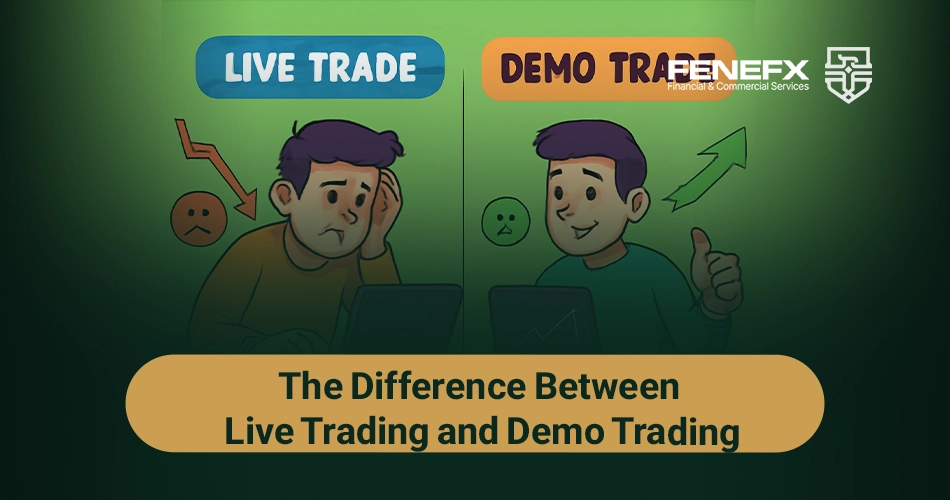
The Difference Between Live Trading and Demo Trading
1. Features and Objectives of Demo and Live Accounts
Demo and live accounts are both designed for trading in the Forex market, but their objectives and features are entirely different. Demo accounts are primarily used for education and practice. In these accounts, traders can test their strategies using virtual money without the risk of losing real capital. Demo accounts serve as a useful tool for newcomers to familiarize themselves with market mechanics and learn how to use trading platforms.
In contrast, live accounts are designed for real trading. In these accounts, you enter the market with actual capital, and all your decisions lead to real profits or losses. The primary purpose of live accounts is to generate real income and experience the market under authentic conditions. These accounts require complete preparedness in terms of technical, strategic, and psychological readiness.
2. Differences in Risk and Market Conditions
One of the biggest differences between demo and live trading lies in the level of risk. In demo accounts, there is no financial risk, and traders can test their strategies without worrying about losing money. In live trading, however, real risks are involved, and every incorrect decision can lead to financial loss. This makes risk management far more critical in live trading.
Additionally, the market conditions in demo and live accounts differ. In demo accounts, market conditions are usually simulated and free from issues such as slippage or delays in order execution. In live accounts, however, you face real market conditions. Rapid price changes, variable spreads, and issues such as delays in order execution can significantly impact your performance.
3. The Role of Emotions in Demo and Live Trading
Another fundamental difference between demo and live trading is the role of emotions. In demo accounts, since no real money is at stake, traders are less affected by emotions such as fear of loss or greed for profit. This risk-free environment allows traders to focus on learning and implementing strategies easily.
In live trading, emotions play a far more significant role. When your real capital is at stake, controlling emotions becomes challenging. Fear of loss may cause you to make overly cautious decisions, while greed can push you into taking excessive risks. Managing emotions and maintaining personal discipline are key skills for success in live trading.
4. Advantages and Limitations of Both Types of Trading
Demo accounts allow traders to strengthen their skills without any financial risk. These accounts are highly useful for testing new strategies, learning how to use trading tools, and familiarizing yourself with the market. However, the primary limitation of demo accounts is that they cannot prepare traders for the psychological pressure and real market conditions experienced in live trading.
On the other hand, live trading offers unique benefits. These trades not only allow you to generate real income but also provide valuable experience in dealing with actual market conditions. However, live trading comes with financial risk and requires complete psychological and technical readiness.
Live trading in the Forex market is an opportunity to experience the real world of trading and generate actual income. While demo accounts are an excellent educational tool for beginners, only live trading allows you to test your skills under real market conditions. However, success in live trading requires risk management, thorough market analysis, and emotional control. Therefore, sufficient preparation and practice in demo accounts can play a vital role in achieving success in live trading.
How to Prepare for Live Forex Trading
Preparing for live trading in Forex requires a combination of knowledge, skills, and practice. Entering the real market without adequate preparation can lead to significant financial losses. In this section, the initial steps, the importance of practicing in demo accounts, and key tips for making informed decisions when transitioning to live trading are discussed.
Steps to Prepare for Live Trading
- Learn the basics of the Forex market: Before anything else, you must have a solid understanding of Forex fundamentals, including concepts such as currency pairs, pips, spreads, leverage, and market analysis methods (technical and fundamental). Reading books, attending courses, and using online resources can help.
- Choose a reliable trading platform: The trading platform is your main tool for accessing the market. Platforms like MetaTrader 4 or 5 are popular due to their user-friendly interface and advanced analytical tools. Ensure you are familiar with all the features of your chosen platform before starting live trading.
- Develop a trading plan: Having a clear trading plan that includes goals, strategies, and risk management principles is essential. This plan should guide you on when to enter and exit trades and how to manage your capital effectively.
The Importance of Practicing on a Demo Account Before Entering Live Trading
Demo accounts are an essential tool for both beginner and even professional traders. These accounts allow you to test various strategies and become familiar with the overall market conditions without risking real capital.
1. Familiarity with Market Functionality:
A demo account lets you understand how prices move, spreads, and potential delays in execution. This experience prepares you for the actual market conditions.
2. Strategy Practice:
Before entering live trading, you must test your trading strategies in a demo account and identify their strengths and weaknesses. This practice helps you refine your strategy.
3. Building Confidence:
Beginner traders often experience fear and uncertainty. Practicing on a demo account can give you the confidence needed to transition into live trading.
Key Tips for Making Informed Decisions
1. Market Analysis:
Before every trade, you should thoroughly analyze the market. Using technical analysis (such as support and resistance levels, price patterns, and indicators) and fundamental analysis (such as economic news and reports) can optimize your decision-making process.
2. Emotion Management:
Decisions in trading should not be influenced by emotions like fear or greed. Maintaining calmness and adhering to your trading plan are crucial for success in this field.
3. Start with Small Capital:
It is advisable to start live trading with a small amount of capital to reduce psychological pressure and risk. As you gain experience and confidence, you can gradually increase the capital you commit to the market.
How to Choose the Right Live Trading Account
One of the most important steps in entering live trading is choosing the right trading account. This decision should be based on your needs, trading style, and the amount of capital you have.
Types of Live Trading Accounts and Their Applications
- Standard Account:This account type is suitable for experienced traders with sufficient capital. In this account, trade volumes are larger, and profits or losses can increase significantly.
- Mini Account:Designed for traders who want to enter the market with lower risk. The trade volume is smaller, making it a popular choice for beginners.
- Micro Account:The best option for beginners and those entering the market with a small amount of capital. In this account, trade volumes are minimal, and financial risk is greatly reduced.
Tips for Choosing a Reliable and Secure Broker
- Regulation and Legal Oversight:Choose a broker that is regulated by reputable financial organizations. These regulations ensure the security of your capital against fraud or misuse.
- Customer Support and Services:A broker that provides strong customer support will be highly effective in resolving any potential issues.
- Trading Platform Features:Ensure that your broker offers tools and features like advanced charts, real-time news, and access to various markets.
Reviewing Costs and Fees
When selecting a broker, consider costs such as spreads, commissions, and withdrawal or deposit fees. Choosing a broker with transparent and fair pricing can significantly impact your profitability.
Challenges and Risks of Live Trading in Forex

Live trading in Forex comes with challenges and risks that traders must consider.
The Role of Emotions in Trading Decisions
Emotions such as fear and greed can negatively impact trading decisions. Fear may cause you to miss profitable opportunities, while greed can push you toward taking high-risk trades. Developing emotional control and sticking to your trading plan are crucial.
The Impact of Real Market Volatility on Trader Performance
The Forex market is known for its high volatility. Sudden price changes can challenge your trading plans. To address this, you need flexible strategies and effective risk management.
Common Mistakes in Live Trading and How to Avoid Them
- Not Sticking to the Trading Plan:Deviating from your trading plan often leads to emotional decisions. Always remain committed to your strategy.
- Overtrading:Entering multiple trades without adequate analysis increases risk. Only trade when you identify a suitable opportunity.
- Poor Risk Management:Not using tools like stop-loss orders can lead to significant losses. Always control the risk of each trade.
Risk Management in Live Trading
Risk management is one of the fundamental pillars of success in live trading. Without proper risk management, even the best strategies may lead to failure.
The Importance of Risk Management in Real Trading
Risk management helps you minimize potential losses and protect your capital. This is especially critical in the Forex market, where volatility is high.
Using Tools Like Stop-Loss and Position Sizing
- Stop-Loss:A stop-loss is a tool that allows you to limit your losses at a specified level. This tool automatically closes the trade when the loss reaches the predetermined threshold.
- Position Sizing:The trade volume should align with your capital and risk tolerance. Never risk too much of your capital on a single trade.
Effective Strategies to Reduce Losses and Increase Profits
- Diversifying Trades:Trading in different assets can reduce your overall risk.
- Adhering to the Risk-to-Reward Ratio:Always choose trades where the reward-to-risk ratio is reasonable.
- Continuous Review and Analysis:After each trade, evaluate your performance and learn from past mistakes.
Advantages of Live Trading in the Forex Market
1. Real Profitability and the Ability to Withdraw Income
In live Forex trading, unlike demo accounts, every profit you earn is entirely real and can be withdrawn. This feature motivates traders to conduct more precise market analysis and execute trading strategies with greater care. Additionally, real profits allow for better asset management and financial planning.
2. Familiarity with Real Market Conditions and Instant Decision-Making
In live trading, you are exposed to real market volatility. This experience enables you to make decisions in real-world conditions with real-time data. Such situations help improve your analysis skills and train you to make quick and accurate decisions.
3. Increased Trading Experience and Knowledge
Live trading provides an excellent opportunity to test theoretical knowledge in the real world. Not only do you become more familiar with trading tools and platforms, but you also strengthen trading psychology skills such as stress management and emotional control.
Tools and Platforms Needed for Live Forex Trading
1. Introduction to Popular Software and Platforms like MetaTrader
One of the most important tools for live trading is trading platforms such as MetaTrader 4 and 5. These software solutions provide access to price charts, technical analysis tools, and trading capabilities in a simple, user-friendly environment. Their popularity stems from their support for various assets and customization options.
2. Analytical Tools and Practical Charts for Market Prediction
Access to advanced technical analysis tools and charts is crucial for success in live trading. Indicators such as Moving Averages, MACD, and RSI help you predict market trends and identify optimal entry and exit points.
3. The Importance of Accessing Real-Time Market News and Information
Economic news and key data significantly impact market movements. Having access to reliable and real-time news sources allows traders to react to market changes faster than others. Websites and apps likeBloombergandForex Factoryare valuable resources for this purpose.
Key Tips for Success in Live Forex Trading
1. Having a Clear Trading Plan and Sticking to It
A trading plan helps you define your goals and strategies precisely. This plan should include entry and exit rules, risk management, and the maximum loss you can tolerate. Adhering to this plan prevents emotional decision-making.
2. Managing Emotions and Controlling Impulses in Critical Situations
Live trading can be emotional, especially when facing unexpected losses or profits. Successful traders learn not to be influenced by emotions like fear and greed and make decisions based on logic.
3. Consistent Learning and Updating Trading Knowledge
The Forex market is constantly evolving. To succeed, you must keep your knowledge up to date and learn new strategies. Reading articles, attending webinars, and leveraging the experience of successful traders can help you on this journey.
Live Forex Trading: Where to Begin?
1. How to Register and Open a Live Trading Account
To start, you need to select a reliable broker and open a live trading account. After registration, submit the required documents and verify your account. Then, with an initial deposit, you’ll be ready to trade in the market.
2. Steps to Transition from Demo to Live Accounts
Before transitioning to a live account, ensure consistent profitability in your demo account and confidence in your trading strategy. The amount you decide to deposit in your live account should align with the level of risk you can tolerate.
3. Evaluating the Right Time to Start Real Trading
Start trading in real markets when market conditions are stable, and significant economic data releases are not imminent. This approach reduces the risk of your initial trades and allows you to gradually familiarize yourself with real market conditions.
Comments
Solid intro, but one tip from experience: go live with the smallest size possible for at least a month. The psychological gap between demo and live is bigger than any strategy tweak.
Thanks for explaining the execution differences. I had no idea slippage and requotes basically don't exist on demo accounts — that explains a lot.
Straightforward and honest, good stuff.
My first live trade was 0.01 lots on GBP/USD and my heart was still pounding. Demo never prepared me for that feeling.
How long should someone realistically stay on demo before going live? Would love an article with actual criteria, not just 'when you feel ready'.