




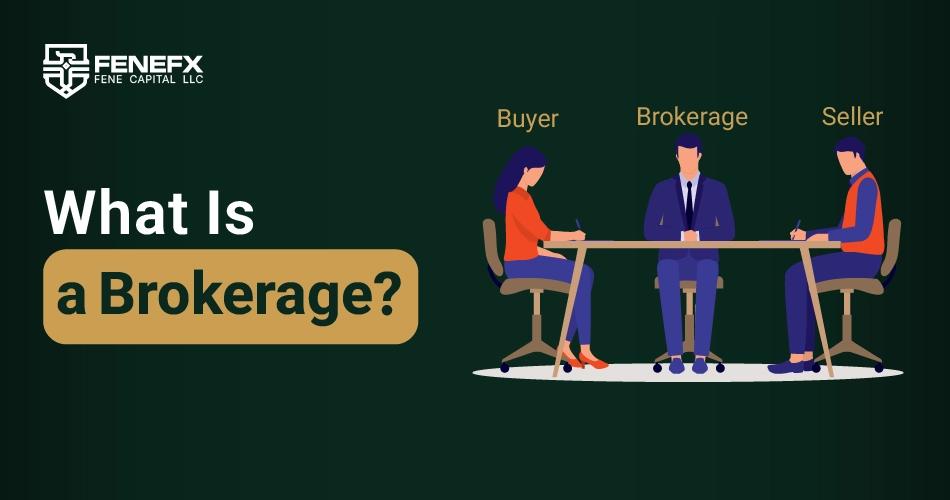
What is a Brokerage?
To access financial markets, particularly the Forex market, traders require tools that facilitate the process of buying and selling currencies. This is where brokerages come into play. This article examines the role of brokers, how they operate, regulatory frameworks, and their methods of earning revenue to provide traders and investors with a clear understanding of these financial entities.
Definition of a Brokerage and Its Role in Financial Transactions
A brokerage is a financial institution that acts as an intermediary between buyers and sellers in financial markets. Brokerages play a crucial role in facilitating transactions involving financial instruments such as stocks, bonds, mutual funds, foreign currencies, and other assets. The primary reason for the existence of brokerages is that financial markets are highly complex, making direct access challenging or even impossible for ordinary investors.
Brokerages act as representatives for their clients, utilizing their expertise and resources to secure the best trading opportunities. These institutions charge a fee or commission for the services they provide. In some cases, brokerages may also charge for additional services such as financial advisory, asset management, or offering research tools.
In the past, brokerage services were primarily accessible only to wealthy individuals. However, with the emergence of online brokerages and discount services, these financial services have become available to the general public as well.
The Role of a Brokerage as an Intermediary in Financial Markets
Brokerages play a significant role in creating liquidity and enhancing efficiency in financial markets. By connecting buyers and sellers and facilitating transactions, they contribute to improved market performance and transparency. In fact, without brokerages, investors would have to interact directly with each other, which would result in complexity, higher costs, and slower transactions.
Some of the key responsibilities of brokerages are as follows:
- Facilitating Transactions: Brokerages utilize advanced software systems to execute transactions with high speed and accuracy.
- Providing Analysis and Advisory Services: Many brokerages offer advisory services, helping their clients make informed investment decisions.
- Market Access: Brokerages provide direct access to markets such as the stock exchange, futures markets, and Forex for their clients.
- Risk Management: Brokerages assist clients in managing risk by offering risk management tools such as margin accounts and stop loss orders.
Types of Brokerages and the Services They Provide
The types of brokerages are as follows:
1. Traditional (Full Service) Brokerages
Traditional or full service brokerages, as the name suggests, offer a wide range of financial and advisory services. These types of brokerages are designed for clients who seek personalized guidance and support in all aspects of their financial management.
Key services provided by traditional brokerages include:
- Wealth Management: Offering comprehensive solutions for asset management, financial planning, and investment strategies.
- Financial Advisory: Providing personalized investment recommendations based on clients' financial goals and risk tolerance.
- Market Research: Delivering detailed reports and analyses of financial markets to clients.
- Other Financial Services: Providing advice on retirement planning, tax strategies, and estate management.
These types of brokerages are typically tailored for high net worth clients and operate on commission based or annual fee models. Prominent full service brokerages include Morgan Stanley, Merrill Lynch, and Edward Jones.
2. Discount (Online) Brokerages
Discount or online brokerages offer their services electronically at significantly lower costs than traditional brokerages. These brokerages are suitable for investors who prefer to manage their trades independently without direct involvement from financial advisors.
Key features of discount brokerages include:
Low Costs:Many of these brokerages offer commission free stock trading.
Advanced Trading Platforms:Providing tools such as technical charts, market data, and analytical tools.
Speed and Easy Access:Enabling trades to be executed anytime and anywhere via websites or mobile apps.
Due to intense competition in the market, discount brokerages have enhanced their services, and some now offer features similar to traditional brokerages, such as investment advice and research tools. Notable examples of discount brokerages include Charles Schwab, Fidelity, and Interactive Brokers.
Robo Advisors
Robo advisors are a new type of brokerage that utilize algorithms and advanced technologies to manage investments. These brokerages are ideal for investors seeking simple, low cost, and automated solutions for managing their capital
Key features of robo advisors include:
Automated Strategies:Using algorithms based on modern financial theories such as Modern Portfolio Theory (MPT) to manage investments.
Extremely Low Costs:Annual fees for these services typically range between 0.25% to 0.50% of assets under management.
Low Minimum Investment:Some robo advisors allow clients to start investing with very small amounts (a few dollars).
Ease of Use:Online platforms and mobile apps that simplify portfolio setup and management.
Human Advisor Interaction:Some of these services offer the option to consult with human advisors alongside automated management.
Robo advisors have gained significant popularity due to their low costs and ease of use. Examples of prominent robo advisors includeBlackRock,Wealthfront, andBetterment.
Brokerages, whether traditional, discount, or robo advisors, play a vital role in facilitating financial transactions and managing investments. Choosing the right type of brokerage depends on the investor's needs, financial goals, and level of financial knowledge. Traditional brokerages are more suitable for those requiring personalized services and financial advice, whereas discount brokerages and robo advisors offer more affordable and efficient solutions for independent investors.
Why Do We Need Brokerage?
The Importance of Access to Financial Markets Through Brokerages
Financial markets have a complex structure, and direct access to these markets is practically impossible for retail investors. Brokerages act as a bridge between investors and these markets. Without brokerages, investors would be unable to access financial instruments such as stocks, commodities, and currencies.
Brokerages also simplify and accelerate the investment process for users by providing real time information and advanced trading tools. This allows users to access both domestic and global financial markets with ease.
The Role of Brokerages in Reducing Transaction Complexity
Financial transactions, especially in markets like Forex and commodities exchanges, require technical knowledge and experience. Brokerages reduce these complexities by offering services such as market analysis, specialized training, and financial consulting.
Additionally, brokerages provide online trading platforms that enable users to trade anytime and anywhere. For example, the ability to view transaction history, perform technical analysis, and manage a portfolio through a comprehensive panel enhances the decision making process.
The Difference Between Independent and Captive Brokerages
There are differences between independent and captive brokerages:
What is an Independent Brokerage?
Independent brokerages are organizations or representatives that have no commitment or affiliation with specific financial companies, such as insurance firms or investment funds. These brokerages often operate as Registered Investment Advisors (RIAs) and adhere to fiduciary standards. This means independent brokers are obligated to recommend the best options that align with the client's best interests.
Since independent brokerages are not tied to a particular company, they have greater freedom to offer a wider and often better range of products, potentially delivering more value to the client.
What is a Captive Brokerage?
Captive brokerages, unlike independent ones, are affiliated with specific financial companies and typically offer products or services from those firms. For instance, a captive brokerage may be limited to selling products from a particular insurance company or designated investment funds.
This affiliation can create limitations in the investment options available to clients, as the recommended products may not necessarily be the best or most suitable options for the client but rather the products promoted by the parent company.
Fiduciary and Suitability Standards in Brokerages
The performance standards of brokers play a crucial role in building trust between them and their clients. In this regard, there are two main approaches:
Fiduciary Standard:This standard requires brokers to always prioritize the best interests of their clients and make decisions that offer the most profitable and suitable options for them.
Suitability Standard:Under this approach, brokers are only required to suggest options that align with the client’s financial situation and goals, even if those options are not the most profitable or optimal ones.
Independent brokerages often operate under the fiduciary standard, making them a better choice for clients seeking unbiased advice free from personal interests. On the other hand, captive brokerages may adhere more closely to the suitability standard, as they are often required to sell products offered by their parent company.
The primary difference between independent and captive brokerages lies in their level of freedom in offering services and products. Independent brokers, due to their lack of affiliation, can provide more impartial advice, whereas captive brokers, bound by obligations to their parent company, often have limited flexibility. Understanding these differences helps clients make better decisions when choosing a brokerage that aligns with their goals and needs.
How Brokerages Operate
The Trading Process in Brokerages
Brokerages act as intermediaries between buyers and sellers in financial markets. When an investor decides to buy or sell assets such as stocks, bonds, or futures contracts, they submit their trade order to the brokerage. The brokerage, with access to trading platforms and exchanges, processes the order and matches it with the opposite party in the transaction.
The process involves the following steps:
- Order Placement:The investor specifies the type and quantity of the asset they intend to buy or sell.
- Order Matching:The brokerage processes the order in its system and searches for a counterparty (buyer or seller) in the market.
- Trade Execution:Once a match is found, the trade is executed at the agreed price.
- Settlement and Finalization: After the transaction is completed, the transfer of assets and financial funds occurs between the buyer and seller.
How Brokerages Facilitate Transactions
Brokerages leverage advanced technologies and the expertise of their specialists to facilitate transactions. These services include:
Online Platforms:Many brokerages provide advanced digital tools that enable investors to execute their trades quickly and automatically.
Information and Advisory Services:Traditional brokerages offer market data, financial analysis, and personalized advice to help clients make informed decisions.
Risk Management:Some brokerages provide services such as risk management tools or investment strategy consultation to help optimize investments.
How Do Brokerages Generate Revenue?
Methods of Brokerage Revenue Generation
Commissions and Trading Fees
One of the primary sources of income for brokerages is commissions or transaction fees. This fee is charged on each trade, and its amount depends on the type of brokerage.
Traditional Brokerages:These brokerages typically charge higher fees as they provide additional services such as financial advisory and market analysis.
Discount Brokerages:These brokerages charge lower fees as they focus on high volume and low costs, often without offering advisory services.
Revenue Models Such as Annual Fees and Advisory Service Fees
Some brokerages adopt alternative revenue models, which include charging annual fees or advisory service fees.
Annual Fees:These fees cover asset management and broader services. Traditional brokerages often charge between 1% to 3% of assets under management (AUM).
Advisory Service Fees:Brokerages that offer financial consulting may charge fees for individual advisory sessions or financial planning services.
Revenue from Spreads and Additional Fees
Brokerages, particularly in Forex and futures markets, generate revenue through spreads. The spread is the difference between the buying (bid) and selling (ask) price of an asset, which the brokerage retains as profit.
Forex Trading Spreads:In Forex transactions, the brokerage earns from the difference between the bid price (buy) and the ask price (sell).
Additional Fees:Some brokerages charge additional fees for services such as access to advanced platforms, trading specific assets, or personalized services.
Advantages and Disadvantages of Using Traditional and Online Brokerages
The advantages and disadvantages of using brokerages are as follows:
Advantages of Using Full Service Brokerages
Full service brokerages are suitable for investors seeking advisory and management services. The advantages of this type of brokerage include:
- Specialized Financial Advice: Full service brokerages provide personalized advice for asset management, financial planning, and investment strategies.
- Access to Advanced Analysis: Clients can access detailed analytical reports and market information.
- Investment Management: These brokerages assist in portfolio management and developing investment strategies.
Advantages of Using Discount Brokerages
Discount brokerages are ideal for investors looking for lower costs and online trading solutions. The primary benefits of these brokerages include:
- Cost Reduction: These brokerages offer significantly lower or even zero commission fees, which is attractive to smaller investors.
- Independence in Decision Making: Users can manage their trades directly without relying on financial advisors.
- Speed and Convenience: Online platforms enable fast and simple trade execution.
Disadvantages and Limitations of Each Type of Brokerage
Both traditional and discount brokerages have limitations that can impact investors’ decision making:
Full Service Brokerages:
- High Service Fees: These costs may not be economical for investors with smaller assets.
- Dependence on Financial Advisors: This reliance may reduce decision making flexibility.
Discount Brokerages:
- Lack of Specialized Advice: The absence of expert guidance can be challenging for beginner investors.
- Limited Tools and Analysis: Fewer resources and less comprehensive analysis may hinder precise decision making.
Choosing between stock and Forex brokerages or traditional and discount brokerages depends on the investor’s needs, financial goals, and experience level. Investors requiring professional advice and management may prefer full service brokerages, while those aiming to reduce costs and maintain direct control over their trades are often drawn to discount brokerages. Carefully evaluating the services and limitations of each type can help ensure a more suitable choice.
Regulatory Standards for Brokerages
Regulatory Standards for Stock Brokerages
Brokerages operating in stock markets are regulated by various legal and regulatory bodies to ensure transparency, fairness, and the protection of investors' rights. These regulations include:
- Registration and Licensing: Stock brokerages must obtain licenses from national or local regulatory authorities.
- Disclosure Requirements: These brokerages are required to provide complete information about fees, commissions, and risks associated with investments.
- Know Your Customer (KYC) Rules: These regulations require brokerages to gather detailed information about their clients' financial status, investment goals, and risk tolerance.
- Client Asset Protection: Brokerages must keep client assets separate from their operational accounts to ensure customer funds are protected in case of financial issues.
Regulatory Standards for Forex Brokerages
Due to the global nature and high transaction volume in the Forex market, specific regulatory standards are required to ensure transparency and fairness in trading.
- Special Licenses: Forex brokerages must obtain licenses from reputable regulatory bodies in their country of operation, such as the CFTC in the United States or the FCA in the United Kingdom.
- Leverage Control: Many regulatory frameworks impose limits on the amount of leverage to mitigate the high risks associated with trading.
- Disclosure of Spreads and Fees: Forex brokerages are required to provide clear information about spreads, commissions, and any additional fees related to transactions.
- Secure Platforms: Forex brokerages must ensure that their trading platforms meet necessary cybersecurity standards to safeguard client data and transactions.

The Role of Regulatory Organizations Such as FINRA and SEC
Regulatory organizations like FINRA (Financial Industry Regulatory Authority) and the SEC (U.S. Securities and Exchange Commission) play a crucial role in ensuring the integrity and transparency of financial markets. Their responsibilities include:
- Monitoring and Inspection: These authorities oversee and inspect brokerage activities to ensure compliance with laws and regulations.
- Investor Protection: Organizations like the SEC ensure that investors have access to accurate and unbiased information for making financial decisions.
- Dispute Resolution: FINRA acts as a mediator in disputes between investors and brokerages.
- Establishing Performance Standards: These organizations set precise requirements for brokerage operations to safeguard investor interests.
Strict regulations and oversight of stock and Forex brokerages play a vital role in ensuring investment transparency and security. While stock market regulations focus more on protecting client rights and preventing financial misconduct, Forex market oversight emphasizes risk control and cost transparency.
Regulatory bodies such as FINRA and the SEC act as guardians of financial markets, fostering investor trust by establishing legal frameworks and resolving disputes between investors and brokerages.
Types of Brokerages in the Iranian Stock Market and Their Roles
Types of Brokerages in the Iranian Stock Market:
1. Securities Exchange Brokerages
These brokerages act as intermediaries in the buying and selling of stocks and securities. Their primary role is to facilitate investor transactions using stock exchange trading platforms. These brokerages also provide services such as investment advisory, market analysis, and related educational resources for their clients.
2. Over the Counter (OTC) Brokerages
In the OTC market, brokerages facilitate the buying and selling of shares in smaller and emerging companies that, due to specific conditions, cannot be listed on the main stock exchange. These brokerages provide investors with access to new opportunities, while the process of obtaining a trading code and entering the OTC market is generally simpler.
3. Commodity Exchange Brokerages
These brokerages specialize in trading commodities such as metals, agricultural products, and petroleum derivatives. Their primary role is to connect producers with buyers and offer services such as providing necessary documentation and facilitating financial settlements for transactions.
4. Energy Exchange Brokerages
These brokerages operate in specialized energy markets such as electricity, oil, and gas. Due to the unique and complex nature of these markets, participation requires special licenses and extensive technical expertise. Energy exchange brokerages provide professional advisory services and manage energy related transactions.
Brokerages in Iran's Capital Market
The Role of Brokerages in the Tehran Stock Exchange and OTC Market
Brokerages are essential intermediaries in transactions within the Tehran Stock Exchange and the OTC Market. By providing online platforms and facilitating the buying and selling process, they enable investors to access these markets. This role has expanded to include services such as market analysis, trading tools, and even investment funds.
Conditions for Obtaining a Trading Code
Obtaining a trading code, as the first step toward entering the capital market, requires the submission of identification information, opening a bank account, and completing the relevant forms at the brokerage. Some brokerages offer this process online, allowing investors to start trading quickly.
The Process of Buying and Selling Stocks via Online Platforms
Online trading platforms provided by brokerages have revolutionized the way transactions are conducted. After obtaining a trading code and accessing their dedicated account panel, investors can easily place buy and sell orders. Features such as technical analysis tools, real time reports, and prompt support are among the services these platforms offer. However, the quality of the platform and the speed of information processing are crucial factors when choosing a suitable brokerage.
Brokerages, acting as intermediaries between investors and financial markets, play a vital role in facilitating transactions and enhancing market transparency. Various types of brokerages in Iran, from the Securities Exchange to the Energy Exchange, offer diverse services tailored to different investor needs. Selecting a professional brokerage considering aspects such as platform speed, customer support, commission discounts, and specialized advisory services can significantly impact investment success.
Forex Brokerages (Forex Brokers)
Definition of a Forex Broker and Its Role in the Currency Market
A Forex broker is an intermediary that enables investors and traders to participate in the foreign exchange market (Forex). The Forex market is the world's largest financial market, with a daily trading volume exceeding $7.5 trillion. Brokers provide the necessary platform for buying and selling currencies and connect users to this market through online platforms. Their primary role is to facilitate transactions and provide analytical tools to help users make better trading decisions.
How the Forex Market Operates and the Importance of Brokers
In the Forex market, transactions are conducted in currency pairs, meaning one currency is bought while another is sold simultaneously. Unlike physical stock exchanges, this market operates entirely electronically. Brokers facilitate fast and transparent trading by providing 24 hour market access and offering real time exchange rates for currency pairs. Without brokers, retail investors would find it nearly impossible to access this market.
Types of Services Provided by Forex Brokers
Forex brokers offer a wide range of services, including:
- Trading Platforms: Providing software for executing trades and conducting market analysis.
- Leverage: Enabling traders to control larger positions than their deposited capital.
- Demo Accounts: Tools for learning and practicing without financial risk.
- Analytical Tools: Including charts, indicators, and market reports.
- Multilingual Support: Offering customer support throughout trading hours.
How to Open an Account and Use Leverage
Opening a Forex account is done online and involves completing identification forms and depositing an initial amount. Brokers typically offer a feature called leverage, allowing investors to trade with a value larger than their initial deposit. For example, with 1:100 leverage, an investor can control a $10,000 trade with only $100 in capital. However, leverage is a double edged sword while it can amplify profits, it can also lead to significant losses.
Risks Associated with Forex Brokers
The Forex market is highly volatile and risky due to leverage and rapid price fluctuations. Moreover, choosing an unreliable broker can result in issues such as fraud, lack of transparency in pricing, or difficulties withdrawing profits. Therefore, selecting a reputable broker under proper regulatory supervision is essential.
Differences Between Stock Brokerages and Forex Brokers
Distinction Between Stock Brokers and Forex Brokers:
Difference in Market Type and Traded Assets
The stock market is a venue for buying and selling stocks, bonds, and commodities such as gold and oil, whereas the Forex market is exclusively focused on trading foreign currencies. Tradable assets in the stock market are more diverse, while Forex relies solely on the exchange rates of currency pairs.
Difference in Target Users (Retail and Institutional Investors)
Stock brokerages are primarily designed to serve both retail and institutional investors. In contrast, Forex brokers often cater more to retail investors due to features like leverage and the ability to trade with small capital. However, major players in the Forex market also include large banks and multinational corporations as key participants.
Difference in Fees and Revenue Models
Stock brokerages typically charge commission fees as a percentage of the transaction amount, while Forex brokers generate revenue primarily from the spread (the difference between the bid and ask price) and, in some cases, additional fees. This difference in revenue models generally makes Forex trading costs lower, though it carries higher risks as well.
Both Forex brokers and stock brokerages play crucial roles in their respective markets. Forex operates as a global market with 24 hour access, requiring professional intermediaries. On the other hand, the stock market is a structured environment for trading various assets. Understanding the differences and similarities between these two markets can help investors choose the right market and develop successful strategies.
Types of Forex Brokers
Forex brokers come in various types:
Market Maker Brokers
Market Maker brokers, also known as Dealing Desk brokers, act as the counterparty to their clients' trades. These brokers manage buy and sell orders within their own system and match trades using their own capital instead of sending orders directly to the market.
- Features:
Provide fixed spreads
Offer fast order execution
Suitable for retail traders
- Disadvantages:
Conflict of interest may arise since brokers profit from clients' losses.
ECN Brokers (Electronic Communication Network)
ECN brokers connect client orders directly to the global Forex market, where traders, banks, and other market participants trade directly with one another.
- Features:
High transparency in pricing
Access to deep market liquidity
Ideal for professional traders
- Disadvantages:
Higher initial capital requirement
Commission fees charged on each trade
STP Brokers (Straight Through Processing)
STP brokers forward client orders directly to liquidity providers without manual intervention. These brokers typically collaborate with multiple liquidity providers to ensure the best available rate for their clients.
- Features:
Combine features of ECN and Market Maker brokers
Offer fast trade execution
Provide variable spreads depending on market conditions.
- Disadvantages:
Spreads may widen during volatile market conditions.
Difference Between Independent and Affiliated Brokers
Independent Brokers: Operate independently and provide services directly to clients. These brokers are usually regulated by international authorities and have greater flexibility in tailoring their services.
Affiliated Brokers: Operate under the supervision of and are affiliated with a larger financial institution. While this affiliation may provide enhanced security for clients, it may also limit the range of services offered.
How to Choose a Suitable Brokerage or Forex Broker?
Choosing the Right Broker:
Reviewing Brokerage Licenses and Regulations
One of the most important criteria for selecting a suitable broker is examining its licenses and regulatory status. Brokers regulated by reputable organizations such as the CFTC, FCA, or ASIC offer greater transparency and are less likely to be involved in fraudulent activities. These regulatory bodies enforce rules such as client fund protection, mandatory financial reporting, and adherence to international rules.
Customer Support and Services
Strong customer support is a key indicator of a reputable broker. Professional brokers should provide 24/7 multilingual support. Access to online chat and phone support helps clients resolve issues quickly and efficiently.
Transparency in Fees
Brokers should clearly disclose all details regarding spreads, commissions, and transaction related fees. Some brokers offer fixed spreads, while others provide variable spreads. Carefully reviewing these costs helps traders choose a broker that aligns with their trading strategy at the lowest possible expense.
Financial Security and Operational Transparency
Financial security is a major concern for traders. Reliable brokers keep client funds in segregated accounts to prevent misuse of those funds. Additionally, offering transparent financial reports and ensuring fast fund withdrawals are essential characteristics of a trustworthy broker.
Choosing a suitable Forex broker requires careful evaluation of the broker's features and services. Understanding the different types of brokers such as Market Makers, ECN, and STP, along with attention to licensing, financial transparency, and customer support, can help traders build a safe and successful Forex trading experience. Traders should consider their individual needs and experience level to select a broker that provides the best services with minimal costs.
Risks and Challenges of Brokerages
The risks and challenges associated with brokerages are as follows:
Risk of Poor or Inefficient Services
The quality of services provided by a brokerage directly impacts the experience and success of investors. One common issue is the slow performance or malfunctioning of trading platforms, which can lead to missed trading opportunities. For instance, during high trading volume periods, weak systems may result in order processing delays or even loss of access for users.
Additionally, ineffective customer support is another challenge. When clients require assistance with technical issues or have urgent questions, a lack of prompt and effective support can undermine trust in the brokerage.
Legal Challenges and Brokerage Violations
In some cases, brokerages may face legal issues due to factors such as lack of financial transparency, violations of regulatory laws, or misuse of client information. Such misconduct can result in losses for clients, particularly if the brokerage lacks the financial capacity to compensate for damages.
Another example of misconduct is conflict of interest. In certain brokerages, trades may be managed in a way that prioritizes the brokerage’s interests over those of the client. Strong regulatory oversight and operational transparency can help mitigate these risks.
Risks of Choosing Unreliable Forex Brokers
In the Forex market, selecting a broker without proper licensing and adequate regulation can jeopardize investments. Unreliable brokers may:
- Refuse to pay profits to clients.
- Manipulate prices by offering unrealistic exchange rates, causing client losses.
- Block fund withdrawals, preventing clients from accessing their money.
Choosing brokers regulated by reputable organizations such as the FCA or ASIC can significantly reduce these risks.
Comments
Could you follow up with how to actually verify a broker's license? Like checking the FCA or ASIC registers step by step.
This cleared up the difference between a broker and an exchange for me. I'd been using the two words interchangeably this whole time.
My first broker took three weeks to process a withdrawal. Taught me to check regulation and reviews before the deposit, not after.
Good basics, but the real differentiator between brokers is the execution model. Market maker vs ECN affects your spreads and slippage more than most beginners realize.
Clean explanation, no fluff. Nice work.