




How to Buy U.S Stocks
For many Iranians, entering the U.S. stock market is not only an investment opportunity but also a way to preserve asset value against domestic economic fluctuations. However, despite its appeal, this path comes with its own complexities and challenges. From international sanctions to legal and technical issues, each presents a barrier for Iranian investors.
Introduction to the U.S Stock Market
The U.S. stock market, as one of the largest and most influential financial markets in the world, plays a crucial role in the global economy. This market comprises two major exchanges: the New York Stock Exchange (NYSE) and the Nasdaq, each known for its unique characteristics.
Familiarity with the New York Stock Exchange and Nasdaq
New York Stock Exchange (NYSE):
The New York Stock Exchange is one of the oldest and largest stock markets in the world. Located on Wall Street in New York City, it is famous for its historic building and bustling trading floor. In the NYSE, shares of large and reputable global companies are traded. Due to its transparency and strict regulations, this market attracts many investors.
Nasdaq:
Nasdaq, as the world's first electronic exchange, has a particular focus on technology and innovation companies. Unlike the NYSE, Nasdaq lacks a physical trading floor, and all transactions are conducted electronically. This market's high speed and lower costs make it especially attractive for technology companies such as Apple, Google, and Amazon.
The Importance and Benefits of Investing in the U.S. Stock Market
Diversity and Breadth:
The U.S. stock market hosts a wide range of international companies operating across various industries. This diversity allows investors to reduce their investment risk by selecting stocks from different sectors.
High Liquidity:
One of the greatest advantages of the U.S. stock market is its high liquidity. The presence of numerous buyers and sellers ensures that transactions are conducted quickly and easily, enabling investors to enter and exit the market with ease.
Dollar Based Returns:
Investing in the U.S. stock market allows investors to earn returns in U.S. dollars, one of the most stable and reliable global currencies. This factor becomes especially important during periods of economic instability.
Growth Opportunities:
The U.S. stock market is home to innovative and leading companies that are continuously growing and expanding. Investing in these companies can provide investors with significant growth and profit opportunities.
Transparency and Security:
The U.S. stock market is known for its strict regulations and thorough oversight, ensuring high levels of transparency and security. This reassures investors that corporate financial information is reliable and trustworthy.
In summary, investing in the U.S. stock market is an attractive option for investors worldwide due to its diversity, high liquidity, dollar based returns, growth opportunities, and security. These features ensure that the U.S. stock market remains a popular destination for international investors, particularly those seeking to preserve and increase their wealth in a secure and dynamic environment.
How Can Iranians Invest in the U.S Stock Market?
Investing in the U.S. stock market is an attractive opportunity for many Iranians, but due to economic sanctions and imposed restrictions, this path comes with certain challenges. This section examines the limitations and available solutions for Iranians seeking to invest in this market:
Limitations and Challenges for Iranians
Economic Sanctions:
One of the main obstacles for Iranians investing in the U.S. stock market is economic sanctions, which have restricted direct access to international financial markets. These sanctions have caused many international brokers to refrain from providing services to Iranian investors.
Banking and Financial Transfer Issues:
Sanctions have also led to difficulties in conducting international financial transactions. Many international banks avoid collaborating with Iranian banks, making it difficult to transfer funds to foreign accounts.
Legal Restrictions:
Certain domestic and foreign regulations may also hinder Iranians from directly investing in the U.S. stock market. These restrictions include requirements for valid residency documents and compliance with anti money laundering laws.
Lack of Access to Reliable Brokers:
Many reputable brokers that provide access to the U.S. stock market are unable to offer services to Iranians due to sanctions. This limitation forces Iranians to seek alternative methods.
Available Solutions to Overcome Sanctions
Using Foreign Brokers via Intermediaries:
One possible solution is to use foreign brokers through intermediaries. Some Iranians open accounts with foreign brokers via individuals residing abroad. Although this method may involve additional costs and risks, it can be a practical option for some investors.
Using CFD Contracts:
Contracts for Difference (CFDs) allow investors to benefit from stock price fluctuations without owning the actual shares. Some forex brokers that provide services to Iranians offer CFD trading on U.S. stocks.
Opening Accounts in Third Party Countries:
Some Iranians opt to open accounts in third party countries that have fewer financial restrictions. While this method may involve complexities related to tax management and regulatory compliance, it can serve as a temporary solution.
Using Cryptocurrencies:
Cryptocurrencies are recognized as an alternative method for transferring funds to international markets. By converting assets into digital currencies, some Iranian investors have managed to bypass banking restrictions. However, this method also comes with risks due to the high volatility of cryptocurrencies and potential security concerns.
Despite the existing challenges and restrictions, Iranians can still utilize creative and alternative methods to access the U.S. stock market. Achieving this requires careful planning, awareness, and consultation with financial experts to minimize the risks associated with such investments.
How to Choose the Right Broker
Choosing a suitable broker for investing in the U.S. stock market is particularly important for Iranians. This section covers the criteria for selecting a broker and introduces reputable and regulated brokers: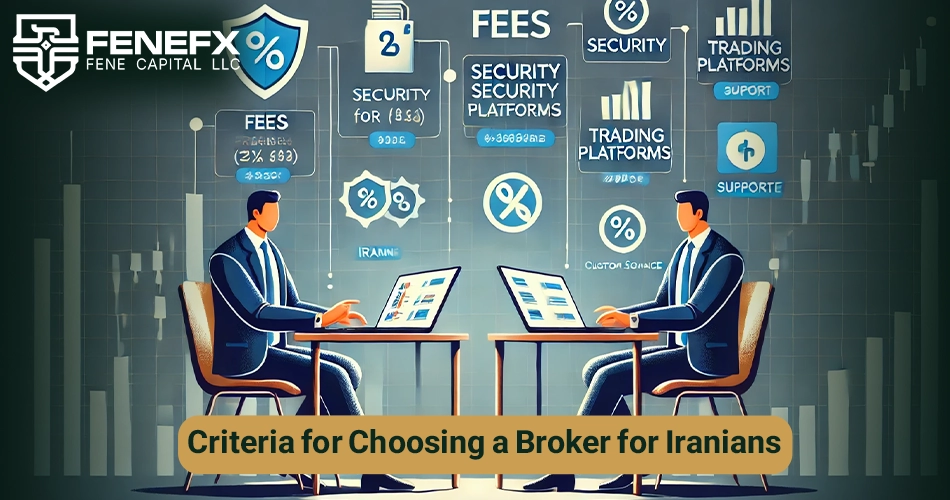
Criteria for Choosing a Broker for Iranians
1. Regulation:
One of the most important criteria is to ensure the broker is regulated. Regulation means that the broker operates under the supervision of a reputable financial authority. This oversight helps protect investors’ funds and prevents potential misconduct.
2. Access to International Markets:
Ensure that the broker provides access to various exchanges, including the U.S. stock market. Access to a wide range of markets allows you to diversify your investment portfolio effectively.
3. Fees and Commissions:
Pay close attention to trading fees and commissions. Some brokers have hidden fees that may increase your overall costs. Comparing fees and reviewing the transparency of these charges should be part of the selection process.
4. Trading Platform:
The trading platform should be user friendly and equipped with diverse analytical tools. Ensure the broker’s platform offers adequate speed, security, and access to charts and market analysis.
5. Customer Support:
Customer support plays a crucial role in your trading experience. Choose a broker that offers 24/7 support in multiple languages, including Persian, to ensure smooth communication when needed.
6. Deposit and Withdrawal Methods:
Examining deposit and withdrawal methods and ensuring these processes are secure and efficient is essential. A broker that offers various safe money transfer methods can be a better option.
Introducing Reputable and Regulated Brokers
In addition to the above criteria, researching the broker's credibility and track record is crucial when selecting a suitable broker. Some brokers are known for their long standing presence and strong reputation in international financial markets. These brokers are typically regulated by well known authorities such as the FCA (UK), CySEC (Cyprus), or ASIC (Australia).
For example, brokers that consistently rank at the top of global ratings and are subject to strict oversight can be a suitable choice. These brokers typically offer a wide range of financial services and tools and are known for delivering a positive user experience.
Introducing MondFx Broker
MondFx is one of the reputable Iranian brokers that provides investors with access to the U.S. stock market and other international markets. This broker offers services such as advanced trading platforms, 24/7 customer support, and competitive fees, making it a suitable option for Iranian investors. Additionally, MondFx emphasizes security and transparency, striving to provide a reliable and satisfactory experience for its users.
Steps to Buying Stocks in the U.S. Stock Market
To purchase stocks in the U.S. stock market, you need to follow specific steps. The process of creating a broker account, depositing funds, and starting trading is as follows:
Creating a Broker Account
1. Choosing the Right Broker:
The first step is selecting a reputable and regulated broker that provides access to the U.S. stock market. Key selection criteria include regulation status, fees, trading platform features, and customer support services.
2. Registering on the Broker’s Website:
Visit the broker’s website and complete the registration form. This form typically requires personal information such as your name, email address, phone number, and residential address.
3. Identity Verification:
To comply with international regulations and prevent money laundering, brokers usually require you to verify your identity. This process may involve submitting identification documents such as a passport and utility bills to confirm your address.
4. Choosing an Account Type:
Brokers offer various types of trading accounts. Assess which account type best suits your needs and trading style. Some accounts may feature different leverage options, spreads, and commission structures.
5. Installing the Trading Platform:
After creating your account, you will need to download and install the broker’s trading platform. This platform provides tools for market analysis and executing trades.
Depositing Funds and Starting Trading
1. Choosing a Deposit Method:
Brokers typically offer several deposit methods, including bank transfers, credit cards, and electronic wallets. It is crucial to choose a method that is fast and secure for you.
2. Depositing Funds into Your Trading Account:
After selecting your preferred deposit method, transfer the desired amount into your trading account. Ensure that your deposit meets the broker's minimum funding requirements.
3. Selecting Stocks and Analyzing the Market:
Before initiating a trade, conduct a thorough analysis of the market and the stock you intend to buy. Using technical and fundamental analysis tools available on the trading platform can help you make better decisions.
4. Placing Your First Trade:
Using the trading platform, select your desired stock and execute the trade. At this stage, you can specify trade details such as the number of shares, purchase or sale price, and order type (e.g., market order or limit order).
5. Monitoring and Managing Trades:
After executing the trade, continuously monitor the market and adjust your strategy if necessary. Utilizing risk management tools like Stop Loss and Take Profit can help improve your trading outcomes.
6. Withdrawing Profits:
If your trades are successful and generate profits, you can withdraw part of your earnings. To initiate a withdrawal, submit your request through the broker’s platform and select your preferred withdrawal method.
Ultimately, investing in the U.S. stock market requires diligence, awareness, and proper capital management. By following the above steps and leveraging suitable analysis tools, you can achieve a successful trading experience in this market.
Using CFD Contracts to Buy Stocks
Contracts for Difference (CFD) are a popular financial instrument that allows investors to benefit from price fluctuations without the need for actual asset ownership. The definition, functionality, advantages, and disadvantages of CFDs are explained as follows:
Definition and Functionality of CFD Contracts
A CFD (Contract for Difference) is a financial contract between two parties that calculates the difference in price between the entry and exit points of a trade. In this type of contract, you do not own the actual asset; instead, you speculate on its price movements.
How It Works:
Opening a Position:
With CFDs, you can invest in both rising and falling prices. If you believe the price will increase, you open a buy (long) position; if you expect the price to decrease, you open a sell (short) position.
Leverage:
CFDs are usually offered with leverage, meaning you can control a larger position with a smaller amount of capital. While this can amplify profits, it also increases risks.
Settlement:
At the end of the contract or when you close your position, the difference in price between the entry and exit points is calculated and either added to or deducted from your account.
Advantages and Disadvantages of Using CFDs
Advantages:
Access to Various Markets
CFDs allow you to trade in multiple markets, including stocks, forex, commodities, and indices.
No Need for Physical Ownership
You do not need to purchase actual stocks or assets, which reduces ownership related costs such as taxes and fees.
Two Way Trading
CFDs enable you to profit from both rising and falling prices, allowing you to capitalize on bearish markets as well.
Leverage
With leverage, you can open larger trades with less capital, potentially enhancing your investment returns.
Trading Flexibility
CFDs are generally free from expiration dates, giving you the flexibility to close your positions at any time.
Disadvantages
High Leverage Risk
While leverage can amplify profits, it can equally magnify losses. Without proper risk management, you may lose your entire investment.
Overnight Fees (Swap)
Holding positions for extended periods may incur additional costs known as overnight interest fees.
No Dividend Income
Since you do not own the actual shares in CFD trading, you are not entitled to dividends or voting rights.
Complexity and Skill Requirement
CFD trading requires extensive knowledge and experience in market analysis and risk management.
Counterparty Risk
If your CFD broker is not reliable, you may face additional risks, as the contract is established between you and the broker and is not directly connected to the actual market.
While CFDs offer numerous profit opportunities, they also carry considerable risks. To succeed in CFD trading, you need a solid understanding of markets, effective strategies, and strong risk management. Before starting, it's crucial to choose a reputable and regulated broker to ensure the security of your investment.
Advantages of Investing in the U.S. Stock Market
Investing in the U.S. stock market holds significant appeal for investors for several reasons. Two of the most important advantages include earning dollar based profits and the ability to engage in two way trading.
Dollar Based Profits and Wealth Preservation
The U.S. dollar is recognized as the global reserve currency and is known for its stability. Investing in the U.S. stock market allows you to earn profits in dollars, which is particularly important for preserving wealth during periods of economic instability.
- Protection Against Inflation: By investing in dollars, you can shield your investments from the negative effects of domestic inflation. This is especially valuable in countries with high inflation rates, as dollar denominated profits help maintain purchasing power.
- Stability and Growth: U.S. listed companies are often known for their strong financial performance and stable growth. Investing in these companies can lead to capital growth and consistent profits.
Ability to Engage in Two Way Trading
Two Way Trading (Long and Short Positions):
Market Flexibility: One of the unique features of the U.S. stock market is the ability to engage in two way trading. This means you can profit from both rising and falling prices.
Taking Advantage of Downtrends: Even in bearish markets, there are profit opportunities. Through short selling, investors can capitalize on declining prices. This method is particularly useful for hedging potential risks in a diversified portfolio.
Diverse Strategies: The ability to trade both long and short positions allows investors to implement more complex strategies such as hedging and arbitrage, which can improve overall investment performance.
In conclusion, investing in the U.S. stock market, with its potential for dollar based profits and two way trading opportunities, offers numerous ways to preserve and grow wealth.
Key U.S. Stock Market Indices
The U.S. stock market comprises reputable indices that help investors assess the overall market condition.
Introduction to the S&P 500, Dow Jones, and Nasdaq Indices
S&P 500 Index:
The S&P 500 index includes 500 large and reputable companies listed on U.S. stock exchanges, representing a broad range of industries. It is widely recognized as one of the best measures of the overall health of the U.S. economy.
Composition: Companies in the S&P 500 are selected based on market capitalization and include industry giants such as Apple, Microsoft, and Amazon.
Dow Jones Industrial Average:
The Dow Jones includes 30 major industrial companies and is one of the oldest and most well known U.S. stock market indices. It serves as a representation of the performance of large companies across various economic sectors.
Composition: Unlike the S&P 500, the Dow Jones is weighted based on stock prices, and notable companies such as Boeing and Coca Cola are part of this index.
Nasdaq Composite Index:
The Nasdaq Composite includes over 3,000 stocks, particularly in the technology and internet sectors. Due to its focus on innovative and tech driven industries, this index is recognized as a leading indicator in the technology sector.
Composition: Companies like Google, Facebook, and Tesla are included in the Nasdaq, which is weighted based on market capitalization.
How to Use These Indices in Market Analysis
Overall Market Assessment:
The S&P 500, Dow Jones, and Nasdaq indices help investors evaluate the overall market condition and economic trends. Growth or decline in these indices reflects the health of the economy and the stock market.
Performance Comparison:
Investors can compare their portfolio's performance against these indices. If your portfolio outperforms the major indices, it may indicate a successful investment strategy.
Trend Analysis:
Analyzing the historical trends of these indices helps analysts predict potential market changes. Technical analysis of these indices can assist in identifying suitable entry and exit points.
Economic Forecasting:
Changes in these indices are often associated with shifts in economic conditions. For instance, consistent growth in the S&P 500 may indicate economic expansion, whereas frequent declines can signal a potential recession.
Investment Decision Making:
Investors utilize information derived from these indices to make informed investment decisions. These indices serve as guides for allocating resources to specific industries or companies.
Using the S&P 500, Dow Jones, and Nasdaq in market analysis enables investors to make better informed decisions by leveraging comprehensive and reliable data. These indices act as essential tools in analyzing the U.S. stock market, assessing economic conditions, and identifying investment opportunities.
Disadvantages and Risks of Buying U.S. Stocks
Despite the numerous advantages of investing in U.S. stocks, there are also certain drawbacks and risks that investors should consider:
Lack of Physical Ownership of Shares
Indirect Ownership:
Many investors purchase stocks through CFD contracts or other financial instruments. These methods do not involve actual ownership of the shares, meaning you only benefit from price fluctuations.
Limited Shareholder Rights:
With indirect ownership, you forfeit certain rights such as voting rights at general meetings or dividend payments. This limitation can reduce your influence on company decisions.
Transaction Fees
High Costs:
Trading fees can significantly impact your final profit. These fees may include costs for buying and selling, account maintenance, and currency conversion.
Hidden Fees:
Some brokers may have hidden fees that are not initially disclosed. These costs can reduce your overall returns, making it crucial to carefully examine broker fee structures before investing.
Broker Fraud Issues
Unreliable Brokers:
Choosing an unregulated or unreliable broker can result in fraud and loss of capital. Unregulated brokers may suddenly disappear or refuse to execute your orders.
Lack of Transparency:
Some brokers do not provide clear information about trading terms and conditions, which can lead to exploitation.
Recommendations for Iranian Investors
Choose a Reliable Broker:
Always select regulated and reputable brokers. Researching their background and reading user reviews can help you find a suitable broker.
Be Aware of Costs:
Before starting to trade, make sure you are fully aware of all related costs and fees. Comparing fees among different brokers can help reduce your expenses.
Education and Research:
Before investing, acquire the necessary education in market analysis and risk management. Utilizing credible educational resources can improve your knowledge and skills.
Risk Management:
To reduce risk, implement effective risk management strategies. Setting stop loss orders and diversifying your portfolio can help prevent potential losses.
Monitoring and Evaluation:
Continuously assess your investment performance and adjust your strategies when necessary to improve results. By following these recommendations and understanding the potential risks and drawbacks, Iranian investors can participate in the U.S. stock market with greater confidence and take advantage of available opportunities.
Comments
Very practical as always from FeneFX, saved this one.
Good guide, but don't skip the tax side. W-8BEN forms and dividend withholding catch a lot of international investors off guard. Ask me how I know.
What about traders outside the US who can't access the big brokers? An article on trading US stocks via CFDs would be really helpful.
Bought my first US stock from Romania back in 2019, the paperwork was a nightmare then. Honestly so much easier now with app-based brokers.
Just opened my first brokerage account last week and this answered basically every question I had about the process. The fractional shares part was news to me.