




The Role of Wall Street in the Global Stock Market
Wall Street is more than just a street or financial center; it has become a symbol of economic power and global influence. This financial hub not only determines the flow of global capital but also plays a crucial role in shaping economic trends, financial policies, and even social developments. A deep understanding of Wall Street's structure, operations, and impacts is key to comprehending the complexities of the modern economy and international financial relations.
The Role of Wall Street in the Global Economy
Wall Street, as the financial capital of the world, plays an unparalleled role in both the U.S. and global economies. Located in the Manhattan district of New York, this center goes beyond being just a street or physical location; it has become a symbol of economic power, large scale investments, and significant financial flows. As the beating heart of the U.S. economy, Wall Street directly influences economic policies, business growth, international investments, and even the daily lives of ordinary people.
The importance of Wall Street in the global economy can be examined from several aspects. First, this area hosts the world's largest and most reputable financial markets, including the New York Stock Exchange (NYSE) and the Nasdaq (NASDAQ). These two markets account for the highest trading volumes and market values globally. Large and small companies from around the world turn to these markets for funding, initial public offerings (IPOs), and attracting investment. Wall Street not only facilitates investment but also acts as a key indicator for the global economy; fluctuations in its financial markets can quickly influence financial markets in other parts of the world.
Wall Street's impact on the U.S. economy is profound. This center drives economic growth by providing capital for companies, creating job opportunities, and fostering innovation. At the same time, Wall Street serves as an economic barometer, reflecting the overall health of the U.S. economy. Bullish trends in Wall Street’s financial markets generally indicate investor confidence and economic growth, while financial crashes can signal economic recessions. For instance, the 2008 financial crisis, which originated on Wall Street, not only crippled the U.S. economy but also triggered a global recession.
In conclusion, Wall Street is more than just a financial district; it stands as a symbol of economic power, a driving force for global growth, and a guiding light for the global economy. Its far reaching effects, both positive and negative, have made it one of the most significant players in the world economy.
The History of Wall Street: From a Wooden Wall to the Heart of the Global Economy
Wall Street is not only recognized as a financial hub but also has a long and eventful history that began with a simple wooden wall and evolved into the heart of the global economy.
The Origin of the Name "Wall Street"
The name "Wall Street" originates from a wooden wall built by Dutch settlers in 1653 in Manhattan. The purpose of this wall was to protect the settlement of New Amsterdam from potential attacks by the British and Native Americans. This wall, which stood along what is now known as Wall Street, was eventually dismantled in 1699. However, the name "Wall Street" remained and later became known as the gathering place for New York's traders and merchants.
The Buttonwood Agreement and the Formation of Formal Financial Exchanges
One of the most significant milestones in Wall Street’s history was the Buttonwood Agreement, signed in 1792. This agreement was made by 24 brokers and local merchants under a buttonwood tree on Wall Street. The agreement established standards for buying and selling securities and set commission rates, laying the foundation for the creation of the New York Stock Exchange (NYSE). Later, in 1817, the NYSE was officially established and began operating in formal buildings.
Wall Street’s Historical Role in U.S and Global Economic Growth
Over time, Wall Street became a hub for financial and investment activities in the United States. During the 19th century, the district served as the primary financial center for funding major infrastructure projects, such as railroads and heavy industries. As the U.S. economy grew, Wall Street expanded and became a hub for financial innovations and large scale investments.
Following World War I, New York and Wall Street replaced London as the world’s financial center. This shift occurred due to the rising economic power of the United States and the declining financial influence of Britain. Since then, Wall Street has acted as the center of global economic and financial decision making. Many major economic events including the Great Depression of 1929, the 2008 Financial Crisis, and even bullish market trends have originated from this district, with their effects spreading across the world.
In conclusion, the history of Wall Street reflects the transformation of a simple location into the heart of the global economy. From a wooden wall to a thriving center for trade and investment, Wall Street has consistently symbolized economic power and financial progress. This financial hub has not only shaped the economic history of the United States but has also had a profound impact on global economic trends.
The Impact of Wall Street on the Stock Market
Structure and Key Players on Wall Street
As the world's most important financial center, Wall Street has a complex structure that includes major stock exchanges, financial institutions, and economic policymakers. This structure profoundly influences not only U.S. domestic markets but also global stock markets.
Introduction to the New York Stock Exchange (NYSE) and Nasdaq (NASDAQ)
The New York Stock Exchange (NYSE) and Nasdaq (NASDAQ) are the two main stock exchanges based on Wall Street, each playing a crucial role in capital markets.
The NYSE, as the world's largest stock exchange by market capitalization, is known for its traditional trading processes and the physical presence of traders on the floor. This exchange enables large and reputable companies to go public, attracting significant investments.
On the other hand, Nasdaq, the world's first electronic stock exchange, provides technology and innovative companies with a faster and more efficient platform for trading their shares. Both exchanges play a vital role in influencing global markets, particularly during periods of economic volatility, helping determine prices and gaining investor confidence.
Financial Institutions Based on Wall Street
Wall Street is home to a variety of financial institutions, including investment banks, investment funds, asset management firms, and insurance companies.
Investment banks such as Goldman Sachs and Morgan Stanley play a key role in financing companies and providing advisory services in mergers and acquisitions. Through in depth analysis, these banks help companies secure the capital they need through initial public offerings (IPOs) or bond issuance.
Investment funds and asset management firms are actively involved in attracting large scale capital and distributing it across various global markets. These institutions, using diverse investment strategies, help control market fluctuations and contribute to economic stability.
Additionally, insurance companies provide financial coverage to ensure investors can protect their assets during economic crises. These institutions, due to their international connections, have both direct and indirect impacts on global markets.
The Role of the Federal Reserve Bank of New York in Monetary Policy
The Federal Reserve Bank of New York, as one of the most significant financial institutions in the United States, plays a crucial role in implementing monetary policies. As one of the 12 Federal Reserve Banks, it is responsible for monitoring the money supply and interest rates.
By adjusting interest rates and utilizing monetary tools, the New York Fed can directly impact financial markets and global stock exchanges.
For instance, lowering interest rates can stimulate investment and consumption, ultimately boosting financial markets. Conversely, raising interest rates may reduce liquidity and economic activity. These changes in monetary policies influence not only Wall Street but also global stock exchanges, often causing fluctuations in international markets.
In conclusion, the structure and key players on Wall Street including the NYSE, Nasdaq, financial institutions, and the Federal Reserve Bank of New York collectively have both direct and indirect impacts on global stock markets. These influences are particularly evident during times of economic and political crises, significantly affecting investment decisions and policymaking at the global level.
The Impact of Wall Street on Global Markets
Wall Street’s Key Indices as Global Benchmarks
With key indices such as the Dow Jones, S&P 500, and Nasdaq, Wall Street is recognized as a global benchmark for measuring the performance of financial markets. These indices not only reflect the economic condition of the United States but also serve as indicators for assessing economic health on a global scale.
The Dow Jones Industrial Average, which includes 30 major and reputable U.S. companies, effectively represents the state of the country's key industries. The S&P 500, encompassing 500 large corporations, provides a broader picture of the U.S. stock market. The Nasdaq, as a technology focused exchange, is particularly known for housing innovative and tech based companies, and its fluctuations can significantly impact technology markets in other countries.
Changes in these indices often have a considerable influence on investment decisions, analysts' evaluations, and policymakers' strategies worldwide.
The Impact of Wall Street Volatility on Asian and European Stock Markets
Fluctuations in the Wall Street market directly affect Asian and European stock exchanges. When Wall Street experiences sharp volatility, these changes can quickly spread to other markets. This is especially evident during major market crashes, financial crises, or economic instability, where Asian and European markets often experience substantial declines in stock values.
For instance, a sharp decline in Wall Street indices can lead to drops in major stock market benchmarks like the FTSE 100 in the United Kingdom or the Nikkei 225 in Japan. This impact is particularly pronounced in an era where global financial markets are increasingly interconnected. Investors in other stock exchanges often react quickly, which can create a negative feedback loop and trigger further volatility in global markets.
Wall Street’s Role in Global Capital Flows
Wall Street also plays a crucial role in global capital flows. Due to its strong reputation and the presence of major financial institutions, Wall Street is a primary destination for international investors seeking to invest in various projects and companies.
Foreign investors, including governments and investment funds, typically allocate a significant portion of their capital to U.S. markets. The inflow of capital into Wall Street can have profound effects on exchange rates, commodity prices, and the economic conditions of other countries.
For example, increased investment in U.S. Treasury bonds can strengthen the U.S. dollar, which may negatively impact export reliant economies. Additionally, Wall Street’s influence on interest rates and financial conditions can shape economic decisions on a global scale.
As a key player in global markets, Wall Street exerts a vital influence through its major indices, its impact on other markets’ volatility, and its role in international capital flows. These complex and multifaceted effects, particularly during periods of economic uncertainty, can lead to significant changes in the economic landscape of various nations and shape global financial and investment trends.
Wall Street as a Global Economic Indicator
Wall Street, as the financial hub of the United States, not only influences domestic markets but is also recognized as a reliable indicator of the global economic climate. These effects are particularly evident through the interplay between the stock market and macroeconomics, the prediction of economic recessions and booms, and the psychological impact on consumer and investor confidence.
The Interrelationship Between the Stock Market and Macroeconomics
The stock market and macroeconomics share a reciprocal relationship that can directly influence one another. When the stock market is on the rise, it often reflects investor confidence in the economic future. In other words, rising stock prices typically signal improved company performance, which in turn indicates economic growth. Conversely, negative fluctuations in the stock market can reduce investor and consumer confidence, potentially leading to decreased spending and investment in the economy.
This relationship becomes particularly evident during periods of crisis, such as financial downturns. For example, the 2008 stock market crash not only undermined investor confidence but also triggered a global economic recession. This demonstrates that Wall Street, as a reflection of economic conditions, can serve as a predictor of macroeconomic changes.
Wall Street's Role in Predicting Economic Recessions and Booms
Wall Street acts as a key metric for forecasting economic recessions and booms. Financial analysts and economists often examine fluctuations in key indices like the Dow Jones and S&P 500 to identify signals of potential economic shifts. For instance, a sustained decline in these indices is often interpreted as a warning sign of an impending recession.
On the other hand, consistent growth in these indices generally indicates economic expansion. This predictive ability of Wall Street, particularly during periods of uncertainty, helps investors and policymakers make informed decisions and mitigate potential economic crises.
The Psychological Impact of Wall Street on Consumer and Investor Confidence
Wall Street's psychological influence on consumer and investor confidence is also significant. Stock market fluctuations can heavily impact public sentiment. When the market is performing well, consumer and investor confidence tends to rise, driving increased spending and investment. In other words, a strong stock market can foster a sense of optimism in society, encouraging people to commit more funds to investments.
Conversely, sharp declines in the stock market can quickly undermine public confidence and spark fears about future economic conditions. Such volatility can trigger self reinforcing cycles, where declining market confidence leads to reduced investments and spending, ultimately worsening economic conditions.
Ultimately, Wall Street, as a global economic indicator, not only influences the financial and economic landscape of the United States but also extends its impact to global markets and broader economic behaviors. These multifaceted effects make Wall Street a crucial pillar in understanding and predicting economic developments on a global scale.
The Impact of Wall Street on Global Stock Markets
Wall Street, as one of the largest and most influential financial hubs in the world, has a profound impact on stock markets across various countries. This influence stems not only from fluctuations in the U.S. stock market but also from international economic and financial connections and how other markets react to Wall Street’s changes.
Wall Street Volatility and Its Global Effects
Fluctuations in the Wall Street market can quickly impact global stock exchanges. For instance, when U.S. markets experience sharp gains or losses, these changes are often mirrored in Asian and European markets. Investors in other countries, especially during uncertain periods, tend to react swiftly and strongly to Wall Street’s movements. This phenomenon becomes particularly evident during financial crises.
For example, during the 2008 financial crash, global stock markets quickly felt the repercussions, resulting in significant declines in stock values worldwide. These effects can rapidly create a negative cycle in which declining investor confidence leads to reduced investment, ultimately slowing economic growth.
Impact of Oil and Commodity Prices on Global Stock Markets
Wall Street also significantly influences commodity and oil prices. Changes in these prices are closely linked to Wall Street, and such shifts can affect the stock markets of both oil producing and oil consuming nations. For instance, when oil prices rise, stock markets in oil producing countries typically improve, whereas those heavily reliant on oil imports may experience declines.
These effects can indirectly influence exchange rates and financial conditions in various countries. In other words, fluctuations in global prices reflected in Wall Street can lead to substantial changes in the financial markets of other nations.
Economic and Financial Connections
As a major financial hub, Wall Street maintains extensive economic and financial ties with other nations. Many major international corporations, including technology and manufacturing firms, are listed on Wall Street, increasing the influence of their performance on other global stock markets. When a major company in Wall Street reports positive financial results, it can boost its stock price in international markets and enhance investor confidence.
Additionally, financial institutions based in Wall Street, as major investors and advisors, actively invest in foreign markets. These investments can increase liquidity and improve financial stability in other countries. However, Wall Street volatility can pose risks to economic stability in those regions.
In conclusion, Wall Street's influence on global stock markets is a multifaceted phenomenon. Market fluctuations, commodity price changes, and international financial connections all play a vital role in shaping the behavior of global stock exchanges. These effects highlight the need for stricter monitoring and risk management in global financial markets to prevent economic crises and support global financial stability.
Wall Street’s Innovations and Their Impact on Global Financial Markets
As the financial center of the United States, Wall Street has consistently been at the forefront of financial innovations, significantly impacting global financial markets. These innovations include the development of new financial instruments, the adoption of advanced technologies such as artificial intelligence (AI) and blockchain, and Wall Street’s role in the cryptocurrency market.
Introduction of New Financial Instruments and Wall Street’s Role in Their Development
Wall Street, as a leading financial institution, has consistently introduced and developed new financial instruments. These include various securities, derivatives, and Exchange Traded Funds (ETFs). These innovations allow investors to implement more sophisticated strategies for risk management and investment.
For example, financial derivatives such as options and futures enable investors to effectively manage risks associated with price fluctuations. Additionally, ETFs provide investors with easy access to a diversified portfolio of assets, enhancing investment flexibility. These new financial tools not only impact U.S. markets but also influence global markets by improving transparency and liquidity.
Adoption of Advanced Technologies such as AI and Blockchain
One of the most significant developments in Wall Street is the adoption of advanced technologies like artificial intelligence (AI) and blockchain. AI is rapidly transforming data analysis and decision making methods in financial markets. Using complex algorithms and machine learning, financial institutions can make more accurate predictions about market trends and investor behavior.
Blockchain, as an innovative technology, has gained prominence particularly in enhancing the security and transparency of financial transactions. This technology can reduce transaction costs and processing times while enabling the creation of smart contracts. These technological advancements allow financial institutions to improve efficiency and offer better services to clients.
Wall Street’s Role in the Cryptocurrency Market
Wall Street has also played a pivotal role in shaping and expanding the cryptocurrency market. With the growing popularity of digital currencies such as Bitcoin and Ethereum, Wall Street based financial institutions have increasingly turned their attention to these markets. Many major banks and financial firms now offer cryptocurrency related services to their clients, and some have launched futures and options trading for digital assets.
This growing interest from Wall Street has not only enhanced the credibility of cryptocurrencies but has also attracted new investors and contributed to developing the necessary infrastructure for this market. This evolution has positioned digital currencies as a recognized asset class with a significant influence on global financial markets.
Wall Street's innovations in financial instruments, advanced technologies, and the cryptocurrency market have had a profound impact on global financial markets. These innovations not only enhance market efficiency and transparency but also enable investors to implement more effective investment strategies using new tools and technologies.
Criticisms of Wall Street and Its Consequences
As the financial center of the United States, Wall Street has consistently faced criticism. These criticisms stem from Wall Street's role in wealth concentration, the creation of financial bubbles, speculative activities, and its ties to politics and influence on financial regulations. These issues not only have economic repercussions but also affect public trust in the financial system.
The key criticisms of Wall Street and their resulting consequences are outlined below:
Wealth Concentration and Rising Economic Inequality
One of the most significant criticisms of Wall Street is its role in concentrating wealth in the hands of a small, wealthy elite. This wealth concentration has contributed to widening economic inequality in society. While Wall Street and its financial institutions continuously generate enormous profits, many ordinary citizens still struggle with economic hardships and living costs. This inequality fuels social and political tensions and reinforces feelings of injustice among various segments of society.
Creation of Financial Bubbles and Economic Crises
Throughout history, Wall Street has repeatedly been responsible for financial bubbles and economic crises due to irresponsible behavior and speculative activities. For example, the 2008 financial crisis was triggered by the collapse of the housing market and financial bubbles created by derivative securities. Instead of focusing on sustainable investments, major financial institutions pursued quick, short term profits. This approach not only led to financial crises but also resulted in the loss of millions of jobs and a severe decline in public trust in the financial system.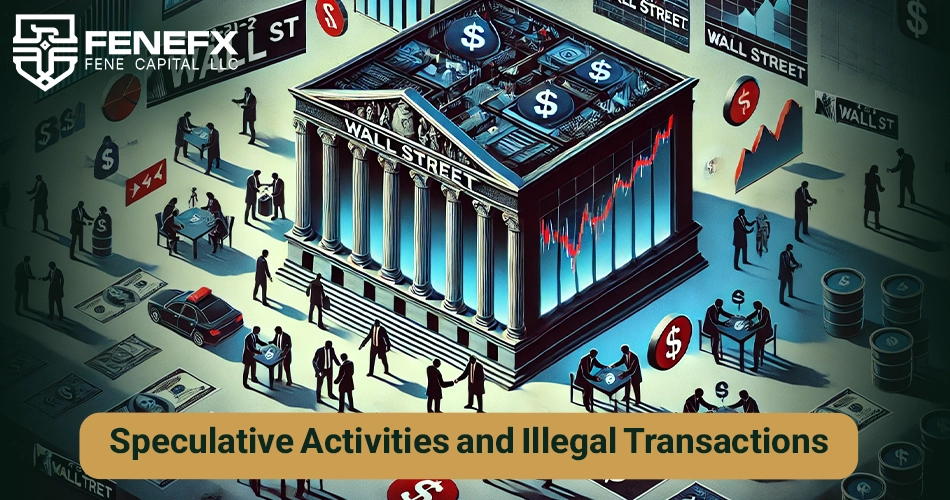
Speculative Activities and Illegal Transactions
Wall Street has also faced criticism for speculative activities and illegal transactions. Some investors and financial institutions focus more on short term gains and illicit profits rather than sustainable and legitimate investments. Such behavior can destabilize financial markets and undermine public confidence. Cases like insider trading and other illegal practices not only damage Wall Street’s reputation but also threaten the overall health of the financial system.
Wall Street's Political Influence and Its Impact on Financial Regulations
Another serious criticism of Wall Street is its close relationship with politics and its influence on financial regulations. Major financial institutions often spend large sums on lobbying efforts to influence policymakers. This influence is frequently aimed at reducing regulations and easing financial activities in ways that benefit these institutions but may harm the general public and the broader economy.
Such connections can lead to the creation of laws that favor large financial institutions while disadvantaged consumers and ordinary investors. For instance, reducing or eliminating financial oversight may create conditions that enable major corporations to engage in riskier activities, ultimately increasing the likelihood of financial crises.
In conclusion, the criticisms directed at Wall Street as a leading financial institution are not limited to economic issues but also extend to social and political concerns. These criticisms highlight the urgent need for substantial reforms in the financial and economic system to promote a fairer and more sustainable financial environment.
Wall Street and Economic Crises: From the 1929 Great Depression to the 2008 Crisis
As the financial center of the United States, Wall Street has always been at the heart of economic crises. From the Great Depression in 1929 to the 2008 financial crisis, this institution has played a significant role in both the formation and escalation of financial turmoil. Examining these crises reveals how Wall Street’s actions can have profound and far reaching effects on the global economy.
The Great Depression of 1929
The Great Depression, known as one of the most significant economic crises in history, began in 1929, with Wall Street playing a key role in its occurrence. During the early 1920s, the stock market grew rapidly, and many investors rushed to purchase stocks in hopes of gaining massive profits. This surge in investment led to the creation of a bubble in stock prices.
In October 1929, the stock market suddenly crashed, wiping out the wealth of countless investors and triggering a deeper economic crisis. Unemployment soared, and economic activity sharply declined. This crisis is regarded as a pivotal moment in the financial history of the United States, ultimately prompting major reforms in financial regulations and oversight of Wall Street.
The 2008 Financial Crisis
The 2008 financial crisis is also considered one of the most severe economic downturns in modern history. Wall Street and major financial institutions played a critical role in both triggering and worsening this crisis. In the early 2000s, relaxed financial regulations allowed banks and financial institutions to aggressively issue high risk mortgage loans. These loans were widely repackaged and sold in financial markets.
As interest rates rose and housing prices fell, many borrowers were unable to repay their mortgages, resulting in a widespread housing market collapse. Financial institutions heavily invested in these mortgage backed securities faced severe losses, and the crisis rapidly spread to other sectors of the economy.
The 2008 crisis was a direct result of irresponsible financial policies and speculative behavior on Wall Street. This turmoil not only led to the loss of millions of jobs and substantial wealth but also triggered economic crises on a global scale. The event highlighted Wall Street’s potential role as a driving force in creating financial instability with consequences extending far beyond U.S. borders.
Wall Street’s role in the 1929 Great Depression and the 2008 financial crisis clearly illustrates its profound and complex impact on the global economy. In both cases, irresponsible behavior and speculative practices led to financial bubbles that eventually resulted in economic downturns. These crises not only erased significant wealth but also pushed policymakers to implement major reforms in financial regulations and Wall Street oversight.
These painful experiences underscore the need for stricter and more responsible monitoring of financial institutions to prevent future crises. Ultimately, as a leading financial institution, Wall Street bears a significant responsibility in maintaining global economic stability and must actively address the challenges and risks inherent in the financial system.
Comments
Any chance of a follow-up on how retail traders can track institutional flows? COT reports, dark pools, that kind of thing.
Enjoyed this one, really well written.
Didn't realize how directly Wall Street sentiment spills into currency markets. The risk-on/risk-off explanation cleared up something I'd been confused about for months.
Visited the NYSE on a trip once. Funny how quiet the actual floor is compared to the movies — everything's really servers in New Jersey now.
Fair summary, though I'd argue it understates how much algo trading drives intraday moves now. The floor-trader image of Wall Street is mostly nostalgia at this point.