




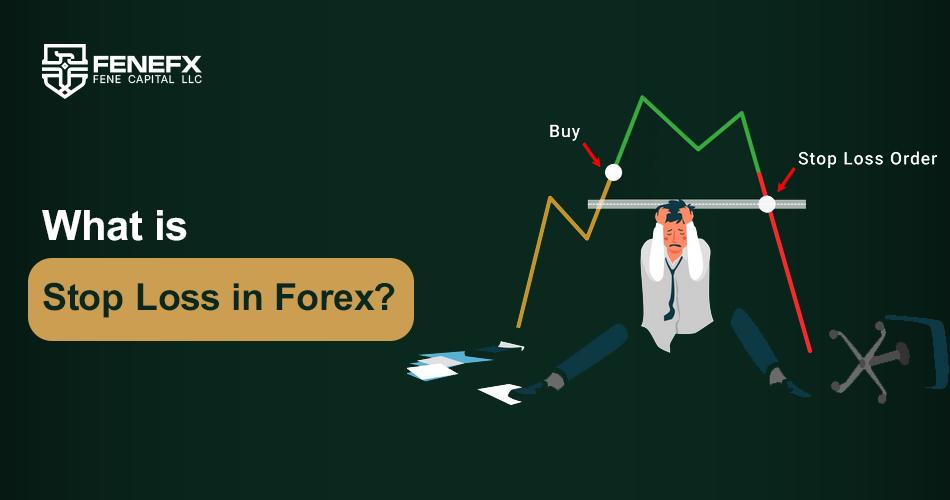
What is Stop Loss in Forex?
Stop Loss in Forex is a trading order that allows you to limit your loss in a trade. This is done by setting a price at which your trade will automatically close if the currency pair reaches that level.
What Is a Stop-Loss in Forex?
A stop-loss in Forex is a trading order that allows you to limit your loss in a trade. It works by setting a specific price at which your trade will be automatically closed if the price of the currency pair reaches that level.
How to Use a Stop-Loss
- Calculating the Stop-Loss Level:You should determine your stop-loss level based on technical analysis, fundamental analysis, and your personal risk tolerance.
- Setting the Stop-Loss:You can set your stop-loss directly within your trading platform.
- Monitoring Trades:You should regularly monitor your trades and adjust the stop-loss level if necessary.
Using a stop-loss is an essential tool for risk management in Forex. By applying stop-losses, you can protect your capital from large losses and increase your chances of success in the market.
Forex, the largest and most liquid financial market in the world, offers significant profit opportunities for traders. However, its highly volatile nature brings inherent risks, which—if not managed properly—can lead to substantial financial losses. Effective risk management is crucial to becoming a successful Forex trader.
Fenefx, with a deep understanding of the Forex market's importance, has prepared the comprehensive educational courseZero to One Thousandtaught by Mohammad Ahangari, a distinguished and experienced instructor. In this course, you will become familiar with the fundamentals and intricacies of Forex, including stop-loss, leverage, types of analysis, and strategies—taking a major step toward becoming a successful Forex trader.
What Is Risk Management?
Risk management involves identifying, analyzing, and mitigating risks associated with Forex trading. This includes creating a comprehensive strategy that defines position sizing, the use of stop-losses, and profit target levels. A sound risk management plan helps traders minimize losses and maximize gains.
Why Is Risk Management Important?
- Capital Protection:Risk management helps protect your capital by limiting your exposure to potential losses.
One of the challenges many traders—especially beginners—face is a lack of capital.Fenefx Prop Trading, as the most trusted capital-providing platform with Persian support, offers a unique opportunity to enter the Forex trading world without the need for significant initial capital. Prop trading with Fenefx opens a new gateway to the Forex market for experienced traders eager to prove their skills.
- Reduced Stress:Having a risk management plan enables traders to trade with more confidence and reduces the stress and anxiety associated with high-risk trading.
- Improved Consistency:Risk management reduces the impact of market volatility on your portfolio, helping stabilize trading results.
Tips for Risk Management in Forex
- Define Risk Per Trade:As a general rule, never risk more than 1–2% of your account balance on a single trade.
- Use Stop-Loss Orders:Stop-loss orders automatically close trades when the price hits a predefined level, helping you limit your losses.
- Set Take-Profit Levels:Take-profit levels lock in gains automatically, allowing you to capitalize on favorable market movements.
- Diversify Your Positions:Trading multiple currency pairs helps reduce overall risk and increases stability.
Risk management should be a top priority for all Forex traders. By building a strong risk management strategy, traders can protect their capital, improve their decision-making, and increase their chances of long-term success in the Forex market.
Benefits of Using a Stop-Loss
Using a stop-loss in Forex trading offers multiple advantages for traders. Below are some of the most important ones:
- Capital Preservation and Protection Against Major Losses:One of the most significant benefits of using a stop-loss is capital preservation and the prevention of heavy losses. In the Forex market, price fluctuations can be sudden and severe. In such situations, if you do not use a stop-loss, you may lose a substantial portion of your capital within seconds or minutes.
- Increased Confidence in Trading:Using a stop-loss helps you trade with greater confidence, knowing that if a loss occurs, it will be limited. This gives you peace of mind and allows you to focus better on your trades.
- Creating Discipline and Order in Trading:Using a stop-loss encourages greater discipline in your trading, as it forces you to calculate the risk and potential loss of a trade precisely before entering it.
- Preventing Emotional Trading:One of the greatest enemies of traders is emotional trading. When under emotional pressure, you may make poor trading decisions. Using a stop-loss helps you avoid emotional trading and base your trades on logic and analysis.
- Aiding in Risk Management:Risk management is one of the most important principles of Forex trading. Using a stop-loss allows you to effectively manage your trade risks and avoid large losses.
- Increasing the Probability of Success in Trades:Overall, using a stop-loss can help increase your chances of success in Forex trading.
While it is true that using a stop-loss has numerous benefits, it is important to remember thatno tool is flawless.The stop-loss can, in some cases, also have drawbacks. For example, it may prevent you from capturing large profits.
Therefore, it is important to become fully familiar with both the advantages and disadvantages of the stop-loss before using it, and to apply it properly and strategically.
Determining an Appropriate Stop-Loss
Setting an appropriate stop-loss is one of the most crucial steps every Forex trader must take before entering any trade. A stop-loss helps you manage your trade risk effectively and prevents significant losses.
Various Factors in Determining an Appropriate Stop-Loss
- Using Technical Analysis:One of the best methods for determining an appropriate stop-loss is using technical analysis. With the help of technical analysis, you can identify support and resistance levels on the price chart and set your stop-loss below the support level or above the resistance level.
- Considering Risk Tolerance Level:Every trader has a different level of risk tolerance. You should set your stop-loss according to your own level of risk tolerance. If you are risk-tolerant, you can place your stop-loss a bit farther from the current price. But if you are risk-averse, you should place it closer to the current price.
- Using Risk Management Tools:There are various tools available in Forex for risk management that can help you determine an appropriate stop-loss. For instance, you can use indicators like ATR (Average True Range) or RSI (Relative Strength Index) to set your stop-loss.
Tips for Setting an Appropriate Stop-Loss
- Set your stop-loss realistically.
- Review your stop-loss regularly and update it when necessary.
- Use trailing stop-loss.
- Use multiple stop-loss levels.
Participating in reputable educational courses and gaining awareness in trading psychology and risk management plays a key role in preparing you to face the challenges of the highly volatile Forex market.
The "Zero to One Thousand Forex" course by Mohammad Ahangari is one of the top free educational resources for Iranian traders. It provides comprehensive training on everything from basic to advanced concepts in Forex trading and serves as an effective step toward achieving your goals in this market.
Types of Stop-Loss Orders
In Forex trading, there are various types of stop-loss orders, each with its own advantages and disadvantages. Below are some of the most common types:
Simple Stop-Loss
A simple stop-loss is a type of stop where a specific price level is set as the exit point of the trade.
How it Works:
You set a stop-loss level based on your analysis before entering the trade.
If the price reaches this level, your trade will automatically be closed by your broker.
The goal is to limit your loss in case the market moves against your prediction.
Advantages:
- Simplicity:Very easy to use and does not require special knowledge or experience.
- Effectiveness:Can be very useful in preventing large and irreversible losses.
- Flexibility:You can use a simple stop-loss in different types of trades and markets.
Disadvantages:
- Lack of Precision:This type of stop-loss may not always work precisely, and in some cases, your loss may exceed the set amount.
- Lack of Dynamism:It does not adjust automatically with price movement, so it may limit your potential profits.
Use Cases:
- Beginner traders looking for a simple way to limit their losses.
- Experienced traders aiming to avoid catastrophic losses.
- Short-term traders seeking quick profits from short-term market fluctuations.
Example:
Suppose you buy a stock at 100 tomans. You set your stop-loss at 90 tomans. If the price falls to 90 tomans, your trade will automatically close, and you will incur a 10-toman loss.
A simple stop-loss is a useful tool for risk management in trading. By using this tool, you can limit your losses and increase your chances of success in the market.
Trailing Stop-Loss
A trailing stop-loss is a type of stop-loss that automatically adjusts upward as the price of an asset increases. This type of stop-loss helps traders lock in profits during upward trends while limiting their risk in case of a price decline.
How It Works:
- The trader sets an initial stop-loss level.
- A fixed range is defined between the current asset price and the initial stop-loss.
- As the asset price increases, the stop-loss also moves upward by the same amount.
- In case the price decreases, the stop-loss does not move.
- If the asset price reaches the stop-loss level, the trade is automatically closed.
Advantages:
- Profit Preservation:As the asset price increases, the trader’s profit increases as well.
- Limiting Losses:In the event of a price drop, the trader's loss is limited to the initial stop-loss level.
- Reduced Human Intervention:The trader does not need to manually adjust the stop-loss during the trade.
Disadvantages:
- Complexity:Setting and using a trailing stop-loss may be challenging for novice traders.
- Potential Loss of Profit:If the asset price temporarily declines and then rises, the trader may miss out on profits.
ATR-Based Stop-Loss
The ATR (Average True Range) indicator is a tool used to measure market volatility. It can be used to dynamically set stop-loss levels.
In other words, the ATR indicator is a popular tool among professional traders that allows for accurate tracking of price or rate fluctuations. The importance of finding the right location for a stop-loss in trades and the useful insights provided by ATR in this regard have captured the attention of many traders.
This section explores the ATR indicator and its applications.
Introduction to the ATR Indicator:
- Full Name:Average True Range (ATR)
- Meaning:Indicator of average true range
- Type:Oscillator
- Display Location:Below the chart
Applications of the ATR Indicator:
- Improving Trading Methodology:While ATR alone is not sufficient for trading, it plays an effective role in enhancing your trading strategy.
- Determining an Appropriate Stop-Loss:One of the key uses of ATR is assisting in accurately placing a stop-loss and preventing early closures of trades within the stop-loss range.
Key Notes About the ATR Indicator:
- Default Settings:14-period timeframe
- Focus on ATR Value:Unlike other oscillators, ATR’s directional trend is not important—only its value matters.
- Timeframe Setting:To display an accurate ATR value for each timeframe, set its configuration to "Chart."
- ATR and Market Volatility:During periods of high volatility, candlesticks with long wicks may form, increasing the risk of stop-loss activation.
- Relationship Between ATR and Candle Size:A rising ATR indicates larger candlesticks and increased volatility, while a falling ATR suggests smaller candles and decreased volatility.
- Simplicity and Ease of Use:Unlike many indicators, ATR is easy to understand and use.
Setting Stop-Loss with ATR:
Many traders suffer losses despite correctly identifying the market direction. This is because the stop-loss is triggered by an initial market move in the opposite direction before it shifts in the intended direction. In such cases, a correct analysis can lead to a loss.
Using the ATR indicator as an efficient tool helps in accurately placing the stop-loss and preventing unnecessary losses.
Example:
The ATR indicator, being popular among professional traders, allows precise tracking of price or rate fluctuations. Its importance in identifying the optimal stop-loss level and the useful suggestions it provides in this context have made it a focal point for many traders.
One of the standout uses of ATR is assisting in accurately placing a stop-loss and preventing early trade closures within the loss zone. For instance, in the image below, on the left side where market volatility is high, ATR has also increased. In such conditions, ATR can be used to set a stop-loss at a greater distance above the candlesticks to avoid activation from false volatility.
Key Points in Using Stop-Loss
Financial markets are full of volatility and uncertainty. As a trader, having a comprehensive risk management strategy—especially the precise use of stop-loss—is essential to protect your capital and ensure long-term survival. Here, we discuss the importance of adhering to predetermined stop-losses and offer tips for effective implementation.
Why Is Stop-Loss Essential?
Stop-losses are your line of defense against catastrophic losses. They help you control your risks and avoid emotional decisions that can wipe out your capital. By setting a predetermined stop-loss, you protect yourself before small losses turn into significant problems.
The Psychology of Stop-Loss
Often, traders fail to stick to their stop-losses, hoping the market will recover. This is a common mistake that can lead to considerable losses. It is important to remember that the market does not care about your emotions. The only way to protect yourself from unexpected market movements is to follow a predetermined trading plan.
Adhering to a stop-loss is a fundamental aspect of successful trading. By setting and sticking to your stop-loss, you safeguard yourself against disastrous losses and increase your chances of long-term survival in the market.
But the question arises: Should you adjust your stop-loss as the price fluctuates?
Reasons Not to Move Your Stop-Loss
Constantly adjusting your stop-loss based on price movements can have drawbacks:
- Increased Risk of Loss:Continuously moving your stop-loss, especially upwards, may expose you to larger losses. The price might reverse after you adjust the stop-loss, causing you to incur a greater loss.
- Loss of Discipline:Frequent adjustments to your stop-loss may indicate a lack of discipline in your trading. This can lead to emotional and irrational decision-making.
- Missed Opportunities:Constantly moving your stop-loss may cause you to miss out on profitable trading opportunities due to fear of loss.
Benefits of Not Moving the Stop-Loss
- Maintaining Discipline:Not moving your stop-loss helps you maintain discipline in your trades and stick to your trading plan.
- Avoiding Major Losses:By not adjusting your stop-loss, you prevent large and catastrophic losses.
- Peace of Mind:Not adjusting your stop-loss provides peace of mind and reduces anxiety and stress in your trades.
Avoiding constant stop-loss adjustments in response to price fluctuations is a disciplined and profitable trading strategy. By using this approach, you can significantly reduce your risk in trades and increase your chances of success in the market.
Using Stop-Loss Alongside Other Risk Management Tools
Using a stop-loss alone is not enough. To preserve capital and increase your chances of success in trading, you must also utilize other risk management tools.
Risk Management Tools
In addition to stop-loss, there are several other tools for managing risk in trading, including:
Technical Indicators:
Technical indicators can help you identify suitable entry and exit points for trades and predict future market trends.
Fundamental Analysis:
Fundamental analysis helps you determine the intrinsic value of an asset and avoid entering high-risk trades.
Position Management:
Position management includes determining the appropriate trade size and diversifying your trading portfolio.
Always remember that trading in financial markets involves risk. Before you begin trading, conduct thorough research and use your capital responsibly.
If you wish to invest professionally in financial markets, you must first learn trading strategies properly. Doing so will lead to more successful trades. You should also remember that using appropriate time frames based on your trading strategies is a key factor in ensuring success.
Final Word
By using stop-loss along with other risk management tools, you can build a comprehensive and disciplined trading strategy that helps preserve your capital and increases your chances of success in trading.
Using stop-loss in combination with other risk management tools is a necessity for successful traders. By applying these tools, you can significantly reduce your trading risk and increase your chances of succeeding in the market.
Frequently Asked Questions
What is the purpose of using a stop-loss in Forex?
The purpose of using a stop-loss in Forex is to limit potential losses in trades. This tool helps you prevent excessive capital loss when the market moves against your expectations.
What types of stop-loss orders exist in Forex?
Proper use of stop-loss is an essential part of a disciplined trading approach in Forex. Understanding the different types of stop-loss and how to apply them correctly can significantly help you preserve capital and increase your chances of long-term success.
When can setting a stop-loss be risky?
In highly volatile market conditions, the likelihood of sharp price swings increases, making the use of stop-loss challenging. Under such circumstances, a trader may be exited from a trade at the set price before the market recovers, potentially missing out on profits or even incurring losses.
Comments
A power cut during a news spike once left me with no platform and no stop loss. Never again — the stop goes in the moment the order does, no exceptions.
Basic topic, but honestly one of the better explanations of it.
Could you cover trailing stops next? I never know when to move mine to breakeven without choking a good trade.
One nuance — a stop that's too tight is nearly as bad as none at all. Put it where the setup is invalidated, not at a fixed pip count, and size the position around that distance.
I'll admit I traded without stops my first month because I 'watched the charts anyway'. One overnight gap taught me otherwise. Wish I'd read this earlier, thanks.