




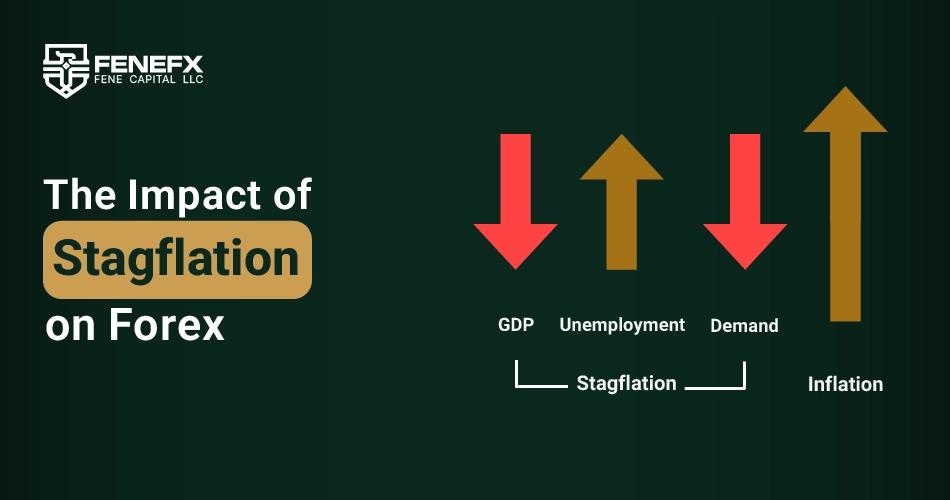
The Impact of Stagflation on Forex
Stagflation, a phenomenon that challenges economists, has a profound impact on global financial markets. Among these, the forex market, as the largest and most liquid financial market in the world, is particularly affected. This article examines the complex relationship between stagflation and the currency market and offers strategies for traders and investors. By gaining a deeper understanding of this phenomenon, readers can design more effective strategies to manage risk and capitalize on potential opportunities during challenging economic conditions. This article not only analyzes the current situation but also reviews past experiences to provide an outlook on the future of the forex market under stagflation conditions.
The Concept of Stagflation and Its Relationship with Macroeconomics
Stagflation is a combination of economic recession and high inflation. This situation occurs when economic growth slows or turns negative, unemployment rates rise, and prices continue to increase steadily. Such conditions pose a significant challenge for economic policymakers because traditional tools for combating recession (such as lowering interest rates) can exacerbate inflation, and conversely, tools for controlling inflation (such as raising interest rates) can worsen economic recession.
History and Examples of Stagflation
One of the most notable instances of stagflation occurred in the 1970s. This period began with a sharp rise in oil prices due to the OPEC embargo, which led to increased production costs and, ultimately, higher prices worldwide. During this time, developed countries faced double digit inflation rates alongside low economic growth. In the United States, the unemployment rate rose to 9%, and inflation exceeded 10% in some years.
A similar situation was observed in the United Kingdom. Ineffective economic policies and rising energy costs exacerbated the crisis. Governments attempted to address this situation by implementing contradictory fiscal and monetary policies, which often had counterproductive results.
This period demonstrated that even in advanced economies, stagflation can occur, challenging traditional economic theories based on the inverse relationship between inflation and unemployment (Phillips Curve).
The Relationship Between Stagflation and Macroeconomics
Stagflation reflects a failure in economic management and can have severe impacts on macroeconomics.
First, rising prices reduce consumers' purchasing power, leading to a decline in overall economic demand. This reduction in demand can result in decreased investment and increased unemployment.
Second, stagflation can diminish investor confidence and create instability in financial markets. Investors often seek safer assets, which can lead to extreme volatility in the currency market and a decline in the value of the national currency.
Third, policymakers face complex dilemmas during stagflation. Choosing between controlling inflation or stimulating economic growth can have far reaching consequences. Poor policy decisions can worsen the situation, resulting in a vicious cycle of rising inflation and declining growth.
In conclusion, stagflation is a serious challenge for macroeconomics that requires innovative solutions and precise economic management. A proper understanding of this phenomenon and its underlying causes can help policymakers design more effective strategies to combat it. Forecasting and preparing for such conditions can help prevent similar economic crises in the future.
Factors Contributing to Stagflation
Stagflation arises from the following factors:
Supply Shocks
Supply shocks refer to sudden and unexpected changes in the availability of goods and services that can impact the economy. These shocks often result from events such as wars, natural disasters, or economic sanctions. A prominent example is the 1970s oil crisis, which occurred due to the OPEC oil embargo, causing oil prices to surge dramatically. This increase led to higher production costs, ultimately driving up the prices of goods and services. In such conditions, inflation remains high despite declining economic growth.
Inefficient Monetary Policies
Inefficient monetary policies can contribute to stagflation. Central banks typically manage inflation and economic growth by adjusting interest rates and controlling the money supply. However, in some cases, misguided policies can produce adverse outcomes. For instance, excessively lowering interest rates to stimulate economic growth may increase demand, consequently fueling inflation. Conversely, raising interest rates to control inflation can further slow economic growth and increase unemployment.
Inefficient monetary policies may also stem from a lack of coordination between fiscal and monetary policies. If governments adopt contractionary fiscal policies to reduce public debt while the central bank simultaneously pursues expansionary monetary policies, this contradiction can undermine investor confidence and contribute to stagflation.
Impact of Oil and Commodity Prices
Oil and commodity prices play a significant role in triggering stagflation. Rising oil prices directly increase production costs for various goods and services. Fuel is a major cost factor in transportation and production, and its price hikes rapidly spread across other sectors of the economy.
In addition to oil, rising prices of other commodities can also fuel stagflation. For example, increased prices of metals or agricultural products can raise production costs and result in higher final product prices. This scenario reduces consumer demand and slows economic growth, while inflation remains elevated.
In summary, these contributing factors interact with one another, creating conditions that are challenging for policymakers to manage. The combination of supply shocks, inefficient monetary policies, and rising commodity prices can lead to stagflation, which has extensive economic and social consequences.
Managing these conditions requires a deep understanding of underlying factors and the implementation of coordinated and targeted policies. Enhancing productivity, boosting domestic production, and reducing reliance on foreign resources are some of the strategies that can help mitigate the effects of stagflation. Simultaneously, closely monitoring monetary and fiscal policies and aligning them with economic conditions can help prevent such crises from occurring.
The Impact of Stagflation on the Forex Market
How Does Stagflation Affect the Forex Market?
Currency Devaluation
Stagflation is often accompanied by a decline in the value of national currencies. This devaluation stems from rising inflation and slowing economic growth, which reduce purchasing power. During stagflation, investors lose confidence in the economy and seek more stable currencies. This shift can decrease demand for the national currency, resulting in its depreciation. Currency devaluation can further exacerbate inflation as imports become more expensive, driving up the cost of goods and services.
Changes in Interest Rates and Central Bank Policies
Central banks face complex challenges when dealing with stagflation. On one hand, raising interest rates can help control inflation; on the other hand, it may further slow economic growth and increase unemployment. Under such conditions, central banks may adopt conflicting policies. For example, they may raise interest rates to curb inflation while simultaneously implementing measures to stimulate economic growth. These conflicting policies can cause sharp volatility in the forex market as investors look for clues about future monetary policy direction.
Investor Reaction to Economic Volatility
During periods of stagflation, investors seek to reduce their risks. This behavior can lead to changes in investment strategies within the forex market. Investors may shift towards safer assets such as gold or more stable currencies, altering demand and supply patterns in the currency market. Additionally, economic volatility can increase speculative activities in the forex market as traders attempt to profit from short term fluctuations. These activities can further intensify currency volatility.
Overall, stagflation has widespread effects on the forex market. Currency devaluation, changes in interest rates, and investor reactions to economic volatility can contribute to intense and unpredictable fluctuations in currency values. Such conditions make risk management, diversification strategies, and hedging essential for traders. A proper understanding of stagflation trends and their impact on the forex market can help traders make more informed decisions and capitalize on emerging opportunities.
Strategies to Counter Stagflation in Forex
To manage stagflation in the forex market, we recommend the following strategies:
Diversification of Investment Portfolio
Diversification is one of the fundamental principles of risk management in the forex market. During periods of stagflation, economic volatility can quickly impact the value of currencies. By diversifying your investment portfolio, you can reduce the risks associated with the depreciation of a specific currency. This is achieved by allocating capital across multiple currencies and various assets. In this way, if one currency declines, other currencies and assets can offset the losses. Additionally, diversification allows you to take advantage of different opportunities in the market and enhance the overall returns of your portfolio.
Investing in Safe Haven Currencies
During stagflation, investors typically seek safe haven currencies. Safe haven currencies are those that experience less volatility during adverse economic conditions. The US dollar and the Swiss franc are among the well known safe haven currencies. Investing in these currencies can help preserve capital value against inflation and economic fluctuations. Moreover, safe haven currencies are generally associated with lower interest rates, which can help reduce financial costs during periods of stagflation. By focusing on safe haven currencies, investors can reduce risks stemming from stagflation and achieve greater stability.
Using Derivatives and Hedging
Derivatives and hedging play a crucial role in managing the risks posed by stagflation. Futures contracts, options, and swaps are among the derivative instruments that can help investors protect their positions against currency rate fluctuations. These tools allow investors to lock in current exchange rates, reducing risks related to sudden currency value changes.
Hedging is also recognized as an effective strategy for minimizing risk. By using hedging techniques, traders can reduce exposure to currency volatility. For example, if a particular currency is expected to decline, taking an opposite position in the derivatives market can mitigate risk. These methods enable traders to establish greater stability in their investment portfolios during stagflation conditions and prevent potential losses.
Ultimately, strategies to counter stagflation in forex should be designed to provide flexibility and adaptability to changing market conditions. By combining diversification, investing in safe haven currencies, and utilizing derivatives and hedging, investors can minimize risks associated with stagflation and focus on preserving and increasing their capital value. These strategies help investors identify suitable opportunities during difficult economic conditions and achieve desirable outcomes.
The Role of Fiscal Policies in Managing Stagflation
What Role Do Fiscal Policies Play in Managing Stagflation?
Introduction to Fiscal Policies
Fiscal policies refer to a set of measures adopted by governments to manage the economy. These policies include changes in taxation, government spending, and budget programs. In stagflation conditions, fiscal policies can play a crucial role in controlling inflation and stimulating economic growth.
The Impact of Fiscal Policies on Inflation
One way to control inflation during stagflation is through contractionary fiscal policies. These policies involve reducing government spending and increasing taxes. By decreasing overall demand in the economy, pressure on prices is reduced, and inflation is controlled. However, this approach can further exacerbate economic recession, so it must be implemented carefully.
Stimulating Economic Growth Through Fiscal Policies
To counter recession, governments may resort to expansionary fiscal policies. This includes increasing government spending on infrastructure projects and reducing taxes to stimulate demand and create jobs. During stagflation, these policies should be designed in a way that boosts economic growth without triggering additional inflation.
Challenges of Fiscal Policy Implementation During Stagflation
One of the main challenges in implementing fiscal policies during stagflation is finding the right balance between controlling inflation and promoting growth. Policymakers must carefully assess the short term and long term impacts of their actions and use various tools in a coordinated manner.
Examples of Successful Policies
In some countries, innovative fiscal policies have successfully managed stagflation. For example, governments can focus on investments in green technologies and innovation, which not only stimulate economic growth but also reduce dependence on foreign resources. Such strategies can contribute to creating sustainable jobs and reducing inflation.
In conclusion, fiscal policies play a vital role in managing stagflation. Governments must address economic challenges through innovative and coordinated approaches. Flexibility and readiness to adapt to changing conditions are key factors for the successful implementation of effective fiscal policies. By correctly executing these policies, it is possible to mitigate the negative effects of stagflation and create a solid foundation for sustainable economic growth.
The Impact of Stagflation on Employment and the Labor Market
How Does Stagflation Affect Employment and the Labor Market?
Introduction to Stagflation and the Labor Market
Stagflation refers to the concerning combination of slow economic growth and high inflation, which creates challenging conditions for the labor market. This situation leads to rising unemployment and pressure on wages, posing challenges for both workers and employers.
Rising Unemployment
During stagflation, companies face higher production costs and reduced demand. This situation often results in workforce reductions and increased unemployment rates. Due to financial pressures, employers are forced to reduce staff numbers or suspend new hiring. This leads to a decline in household incomes and reduced consumer purchasing power, which in turn further exacerbates the economic recession.
Pressure on Wages
Stagflation also puts significant pressure on wages. As inflation rises, workers' purchasing power declines, increasing demands for higher wages. However, in a recessionary environment, companies often struggle to raise wages. This contradiction can result in worker dissatisfaction and increased social unrest.
Impact on Skills and Education
During periods of stagflation, investment in education and skill development may decrease. Due to financial constraints, companies may cut training budgets, leaving workers with fewer opportunities to improve their skills. This situation can reduce the workforce's ability to adapt to labor market changes and negatively impact overall economic productivity.
Strategies to Address Labor Market Challenges
To mitigate the challenges caused by stagflation in the labor market, several strategies can be effective:
Government Investment in Key Sectors:Governments can create new job opportunities and reduce unemployment by investing in infrastructure and innovative sectors.
Education and Skills Development Programs:Expanding educational and skill development programs can help workers acquire new skills and remain competitive in the labor market.
Support for Small and Medium Sized Enterprises (SMEs):Providing financial assistance and tax incentives to SMEs can help sustain employment and create new job opportunities.
Stagflation has profound effects on the labor market, and managing it requires coordinated and targeted actions from both governments and the private sector. By implementing appropriate strategies, the negative impacts of stagflation on employment can be minimized, improving economic conditions and increasing job opportunities. Flexibility and innovation in policy making can lead to the creation of a more resilient and sustainable labor market.
Case Study: The Impact of 1970s Stagflation on the Currency Market
In the 1970s, stagflation had a significant impact on the currency market. This period began with a sharp increase in oil prices due to the OPEC embargo, which led to higher production costs and soaring inflation. The value of the US dollar declined against major currencies as the United States faced double digit inflation and sluggish economic growth. The rising oil prices increased import costs for many countries, weakening their national currencies. Consequently, severe exchange rate volatility was observed during this period, which affected investor confidence in various currencies.
Policy and Market Response
Policymakers in the 1970s faced considerable challenges. Central banks attempted to control inflation by raising interest rates, but these measures hurt economic growth and increased unemployment. In the United States, the Federal Reserve, led by Paul Volcker, significantly raised interest rates to curb inflation. While this move triggered a recession, it ultimately helped stabilize the value of the US dollar.
In Europe, governments and central banks also sought solutions to tackle stagflation. Some countries adopted contractionary fiscal policies, while others focused on increasing production and reducing dependence on oil to strengthen their economies. These policies had varying effects on exchange rates, resulting in significant changes in the currency market.
The market also responded to these shifts. Investors sought safer assets, driving increased demand for gold and more stable currencies. This change in demand contributed to greater exchange rate volatility. Speculators exploited these fluctuations, further fueling rapid currency value changes.
Overall, the stagflation of the 1970s demonstrated how factors such as rising oil prices, monetary policies, and market reactions can lead to widespread changes in the currency market. This period provided policymakers and investors with valuable lessons about risk management and the importance of coordinated economic policies.
Key Risk Management Tips During Stagflation
Managing risk in stagflation conditions requires precise and flexible strategies. Here are some key tips for traders:
Diversifying Investment Portfolios:Spreading investments across various currencies and safer assets can reduce risks associated with the depreciation of a specific currency.
Using Derivatives and Hedging:Utilizing futures contracts and options can help protect against currency rate fluctuations.
Monitoring Economic and Monetary Policies:Tracking changes in central bank policies and economic decisions enables better informed trading decisions.
Focusing on Safe Haven Currencies:During unstable conditions, investing in safe haven currencies such as the US dollar and Swiss franc can provide greater stability.
Technical and Fundamental Analysis:Using both technical and fundamental analysis can help identify trends and determine appropriate entry and exit points.
Forecasting Future Forex Market Trends During Stagflation
Forecasting the forex market during stagflation is challenging, but certain trends are foreseeable:
High Volatility:Stagflation often leads to increased volatility. Traders should be prepared to react quickly to market changes.
Increased Demand for Safe Haven Currencies:As investors seek security, demand for safe haven currencies is likely to rise.
Interest Rate Changes:Central banks may adopt sudden interest rate adjustments, which can significantly impact currency values.
Ultimately, traders must continuously stay informed and adjust their strategies based on evolving market conditions. Flexibility and readiness to adapt are key success factors for forex trading during stagflation.
Comments
Solid write-up, straight to the point.
Could you do a follow-up on which indicators signal stagflation early? CPI vs PMI vs unemployment — which one leads?
Traded through 2022 when everyone was screaming stagflation. My EUR/USD shorts did great but I got chopped up on commodity pairs. Wild time.
I always mixed up stagflation with regular inflation. The part about slow growth and rising prices happening at the same time finally made it click for me, thanks!
Good overview, but I'd add that stagflation periods tend to favor safe havens like CHF and JPY. The dollar's reaction really depends on whether the Fed prioritizes fighting inflation or saving growth.