




Trading Using Blockchain
Financial markets are constantly seeking technologies that can enhance efficiency, security, and transparency in transactions. Blockchain, as a technological revolution, offers an innovative solution to existing challenges in financial markets, particularly the complex Forex market. This technology, with its ability to eliminate traditional intermediaries, reduce costs, increase transaction speed, and ensure data security, has the potential to fundamentally transform the way currency trading is conducted. This article provides a comprehensive analysis of blockchain-based trading in Forex and its impact on international transactions.
Understanding Blockchain Technology and Its Key Features
Blockchain is an innovative technology that acts as a digital ledger. This ledger records information in a chain of blocks. Each block contains specific data, including transaction details, which are linked to the previous block. This chain-like connection ensures that the data is stored securely and immutably.Title | Description |
Definition of Blockchain | A digital ledger that stores information in a chain of blocks. |
Data Structure | Each block contains specific data such as transaction details and links to the previous block. |
Security Feature | The chained structure ensures data is secure and immutable. |
Network Model | Operates on a peer-to-peer (P2P) network using multiple nodes (computers). |
Consensus Process | Nodes must agree to validate a transaction — this is called consensus. |
Tamper Resistance | Modifying data requires altering all previous blocks, which is nearly impossible. |
Difference Between Blockchain and Traditional Databases
- Traditional Databases:
- Traditional databases are usually managed by a central authority, and data is stored in a specific location. This centralized structure makes them vulnerable to cyberattacks and manipulation. Moreover, trust in the system administrator is essential, as they are responsible for recording and maintaining the data.
- Blockchain:
- Blockchain, on the other hand, uses a decentralized structure. Data in blockchain is not stored on a central server but is distributed across all nodes in the network. This distribution ensures that no single node has full control over the data. Additionally, the use of advanced encryption in blockchain enhances data security and minimizes the possibility of tampering.
Advantages of Blockchain in Enhancing Security and Reducing Risk
One of the biggest advantages of blockchain is its high level of security. Since data is stored across multiple points and each transaction is recorded in an encrypted format, the likelihood of cyberattacks and data manipulation is significantly reduced.
Furthermore, blockchain reduces the risk of human errors and fraud. In traditional systems, data recording can be affected by human mistakes or malicious intent. However, in blockchain, transactions are recorded only after multiple nodes verify and reach a consensus in the network. This feature increases confidence and reduces risk in using this technology in financial markets like Forex.
Blockchain Features Relevant to the Forex Market
Decentralization and Reducing Dependence on Central Authorities
One of blockchain's most important features is its decentralization. In traditional Forex markets, transactions are processed through intermediaries such as banks or brokers, which add costs and increase settlement time.
Using blockchain eliminates these intermediaries. By leveraging a decentralized network, transaction parties can interact directly with each other. This not only reduces costs but also significantly shortens transaction times.
Transparency in Transactions and Building Trust in the Market
Transparency is a central feature of blockchain, which is highly valuable in the Forex market. All transactions in blockchain are publicly (or, if needed, privately but traceably) recorded. This means that any user can review the transaction history and verify its authenticity.
This transparency boosts trust in the market. In Forex, which is sometimes criticized for its complexity and lack of transparency, blockchain can strengthen trust among traders and reduce potential abuses.
Immutability of Information and Its Importance in Financial Transactions
Data recorded on the blockchain cannot be altered once verified. This immutability means that transaction history is stored permanently and tamper-proof.
In the Forex market, where accuracy and reliability of information are critical, this feature can play a significant role. Traders can be confident that their financial data is recorded precisely and without alterations. This feature also reduces disputes and legal challenges in the market.
Blockchain technology has the potential to revolutionize the Forex market by offering enhanced security, reduced costs, greater transparency, and streamlined operations. It addresses some of the long-standing challenges in the financial industry, providing a robust and innovative foundation for future trading.
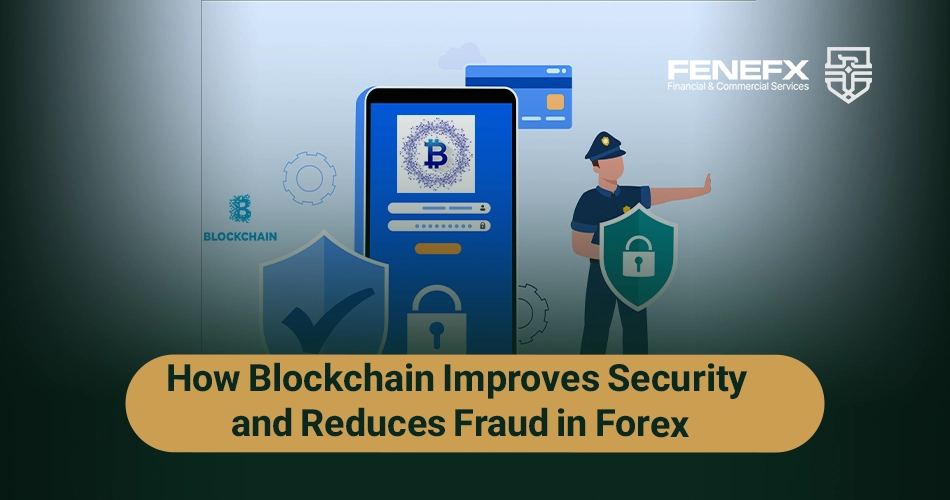
How Blockchain Improves Security and Reduces Fraud in Forex
Using Encryption to Prevent Data Tampering
Encryption is one of blockchain's primary tools for maintaining data security. In this technology, every transaction is encrypted using complex algorithms, and only individuals with special keys can access the information.
This makes it nearly impossible to manipulate or alter data without the knowledge of other network participants. In the Forex market, where a high volume of financial transactions occurs, this feature can prevent fraud and manipulation, enhancing the overall security of the market.
Minimizing Security Risks in Transactions and Protecting Investors
Due to its global and digital nature, the Forex market is always exposed to security risks like hacking and theft. Blockchain minimizes these risks by distributing data across the network and encrypting transactions.
Additionally, blockchain ensures that every transaction is precisely recorded and traceable. This transparency and traceability provide investors with greater confidence and protect them against fraud and financial threats.
Role of Smart Contracts in Forex Trading
What Are Smart Contracts?
Smart contracts, one of blockchain's key innovations, are digital, self-executing contracts with terms and conditions written into code. Stored on the blockchain, these contracts automatically execute once predefined conditions are met, eliminating the need for third-party intermediaries.
In Forex trading, smart contracts can enhance the execution of transactions. For example, parties can create smart contracts that execute trades only when a specific exchange rate is reached. This reduces the need for constant monitoring and eliminates the risk of one party failing to fulfill the agreement.
Automating Processes and Reducing Human Errors
One of the greatest advantages of smart contracts is the automation of complex processes. In the Forex market, where transaction volumes and complexities are high, human errors can result in significant costs for traders.
Smart contracts minimize the likelihood of human error by automating trade execution. For instance, setting up a smart contract to buy or sell currency upon meeting specific conditions eliminates the need for human intervention and potential errors. This automation ensures greater precision and consistency in trading.
Increasing Speed and Accuracy in Trade Execution
Time is critical in the Forex market, where even a few seconds of delay can result in financial losses. Smart contracts significantly accelerate transaction speed by executing trades automatically and in real time.
Additionally, the accuracy of trade execution improves. Smart contracts, by precisely enforcing predefined conditions, eliminate issues related to misunderstandings or human miscoordination. This feature is particularly valuable in trades requiring fast and accurate execution, such as algorithmic trading.
Blockchain technology, with its unique features such as decentralization, transparency, immutability, and high security, has had a significant impact on financial markets, especially Forex. By reducing costs, accelerating processes, minimizing fraud, and increasing security, blockchain strengthens investor trust.
Smart contracts further enhance Forex trading by automating processes, reducing human error, and ensuring faster and more precise execution of trades. As blockchain continues to advance, it is expected to play an even more prominent role in the future of financial markets.
Benefits of Using Blockchain in the Forex Market
Reducing Operational Costs and Fees
One of the main challenges in the Forex market under traditional systems is the operational costs and fees charged by intermediaries such as banks and brokers. Blockchain eliminates intermediaries, significantly reducing these extra costs.
In a blockchain network, transactions occur directly between parties without the need to pay fees to financial intermediaries. This cost reduction is particularly important for traders who conduct high transaction volumes, as it can significantly improve their profitability.
Faster Financial Settlement
In traditional systems, financial settlements can take several days, especially for international transactions. This delay is not only costly but also exposes traders to price fluctuation risks.
Blockchain resolves this issue by enabling real-time transactions. All transaction details are recorded and verified instantly, allowing parties to settle immediately. This feature not only saves time but also reduces risks associated with settlement delays.
Improved Data Integrity and Reduced Transaction Recording Issues
A common issue in the Forex market is disputes arising from inaccurate transaction recording or inconsistencies in financial data. Blockchain, with its shared and immutable ledger, eliminates this problem.
All transactions are recorded transparently and permanently on the blockchain, ensuring that no data can be altered without the knowledge of all network participants. This feature ensures that all parties to a transaction have access to a single, consistent version of the data, minimizing disputes caused by data inconsistencies.
Challenges and Limitations of Using Blockchain in Forex
Scalability Issues and High Transaction Volumes
One of the biggest challenges for blockchain technology is its scalability. Given the high volume of transactions in the Forex market, current blockchain networks may struggle to achieve the necessary speed for processing all transactions.
For instance, Bitcoin and Ethereum, two of the most popular blockchain networks, can process only a limited number of transactions per second. Compared to traditional systems like banking networks, which can process thousands of transactions per second, this limitation is a significant drawback.
Legal Barriers and Lack of Global Standards
The Forex market is a global market influenced by various laws and regulations in different countries. Meanwhile, blockchain technology still lacks clear regulations in many jurisdictions, which could hinder its widespread adoption in Forex.
The absence of global standards for using blockchain in Forex is another major challenge. For example, differences in laws regarding data privacy, taxation, and transaction oversight can complicate the implementation of this technology.
High Implementation Costs and Transition from Existing Systems
Using blockchain in the Forex market requires major changes to existing infrastructures. These changes include updating trading systems, training staff, and creating coordination among various institutions.
This process is not only time-consuming but also expensive. Many financial organizations may be reluctant to adopt blockchain technology due to the high implementation costs and uncertainty about return on investment.
Blockchain Innovations in Forex Trading
The Rise of Decentralized Finance (DeFi) and Its Impact on Forex
The emergence of decentralized finance (DeFi) technology based on blockchain has brought about a fundamental transformation in the Forex market. DeFi allows traders to engage in currency transactions without relying on traditional intermediaries such as banks or brokers. This has not only reduced costs but also facilitated access to the Forex market for users worldwide. Moreover, transaction transparency has increased due to the recording of all transactions on the blockchain, thereby reducing the risk of fraud and manipulation.
Using Blockchain to Establish Decentralized Exchanges
Decentralized exchanges (DEX) are among the key blockchain innovations in Forex trading. These exchanges enable users to directly exchange currencies without requiring a centralized entity. This decentralized structure reduces hacking risks, enhances security, and lowers transaction-related costs.
Additionally, decentralized exchanges automatically use smart contracts to enforce trading rules, increasing speed and efficiency.
Tokenization of Currencies and New Trading Opportunities
Tokenization of currencies is another blockchain innovation that has created new opportunities in Forex trading. This process involves converting traditional currencies into digital tokens that can be traded on a blockchain. Tokenization increases market liquidity and facilitates the use of advanced financial instruments such as stablecoins and smart contracts. This innovation allows traders to benefit from faster speeds and lower costs.
Case Studies: Applications of Blockchain in the Forex Market
HSBC’s "FX Everywhere" Platform
HSBC is one of the leading financial institutions leveraging blockchain in Forex trading. The bank's blockchain-based "FX Everywhere" platform enables centralized management and coordination of international payments. This system has reduced foreign exchange transaction costs by up to25%and minimized settlement times. HSBC has used this platform to complete over 3 million transactions and transfers worth billions of dollars.
Reducing Costs and Increasing Efficiency in Currency Trading with Blockchain
By eliminating intermediaries and digitizing trading processes, blockchain has significantly reduced costs and enhanced efficiency. In traditional methods, Forex transactions required significant time for settlement and verification. However, with blockchain, these processes are nearly instantaneous. This reduces operational costs and improves transparency.
The Experience of Major Banks Using Blockchain
Many major banks worldwide have adopted blockchain to enhance Forex trading processes. For example, some banks use blockchain to streamline international financial flows and ensure regulatory compliance. These experiences have shown that blockchain can increase trust among parties, improve transaction security, and reduce overall costs.
The Role of Blockchain in Enhancing Financial Inclusion and Access to the Forex Market
Reducing Dependency on Traditional Financial Institutions
Blockchain technology, through its decentralized infrastructure, plays a critical role in reducing reliance on traditional financial institutions. In traditional Forex trading, large banks and brokers act as intermediaries, controlling financial flows. However, blockchain enables users to execute transactions directly without the need for these intermediaries.
This feature not only lowers transaction costs but also broadens market access to a wider audience. By providing transparency and security in transactions, blockchain alleviates concerns such as fraud and misuse, giving users greater confidence. This is particularly valuable for communities or regions with limited access to financial services, allowing them to leverage the Forex market as a global opportunity.
Easier Access for Individuals and Small Businesses to the Forex Market
One of the largest barriers to entry for individuals and small businesses in the Forex market is the complexity and high cost of traditional trading methods. Blockchain reduces these barriers. Decentralized exchanges (DEX), operating on blockchain technology, allow users to trade directly at lower costs.
Moreover, smart contract technology automates trading processes, eliminating the need for advanced technical knowledge or large financial teams. Small businesses and entrepreneurs can also benefit from blockchain. For example, they can use tokenization to finance their projects or settle international payments. This makes Forex a powerful tool for economic development and access to global markets.
The Future of Blockchain Technology in the Forex Market

Emerging Trends in Blockchain-Based Currency Trading
Blockchain continues to evolve, introducing new innovations in the field. One of these trends is the growing use ofCentral Bank Digital Currencies (CBDCs), built on blockchain technology. These currencies have the potential to bridge the gap between traditional financial systems and decentralized technology, allowing users to benefit from both.
Another trend is the development ofcross-chain protocols, enabling the fast and secure transfer of assets between different blockchains. This advancement will significantly facilitate cross-border trade and currency exchange. Additionally, the integration of artificial intelligence with blockchain for predicting market movements and executing automated trades is emerging as a promising trend.
Forecasting Global Adoption of Blockchain in the Financial Industry
Global adoption of blockchain is accelerating due to its benefits like transparency, security, and efficiency. Predictions indicate that in the coming years, many banks and major financial institutions will incorporate blockchain to enhance their systems. Collaborations between public and private organizations are helping standardize and promote the global adoption of this technology.
For example, leading banks such as HSBC and JPMorgan have launched blockchain-based projects to reduce operational costs and simplify settlements. These developments suggest that blockchain can become a central tool in the global financial industry, overcoming many current barriers in the Forex market.
The Impact of Blockchain Innovations on the Future of Financial Markets
Blockchain innovations have transformed not only the Forex market but also the broader financial markets. The use of smart contracts and asset tokenization has restructured markets and introduced new financial tools. These changes have increased transaction speed, reduced costs, and enhanced market transparency.
Additionally, blockchain can address complex challenges such as global financial regulatory compliance. By offering automated tools for data tracking and reconciliation, this technology simplifies and reduces the cost of regulatory processes. As a result, global financial markets will become more transparent and reliable.
Comments
Tried a DEX for the first time last month and paid more in gas than the trade was worth. Now I batch my trades and stick to layer 2s.
Interesting angle, enjoyed this one.
On-chain trading is transparent, sure, but front-running bots watching the mempool are a real cost. MEV eats retail more than people realize.
I thought blockchain was just for holding coins — didn't realize actual trade settlement can happen on-chain. Nicely explained, thanks.
Could you do a deeper piece on DEXs vs centralized exchanges? Still not sure when on-chain trading is actually worth the gas fees.