
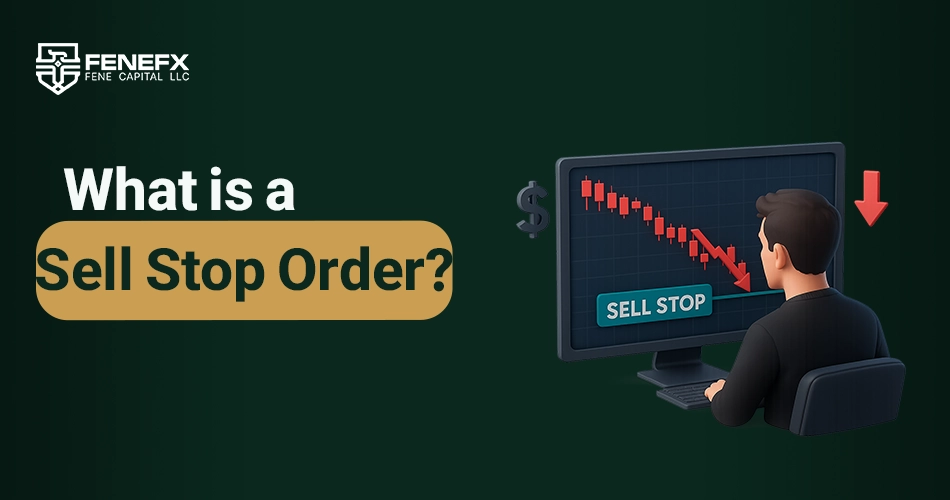
What is a Sell Stop Order
In volatile financial markets, the **Sell Stop** order allows traders to manage their positions intelligently without the need for constant screen monitoring. This order is triggered when the price of an asset drops to a level below the current market price, automatically executing a sell position to prevent further losses. Proper use of a Sell Stop can be the difference between an amateur and a professional trader especially considering that over 70% of beginner traders lose their capital due to the lack of an effective exit strategy.
How Does a Sell Stop Work in Order Placement?
A sell stop order works by entering a specific price point below the current market price. Once the market reaches this price level, the order is activated, and the sale is executed automatically. This automated system allows traders to protect themselves from sudden market movements or sharp fluctuations that could cause additional losses.
For example, if the price of an asset is currently $100, and the trader predicts that if the price falls to $95, the price drop will likely continue, they can place a sell stop order at $95. In this case, if the market reaches $95, the sell order is triggered, and the trader’s position is closed, preventing further losses.
In platforms like MetaTrader or TradingView, placing a sell stop order is straightforward. The trader simply enters the desired price in the order placement section and confirms the order.
Use of Sell Stop in Real Market Scenarios
A sell stop order has many uses in different market conditions, particularly when markets are affected by economic news or sudden changes. For instance, let’s say you are in a long position on a currency pair, and the market has been trending upward. However, if the price falls below a certain point, you want to close your position to avoid further losses. In this situation, a sell stop order can help protect you from risk.
Another application of the sell stop order occurs when a trader is about to enter a new position but is concerned that the market may suddenly move in the opposite direction. In this case, a sell stop order can act as a risk management tool. If the market moves against the trader and hits the sell stop price, the position is automatically closed.
Additionally, in markets with high volatility, such as cryptocurrency markets, sell stop orders can be an effective tool for risk management. Traders, especially in these markets, use them to prevent substantial losses.
Sell Stop vs. Sell Limit: Which One is the Better Choice?
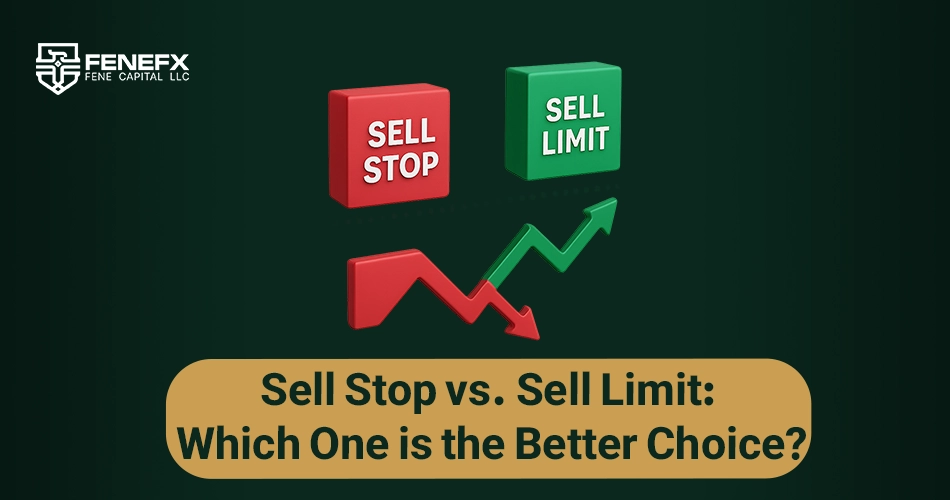
One of the most common questions traders face is the difference between sell stop and sell limit orders. While both orders are used for selling assets, they function differently and are used in different market situations.
A sell limit order is an order to sell an asset at a specific price higher than the current market price. This order is used when a trader anticipates that the price of an asset will temporarily rise before it starts to fall again. In other words, the trader expects a brief price increase before a decline occurs.
In contrast, a sell stop order is used when the trader believes that the market will continue to move downward once it hits a certain price. Therefore, sell stop orders are used to close long positions when the price declines.
Choosing between a sell stop and a sell limit order depends on the trader's analysis and trading strategy. If a trader is in a position where they expect the price to reach a certain level before continuing in the expected direction, a sell limit order may be the better choice. However, in markets with significant volatility, a sell stop order is generally a safer tool for risk management.
When Should You Use a Sell Stop Order?
A sell stop order is used in various market situations to manage risk and limit losses. This order is typically employed when traders aim to protect themselves from sudden market fluctuations. To better understand when to use a sell stop, consider the following scenarios:
In a Downtrend Market
When a trader holds a long position and the market shows clear signs of a downtrend, a sell stop order can be used to prevent further losses. For example, if the price of an asset is currently $120, and the trader anticipates that if the price drops to $110, the downtrend will accelerate, they can place a sell stop order at $110.
In Volatile Markets
In markets with high volatility, such as cryptocurrencies or specific stocks, the market can change direction rapidly. In these situations, a sell stop order helps the trader avoid significant losses from unexpected market moves.
After Major Economic News Releases
During the release of important economic data or global events that can heavily impact the market, a sell stop order can help reduce the risk of large losses. For example, after the release of employment data or central bank decisions, the market may react sharply, and a sell stop order helps to protect the trader from this volatility.
Key Considerations When Using Sell Stop Orders in Trades
Although a sell stop order is a useful tool for managing risk, there are important factors to consider when using it. One of the most critical aspects is choosing the right price level for placing the order.
Choosing the Right Price Level
It is essential to place the sell stop order at a reasonable distance from the current market price. If the order is set too close to the current price, minor market fluctuations may trigger it. On the other hand, if the sell stop is set too far away, the order might miss the intended risk management target, leading to larger losses.
The Impact of Slippage
During times of high volatility, such as major news releases or in cryptocurrency markets, slippage can be an issue. Slippage refers to the difference between the expected price of the order and the price at which the order is actually executed. For example, if your sell stop is set at $110, but the market quickly moves to $105, the order may be filled at $105 instead. Managing slippage is crucial when using sell stop orders, as it can affect the effectiveness of your risk management strategy.
The Need for Monitoring and Adjustment
Sometimes, it’s necessary to adjust the sell stop order based on changing market conditions. If the market trend changes or the initial analysis becomes less relevant, resetting the sell stop order ensures that the trader can adapt to new circumstances and prevent unnecessary losses.
Common Mistakes in Using Sell Stop Orders and How to Avoid Them
While a sell stop order can be a valuable risk management tool, improper use can lead to problems in the trading process. In this section, we will discuss some common mistakes traders make when using sell stop orders and how to avoid them:
Mistake in Determining the Right Distance
One of the biggest mistakes traders make is setting the sell stop too close or too far from the current market price. Setting it too close may trigger the order due to temporary market fluctuations. On the other hand, setting it too far can lead to missing the intended stop loss target, resulting in larger losses. The best practice is to set the sell stop at a reasonable distance, considering the natural market fluctuations and technical analysis.
Ignoring Market Conditions
At times, traders place sell stop orders without considering the overall market trend. This mistake can lead to the premature activation of the stop order, especially if the market is undergoing a temporary pullback. Sell stop orders should only be placed in situations where there is a clear downtrend or the trader anticipates a price drop. Always ensure that the order aligns with the broader market conditions.
Failure to Adjust Sell Stops
Many traders place a sell stop order and then forget to adjust it as market conditions evolve. This mistake can result in missed opportunities or expose the trader to unnecessary risk. Regularly adjusting the sell stop based on market changes or price movement is key to ensuring the stop order remains relevant to the current market situation.
The Impact of Market Conditions on Using Sell Stop Orders
Market conditions are one of the most important factors influencing the decision to use a sell stop order. Depending on the type of market and the prevailing economic and technical conditions, using a sell stop order may vary. Generally, in the following conditions, a sell stop order becomes even more crucial:
Markets with High Volatility
In markets like cryptocurrencies, where prices can change quickly and unpredictably, sell stop orders help traders protect their capital from drastic price movements. In these markets, where liquidity can be low and volatility high, prices may change rapidly, and using a sell stop order helps to secure the trader’s position.
Trending Markets
In markets with clear and ongoing trends, a sell stop order can help traders protect themselves from sudden reversals. For example, when a trader is profiting from an uptrend, placing a sell stop order at a reasonable level can lock in profits and provide protection against a sudden price reversal.
Sensitivity to Economic News
During major news events that affect market prices, such as central bank announcements or global political events, sell stop orders help traders manage the risk of market volatility. Since these events can trigger rapid price movements, having a sell stop order in place ensures that the trader is protected from these sudden shifts.
The Role of Technical Analysis in Determining the Sell Stop Level
Technical analysis is one of the most important tools in determining the appropriate level for a sell stop order. Generally, traders use charts, patterns, and technical indicators to decide entry and exit points in the market. These tools can assist in determining the sell stop level and help avoid mistakes caused by random market fluctuations.
To determine the appropriate level for a sell stop, traders typically use support and resistance levels, trendlines, and indicators like moving averages. For instance, if a currency pair is in an uptrend and is nearing a resistance level, a trader may place the sell stop order just below that resistance level to protect against sudden market reversals.
Additionally, using oscillators like RSI or MACD indicators can help traders gain a better understanding of market momentum and adjust their sell stop level accordingly based on real-time market conditions. Given that markets can be influenced by various factors like economic news or global events, technical analysis is a powerful tool for preventing mistakes when determining the sell stop level.
The Impact of Trading Strategies on the Use of Sell Stop Orders
Different trading strategies can have a significant impact on how sell stop orders are used. Depending on which strategy a trader employs, the method of setting and using the sell stop order may vary. In this section, we will look at a few popular strategies and their effect on the use of sell stop orders.
Trend Following Strategy
In this strategy, traders aim to profit from long-term market trends. In trend-following strategies, using a sell stop order is crucial to managing risk in case of sudden trend reversals. For example, if a trader has entered a position during an uptrend and believes the market will reverse if the price drops to a certain level, the sell stop order can act as a protective measure.
Swing Trading Strategy
In this strategy, traders seek to profit from short-term price fluctuations. Here, a sell stop order is typically used to prevent significant losses if the market reverses. Given the high volatility of swing trading, traders should frequently adjust their sell stop orders to account for unexpected market movements.
News-Based Trading Strategy
In news-based trading, traders use the release of economic or political news to anticipate market price movements. In this scenario, using a sell stop order is essential for protecting against high volatility that can occur after major news events. Since markets can react rapidly to news, setting the right sell stop order becomes a vital tool for protecting traders from unforeseen price swings.
Ultimately, the choice of trading strategy and how the sell stop is set should align with the trader's trading style and technical analysis. Considering these factors can prevent mistakes and unnecessary losses and allow the trader to use sell stop orders more effectively.
Comments
Could you do one on stop orders vs limit orders in general? I'd honestly love a full comparison table.
Set my first sell stop during a breakout last month and it filled with crazy slippage on news. Learned to check the economic calendar first.
Good write-up. Just be careful placing sell stops right below obvious support — that's exactly where stop hunts happen. A few pips of buffer makes a real difference.
I kept mixing up sell stop and sell limit for months. The example with entry below current price finally made it click. Cheers!
Simple and clear, exactly what I was looking for.