




What Is an Altcoin?
Altcoins, as more advanced versions of cryptocurrencies, are designed to overcome the limitations of existing technologies. With features such as faster transaction speeds, lower fees, and the ability to execute smart contracts, these currencies offer new opportunities for investors and users. Understanding the features and differences of altcoins compared to other digital currencies can help you make smarter choices in the cryptocurrency market.
Definition of Altcoin
Altcoins refer to all digital currencies other than Bitcoin. The term is a combination of "alternative" and "coin," meaning coins that serve as alternatives to Bitcoin. Some people exclude Ethereum from this category, but generally, any digital currency that is not Bitcoin is considered an altcoin.
Altcoins were created to improve upon the limitations of Bitcoin and to offer new features. Many of them are built using the blockchain technology of Bitcoin or Ethereum, and due to disagreements within developer communities or the desire to introduce new capabilities, they are often created as forks from existing cryptocurrencies.
Altcoins serve a variety of purposes: some are designed to enable faster and cheaper payment methods, while others are developed for specific applications in different industries. For example, Ripple was created to facilitate international financial transactions and to attract the banking sector.
In conclusion, altcoins with their diversity and unique features allow investors and users to make more tailored choices based on their needs and goals. With thousands of altcoins available in the market, evaluating the functionality and use cases of each can contribute to better investment decisions.
The Difference Between Altcoins, Bitcoin, and Ethereum
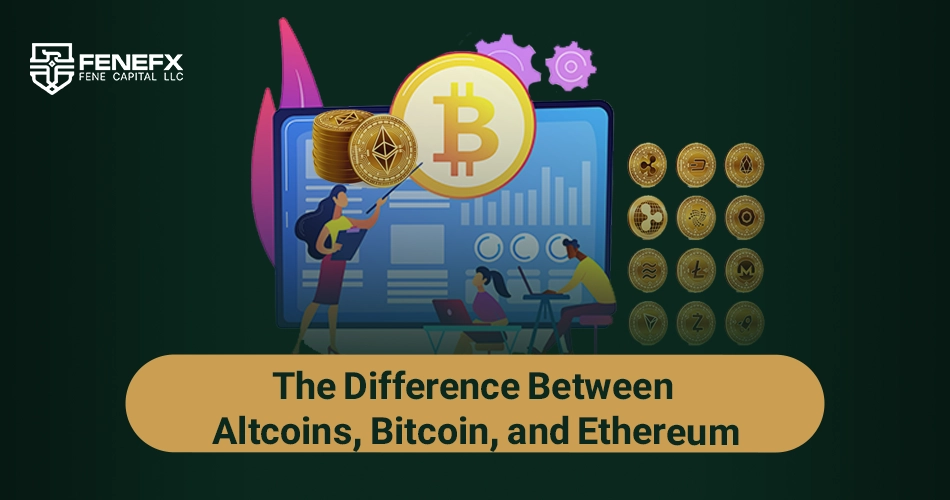
Altcoins do not include Bitcoin and Ethereum and are recognized as alternative digital currencies. Each of these cryptocurrencies has its own goals and unique features. Below, we examine their differences and similarities.
Bitcoin
Bitcoin is the first and most well known cryptocurrency, created in 2009. Its main objective was to offer a decentralized and secure payment system. Bitcoin uses the Proof of Work (PoW) algorithm to validate transactions, which requires a high amount of energy. Despite this, the strong security and reliability of the network make it attractive to many users and investors.
Ethereum
Ethereum, the second largest cryptocurrency by market capitalization, was introduced in 2015 and has major differences from Bitcoin. In addition to being a digital currency (Ether), Ethereum is also a platform for developing smart contracts and decentralized applications (dApps). These features enable developers to run complex programs on the blockchain. Ethereum has recently transitioned to the Proof of Stake (PoS) algorithm, which consumes significantly less energy compared to PoW.
Differences
- Purpose and Function:Bitcoin is primarily designed as a store of value and a method of payment, whereas Ethereum is used as a platform for running smart contracts and developing applications.
- Consensus Algorithm:Bitcoin uses Proof of Work (PoW), while Ethereum has transitioned to Proof of Stake (PoS), which consumes less energy and offers greater scalability.
- Transaction Speed:Ethereum transactions are generally faster than Bitcoin’s due to network design and the use of PoS.
- Use Cases and Applications:Bitcoin is mainly used for financial transactions and value preservation, while Ethereum focuses on the development and execution of decentralized applications.
Similarities
- Blockchain:Both use blockchain technology to create a distributed ledger that ensures the security and transparency of transactions.
- Decentralization:Both are designed to eliminate intermediaries and establish a decentralized system.
- Market Value:Bitcoin and Ethereum are the two digital currencies with the highest market value and have a significant influence on the overall cryptocurrency market.
Altcoins are designed with diverse goals and features, some of which may resemble those of Bitcoin or Ethereum. However, each has its own value and use case, depending on users’ needs and strategies. Choosing between these currencies should be based on a thorough analysis of their features and applications.
Types of Altcoins
Altcoins are divided into various categories, each with its own specific use cases and features. Below, we introduce the different types of altcoins.
Payment Tokens
Payment tokens are designed for value exchange and serve as an alternative to traditional money. Their primary goal is to facilitate faster and cheaper financial transactions. Bitcoin is known as the first and most well known payment token, but altcoins like Litecoin and Bitcoin Cash also fall into this category. These coins often focus on improving transaction speed and reducing costs.
Stablecoins
Stablecoins are designed to minimize price volatility. They peg their value to stable assets such as the US dollar, gold, or other commodities. The most well known stablecoins include Tether (USDT), USD Coin (USDC), and DAI. These coins are used to maintain value stability in volatile markets and are suitable for everyday transactions and preserving asset value.
Security Tokens
Security tokens represent ownership or shares in a real or digital asset and are regulated under securities laws. They can represent stocks, bonds, or even real estate. Security tokens have gained popularity due to their transparency and the reduced costs associated with issuing traditional securities. These tokens allow investors to invest in various assets easily and securely.
Utility Tokens
Utility tokens are designed for use within a specific network and allow users to access services or special features. One of the most well known utility tokens is Ether (ETH), which is used to pay transaction fees and execute smart contracts on the Ethereum network. Utility tokens can act as the fuel of a blockchain and are valuable for developers and users alike.
Meme Coins
Meme coins are based on internet memes or jokes and often lack a specific use case. Dogecoin, which was created as a joke, is one of the most famous meme coins. These coins usually gain popularity through hype, celebrity endorsements, or internet campaigns. Although meme coins may be highly volatile, they have attracted a great deal of investor attention.
The diversity of altcoins allows users and investors to have a broader range of choices based on their needs and goals. Each type of altcoin, with its unique features and applications, forms part of the vast digital currency ecosystem and creates new opportunities for innovation and investment. A clear understanding of these types and their uses can aid in making better decisions regarding usage and investment.
History and Evolution of Altcoins
Altcoins are known as digital currencies that serve as alternatives to Bitcoin and have undergone significant evolutionary development since their inception. The following explores the history and development of altcoins.
The Beginning
After the introduction of Bitcoin in 2009, developers sought to improve its features. The first altcoin, Litecoin, was created in 2011. Aimed at offering faster transactions and lower fees, Litecoin used the Scrypt algorithm instead of Bitcoin’s SHA 256. This algorithm enabled easier mining and marked one of the first attempts to enhance Bitcoin.
Growth and Diversification
In the following years, a large number of altcoins emerged with various goals and applications. Some were designed to increase transaction speed and reduce costs, such as Ripple, which was created to facilitate international transactions in the banking sector. This trend led altcoins to become essential tools in the development of blockchain technology.
The Emergence of Smart Contracts
With the introduction of Ethereum in 2015, the world of digital currencies experienced a major transformation. Ethereum revolutionized blockchain usage by enabling the execution of smart contracts and decentralized applications (dApps). This innovation allowed developers to create new blockchain use cases, leading to the development of many altcoins based on this model.
Challenges and Opportunities
As the number of altcoins grew, the market faced new challenges. Several projects failed due to a lack of transparency or real world utility. However, projects with real functionality and strong development teams managed to secure their position. The emergence of stablecoins and security tokens are examples of successful efforts to deliver stable value and security to users.
Current State and Future
Today, thousands of altcoins exist in the market, each designed with a specific purpose. Some aim to compete with Bitcoin as a store of value, while others are developed for specific uses such as data management or building decentralized financial platforms.
The future of altcoins heavily depends on the advancement of blockchain technology and its public adoption. With the development of new technologies and growing public awareness, altcoins are expected to play an increasingly prominent role in the digital economy.
The history and evolution of altcoins reflect ongoing efforts to improve and diversify digital currencies. Despite challenges and setbacks, altcoins have played a key role in the innovation and development of blockchain technology. The future of these currencies depends on their ability to deliver real value and meet user needs.
Advantages and Disadvantages of Altcoins
Altcoins, as alternatives to Bitcoin, offer a wide range of features and applications. However, like any other technology, they come with their own strengths and weaknesses, which are examined below.
Advantages of Altcoins
- Diversity and Innovation:Altcoins are designed to improve upon and overcome the limitations of Bitcoin. This diversity allows users to choose the most suitable digital currency based on their needs and goals. For example, some altcoins offer faster transaction speeds or lower fees.
- Wide Range of Applications:Many altcoins have specific use cases, such as smart contracts on Ethereum or faster international transactions on Ripple. These applications have led to the use of altcoins across various industries.
- Improved Scalability and Security:Some altcoins address Bitcoin's scalability and security issues through new and optimized algorithms. For instance, Litecoin uses the Scrypt algorithm to simplify the mining process.
- Investment Opportunities:Altcoins can present attractive investment opportunities. Given their diversity and sheer number, investors can choose different projects to invest in based on their analysis.
Disadvantages of Altcoins
- High Volatility:The altcoin market is highly volatile, which can be risky for investors. Prices can change rapidly, and investors must be prepared to deal with such fluctuations.
- Lack of Public Adoption:Despite their various applications, many altcoins have yet to gain widespread public acceptance. This may be due to a lack of awareness or distrust in new technologies.
- Security and Fraud Risks:Some altcoin projects have led to fraud and scams due to a lack of transparency or weak development teams. Investors should be cautious and invest in projects with strong and reputable backing.
- Intense Competition:The large number of altcoins leads to intense competition among them. Many projects have failed due to their inability to attract users and investors.
Altcoins, by offering diverse features and applications, play an important role in the development and innovation of the digital currency world. However, high volatility and certain challenges can be considered drawbacks of this technology.
Popular and Well Known Altcoins
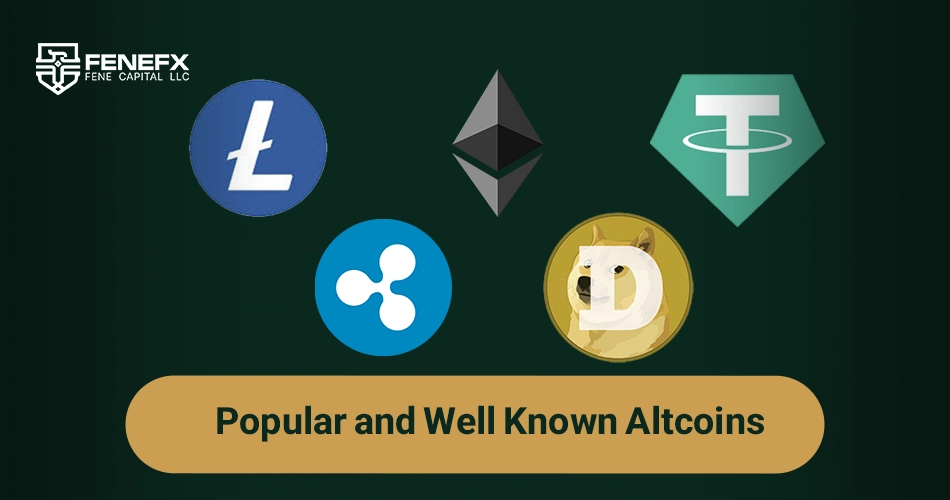
Altcoins are recognized as digital currencies that serve as alternatives to Bitcoin, and some of them have gained significant popularity due to their unique features and applications.
Ethereum
Ethereum is one of the most well-known and advanced blockchain platforms, founded in 2015 by Vitalik Buterin. This platform enables developers to create and execute smart contracts and decentralized applications (DApps) on its blockchain. The main goal of Ethereum is to provide an open and decentralized platform for software development.
Key features of Ethereum:
- Smart Contracts: Contracts that are executed automatically without intermediaries, allowing for more complex transactions.
- Support for ERC-20 Tokens: This standard facilitates the creation of various useful tokens on the Ethereum network
Tether (USDT)
Tether is one of the most well-known stablecoins in the cryptocurrency market, with its value directly pegged to the US dollar. This digital currency helps investors preserve the value of their assets during periods of market volatility and reduces the risk of capital loss.
Key features of Tether:
- Price Stability: Tether is pegged to the US dollar, making it a reliable unit of value for traders.
- Support for Multiple Currencies: Tether acts as a bridge to facilitate easy conversion between different cryptocurrencies, simplifying trading in the crypto market.
Litecoin (LTC)
Litecoin was introduced in 2011 by Charlie Lee, a former Google engineer. This digital currency was designed to improve upon and address some of Bitcoin’s limitations, particularly transaction speed and fees. Litecoin uses the Scrypt algorithm instead of Bitcoin’s SHA 256, making mining simpler and faster.
Due to its faster transactions and lower fees, Litecoin is considered an attractive option for everyday payments. It is also known as digital silver in comparison to Bitcoin, which is referred to as digital gold.
Ripple (XRP)
Ripple and its token, XRP, were designed to facilitate and accelerate international financial transactions. Ripple was founded in 2012 by Chris Larsen and Jed McCaleb. Unlike Bitcoin and many other altcoins that use proof of work technology, Ripple utilizes a unique consensus protocol that allows transactions to be confirmed within seconds.
Ripple is recognized as an efficient solution for international payments due to its partnerships with major banks and financial institutions around the world. These features have made Ripple one of the most widely used altcoins in the financial industry.
Dogecoin (DOGE)
Dogecoin was created as a joke in 2013 by Billy Markus and Jackson Palmer. This digital currency was based on an internet meme featuring the Shiba Inu dog and quickly gained popularity. Despite its humorous origin, Dogecoin evolved into a legitimate cryptocurrency thanks to its active user community and support from celebrities and investors.
Dogecoin uses the Scrypt algorithm, like Litecoin, and is popular for micro payments and online charitable donations due to its fast transactions and low fees. In recent years, it has attracted significant attention due to price volatility and endorsements from public figures like Elon Musk.
Popular altcoins such as Litecoin, Ripple, and Dogecoin have each played an important role in the development and adoption of digital currencies. By offering innovative solutions to existing issues in traditional and digital financial systems, these coins have become attractive options for both users and investors. Understanding these altcoins can contribute to better decision making in the use and investment of digital currencies.
The Role of Altcoins in the Cryptocurrency Market
Altcoins, as digital currencies that serve as alternatives to Bitcoin, play a significant role in the cryptocurrency market. Through their diversity and innovations, they have managed to carve out a unique position in this space.
Diversity and Innovation
Altcoins offer a range of features and applications that provide users and investors with more options compared to Bitcoin. These currencies are often designed to address Bitcoin’s limitations, such as transaction speed and associated costs. For example, Litecoin, with its faster transactions and lower fees, is considered a suitable alternative for daily payments.
Role in Blockchain Technology Development
Many altcoins have contributed to the advancement of blockchain technology by introducing new and improved technologies. Ethereum, by introducing smart contracts and platforms for developing decentralized applications (dApps), revolutionized the use of blockchain. These innovations enable developers to create more complex applications and define new use cases for blockchain.
Impact on the Financial Market
Altcoins have had a significant impact on the financial market by increasing competition in the cryptocurrency space. They allow users to make more diversified investments based on their needs and strategies. As a result, altcoins are recognized as tools for portfolio diversification.
Increasing Adoption and Usage
Thanks to their broad applications and unique features, altcoins are attracting increasing attention from companies and individuals. For example, Ripple has gained the attention of banks and financial institutions due to its ability to facilitate fast and low cost international transactions. This widespread adoption has led to increased credibility and usage of altcoins.
Challenges and Opportunities
Despite their many advantages, altcoins also face challenges. High price volatility and intense competition can increase investment risks. Moreover, some altcoins have failed to maintain their position due to a lack of transparency or real world utility. Nevertheless, there are numerous opportunities for growth and development in this market.
Altcoins, by offering innovations and diverse features, play a vital role in the cryptocurrency market. These currencies have not only contributed to the advancement of blockchain technology but also serve as new and attractive financial instruments for users and investors. Given the ongoing growth and evolution of altcoins, their role in the digital economy is expected to become increasingly prominent. A thorough understanding of these currencies and analysis of their impact can aid in making better decisions regarding their use and investment.
The Future of Altcoins
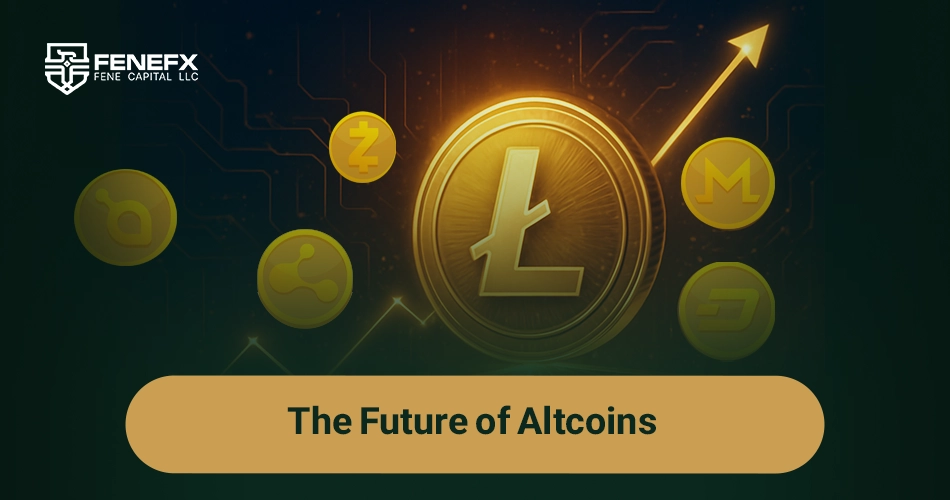
The future of altcoins, given the technological advancements and changes in the cryptocurrency market, is both challenging and intriguing.
Growth and Greater Adoption
With increasing public awareness and the growing adoption of blockchain technology, altcoins are expected to gain more popularity. More companies and financial institutions are seeking to use digital currencies to enhance efficiency and reduce costs. Altcoins that offer real and tangible applications will have the greatest chance of success.
Technological Innovations
New advancements in blockchain technology, such as scalable algorithms and lower energy consumption, can support the growth of altcoins. Projects focused on improving security and increasing transaction speeds are likely to lead the future. Ethereum’s shift to the Proof of Stake (PoS) algorithm is an example of such innovation.
Competition and Diversity
The large number of altcoins means intense competition in the market. This competition can lead to higher quality and better services for users. Moreover, the diversity of altcoins allows investors to diversify their portfolios and benefit from various opportunities.
Challenges and Risks
Despite the many opportunities, altcoins face challenges such as extreme price volatility and security risks. Many projects may fail due to the lack of strong development teams or real world utility. Investors should enter the market with caution and conduct thorough research while considering the associated risks.
Regulation and Legislation
One of the key factors in the future of altcoins is how they are regulated and overseen. Governments and regulatory bodies are actively examining how to regulate the cryptocurrency market. Proper regulations can help build trust and public adoption, while overly strict rules may hinder the development of certain projects.
The future of altcoins is filled with both opportunities and challenges. With ongoing technological progress and increasing public acceptance, altcoins that bring innovation and real world applications have a better chance of succeeding. However, investors must approach this market with care and due diligence to be aware of its risks and volatility.
Key Considerations for Investing in Altcoins
Investing in altcoins can be profitable, but it requires careful attention and thorough research. Below are some recommendations and guidelines for investors:
Thorough Research
Before investing, carefully research the project, development team, and roadmap of the altcoin. Projects with strong teams and clear objectives are generally more reliable.
Diversification of Investment Portfolio
Do not invest in only one altcoin. Diversifying your investment portfolio can reduce risk and provide more opportunities.
Risk Tolerance
Altcoins are considered high risk investments due to their high volatility. Make sure you understand your level of risk tolerance and invest accordingly.
Monitoring Market News and Changes
The cryptocurrency market changes rapidly. By keeping up with news and market analysis, you can make better informed decisions.
Using Secure Wallets
Ensure the security of your investments by using reputable and secure wallets. Avoid storing altcoins on exchanges for extended periods.
The Difference Between Coins, Altcoins, and Tokens
Understanding the technical and functional differences between coins, altcoins, and tokens is important for investors:
Coins
Coins are digital currencies that operate on their own independent blockchain. Bitcoin and Ethereum are two examples of coins. Coins are typically used as a means of payment and a store of value.
Altcoins
Altcoins refer to all digital currencies other than Bitcoin. Some altcoins operate on their own independent blockchains, such as Ethereum and Litecoin. Altcoins are developed to offer new and improved features and functionalities compared to Bitcoin.
Tokens
Tokens are built on existing blockchains and do not have their own independent blockchain. Most tokens are created on the Ethereum blockchain using the ERC 20 standard. Tokens can represent assets, provide access to specific services, or signify participation in projects.
Investing in altcoins requires diligence and knowledge. With proper research and an understanding of the technical differences between coins, altcoins, and tokens, you can make smarter investment decisions and take advantage of opportunities in the cryptocurrency market.
Comments
My first altcoin buy was a meme coin that dropped 90% in a week. Now I stick mostly to the top 20 and my stress levels thank me.
Nice and beginner-friendly, thanks.
The term's getting fuzzy though — calling ETH an 'altcoin' in 2026 feels off. I'd separate the majors from the long-tail stuff, the risk profiles are completely different.
Any chance of a follow-up on filtering the thousands of altcoins down to a watchlist? Market cap? Volume? I'm lost.
Ok so literally everything that isn't Bitcoin counts as an altcoin — I honestly thought it was some specific category of coin. Thanks for the clarity.