




What is Floating Spread?
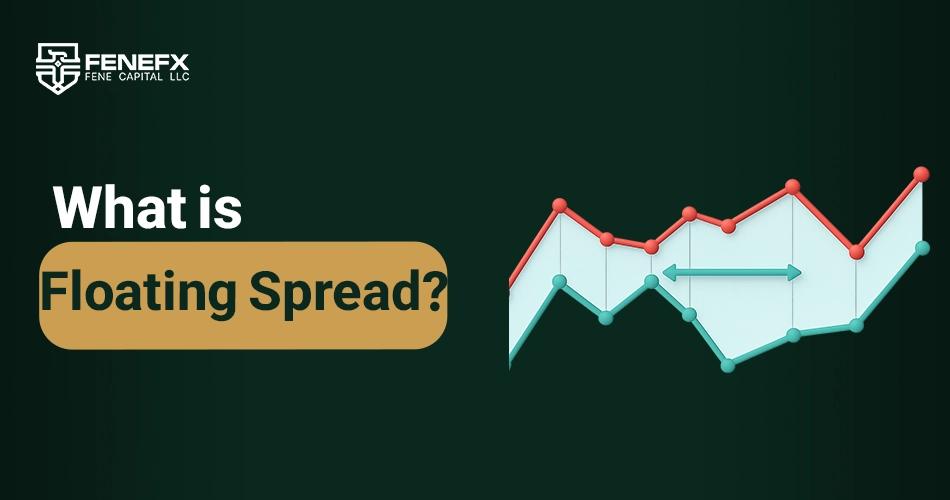
A floating spread refers to the variable difference between the ask price and the bid price in financial markets, which constantly changes based on market conditions. Unlike a fixed spread, which remains constant within a defined range, a floating spread can expand or narrow at different times. Floating spreads are directly influenced by factors such as market volatility, trading volume, and liquidity conditions. When the market is calm and stable, floating spreads are typically low and stable. However, during key economic news releases or late-night hours when liquidity is reduced, spreads can suddenly widen.
Difference Between Floating Spread and Fixed Spread
Afixed spreadis predetermined by the broker and does not change, even during volatile conditions. Conversely, afloating spreadvaries according to market conditions and may experience significant fluctuations at different intervals.
For instance, in the EUR/USD pair, a floating spread might be1 pipunder normal conditions but expand to5 or even 10 pipsduring major economic news releases. This flexibility in floating spreads can present both opportunities and challenges for traders.
Why Do Brokers Use Floating Spreads?
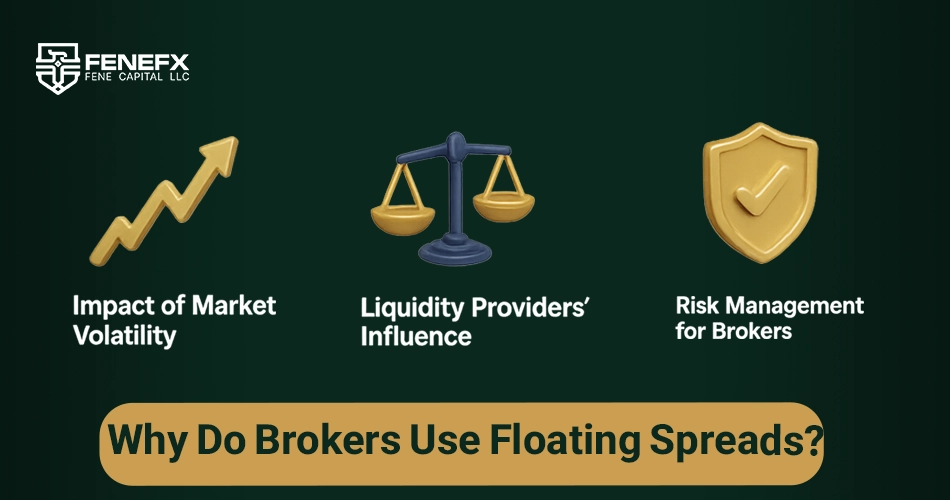
Brokers utilize floating spreads in their trading systems for several key reasons. These include:
1. Impact of Market Volatility
In financial markets, price fluctuations are constant. By using floating spreads, brokers can automatically adjust their pricing to match these changes. When the market is stable, floating spreads typically decrease. Conversely, during volatile conditions, spreads widen. This adaptability allows brokers to manage their risk and maintain profitability under various conditions.
2. Liquidity Providers' Influence
Brokers often receive buy and sell prices fromliquidity providers. In volatile conditions, liquidity providers widen their spreads to manage risk. As a result, brokers must increase their spreads accordingly to reflect these changes.
3. Risk Management for Brokers
Floating spreads help brokers mitigate risk during uncertain market conditions. When the market experiences rapid and unpredictable movements, brokers can widen their spreads temporarily to safeguard themselves from potential losses.
How Does a Floating Spread Affect Traders?
Floating spreads can have a significant impact on trading strategies and capital management. Key effects include:
1. Impact on Trading Costs
Floating spreads make trading costs less predictable. In stable market conditions, these costs may be minimal, but during periods of heightened volatility, spreads can expand significantly, increasing transaction expenses.
2. Impact on Entry and Exit Points
Traders who rely on precise entry and exit points (such asscalpers) may face challenges with sudden spread fluctuations. A rapid increase in the spread can triggerstop-loss ordersor cause traders to miss favorable trade opportunities.
3. Impact on Trading Strategies
In short-term strategies likescalping, floating spreads can be particularly challenging since these strategies aim for small profits. Sudden spread expansion can quickly wipe out those gains.
Advantages and Disadvantages of Floating Spread vs. Fixed Spread
Both floating and fixed spreads have their own unique advantages and disadvantages. Choosing between the two depends on your trading strategy, risk management style, and market conditions.
Advantages of Floating Spread
- In normal market conditions, floating spreads are often lower than fixed spreads, reducing trading costs.
- Floating spreads are typically more transparent inECNandSTPbrokers, where prices are sourced directly from liquidity providers.
- For traders operating during calm market hours, floating spreads can provide a more cost-effective option.
Disadvantages of Floating Spread
- During volatile market conditions, floating spreads can expand suddenly, increasing trading costs.
- A sudden spread increase may trigger stop-loss orders, leading to unexpected trade closures.
- During major economic news releases, floating spreads can spike to unpredictable levels.
Floating Spread vs. Fixed Spread
Feature | Floating Spread | Fixed Spread |
Spread Fluctuations | Variable and dependent on market conditions | Fixed and stable under normal conditions |
Trading Costs | Generally lower during calm markets | Fixed, even in volatile conditions |
Impact During Volatility | Sudden spread expansion and increased costs | Fixed costs but may result inrequotes |
Suitable For | Professional traders, scalpers, and short-term traders | Beginner traders, long-term traders, and stable strategies |
Risk of Slippage | Higher during volatile conditions | Lower during stable market conditions |
Price Transparency | Higher in ECN/STP brokers | Lower in Market Maker brokers |
Choosing between floating and fixed spreads depends on your trading style and market conditions. Traders who operate in stable and low-volatility conditions may benefit from floating spreads as they can reduce trading costs. On the other hand, traders who prefer predictable and stable costs may opt for fixed spreads.
How to Reduce the Negative Impact of Floating Spread with Risk Management
Floating spreads, especially during volatile market conditions, can suddenly increase trading costs. However, traders can mitigate these negative effects by implementing effective risk management strategies to protect their capital from unexpected losses. Below are practical methods to reduce the risks associated with floating spreads:
1. Choosing the Right Time to Enter Trades
Proper timing can significantly reduce the costs caused by floating spreads. Floating spreads are generally at their lowest levels during periods of high market liquidity. These periods typically include theoverlapping hoursof major financial markets such asNew YorkandLondon. During these hours, trading volume is high, and ample liquidity helps keep spreads minimal.
Conversely, during late-night hours or when major financial markets are closed, spreads may widen suddenly. Therefore, traders should aim to enter the market during high-liquidity periods to minimize costs.
2. Setting a Logical Stop Loss
Sudden spread expansion during volatile conditions can trigger inappropriate stop-loss orders and prematurely close profitable positions. To reduce this risk, it’s recommended to set your stop loss by considering theaverage spread fluctuationsat different times of the day.
- During volatile conditions, set your stop loss slightly farther away than usual to avoid premature trade closures caused by sudden spread spikes.
- During stable market conditions, you can place your stop loss closer to your entry point to limit potential losses more effectively.
3. Managing Position Size (Position Sizing)
Proper position sizing can reduce the impact of sudden spread widening. When the market is volatile or there’s a higher risk of spread expansion, reducing your trade size can minimize potential losses. Conversely, when the market is stable, you may consider increasing your position size.
Position sizing is crucial in volatile environments where sudden changes in spread can lead to unexpected drawdowns.
4. Avoid Trading During Major Economic News Releases
When major economic news is released, floating spreads can widen drastically. Events such ascentral bank announcements,employment reports, orpolitical developmentscan cause sharp market fluctuations.
To minimize this risk:
- Avoid entering high-risk trades during key news releases.
- If you must trade during these times, usewider stop lossesandsmaller position sizesto manage the impact of sudden spread expansions.
5. Choosing a Broker with Favorable Spread Conditions
Some brokers offer more stable spreads and transparent policies regarding floating spreads. Selecting a reputable broker that doesn’t dramatically widen spreads during volatile conditions can significantly reduce your trading costs.
Before choosing a broker, review their spread history, especially during economic news releases or low-liquidity periods. A broker that maintains stable spreads in such conditions is often more reliable.
Who Is Floating Spread Suitable For?

Due to its variable nature, floating spreads may not be suitable for all traders. Choosing between floating and fixed spreads depends on your trading strategy, risk tolerance, and investment goals. Below is a breakdown of which trader types are best suited for floating spreads:
1. Scalpers
Scalpers, who aim to capture small profits within short timeframes, are often more exposed to floating spread risks. However, if scalpers operate during low-spread periods, they can minimize trading costs effectively.
Since floating spreads may expand rapidly in volatile markets, scalpers should be especially cautious and avoid trading during unpredictable conditions.
2. Day Traders
Day traderswho execute multiple trades within a few hours can generally benefit from floating spreads. By identifying the periods when spreads are at their lowest, day traders can minimize transaction costs and maximize their profit potential.
3. Swing Traders / Position Traders
Swing tradersandposition traders, who hold trades for several days or weeks, are less affected by floating spread fluctuations. In this trading style, short-term spread changes generally have minimal impact on the overall trade outcome, as larger profits often offset temporary spread expansions.
4. Professional Traders with Flexible Strategies
Experienced traders with adaptive strategies who can adjust their approach according to changing market conditions can take advantage of floating spreads. These traders often excel at identifying ideal entry and exit points and can turn spread volatility into a strategic advantage.
Comments
Once had a stop triggered purely by a spread spike during a thin Asian session. The chart never touched my level. That's when I really learned what 'floating' means.
Well explained, no fluff. Just how I like it.
Floating spreads are usually cheaper than fixed overall, but the tail risk is real — I've seen 20+ pip spreads on minors during rollover. If you trade news, factor that in or use limit orders.
This explains why my costs kept changing on the same pair! I thought something was broken with my platform. Makes total sense now, thank you.
How do floating spreads behave during major news like NFP? Would love a follow-up showing actual spread charts around a news release.