
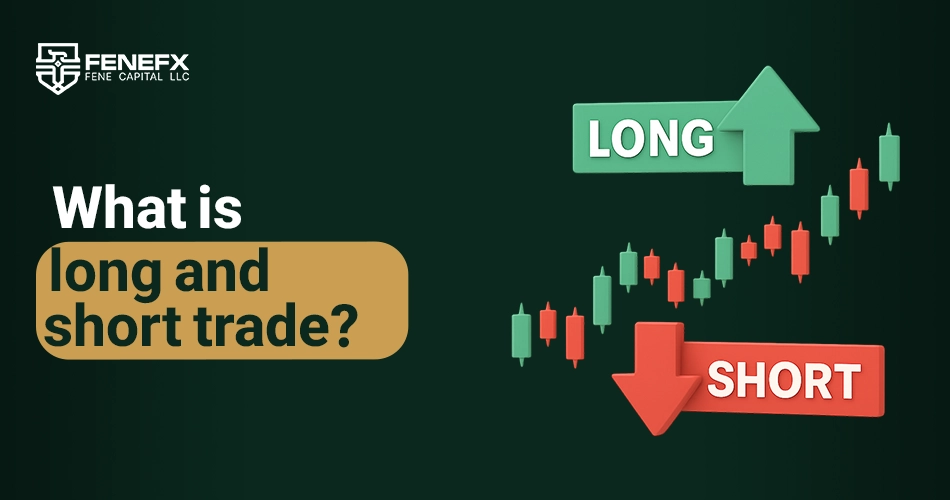
What is long and short trade?
A long trade simply means buying an asset with the expectation that its price will increase in the future. Traders enter a long position when they predict that the value of an asset (such as stocks, cryptocurrencies, or commodities) will rise over time. For example, imagine that the current price of a stock is 100 units. If you predict that the stock's price will increase to 120 units within the next month, you can purchase it now. This action is referred to as a long trade. If your prediction is correct and the stock price rises to 120 units, you can sell it and make a profit. The main reason for choosing a long trade is the general expectation of price growth in financial markets. Newcomers and even many professional traders prefer this type of trade due to its simplicity and relatively lower risk. Long trades are particularly popular in bullish markets, where prices are trending upwards. Long trades are not limited to the stock market; they are also common in other markets such as cryptocurrencies, commodities, and forex. The key to a successful long trade lies in thorough market analysis and confidence in the asset's future price increase.
What is a Short Trade? Concept and Application in Financial Markets
Ashort tradeworks in the opposite way to a long trade. In this type of trade, the trader profits from the decrease in the price of an asset. Essentially, the trader borrows the asset, sells it at the current market price, and then buys it back at a lower price to return it to the lender. The trader’s profit is the difference between the initial selling price and the final buying price.
For instance, suppose the price of a stock is 100 units, and you predict that its price will decrease. You borrow the stock and sell it in the market. If the stock's price drops to 80 units, you can buy it back at this lower price and return it to the lender. In this case, you have made a profit of 20 units.
Short trading is commonly used in bearish markets (downward-trending markets) or when an asset is overvalued and likely to experience a price correction.
This method is generally more suitable for experienced traders because it carries a higher level of risk. If the trader's prediction is incorrect and the price of the asset increases instead of decreasing, the potential losses can be significant.
The Difference Between Long and Short Trades: When to Use Each?
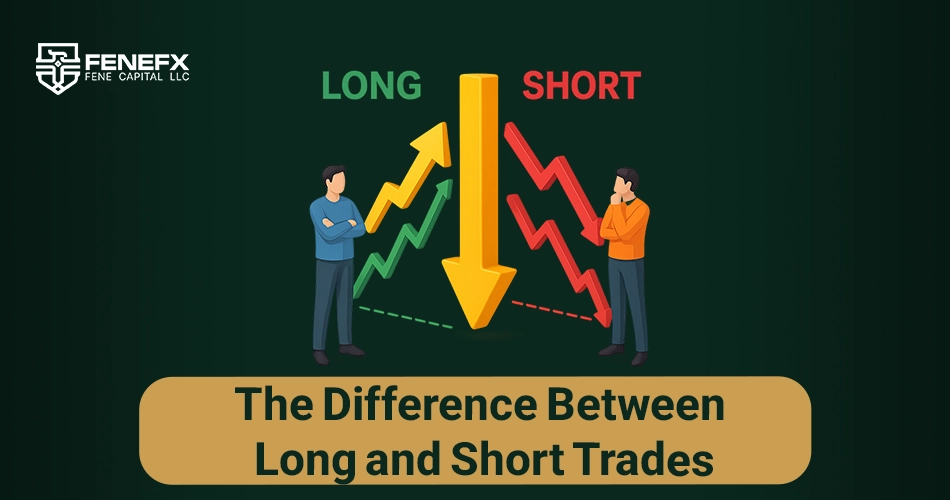
The primary difference between long and short trades lies in the trader's market prediction. In a long trade, the trader expects the asset's price to rise, whereas in a short trade, they anticipate the price will fall.
Long trades are more commonly used in bullish markets, where the economy or financial markets are growing. This type of trade is better suited for individuals with a long-term perspective on the market and those who prefer lower levels of risk.
Conversely, short trades are typically used in bearish markets or under specific conditions where assets are overvalued. This method is more appealing to traders with considerable experience and expertise in market analysis, as it requires the ability to manage higher risks.
Another important distinction is the potential loss in each type of trade. In a long trade, the trader's loss is limited to their initial investment. For example, if you purchase a stock at 100 units and its value drops to zero, your maximum loss is 100 units. However, in a short trade, the loss can be theoretically unlimited, as there is no cap on how high the asset's price can rise.
Thus, choosing between a long and short trade depends on the trader's market analysis, risk tolerance, and strategy.
How Do Long and Short Trades Work? The Execution Mechanism
The mechanisms of long and short trades generally revolve around how assets are bought and sold in financial markets.
Long Trade:
The process of a long trade is relatively straightforward. You purchase the desired asset and hold onto it until its price increases. Once the price rises, you can sell it at a higher price and make a profit. This type of trade is especially common in spot markets.
For example, if you buy a cryptocurrency like Bitcoin at 20,000anditspricerisesto20,000 and its price rises to 20,000anditspricerisesto25,000, you can sell it and make a $5,000 profit.
Short Trade:
A short trade is slightly more complex. In this type of trade, you borrow the asset from a broker or financial institution and sell it at the current market price. If your prediction is correct and the price decreases, you can buy the asset back at the lower price and return it to the lender. This process is often used in futures markets or through financial instruments like CFDs (Contracts for Difference).
For instance, let’s assume you borrow 10 shares of a company and sell each share at 100 units. If the price of each share drops to 80 units, you can repurchase the shares at this lower price and return them to the lender. Your profit in this trade is 20 units per share.
One crucial aspect of short trading is the use of leverage. Many traders use leverage to amplify their potential profits, but it also significantly increases the risk. As such, proper risk management is essential in short trades.
Ultimately, whether executing a long or short trade, success depends on knowledge, market analysis, and a well-defined strategy. Traders must be fully aware of market conditions and associated risks before entering any trade.
Advantages and Disadvantages of Long and Short Trades
Both long and short trades are powerful tools for making profits in financial markets, but each comes with its own advantages and limitations. The benefits and risks associated with these trading methods depend on market conditions, the trader's experience, and their risk tolerance.
Long tradesare generally more suitable for bullish (rising) markets and are often favored by beginner traders due to their simplicity. In a long trade, the risk is limited to the amount of capital invested in the trade. However, if the market turns bearish (falling), profit opportunities may diminish.
Short tradesallow traders to profit from the decline in an asset's price. This is particularly useful in bearish markets or when an asset is overvalued. However, short selling is more complex and carries higher risk since potential losses in short trades can be unlimited.
Below is a detailed comparison of the advantages and disadvantages of both long and short trades:
Table: Advantages and Disadvantages of Long and Short Trades
Feature | Long Trade | Short Trade |
Risk | Limited risk, restricted to initial capital | Unlimited risk if the price rises significantly |
Target Market | Bullish (rising) markets | Bearish (falling) markets |
Complexity | Simple and beginner-friendly | More complex, requires greater experience |
Timeframe | Suitable for long-term trades | More commonly used for short-term or swing trading |
Profit Potential | Profitable only if the asset's price rises | Profitable if the asset's price falls |
Risk Management | Requires moderate risk management | Requires highly precise risk management |
Long and Short Trades in Different Markets
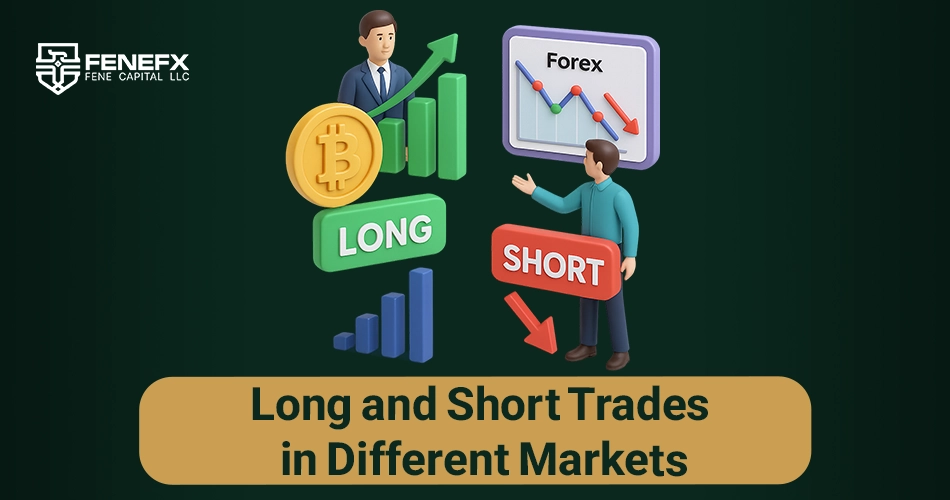
Long and short trades are widely used in various financial markets, includingForexandCryptocurrencies. Due to their unique structures and characteristics, these markets provide multiple opportunities for traders. Below is an explanation of how long and short trades function in these markets.
Long and Short Trades in Forex
TheForex marketis one of the largest and most dynamic financial markets where currency pairs are traded. In this market, traders can profit from both buying (long) and selling (short) currency pairs based on exchange rate fluctuations.
In along tradein Forex, a trader buys a currency pair expecting the base currency's value to rise against the quoted currency. For example, if you predict that theEUR/USDexchange rate will rise, you can enter a long position by buying the EUR/USD pair. If your prediction is correct and the euro strengthens against the dollar, you make a profit.
On the other hand, ashort tradein Forex involves selling a currency pair. Here, the trader expects the base currency's value to decline. For example, if you anticipate that theGBP/USDexchange rate will fall, you can short the GBP/USD pair. If the British pound weakens against the dollar as expected, you can close the trade at a lower price and secure a profit.
The Forex market’s high trading volume, strong liquidity, and access to leverage make it an attractive space for both long and short trades. However, given the market’s volatility, precise analysis and effective risk management are essential to minimize losses.
Long and Short Trades in Crypto
Thecryptocurrency marketis another popular environment for long and short trades. Due to its high volatility and dynamic price movements, crypto offers numerous trading opportunities.
In along tradein crypto, a trader purchases a cryptocurrency such asBitcoinorEthereum, expecting its price to rise in the future. For example, if Bitcoin is currently valued at$20,000and you predict its price will increase to$25,000, you can enter a long trade, hold your position, and sell at the higher price for a profit. This type of trade is most effective in bullish market conditions.
Conversely, ashort tradein crypto is used when a trader expects the price of a cryptocurrency to fall. In this scenario, you can use exchanges that offer leverage trading to sell the cryptocurrency at its current price and later buy it back at a lower price to profit from the decline. For example, if you predict thatEthereumwill drop from$1,500to$1,200, you can short the asset, and if your prediction is correct, you profit from the price drop.
The crypto market's high volatility provides extensive opportunities for both long and short trades. However, these rapid price movements also introduce significant risk. For this reason,risk managementandcareful analysisare crucial when trading cryptocurrencies.
How to Succeed in Long and Short Trades? Tips and Strategies
To succeed in long and short trades, having sufficient knowledge and employing effective strategies is essential. In this section, we will explore key tips and strategies that can help you improve your trading performance.
Market Analysis
The first step toward success in long and short trades is conducting thorough market analysis.Technical analysisandfundamental analysisare two primary tools for this purpose.
Withtechnical analysis, you can identify trends, entry and exit points, and support and resistance levels.Fundamental analysis, on the other hand, requires evaluating economic factors, political developments, and major events that may impact asset prices.
Combining these two approaches allows you to make better-informed trading decisions.
Risk Management
Risk management is one of the most crucial principles in long and short trading. Using astop-loss orderto limit potential losses is essential. Additionally, never risk your entire capital on a single trade.
Dividing your funds into smaller portions and entering trades with reasonable position sizes can help prevent substantial losses.
Emotional Control
Emotions such asfearandgreedcan heavily influence your decision-making process. To succeed in trading, you must act based on analysis and planning rather than emotional reactions.
Having aclear trading planand sticking to it can help you manage your emotions effectively.
Familiarity with Financial Instruments
Being familiar with available financial tools, such asleverageandfutures contracts, can enhance your ability to execute trades effectively. However, you must use leverage with caution, as it can significantly amplify both your profits and losses.
Trading Strategies
Using effective strategies is a key element of success in long and short trades. Below are some important strategies that can improve your results:
- Trend Following Strategy:
In this strategy, you follow the current market trend. If the market is bullish, you enter along trade; if the market is bearish, you enter ashort trade. This strategy is highly effective in markets with clear trends.
- Swing Trading Strategy:
This strategy involves capitalizing on short-term price fluctuations. Swing trading is ideal for traders looking to profit from temporary market changes over short timeframes.
- Reversal Trading Strategy:
In this strategy, you aim to identifyprice reversal pointsin the market. You enter a trade when the market is showing signs of changing direction. This method requires strong analytical skills and precise timing.
Continuous Learning
Financial markets are constantly evolving, and to stay ahead, you must adapt to these changes. Engaging in continuous learning, studying past experiences, and staying informed about market trends can significantly improve your trading performance.
Additionally, practicing indemo accountsis an effective way to test strategies and reduce risks in live trading environments.
By following these tips and implementing appropriate strategies, you can enhance your chances of success in long and short trades while minimizing potential risks. Successful trading requires a combination of knowledge, planning, and discipline. With consistent learning and practice, you can develop the skills necessary to navigate the complexities of financial markets effectively.
Comments
Could you write about how swap differs between long and short positions? I noticed my short EURUSD earns swap while longs pay — why is that?
Basics explained the right way. Nice work.
Worth adding that shorting in forex feels symmetric, but in stocks and crypto shorts carry extra costs like borrow fees and funding rates. New traders find that out the hard way.
My first short was on a stock CFD and I kept panicking because profit showed when price fell — my brain refused to accept it for weeks lol. You get used to it.
The whole 'selling something you don't own' thing never made sense to me until now. The borrowing explanation finally did it. Thank you!