

What is Stop Out?
Stop Out is a critical level in a trading account designed to prevent significant losses. When a trader’s account balance reaches the minimum required margin level, the broker automatically closes some or all open positions to prevent the account from going negative and incurring debt.
When the Margin Level in a trader’s account decreases and reaches the predetermined Stop Out level, the broker automatically closes open trades and preserves the remaining assets. This measure is taken to prevent the investor from further losses and protect them from falling into deeper debt.
The Stop Out level varies depending on each broker’s policies. It is typically set as a percentage of the account’s margin, usually ranging between 20% and 30% in most brokerage firms. This means that if a trader’s margin level falls below this threshold, the broker will start closing trades automatically.
How to Calculate Stop Out?
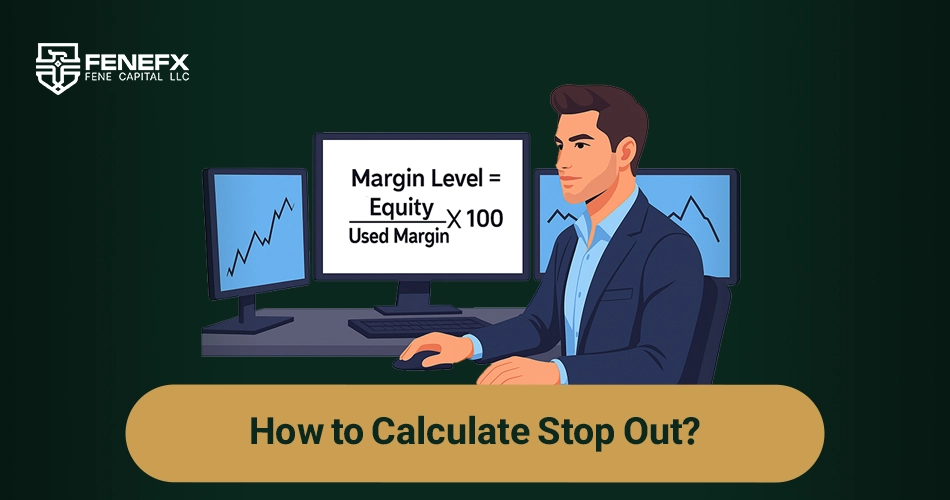 In forex trading, one of the key concepts that every trader must understand is theStop Outlevel. A stop out occurs when the losses on open positions become so significant that the margin level drops to the critical threshold set by the broker. At this point, the broker will automatically begin closing open positions to prevent the account from going negative.
To better understand this, we must first look at how to calculate theMargin Level.The formula for calculating margin level is as follows:
- Margin Level (%) = (Equity ÷ Used Margin) × 100In this formula:Equityrefers to the real-time balance of your account, which includes your starting balance plus the profit or loss of open trades.
- Used Marginis the amount of capital currently tied up in your open positions.
AStop Outis triggered when theMargin Levelfalls to or below the broker's predetermined stop out level. This level is usually set by the broker and typically ranges between20% and 50%.Therefore:A stop out occurs when:Margin Level ≤ Broker's Stop Out LevelUnder such circumstances, the broker will begin closing your trades—starting with the most unprofitable ones—in order to free up margin and prevent further lossWhat is Margin Level?
Margin Level is a key indicator in financial markets, particularly in Forex and leveraged markets, that reflects the risk level and status of a trading account. It is displayed as a percentage and represents the ratio of Used Margin to Free Margin in a trader’s account.
Margin Level Calculation Formula:
Margin Level = (Equity ÷ Used Margin) × 100
- Equity:The total account balance, including the floating profit or loss of open trades.
- Used Margin:The amount of capital required to keep trades open.
The Margin Level must always remain above the minimum threshold set by the broker. Maintaining an adequate margin level helps traders safeguard their capital during sudden market fluctuations and avoid Stop Out.
Brokers typically set a minimum Margin Level between 50% and 100% for trading accounts. This means that if your Margin Level reaches or falls below this threshold, your account will enter the Stop Out phase.
What is Margin Call?
A Margin Call is a warning issued by the broker, indicating that your account's margin level has reached a critical threshold. This notification informs you that the available capital is insufficient to maintain open positions, and you must deposit additional funds into your account to prevent your trades from being closed.
If you ignore the Margin Call warning and your margin level reaches theStop Outthreshold, the broker will automatically close your open trades. This action is taken to prevent further losses and to keep your account from going negative.
Difference Between Stop Out and Margin Call
| Title | Stop Out | Call margin |
| Definition | When the margin level reaches the minimum threshold set by the broker, and open positions are automatically closed. | A warning issued by the broker to notify the trader of a decreasing margin level and the need for additional funds. |
| When It Occurs | When the margin level drops to the broker's Stop Out threshold (usually between20% and 50%). | When the margin level reaches the broker’s set limit (typically100%). |
| Purpose | To prevent further losses and protect both the trader’s and the broker’s capital. | To warn the trader to avoid forced closure of trades and to encourage additional funding. |
| Impact on Trades | The broker automatically closes trades to prevent the account from going negative. | The trader can still manage positions (add funds, close some trades). |
| Trader’s Control | The trader has no control; the broker forcefully closes trades without permission. | The trader has the opportunity to take action to prevent liquidation. |
| Risk Level | Very high risk; trade closures are unavoidable. | Indicates increased risk and the need for immediate action. |
The Role of Leverage in Stop Out Occurrence
How Does Leverage Affect Stop Out?
Increasing Trade Volume and Reducing Capital Safety Margin
High leverage allows traders to open larger positions with a small amount of margin. However, this also means that even minor price fluctuations can rapidly reduce the margin level, bringing the account closer to a Margin Call and Stop Out much faster.
Increasing Account Volatility and Stop Out Risk
In highly volatile markets like Forex and cryptocurrencies, using high leverage means that even small price movements can significantly impact a trader’s account. If a trade moves into a loss, high leverage accelerates the decline in margin level, causing the account to reach the Stop Out threshold set by the broker more quickly.
Reducing Decision-Making Time and Preventing Losses
With high leverage, traders have limited time to recover from losses. If trade values decline, the account can reach the criticalStop Outlevel much sooner than expected. In such cases, the broker automatically closes open positions to prevent further losses.
Impact of Leverage on Margin Level
Margin Level is an important factor in determining Stop Out. The higher the leverage, the faster the margin level decreases. Conversely, using lower leverage helps maintain a higher margin level, giving traders more time to manage their risk effectively.
What Happens If a Trader Has Multiple Open Trades?
When a trader has multiple open positions in their trading account, the Used Margin increases, directly impacting the Margin Level and the risk of Stop Out.
1. Impact on Margin and Margin Level
Each open trade locks a portion of the trader’s capital as Used Margin. When multiple trades are open simultaneously, the Free Margin decreases. If these trades move into losses, the Margin Level drops. If it reaches the minimum threshold set by the broker, the account enters Margin Call, and if the losses continue, it triggers a Stop Out.
2. Managing Open Trades in Case of Profit or Loss
A) If the Trades Are in Profit:
- Free Margin increases, allowing the trader to open new positions without concern.
- Margin Level rises, reducing the risk of a Margin Call.
B) If the Trades Are in Loss:
- Free Margin decreases, limiting the ability to open new trades.
- Margin Level drops, and if it reaches the broker’s set threshold, the trader first receives a Margin Call warning.
- If no corrective action is taken, the broker will automatically close some trades to prevent further losses (Stop Out).
3. Trade Closure Priority During Stop Out
If the account reaches the Stop Out level, the broker typically closes the most losing trades first to recover the Margin Level. This process continues until the account exits the critical zone.
How to Prevent Stop Out?
- Proper Capital Management:Choose trade sizes that match your account balance to reduce pressure on margin.
- Set a Stop Loss:Define a Stop Loss for each trade to prevent significant losses and rapid margin depletion.
- Control Leverage Usage:High leverage increases the risk of Stop Out, so it's advisable to use a balanced and reasonable leverage level.
- Increase Account Balance:Depositing additional funds can help maintain margin levels and prevent Stop Out in case of a sharp decline.
- Monitor Margin Level Regularly:Keep an eye on your Margin Level and close some trades if necessary to maintain account stability.
- Diversify Your Portfolio:Engaging in diverse trades helps reduce overall risk and prevents a single trade from having a severe impact on your account.
- Limit the Number of Open Trades:Opening too many positions can quickly drain margin, so avoid excessive trading.
- Choose Trading Accounts with Better Conditions:Some brokers have different margin level requirements. Selecting a broker with a lower Stop Out level can provide better trade management flexibility.
Analysis of the Pros and Cons of High and Low Stop Out Percentages

The Stop Out percentage varies depending on a broker’s policy. Both high and low Stop Out levels have their own advantages and disadvantages, which we will discuss in this section:
High Stop Out Percentage
Advantages:
- Better Risk Management:Traders are alerted earlier before all trades are closed, giving them more time to prevent heavy losses.
- Capital Preservation:Closing trades at higher levels prevents the account balance from depleting too much.
- Lower Risk of Going into Debt:A higher Stop Out level reduces the likelihood of the account balance reaching zero or going negative.
Disadvantages:
- Premature Trade Closures:Some temporarily losing trades may be closed before they have a chance to recover.
- Reduced Flexibility:Traders have less opportunity to manage their account and increase their margin.
- Lower Profitability in Volatile Markets:In highly volatile markets, a high Stop Out level may lead to early exits from potentially profitable trades.
Low Stop Out Percentage
Advantages:
- More Time for Trade Recovery:Traders have more time to increase their capital or adjust their strategy before trades are closed.
- Greater Flexibility:A lower Stop Out level allows traders to hold positions longer.
- Higher Profit Potential in Market Fluctuations:Traders have a better chance to recover from losses if the market reverses.
Disadvantages:
- Higher Risk of Losing the Entire Capital:If the Stop Out level is too low, the account balance may drop significantly or even reach zero.
- Risk of Trading Debt:In extreme market moves, the account may go negative, leaving the trader owing money to the broker.
- Harder Risk Management:With a very low Stop Out level, controlling losses becomes more difficult, making traders more vulnerable to unexpected market movements.
Selecting the appropriate Stop Out level depends on trading style, risk tolerance, and capital management strategy:
Conservative traders and beginners often prefer a higher Stop Out percentage to avoid significant losses.
Professional traders and those with larger capital may opt for a lower Stop Out percentage to gain more flexibility in managing trades.
Difference Between Stop Out and Stop Loss
| Comparison Criteria | Stop Loss | Stop Out |
| Definition | An order set by the trader to close a trade at a specific price. | Automatic trade closure by the broker when the margin level drops significantly. |
| Objective | To limit losses on a specific trade. | To prevent the account balance from going negative. |
| Impact on Trades | Only the trade with the Stop Loss set is closed. | Some or all open trades are closed to maintain account balance. |
| Role in Risk Management | A risk control tool to reduce losses on individual trades. | A protective mechanism to prevent Margin Call and total capital loss. |
| Who Controls It? | Trader | Broker |
| How to activate | Activated when the asset price reaches the trader's preset level. | Activated when the Margin Level drops to the broker’s minimum threshold (usually 20%-50%). |
| Example | If a trader sets a Stop Loss at $100 and the price reaches that level, the trade is closed. | If the Margin Level drops to 20%, the broker starts closing trades automatically. |
Comments
Got stopped out during a franc-style spike on a minor pair years ago. Whole account gone in seconds. Respect your margin, folks.
Worth adding that during major news the spread widening alone can trigger a stop out even if price barely moves. Seen it happen on gold more than once.
Does the stop out level differ much between brokers? Would love a comparison piece, especially for accounts with high leverage.
I kept confusing margin call with stop out — didn't realize one is the warning and the other is the broker actually closing your trades. Makes sense now, thank you.
Short, clear, exactly what I needed.