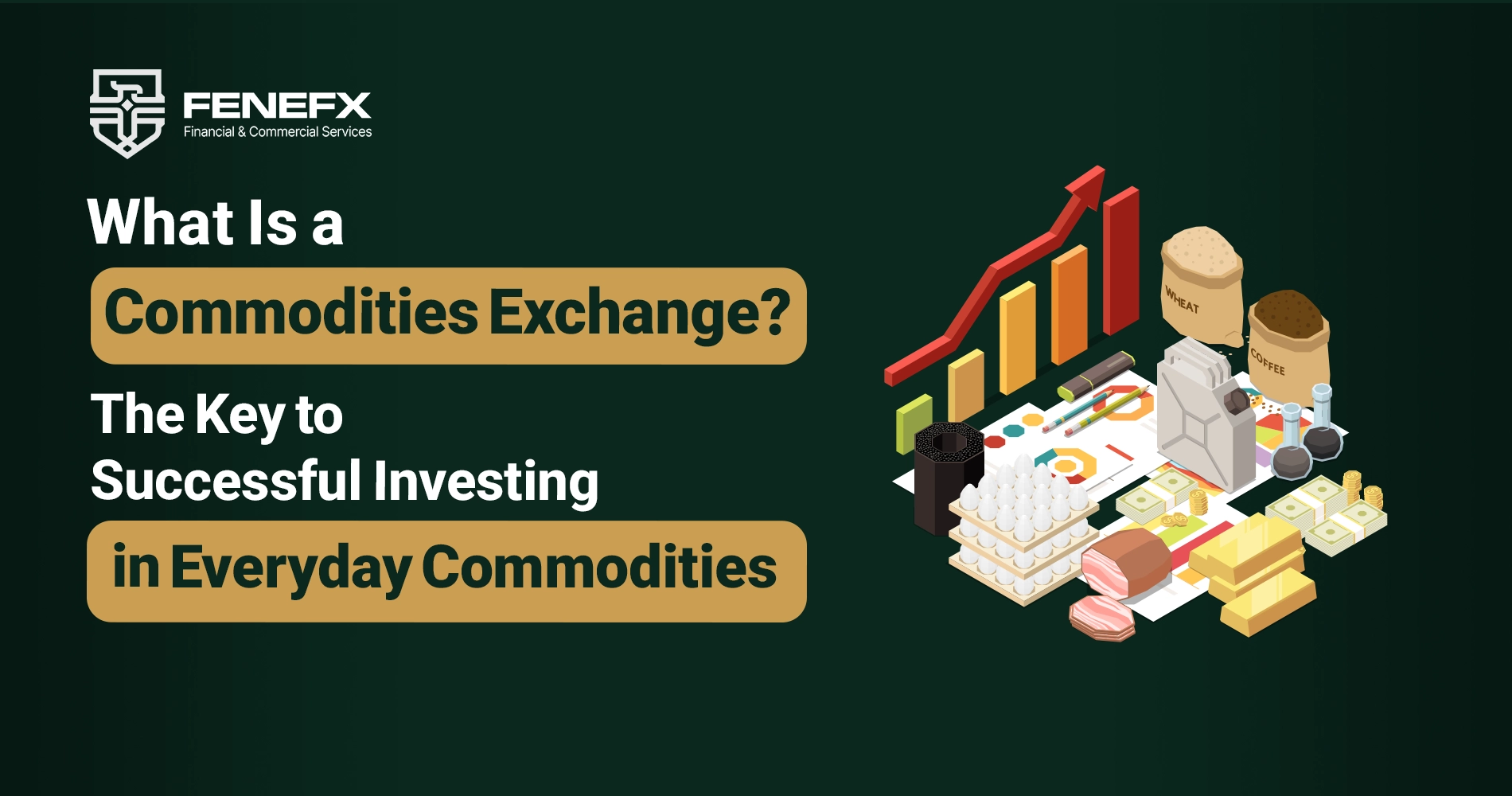
What Is a Commodity Exchange? The Key to Successful Investing in Everyday Commodities
A commodity exchange is a structured and regulated market for buying and selling essential goods and raw materials. Unlike traditional markets, where transactions between buyers and sellers may occur in a non-transparent manner, without clear standards, and with the interference of multiple intermediaries, a commodity exchange provides a platform where everything from product quality to pricing, delivery schedules, and settlement procedures proceeds under clear and supervised rules.
In direct response to the question, "What is a commodity exchange?", it can be said that a commodity exchange is an official market for trading goods that are widely used in industry or general consumption, such as steel, petrochemical products, foodstuffs, and energy resources. This market not only serves as a supply tool for large consumers and industries but also offers an opportunity for investment, risk management, and the discovery of real and fair prices. Its difference from traditional markets lies in its transparency, oversight, standardization of transactions, and the possibility of using modern financial instruments such as futures contracts and options.
The Importance of the Commodity Exchange in the Economy
The commodity exchange is not just a trading platform but a key pillar in the economic structure of countries. With tools such as official, competitive, and supply and demand based trading, this market enables transparent price discovery for essential goods. This transparent process leads to reduced rent seeking, elimination of exploitative intermediaries, and decreased volatility in the prices of critical goods in the market.
From a risk reduction perspective, the commodity exchange provides a suitable framework for managing price fluctuations. Producers and consumers can use futures and options contracts to lock in purchase or sale prices in advance, enabling more effective planning against sudden market changes.
In Iran, data shows that the trading volume of the commodity exchange has steadily grown, and major players from the steel, petrochemical, cement, and agricultural industries have joined it. This growth has been driven by increased trust in the exchange's mechanism and regulatory requirements for transaction transparency. The commodity exchange has effectively become an executive arm for market regulation policies and plays a significant role in supporting domestic production and controlling economic fluctuations.
History of the Commodity Exchange
As one of the oldest financial markets in the world, the commodity exchange has played a fundamental role in economic development. Its roots go back to ancient times when early societies turned to local markets to exchange essential goods. As economies grew more complex over time, the need for an organized and systematic framework for commodity trading became increasingly evident.
In the 19th century, with the rapid expansion of the economy and industry in Europe and America, commodity exchanges were formally established. One of the first modern commodity exchanges was the Chicago Board of Trade, founded in 1848. It was established to bring transparency and efficiency to agricultural trading and quickly evolved into one of the major hubs of global commerce.
With the development of technology and communications, commodity exchanges gradually shifted from traditional to electronic trading. This transition increased the speed and efficiency of transactions and contributed to the expansion of markets on a global scale. Today, international commodity exchanges such as the London Metal Exchange and the Chicago Board of Trade play a crucial role in determining global prices and are recognized as benchmarks for pricing essential commodities.
History of Iran’s Commodity Exchange
Iran’s Commodity Exchange also has a rich and complex history. The initial steps toward establishing a commodity exchange in Iran date back to the early 2000s (1380s in the Iranian calendar). Given the importance of essential commodities in Iran’s economy and the need for a transparent system for trading these goods, the decision was made to establish the Iran Commodity Exchange.
In 2003 (1382), the Metal Exchange was launched as Iran’s first commodity exchange. This market was dedicated to the trading of basic metals such as steel and copper and quickly secured its position in the domestic market. Following its success, in 2004 (1383), the Agricultural Commodity Exchange also commenced operations, facilitating trades in products like wheat, barley, and other agricultural goods.
Ultimately, in 2007 (1386), the Metal Exchange and the Agricultural Exchange merged, and the Iran Commodity Exchange was officially established. This merger enabled the commodity exchange to act as a comprehensive and integrated institution, offering diverse services for trading a wide range of commodities. By leveraging modern technologies and international standards, the Iran Commodity Exchange has become one of the country’s most important financial markets.
The Iran Commodity Exchange plays a vital role in the country’s economic development. By promoting transparency in pricing and reducing market volatility, it contributes to strengthening domestic production and supporting investors. Additionally, by providing a suitable platform for futures and options trading, it allows producers and consumers to manage risk effectively.
Overall, the history of Iran’s Commodity Exchange reflects continuous efforts to create a transparent and efficient market that serves the national economy. Inspired by global experiences and tailored to domestic needs, this market has succeeded in becoming a reliable benchmark for trading essential commodities and plays a significant role in the country’s economic and social development.
Types of Commodities Traded on the Exchange
Commodities traded on the exchange are generally divided into two main categories:Hard CommoditiesandSoft Commodities. This classification is based on the physical nature, source of supply, and use of the commodity.
Hard Commodities (Metals, Energy)
Hard commodities consist of natural resources that require extraction, refining, or industrial processing. Key hard commodities traded on the exchange include industrial metals such as steel, aluminum, and copper, as well as precious metals like gold and silver. These metals form the backbone of many industries, including construction, automotive, and electrical sectors. Energy resources such as crude oil, bitumen, coal, and natural gas also fall into this category. Due to their vital role in the global economy and their high sensitivity to geopolitical factors and international market dynamics, these commodities are among the most actively traded items on commodity exchanges.
Soft Commodities (Agricultural Products)
Soft commodities primarily include goods harvested from nature and produced in seasonal cycles. This category encompasses products such as wheat, barley, corn, soybeans, sugar, cotton, and coffee. Price fluctuations in this group are typically driven by factors such as weather conditions, pests, subsidy policies, and global supply and demand status. By offering futures contracts for agricultural products, the commodity exchange provides an effective tool for farmers and large buyers to hedge against price volatility and to plan more reliably for harvest or procurement seasons.
Rules and Regulations of the Commodity Exchange
The commodity exchange operates under a coherent set of regulations overseen by organizations such as the Securities and Exchange Organization of Iran and international entities like the CFTC (in the United States). These regulations aim to ensure the integrity of trading activities, prevent misconduct, and protect the interests of market participants. Proper conduct by regulatory bodies creates a safe and trustworthy environment for all participants.
The Role and Oversight of the Securities and Exchange Organization of Iran
The Securities and Exchange Organization (SEO) is responsible for drafting guidelines to standardize commodity transactions, ensure guaranteed settlement, and manage warehouse operations. This body also publishes periodic reports to maintain transparency in the performance of trading entities and takes legal action in cases of violations.
The CFTC’s Regulatory Role in the Global Market
In international markets, the Commodity Futures Trading Commission (CFTC) acts as the regulatory authority for derivatives trading. It protects the rights of individual and institutional traders by setting leverage limits, combating price manipulation, and ensuring the integrity of transactions. Additionally, the CFTC is responsible for publishing weekly and quarterly reports on traders’ open positions.
Commodity Markets in Iran and Worldwide
Iran’s commodity market and global exchanges differ in terms of structure, asset diversity, and infrastructure understanding these differences is essential for investors. This knowledge helps in selecting the right market and trading instruments.
Physical, Derivatives, Secondary, and Financial Markets in Iran
In Iran, the Commodity Exchange consists of four main markets. In the Physical Market, commodities such as metals and agricultural products are traded either in person or through prompt delivery. The Derivatives Market includes futures and options contracts designed for risk management. The Secondary Market provides a platform for trading by products or knowledge based commodities. The Financial Market offers instruments such as commodity deposit certificates and Salam bonds, enabling producers to secure financing and attracting investor participation.
In global markets, the number of tradable commodities is significantly higher and the infrastructure is more technologically advanced. Real time trading takes place at the international level, with the ability to connect to global markets. Moreover, transaction scales and liquidity volumes are typically much greater. On the other hand, Iran’s Commodity Exchange focuses primarily on domestic goods, and while its infrastructure is still developing, its strength lies in tighter regulatory oversight and easier access for local participants.
How to Trade on the Commodity Exchange
To enter and operate effectively in the commodity exchange, one must follow a defined path and become familiar with the available processes and instruments. This familiarity leads to better control and reduces errors in trading.
Legal Onboarding Process (SEJAM, Trading Code, Identity Verification)
To begin, individuals must register in the SEJAM system and complete identity verification to obtain a commodity trading code. Then, by visiting authorized brokerage firms, contracts for commodity baskets or futures trading are signed, granting official access to the market.
Auctions and Trading Systems
Physical trades are often conducted through an auction system, where buyers submit price bids and the highest bidder wins. In the order placement system, traders register buy and sell prices, and the system automatically matches orders. After the trade is executed, the settlement process is completed through fund transfer, followed by the delivery of goods to the buyer.
Derivative Instruments (Futures, Options, certificates of deposit)
In the derivatives market, futures contracts are used agreements to trade at a fixed price in the future. Options contracts provide the right, but not the obligation, to buy or sell at an agreed price in the future. Standard Parallel Salam contracts are designed for the pre purchase of commodities. Commodity deposit certificates (warehouse receipts) are documents indicating ownership of goods stored in a warehouse and can be traded.
Comparison of Global Commodity Exchanges and the Iran Mercantile Exchange
While global commodity exchanges and the Iran Mercantile Exchange (IME) share a common goal organizing commodity trading and enhancing economic transparency they differ significantly in terms of structure, diversity, technology, and their role in the global economy. Understanding these differences helps market participants better assess the true position of IME and recognize its growth potential.
Commodity Diversity:
International exchanges such as the Chicago Mercantile Exchange (CME) and the London Metal Exchange (LME) offer a wide range of tradable commodities, including metals, energy, agricultural products, processed food items, natural gas, and even carbon emission rights. In contrast, the IME is more focused on domestic basic commodities such as steel, petrochemical products, bitumen, saffron, and wheat. Although this narrower scope limits the range of hedging tools and investment opportunities, it allows for better control over the supply and demand of strategic goods.
Technological Infrastructure:
Global commodity exchanges benefit from highly advanced trading infrastructures, featuring algorithmic order execution, 24/7 market access via mobile platforms, and direct connectivity to international markets. In comparison, trading on the IME is still largely confined to official working hours and conducted through brokerage firms. However, the exchange's online infrastructure has been improving steadily, with notable progress made in recent years.
Regulatory Framework:
Global exchanges operate under the supervision of independent regulatory bodies such as the Commodity Futures Trading Commission (CFTC) or the European Securities and Markets Authority (ESMA), whose oversight often extends beyond national borders. On the other hand, the IME is regulated by the Securities and Exchange Organization of Iran. While it operates within a defined legal framework, certain government considerations still influence the pricing mechanisms of some commodities.
This comparison highlights both the challenges and the opportunities facing the Iran Mercantile Exchange as it evolves within a globalized trading environment.
| Comparison Aspect | Iran Mercantile Exchange (IME) | Global Commodity Exchanges |
| Diversity of Traded Commodities | Limited to domestic basic goods such as steel, petrochemicals, and agricultural products | Highly diverse (metals, energy, grains, carbon credits, rare metals, emerging commodities, etc.) |
| Trading Infrastructure | Developing; limited platforms; trading during business hours only | Advanced and global; 24/7 trading, algorithmic systems, with international access |
| Financial Instruments | Includes futures, forwards, options, and warehouse receipts; still expanding | Broader and more complex instruments including weather contracts, hybrid derivatives, etc. |
| Regulation and Supervisory Body | Regulated by Iran's Securities and Exchange Organization | Supervised by international entities like CFTC, ESMA, and FCA |
| Global Position | Domestic market with regional growth potential | Key players in global price discovery |
| Market Transparency and Trust | Improving; faces challenges in pricing and government policy interventions | High transparency, strict oversight, attracts international capital |
| Growth Outlook | High; with ongoing infrastructure development and expansion of instruments | Stable and established; focused on innovation and further digitalization |
Opportunities and Challenges of the Commodity Exchange
The commodity exchange is an official and organized platform that offers numerous benefits to producers, consumers, and investors. However, like any other economic institution, this market also faces challenges that must be understood in order to better leverage its opportunities.
Diversification in the Investment Portfolio
The first opportunity in the commodity exchange is diversification in the investment portfolio. Investors can allocate a portion of their assets to commodities such as steel, saffron, copper, or even agricultural products, instead of focusing solely on stocks or currency. This diversification reduces the overall risk of the portfolio and increases the potential for profitability during inflationary or recessionary periods.
Price Risk Management
The second major advantage is price risk management for producers and consumers. Through futures or forward contracts, parties can fix the price of commodities for the future and protect themselves from extreme market fluctuations. This tool is useful for farmers, exporters, heavy industries, and even the government.
Transparent and Competitive Price Discovery
The third opportunity is transparent and competitive price discovery. Transactions in the commodity exchange take place through auctions and are based on real supply and demand. This process removes price control from monopolistic brokers and intermediaries, allowing both producers and buyers to achieve fair benefits.
Severe Price Volatility
On the other hand, there are also challenges. The first and most common challenge is the severe price volatility of commodities, which can be caused by political crises, sudden changes in supply or demand, and even global factors such as exchange rates. Such fluctuations, despite the presence of hedging tools, may lead to unexpected losses.
Regulated Pricing of Certain Commodities
The second challenge is the regulated pricing of certain commodities in the domestic market. Although the commodity exchange is known as a reference for free and competitive price discovery, in some cases, the government disrupts market balance by imposing price ceilings or direct interventions. This can affect producer incentives and market transparency.
Relative Complexity
The third challenge is the relative complexity of entering and operating in the commodity exchange for novice users. The steps of obtaining a trading code, registering in SEJAM, opening a custodial account, learning about derivative trading mechanisms, and understanding technical terms may be difficult and time consuming for some investors, especially individuals.
Overall, the commodity exchange is an important and promising platform within Iran’s financial structure that can contribute both to investment growth and to strengthening domestic production. However, to better capitalize on its opportunities, addressing challenges and developing infrastructure should go hand in hand with prioritizing public education, regulatory transparency, and easier access for investors.
Comments
Can you cover how commodity exchange prices end up affecting what we pay at the supermarket? That link between futures and retail prices still confuses me.
Decent primer, though I'd add that for most retail folks the practical route is CFDs or ETFs on commodities, not the exchange itself. Margin requirements on real futures are no joke.
My grandfather traded rice futures in Osaka his whole life. Reading this brought back a lot of his dinner-table lectures about delivery months, ha.
Really clear intro, bookmarked for my study group.
Never understood how coffee or wheat could be 'traded' without warehouses full of it. The explanation of standardized contracts finally cleared that up for me, thank you.