
What Is Trading Psychology?
The forex market, has always captivated traders. Among them, some seek to profit from currency pair fluctuations by relying on their analytical knowledge and skills. However, beyond mastery of technical and fundamental analysis, there is a key element in a trader’s success that is often overlooked: the psychology of the forex market.
Trading psychology, grounded in the principles of psychology the science of understanding behavior and the mind examines the reactions, emotions, and decision making processes of traders in financial markets.
This connection between psychology and trading reveals that success in financial markets is not solely dependent on technical knowledge and analysis, but also heavily relies on managing emotions such as fear, greed, stress, and confidence.
Trading psychology helps traders better understand their own behaviors, correct common cognitive errors such as false confidence in trades or paralyzing fears of losses, and ultimately make more rational decisions in volatile market conditions.
Key Psychological Factors in Trading
These factors refer to a set of elements and components that play a significant role in shaping individuals' behaviors, experiences, and psychological states. Psychological factors are influenced by various variables and are used to explain and predict behaviors and mental states in different situations.
Among the key psychological factors in trading, the following can be mentioned:
Personal Identity
Each person’s personality and identity form a style of behaviors that distinguish us from others. These personal identities determine how we deal with risks, profits, and losses whether we engage with them or avoid them. Personal identity also helps us understand how much we trust ourselves and our decisions, laying the foundation for a trader’s approach in the market.
Life Experiences
A trader’s past experiences, whether in financial markets or personal life, affect their behavior in trading. For instance, past failures or successes can create fear or increased motivation and influence decision making methods.
Cognitive Processes
These processes include how a trader focuses, learns, analyzes, and stores information in the brain. The way this information is processed and decisions are made based on it plays a crucial role in trading quality.
Lifestyle
Daily routines, sleep habits, nutrition, exercise, and stress management methods can impact a trader’s mental health and ability to concentrate during trading, ultimately affecting the quality of decision making.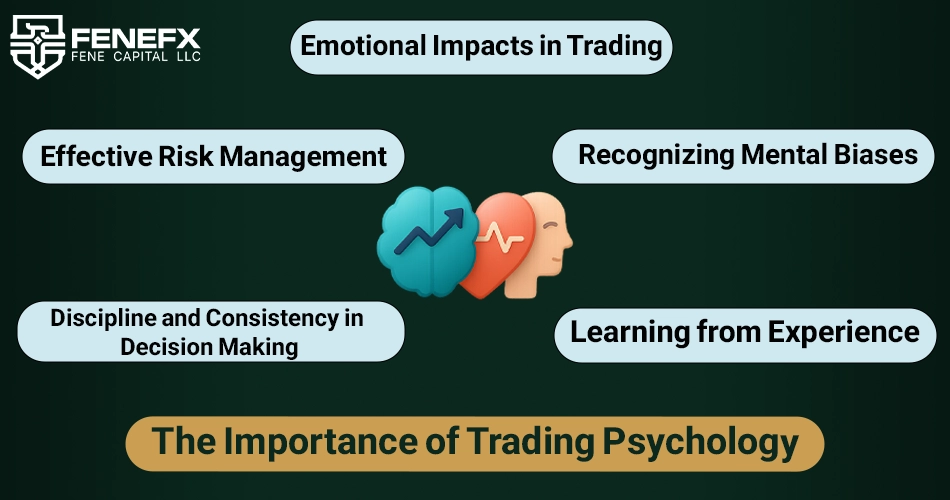
The Importance of Trading Psychology
Understanding trading psychology can help traders improve their decision making in the following ways:
Emotional Impacts in Trading
Trading is a highly emotional activity. Emotions such as fear of losing or greed for quick profits can lead to poor decision making. Recognizing and managing these emotions plays a vital role in maintaining a calm mindset and making rational decisions in the market. One of the key skills in trading psychology is the ability to control emotions during high market volatility.
Recognizing Mental Biases
Traders need to be aware of common cognitive biases. For example:
-Confirmation Bias occurs when a person only seeks out information that confirms their pre-existing beliefs.
-Anchoring Bias causes a trader to rely too heavily on initial information (such as the entry price), which can prevent them from having a realistic view of market changes.
Recognizing these biases helps traders make more balanced and objective decisions.
Effective Risk Management
Risk management is a cornerstone of trading success and is directly tied to trading psychology. A trader with a strong mindset can handle losses without making impulsive or emotional decisions, size their positions rationally, and avoid panic exits or unplanned entries.
Discipline and Consistency in Decision Making
Having a disciplined approach to trading reflects psychological maturity in the market. Trading discipline involves sticking to a trading plan, respecting stop loss levels, and avoiding impulsive decisions. Behavioral consistency in executing strategies and making decisions leads to increased profitability and reduced mental errors over time.
Learning from Experience
Trading psychology emphasizes that traders should learn from the outcomes of their trades. Whether the result is success or failure, continuous analysis and a feedback loop help refine strategies and enhance overall market performance. Traders who approach the market with a learning mindset are taking essential steps toward becoming professionals.
Educational Resources for Overcoming Trading Psychology Challenges
In addition to applying practical strategies to overcome the challenges of trading psychology, using the right educational resources can greatly enhance your knowledge, skills, and ultimately your performance in the market. This section introduces some of these educational resources:
1. Books and Articles:
- Trading Psychology Books:
Numerous books on trading psychology have been published in Persian by leading authors and experts in the field. Reading these books can help you gain a deeper understanding of key concepts in trading psychology, identify common challenges, and find effective solutions to overcome them.
- Trading Psychology Articles:
Many financial market websites and specialized magazines offer valuable articles and content on trading psychology. Reading these articles can keep you up to date with the latest research and findings in this field and provide various perspectives on trading psychology challenges and ways to address them.
2. Educational Courses:
- Online Trading Psychology Courses:
There are numerous online courses in the field of trading psychology, including the Zero to Thousand Forex course, which is the most comprehensive course in Iran. These courses allow you to learn key concepts of trading psychology and enhance your skills in this area in an interactive environment with the help of experienced instructors.
- Trading Psychology Workshops:
Trading psychology workshops offer you the opportunity to learn psychological concepts and techniques in person, alongside other enthusiasts in the field. These workshops help you strengthen your understanding and improve your practical skills in trading psychology.
Tips for Choosing the Right Educational Resources
- Consider Your Knowledge and Experience Level:
Educational resources in trading psychology are offered at various levels. First, determine your current level of knowledge and experience in this field, and then choose resources that match your level.
- Look for Credible Sources:
Reliable educational resources are authored and delivered by recognized writers, coaches, and experts in trading psychology. Before selecting any educational material, assess the credibility and qualifications of the author or provider.
- Benefit from Others' Opinions and Experiences:
You can be guided in choosing the right resource by reading reviews and experiences of others who have used various educational materials.
Using appropriate educational resources can greatly help you overcome trading psychology challenges, enhance your trading skills, and ultimately achieve success in financial markets.
Frequently Asked Questions (FAQ) About Trading Psychology
What is trading psychology?
Trading psychology is the science that examines the behavior, emotions, and reactions of traders in financial markets. It shows that success in trading is not solely about technical knowledge, but also about managing emotions like fear, greed, and stress.
Why is trading psychology important?
Because trading is an emotionally intense and stressful activity, and negative emotions can lead to poor decision making. Awareness and control of these emotions improve focus and lead to more rational decisions.
What are the key psychological factors in trading?
Key factors include personal identity, life experiences, cognitive processes, lifestyle, and emotions, each of which influences a trader’s behavior and decisions in different ways.
What are cognitive biases in trading?
Mental biases like confirmation bias (the tendency to accept only information that confirms prior beliefs) and anchoring bias (over reliance on initial information) can lead to irrational decisions.
How can risk be better managed in trading?
By having a strong mindset, sticking to a clear strategy, controlling emotions, and choosing position sizes rationally, traders can avoid impulsive decisions and large losses.
What is the role of discipline and consistency in trading?
Discipline in trading means adhering to a trading plan, respecting stop losses, and avoiding impulsive decisions. Consistency in applying these principles reduces mental errors and increases profitability.
Why is learning from experience important?
Analyzing past trades whether successful or not helps improve strategies and performance, and contributes to becoming a more professional trader.
What educational resources are suitable for trading psychology?
Specialized books, online articles, online training courses, and in person workshops can all help improve your knowledge and skills in trading psychology.
How should one choose the right educational resources?
Start by assessing your knowledge and experience level, then select reliable resources and well known authors, and make use of feedback and reviews from others.
How does lifestyle affect trading psychology?
Daily habits like sleep, nutrition, exercise, and stress management can improve a trader’s mental health and focus, leading to better decision making in trades.
Comments
This should be required reading before anyone funds an account.
I thought I had a strategy problem but reading this... it's 100% a me problem. The revenge trading section hit hard. Thanks for writing it.
Good article, but psychology can't fix a strategy with no edge. Get a positive expectancy system first, then work on the mental game. Order matters.
After a big loss I used to double my size to 'win it back' — same session, every time. Recognizing that pattern in myself did more than any new indicator ever did.
Any book recommendations to go deeper on this? Maybe a follow-up ranking the classics like Trading in the Zone?