
Who is a Live Trader?
A live trader refers to an individual who enters financial markets with real money and experiences the risk of profit and loss in real terms. Live traders typically use trading platforms such as MetaTrader 5 and engage in real time (live) buying and selling in the forex market, stocks, cryptocurrencies, or other financial markets. In contrast, a demo trader refers to someone who operates in a demo account (simulated account). Demo accounts are designed for practice and learning, and all transactions are conducted with virtual money, therefore carrying no financial risk. Demo traders use these accounts to test trading strategies and become familiar with platforms, but ultimately no profit or loss from these transactions affects them.
The main difference between a live trader and a demo trader is that a live trader trades in the real market with actual capital, while a demo trader only interacts indirectly with the market in a simulated environment and faces no risk regarding real money.
This difference means that live traders need to manage risk and make faster, more precise decisions. Additionally, live traders must deal with the psychological pressure of real markets and cope with price fluctuations, whereas demo traders experiment with their strategies in an environment free from financial and psychological pressure.
Essential Characteristics and Skills for Becoming a Live Trader
To become a successful live trader, it's necessary to develop certain characteristics and skills. These skills are not only essential for executing correct trades but also help you make the right decisions in critical situations.
1. Market Analysis
Live traders must have the ability to analyze the market. This analysis can include both fundamental and technical analysis. Fundamental analysis examines the economic and political conditions of countries and factors that influence market prices. On the other hand, technical analysis focuses on using charts, price patterns, and indicators to predict future market movements. Every live trader should employ both types of analysis simultaneously.
2. Risk Management
One of the fundamental skills of any live trader is risk management. In the world of live trading, significant losses can easily occur, so live traders must be able to set Stop Loss and Take Profit levels. The use of leverage must also be done carefully, as it can significantly increase risks. A live trader must be able to properly manage the volume of their trades to prevent major losses.
3. Emotional Control and Trading Psychology
One of the major challenges for live traders is controlling emotions during market crises. In times when the market changes unexpectedly, live traders must make decisions without being influenced by emotions. Fear of missing out (FOMO) or excessive greed can lead to making wrong decisions. For example, if a live trader seeks quick profits, they might enter a trade at an inappropriate opportunity. Or if they fear losses, they might exit and miss good opportunities. Therefore, the skill of controlling emotions and making logical decisions is very important.
4. The Ability to Make Quick Decisions
Financial markets, especially in short timeframes, move very quickly. A live trader must be able to make decisions rapidly and react to market changes. This ability requires significant practice and experience, as even a one second delay in decision making can result in missed opportunities or losses.
Common Strategies of Live Traders for Market Success
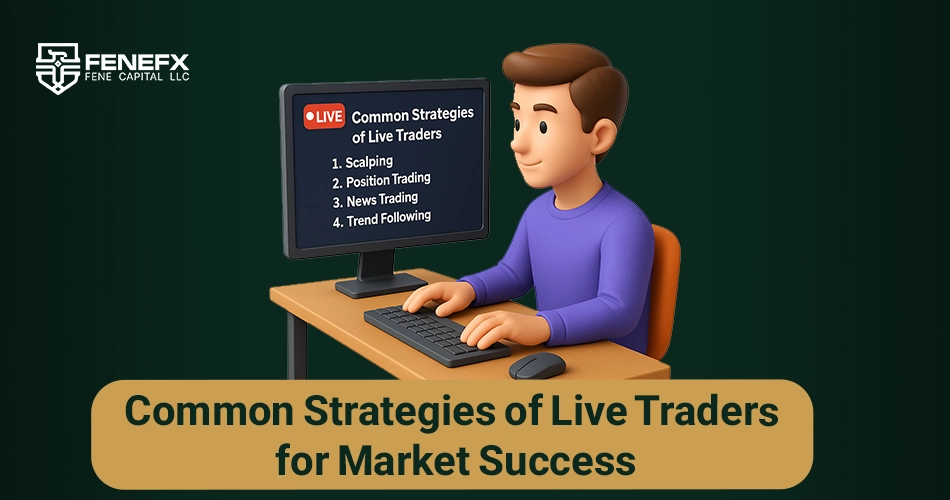
Trading strategies for live traders should be based on precise analysis and the ability to react quickly to market conditions. In this section, we cover some common strategies that live traders use.
1. Scalping
Scalping is a popular strategy in live trading. In this strategy, the live trader enters trades using small price fluctuations in short timeframes (such as 1 minute or 5 minutes) and tries to make small profits in a very short period. The main goal in scalping is to profit from rapid price changes.
This strategy requires high speed execution and great precision, as the live trader must close each trade in a short time and take advantage of sudden market changes.
2. Position Trading
In this strategy, the live trader holds positions for a longer period (from several days to several weeks). This strategy focuses more on fundamental analysis and long term market changes. Position traders usually seek to profit from larger market movements.
3. News Trading
Some live traders use economic and political news to make trading decisions. This type of trading is based on rapid information about economic changes such as earnings reports, central bank interest rate decisions, and global news. Live traders who use this strategy must be able to quickly analyze news and predict its impact on market prices.
4. Trend Following
In this strategy, the live trader tries to capitalize on market trends. This means that after identifying a strong trend (bullish or bearish), the live trader joins that trend and waits for it to continue. This strategy is more suitable for larger timeframes (such as 4 hour or daily) and the live trader must use technical analysis tools like trendlines, moving averages, and technical indicators to identify market trends.
Tools and Resources Needed for Live Traders
To become a successful live trader, it's necessary to have various tools and resources at your disposal. These tools help you make better decisions and analyze the market more effectively. In this section, we cover the most important tools and resources needed by live traders.
1. Trading Platforms
One of the most important tools for live traders is trading platforms. Platforms such as MetaTrader 5 (MT5), cTrader, and brokers' proprietary platforms are tools that live traders use to conduct their trades. These platforms provide various features such as fast order execution, viewing price charts, using indicators, and account management.
- MetaTrader 5 (MT5): One of the most famous trading platforms that offers numerous features for market analysis, fast order execution, and using various tools. This platform is very suitable for live traders because its execution speed and analysis tools are very powerful.
- cTrader: This platform also has suitable tools for fast trading and technical analysis. One of the advantages of cTrader over MetaTrader is its simpler user interface and more precise charts, which helps many live traders make decisions during sensitive times.
2. Analytical Tools and Indicators
For market analysis in live trading, using indicators and analytical tools is essential. Live traders typically use various tools such as Moving Averages (MA), RSI indicator, MACD, Bollinger Bands, and Fibonacci to analyze prices.
- Moving Averages (MA): This indicator helps live traders identify market trends. When the price crosses the moving average, it may be a sign of a trend change.
- RSI Indicator: This indicator helps traders identify overbought and oversold conditions. Using RSI can be effective for determining entry and exit points.
- MACD: This indicator is typically used to identify crossovers and trend changes. Traders can receive buy and sell signals using MACD.
3. News and Economic Resources
In live trading, up to date and rapid information is one of the most important factors that traders need for their trading decisions. Live traders must be able to quickly receive economic news and reports and analyze their impact on the market.
For this purpose, using reliable news sources such as Bloomberg, Reuters, CNBC, and platforms that publish economic news and central bank interest rate changes is vital. These sources help traders become aware of important economic and political events that can influence the market.
4. Risk Management Software
Risk management is vital for live traders. Software such as TradeStation and MetaTrader 5 allows live traders to use tools like Stop Loss and Take Profit to control potential risks.
These software also give you the ability to automatically execute your trading strategies and prevent impulsive decisions. By using these tools, live traders can continuously monitor their trades and ensure that no unacceptable risk will affect their account.
Challenges and Risks of Live Trading
Live trading may seem exciting, but to succeed in this field, traders must face various risks and challenges that can affect trading results. In this section, we examine some of these challenges and risks.
1. Market Fluctuations
Financial markets, especially when important economic or political news is released, can experience severe fluctuations. These fluctuations can cause prices to change rapidly and prevent live traders from making correct decisions quickly. For example, when news about central bank interest rates is released, prices may unexpectedly rise or fall.
In these conditions, live traders must have the ability to control their emotions and make logical decisions. High fluctuations can cause some traders to feel pressured and make hasty decisions that result in losses.
2. Psychological Pressure
Live trading, due to the need for quick decision making under market pressure, can exert significant psychological pressure on traders. This pressure can lead to emotional decisions, trading mistakes, and missed opportunities. Traders who cannot control their emotions may suffer substantial losses over time.
To reduce this pressure, live traders should use specific strategies and not only pay attention to technical and fundamental analysis but should also continuously practice emotional management skills.
3. Human Errors
In live trading, human errors can be one of the biggest challenges. Traders may make mistakes in entering orders, not properly adjust the amount of leverage, or even make incorrect choices of trading tools. These errors can cause significant losses.
To reduce such errors, live traders should carefully enter their information, use automated tools for executing orders, and examine all aspects of the market before making any decision.
How to Enter the World of Live Trading? Getting Started Guide

To start as a live trader, you must first ensure that you have all the necessary prerequisites and tools at your disposal. In this section, we explain the initial steps for entering the world of live trading.
1. Choosing a Suitable Broker
The first step to start live trading is selecting a reputable and suitable broker. The broker should have valid legal licenses, competitive spreads, and advanced trading platforms. Also, you should look for a broker that provides proper customer support and can quickly find solutions in case of problems.
2. Learning and Practice
Before starting real trading, it is recommended to use a demo account for practice. This option gives you the opportunity to test different strategies and become familiar with trading platforms without any financial risk. Many brokers offer free demo accounts that help you easily enter the world of live trading.
3. Risk Management and Strategy Determination
After gaining sufficient experience in a demo account, you should define your strategies for risk management and profit. Using Stop Loss and Take Profit, determining trade volume, and following the principles of trading psychology are among the most important factors to include in your strategy.
Comments
One nuance: being profitable on demo means very little. The real test is staying consistent live for 6+ months with the same rules. That transition breaks most traders, not the strategy.
My first week live I risked 10x less than on demo and still felt my heart pounding on every trade. Nobody warns you how different real money feels.
Could you write about how long someone should stay on demo before going live? Everyone gives a different answer, from two weeks to a year.
Nice one, straight to the point.
This cleared up something basic for me — I thought 'live trader' just meant someone who streams their trading. The demo vs live distinction makes way more sense now, thanks.