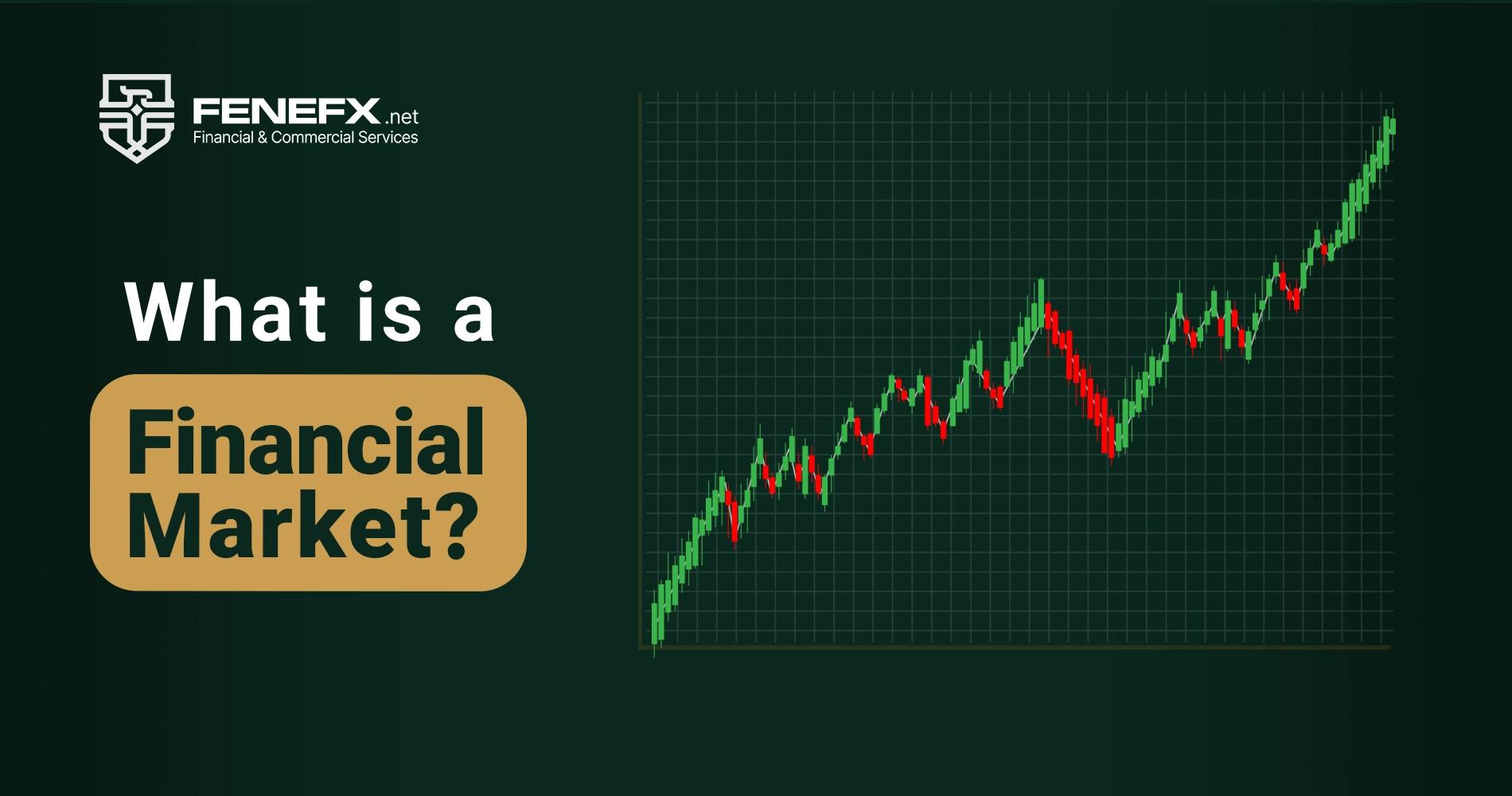
What is a Financial Market?
Financial markets are a collection of trading platforms where assets such as stocks (with a global market value of approximately $95 trillion), bonds (over $130 trillion), currencies (with an average daily volume of about $7.5 trillion), and derivatives (with a notional value exceeding $600 trillion) are exchanged. These markets play a crucial role in the efficient allocation of resources, financing of enterprises and large scale projects, and maintaining economic efficiency by enabling the rapid conversion of assets into cash and attracting capital from around the world. Serving as a link between investors and borrowers, they significantly accelerate the circulation of capital in capitalist economies.
Types of Financial Markets
The world of financial markets consists of various types, each with its own unique function within the financial ecosystem. Understanding these markets and their specific characteristics helps investors and economic agents to design and implement their appropriate strategies. The most important financial markets in the world are:
Stock Market
The stock market is a place where publicly traded companies issue part of their ownership in the form of shares to raise the capital needed for their development projects, and investors buy and sell these shares. The largest stock market in the world is the New York Stock Exchange (NYSE), whose total market value is estimated at over $25 trillion and which hosts major companies such as Apple and Microsoft. Companies active in this market are required to publish their quarterly and annual reports so that shareholders can judge based on profitability, financial structure, and future strategies. Brokers and market makers ensure high liquidity by balancing supply and demand, and indices like the S&P 500 or DJIA represent the overall behavior of this market.
Over the Counter Market (OTC)
The over the counter market is a decentralized network where direct transactions between buyers and sellers are conducted without the presence of a formal exchange. Instruments traded in this system typically include the stocks of small companies or startups, bonds not listed on exchanges, and specific derivatives. Liquidity in this market is lower than in formal exchanges, and price transparency is reduced due to the lack of unified oversight, yet it creates an opportunity for companies that do not meet the criteria of major exchanges to raise capital.
Bond Market
In the bond market, governments, municipalities, and large corporations issue bonds through which buyers commit to receiving the principal plus agreed periodic interest at a specified maturity date. The global bond market is valued at over $130 trillion, with the majority belonging to low risk, fixed yield government bonds. This market includes types such as one year treasury bills, corporate participation bonds, and approved municipal bonds. Institutional investors such as banks and pension funds are the primary buyers of long term maturity bonds.
Money Market
The money market is a venue for trading very short term debt instruments usually with maturities of less than one year, such as bank drafts, short term certificates of deposit, and companies’ commercial papers. The annual turnover of this market is estimated at around $80 trillion globally, and its main role is to quickly provide liquidity for financial institutions and governments. Large banks and government treasuries use this market to manage short term resources, and its rates serve as a benchmark for interbank interest rates.
Foreign Exchange Market
The foreign exchange market, or Forex, is the largest financial market in the world, with a daily trading volume of over $7.5 trillion. This market is completely decentralized and operates through global order books of central banks, major financial institutions, and retail brokerages. Currency traders profit from changes in exchange rates by buying one currency against another for example, the dollar against the euro or hedge exchange rate risks for their commercial transactions. Due to its extremely high liquidity and the availability of leverage, Forex holds special appeal for speculators and production entities.
Commodity Market
The commodity market is a place for trading raw materials and primary products such as crude oil, natural gas, precious metals (gold and silver), and agricultural products (wheat, corn, and coffee). This trade occurs either physically in warehouses and ports or through futures and options contracts. The annual trading volume of crude oil is about $5 trillion, and the global precious metals market is valued at over $12 trillion. Producers, industrial consumers, and speculative traders participate in these markets, and prices are influenced by fundamental factors such as global supply and demand, geographical conditions, and trade policies.
Derivatives Market
In the derivatives market, instruments such as futures contracts, options, swaps, and CFDs are traded, with an estimated total notional value of over $600 trillion. These instruments allow traders to participate in price fluctuations without owning the underlying asset or to reduce risks related to exchange rate and interest rate volatility. Banks, hedge funds, and large industrial companies use derivatives to hedge their commercial and financial risks.
Alternative Investments Market
This market includes non-traditional assets such as real estate, private equity, venture capital funds, art and collectible assets, and even cryptocurrencies. The global real estate market is estimated at over $300 trillion in value, and venture capital funds have in recent years, with more than 20% growth, claimed a significant share of institutional investors’ portfolios. Investment in these areas requires a long term horizon and specialized risk management due to less liquidity.
How to Enter Financial Markets
To successfully enter financial markets, you must first define your investment horizon and goal: are you seeking short term returns from daily fluctuations, or are you focused on long term outlook and preserving purchasing power?
Choosing the Right Market:
Based on your objective and initial capital, choose among stock markets, Forex, bond markets, or commodities. For high liquidity and leverage, Forex or U.S. stocks are suitable; if you prefer stability, bonds or investment funds are better options.
Learning the Basics of Analysis:
Participate in technical and fundamental analysis courses to learn how to read charts, interpret financial statements, and monitor economic news. This knowledge will form the foundation of your decision making.
Practicing with a Demo Account:
Open a demo account with virtual capital and test simple strategies such as moving average crossovers or support/resistance breakouts without any risk.
Choosing a Reputable Broker:
Choose a brokerage regulated by authorities like the FCA or SEC, with competitive fees and access to your desired markets. Opening an account with most online brokers usually takes 1-3 days and requires $200-$500.
Developing and Testing a Strategy:
Test your strategy in a live account with a small amount of capital (1-2% of your total portfolio). Maintain a minimum risk to reward ratio of 1:2 and adjust position size according to market volatility.
Risk Management:
Set a stop loss and take profit for each trade. Use fixed or trailing stop losses and never take positions beyond your defined risk threshold.
Continuous Updating and Optimization:
Keep your knowledge up to date by studying central bank reports, economic analyses, and participating in specialized webinars. Review and adapt your strategies according to market changes.
Participation of Iranian Users in Financial Markets:
Stock and OTC Markets:First, register and verify your identity in the “Sajam” system. Then, by receiving a “stock market code,” you’ll be allowed to trade shares of companies listed in the stock exchange and OTC markets.
Commodity Exchange:After registering in Sajam and verifying with a brokerage, you can request a “commodity exchange code” to buy and sell products like metals, petrochemicals, and agricultural goods.
Futures and Options Market:To enter futures and options contracts on stocks or commodities, you need the same “stock market code” used in the stock market; no new code is required.
Forex Market:If you intend to trade in the global currency market (Forex), you must register with a reputable broker (domestic or international) and complete the identity verification process.
Cryptocurrency Market:To trade cryptocurrencies, it is sufficient to open an account in a licensed Iranian exchange (after completing the identity verification process and being at least 18 years old) and use its internal wallet services.
Importance of Financial Markets
Efficient financial markets are essential for sustainable economic development. These markets, by creating a bridge between savers and investors, complete the resource allocation cycle and lead to increased liquidity, transparency, and efficiency in the economy. The most important roles of financial markets in the economy are examined below.
The Role of Financial Markets in Resource Allocation
Financial markets help channel capital toward the productive sectors of the economy. Investors are always in search of the highest returns, and financial markets provide the opportunity to allocate capital to companies and projects with high growth potential. Moreover, markets, by continuously publishing information related to asset pricing and performance, help investors make more informed decisions.
The Role of Financial Markets in Creating Liquidity
Financial markets enable investors to easily buy and sell assets. This capability contributes to creating liquidity in the economy. Market liquidity reduces transaction costs and allows investors to quickly respond to market changes and manage their risks. In addition, high market liquidity facilitates the faster and more effective transmission of economic policies to various sectors of the economy.
Transaction Mechanism in Financial Markets
In organized markets such as stock exchanges, investors' buy and sell orders (Limit, Market, and Stop) are submitted to the trading system through a broker. This centralized system, using a Matching Engine, automatically pairs supply and demand at any given moment through a specific algorithm. Then, the clearing process and final transfer of assets or funds are executed through a clearinghouse. In contrast, over the counter (OTC) markets lack a unified platform, and each transaction is recorded and settled through direct agreements between parties usually via electronic trading desks. In both structures, market makers and dealers ensure liquidity by continuously offering buy and sell quotes and controlling the price spread.
Price Discovery Process
Prices in financial markets result from the continuous interaction of supply and demand forces. Any economic news or change in investor expectations from corporate earnings reports to employment statistics can shift the supply or demand curve and establish a new equilibrium price. Information transparency, through mandatory regular financial disclosures by companies and public access to economic data, plays a key role in the integrity and accuracy of this mechanism. Additionally, analysts use fundamental analysis (examining the intrinsic value of assets) and technical analysis (studying price patterns) to predict the next price movement and shape their decisions to optimize profits and manage risk.
The Role of Financial Markets in Economic Growth
Developed financial markets are a primary driver of productive investment and economic stability. First, by providing firms with the capital needed for development plans and large infrastructure projects, they accelerate Gross Domestic Product (GDP) growth. Second, through optimal resource allocation where investors direct their capital to profitable opportunities by comparing returns and risks they increase overall economic efficiency. Third, by offering a variety of risk hedging instruments (such as currency and interest rate derivatives), they reduce sudden market volatility and support financial stability. In times of crisis, these markets prevent deeper economic recessions by injecting liquidity and facilitating access to emergency loans.
| Domain | Main Mechanism | Economic Outcome |
| Transactions | Order placement by broker → Automatic order matching → Clearing and Settlement | Fast and secure execution of trades; high liquidity |
| Price Discovery | Interaction of supply and demand based on news and expectations + Transparency of corporate and economic data | Fair pricing and continuous updates |
| Economic Growth | Financing of development projects + Optimal resource allocation + Risk hedging instruments + Liquidity injection in crises | Increased efficiency, financial stability, and accelerated GDP growth |
Principles of Regulation in Financial Markets
An appropriate legal and regulatory framework is essential for the healthy functioning of financial markets. These regulations aim to maintain transparency, fairness, and stability, protect investors, and strengthen public confidence in the financial system.
The Principle of Transparency in Financial Markets and Its Importance
Transparency means equal and open access to financial information. When information about companies and markets is published clearly and in a timely manner, investors can make more informed decisions. Transparency in financial markets helps reduce fraud and corruption and improves market efficiency.
The Principle of Fairness in Transactions
Fairness in transactions means treating all market participants equally. All investors should have equal access to information and equal investment opportunities. This fairness supports investor rights, increases trust in the market, and helps reduce systemic risks.
The Role of Regulatory Institutions in Financial Markets
Regulatory institutions are responsible for enforcing rules and regulations in financial markets. By monitoring market activities, they ensure compliance with transparency and fairness. These institutions establish regulations that help maintain market health and efficiency and also work to raise public awareness about investor rights and responsibilities.
Financial Markets and Risk Management
Risk management is one of the fundamental functions of financial markets. These markets, by offering a variety of risk hedging instruments, enable economic agents to protect themselves against price fluctuations, exchange rate changes, and other financial risks.
Risk Management Instruments
Financial derivatives such as futures contracts, options, and swaps are key instruments for risk management. These tools allow investors to hedge their risks by anticipating price movements. Insurance and hedging contracts are also among the other risk management tools. Additionally, portfolio diversification and active portfolio management contribute to reducing investment risks.
The Role of Risk Management Instruments in Financial Markets
Risk management instruments help reduce volatility and enhance stability in financial markets. When investors know they can effectively manage their risks, they have greater confidence in the market. This confidence leads to increased capital inflow and higher liquidity. Moreover, risk management instruments contribute to the optimal allocation of resources.
Comments
Decent primer. One nuance though: OTC markets like forex have no central exchange, which matters a lot for spreads and counterparty risk. Worth emphasizing more for beginners.
I started with stocks years back and only touched forex much later. Wish I'd read something like this first, would've saved me a lot of confusion about how these markets connect.
Can you write one on how the forex market differs from the stock market in terms of hours and liquidity? That'd be super useful.
Nice and clear, good starting point for newbies.
As someone totally new to this, the breakdown of the different market types really helped. I never knew money markets and capital markets were separate things.