




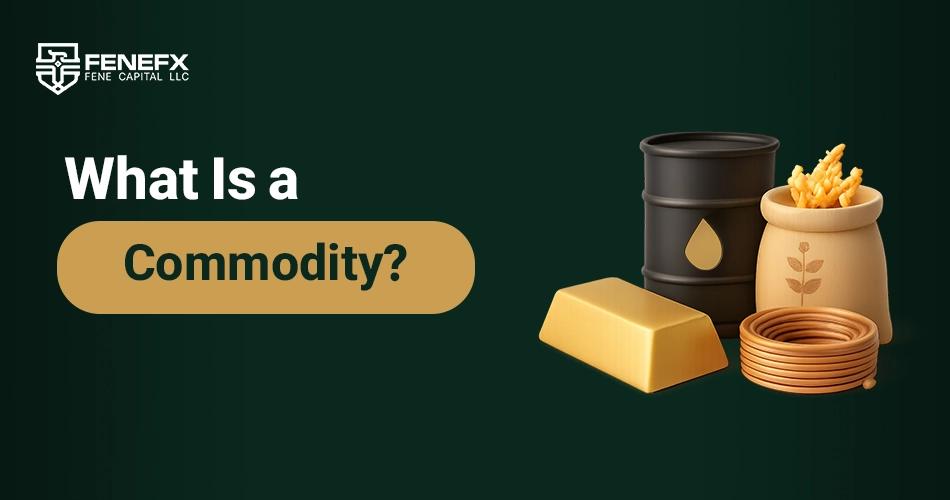
What Is a Commodity?
Commodities are goods that are widely traded in financial markets. These goods typically possess similar and standardized characteristics that make them easily interchangeable. In other words, commodities are items that, instead of having unique features, are generally replaceable, and their value is determined based on specific quality characteristics present in the market.
These goods are mainly categorized into different groups and may include metals, energy, agricultural, and animal based commodities. For example, gold, oil, wheat, and coffee are all recognized as commodities.
In financial markets, commodities are typically traded through futures contracts or via instruments such as ETFs (Exchange Traded Funds) and other derivative products. These instruments allow investors and traders to invest in commodities indirectly.
Types of Commodities: Metals, Energy, Agricultural, and Animal Based
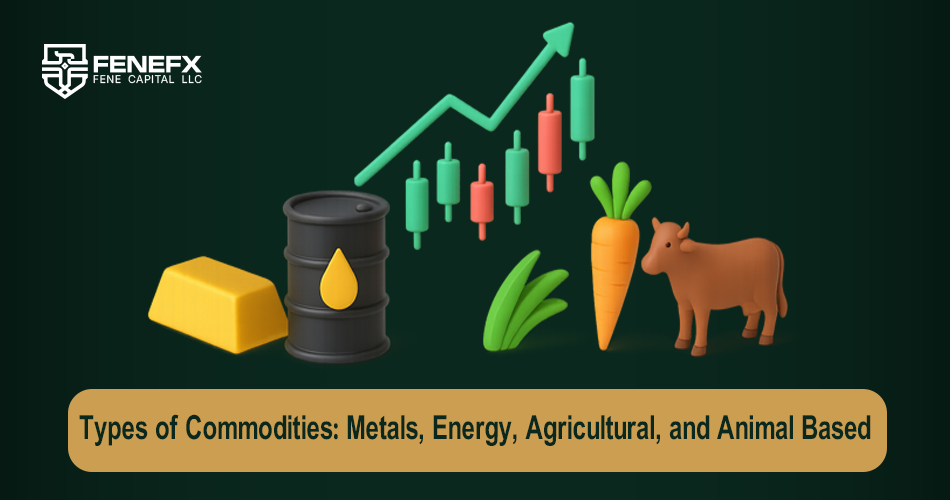
Commodities can be divided into four main categories: metals, energy, agricultural, and animal based. Each of these categories has its own unique characteristics and is influenced by various factors that directly affect their pricing and trading in financial markets.
Metal Commodities
Metal commodities include precious metals and industrial metals. These types of commodities are widely used across different industries and are therefore in high demand. Some of the most important precious metals include gold, silver, and platinum, which are also used as stores of value and investment assets. Industrial metals such as copper, aluminum, and iron have broad applications in industries such as construction and manufacturing.
Energy Commodities
Energy commodities include energy sources such as oil, natural gas, and coal. These commodities are of significant importance as the demand for energy in the modern world is continuously rising. The price of oil, in particular, has a major impact on the global economy and is subject to significant volatility. Natural gas is also used to supply energy to various industries and for domestic consumption.
Agricultural Commodities
Agricultural commodities include products such as wheat, corn, coffee, sugar, and cocoa. These goods are economically important because they serve as food sources and primary energy inputs for many countries. The market for these commodities is influenced by factors such as weather conditions, seasonal changes, and government policies. For producing countries in particular, global commodity prices have a significant effect on economic growth.
Animal Based Commodities
Animal based commodities include livestock products such as meat, milk, wool, and leather. These commodities are vital for fulfilling food and industrial needs across the globe. The market for these commodities is affected by factors such as global demand for animal proteins, changes in consumer behavior, and economic trends.
Comparison Table of Commodity Types
| Commodity Category | Common Examples | Applications | Influencing Factors | Price Volatility Risk |
| Metals | Gold, Silver, Copper | Store of value, electronics industry, construction | Interest rates, inflation, industrial demand | Medium |
| Energy | Crude oil, Natural gas | Energy production, transportation, petrochemical industries | Geopolitical tensions, OPEC supply, global reserves | Very High |
| Agricultural | Wheat, Corn, Coffee | Food, animal feed, industrial production | Weather conditions, seasonal harvests, national export | High |
| Animal Based | Beef, Milk, Wool | Human nutrition, apparel industry, livestock products | Livestock diseases, dietary changes, production costs | Medium to High |
The Difference Between Commodities, Stocks, and Currencies
One of the common questions among investors is what the key differences are between commodities, stocks, and currencies, and why each should be considered separately. To answer this question, it is important to understand the fundamental distinctions among these three types of financial assets.
Market Structure
In the stock market, each public company offers shares that are directly bought and sold by investors. Each share represents a portion of ownership in a company, and its value depends on the company’s financial performance. In contrast, commodities are standardized and interchangeable goods whose value is tied to macroeconomic factors, global production, and consumption.
The currency market (Forex) is where currencies from different countries are exchanged. In this market, the value of a currency relative to another is influenced by factors such as interest rates, economic policies, and political conditions. In comparison, in the commodity market, the value of goods is more directly affected by supply and demand as well as the physical conditions of the commodity.
Price Volatility
One of the major differences between commodities and stocks or currencies is price volatility. Commodities generally experience greater volatility due to their dependence on natural factors such as weather conditions, seasonal cycles, and global demand. While stocks and currencies also fluctuate, their volatility is typically driven by economic and political performance.
Investment Opportunities
While the stock and currency markets are primarily used for investing in companies and national currencies, the commodity market is more commonly used for hedging and investing in essential goods. For example, during times of inflation, investors may turn to buying gold or oil as safe haven assets.
Liquidity and Costs
Liquidity in the commodity market may be lower than in the stock and currency markets. This means that buying or selling commodities quickly can sometimes incur higher costs. On the other hand, stock and currency markets typically offer higher liquidity and lower transaction costs compared to commodities.
In conclusion, although each of these asset types has its own unique characteristics, the choice between commodities, stocks, or currencies depends on an individual’s investment strategy, financial goals, and risk tolerance.
Why Should Traders Pay Attention to Commodities?
Commodities are not merely raw materials used in industry or food production; they are dynamic instruments for investment, risk hedging, and analyzing economic conditions. For a professional trader or even someone seeking diversification in their investment portfolio, attention to the commodities market is considered a logical and profitable necessity. There are several reasons why traders should focus on this market, which are outlined below.
The first reason is the physical and tangible nature of commodities. Unlike stocks or currencies, commodities are real goods, and the demand for them arises from fundamental factors such as consumption, production, global crises, or climate changes. This makes fundamental analysis in the commodities market often more reliable than in purely sentiment driven markets such as cryptocurrencies.
The second reason is the distinct correlation commodities have with other assets. For example, gold typically rises when stock markets experience downturns or inflation increases. Therefore, adding commodities to a trading portfolio can help reduce overall risk and enhance portfolio stability in volatile market conditions.
On the other hand, many commodities are heavily influenced by global events. For instance, a war in an oil producing region can trigger a surge in oil prices. An informed trader can monitor such events to identify opportunities for entering or exiting the market.
Ways to Trade Commodities in Financial Markets
Entering the commodities market does not necessarily require purchasing physical goods. In fact, most transactions in this market are carried out through financial instruments that allow traders to participate indirectly. Depending on investment goals and skill level, there are various ways to trade commodities, the most important of which are introduced below.
Futures Contracts
Futures contracts are the most common method for trading commodities in international markets. These contracts are agreements to buy or sell a specific quantity of a commodity at a predetermined price on a specific date in the future. This instrument is particularly useful for hedging risk for major producers and consumers, but it also offers profitable opportunities for active traders.
CFDs (Contracts for Difference)
CFDs are one of the most popular instruments among retail traders because they allow traders to benefit from price fluctuations without actual ownership of the commodity. In a CFD, the trader only speculates on the difference between the entry and exit price of a trade. This tool is especially suitable for those seeking quick trades, as it is simpler to execute than futures contracts and requires less initial capital.
ETFs and Commodity Funds
Exchange Traded Funds (ETFs) focused on commodities allow for indirect investment in goods. For example, ETFs related to gold, oil, or agricultural products are traded on many global stock exchanges. This method is ideal for individuals who wish to participate in the commodities market with lower risk and greater diversification.
Commodity Exchanges
Some countries have dedicated commodity exchanges where goods are traded either physically or through warehouse receipts. For example, the Iran Mercantile Exchange or the Chicago Mercantile Exchange (CME) provide platforms for the official and regulated trading of various commodities. These exchanges usually operate with more transparent mechanisms and are considered more attractive for long term investors or financial institutions.
Table of Commodity Trading Methods
| Trading Method | Characteristics | Advantages | Suitable For |
| Futures Contract | Trading based on a specified future date; requires high technical knowledge; high leverage | Risk hedging; standardized contracts; high liquidity | Professional traders and hedgers |
| CFD Contract | Trading based on the difference between buy and sell prices, Suitable for swing trading | Easy access; lower capital requirement; fast execution | Short and medium term traders |
| ETF and Commodity Fund | Indirect investment; lower risk; suitable for portfolio diversification | Controlled risk; suitable for non professional investors | Passive investors and diversifiers |
| Commodity Exchange | Direct trading or via Certificate of deposit ; greater transparency; strong regulatory oversight | High security; reliable for long term investors | Financial institutions and cautious investors |
A Key Consideration in Choosing the Right Method Is Understanding the Risks of Each Instrument
Futures and CFD trading can generate substantial profits, but at the same time, due to the use of leverage, the risk of loss is also high.
The Impact of Economic and Political Factors on Commodity Prices
Unlike many other financial assets, commodity prices are not solely dependent on market supply and demand; they are influenced by a wide range of economic, political, and even environmental factors. Understanding these factors helps traders better anticipate price movements.
Interest Rates and Inflation
One of the most important economic factors affecting commodity prices is the interest rate in major economies such as the United States. For example, when interest rates rise, the value of the U.S. dollar tends to increase, which can lead to a decline in the price of dollar denominated commodities like gold. Additionally, during periods of high inflation, commodities such as gold and silver are often viewed as safe havens for preserving asset value.
Economic Growth in China and the U.S.
China is one of the largest consumers of commodities in the world. Any change in China's economic growth can quickly affect demand for industrial metals such as copper or aluminum. Similarly, economic conditions in the United States influence markets for oil, natural gas, and other commodities.
Geopolitical Tensions
In the commodity markets, wars, sanctions, political crises, or regime changes can disrupt supply chains or increase production costs. For instance, war in the Middle East can reduce oil supply and drive up global prices. Likewise, economic sanctions on countries that export raw materials can quickly destabilize commodity prices.
Weather Conditions and Natural Disasters
In agricultural commodity markets, climate variations play a major role. Droughts, heavy rainfall, frosts, and even storms can reduce crop yields and drive prices higher. For example, a shortage of coffee due to low rainfall in Brazil or the spread of pests in Southeast Asia can lead to significant price increases.
Government Policies and Tariffs
Governments play a direct role in regulating or controlling commodity markets. Through import or export tariffs, subsidies for producers, or the establishment of base prices, they can influence the pricing direction of commodities. Such interventions are especially common in agricultural and energy markets.
Traders operating in the commodity markets must maintain a broad economic perspective and remain attentive to political events, interest rate changes, weather reports, and geopolitical developments. The commodity market is often driven by external forces, and success in it requires a deep understanding of these factors
Risks and Opportunities of Investing in the Commodity Market
Like other financial markets, the commodity market is a combination of profitable opportunities and potential risks. Traders and investors who properly understand this market can benefit from its volatility; however, neglecting its unique characteristics can lead to significant losses.
Portfolio Diversification Potential
One of the most important opportunities in this market is its ability to diversify an investment portfolio. In situations where the stock or currency markets face downturns or unexpected fluctuations, certain commodities like gold can serve as a safe haven asset. Gold, in particular, tends to perform well during inflationary periods or economic crises. Likewise, some commodities such as oil and gas can become highly profitable during times of economic growth and increased energy consumption.
Strong Fundamental Analysis Capability
Another opportunity is the potential for strong fundamental analysis. Unlike markets that move largely based on collective psychology, the commodity market is driven by objective economic factors such as supply, demand, global reserves, government policies, and climate conditions. This can create a more favorable environment for analytical traders.
High Price Volatility
On the other hand, there are also risks that must be taken seriously. The first major risk is the high price volatility. Some commodities like oil, natural gas, or coffee can experience significant price swings within a short period. If a trader uses leverage, such volatility can quickly lead to the loss of capital.
Heavy Dependence on Conditions
The second risk is the heavy dependence of some commodities on specific political or climatic conditions. For instance, droughts in agricultural regions can reduce the supply of wheat or corn and cause sudden price shocks. Similarly, a political crisis in an oil producing country may drive up global prices or disrupt trading.
Liquidity Risk
Liquidity risk is also present in certain specific markets. Some commodities are traded on specialized exchanges and may not be accessible at all hours or to all investors. This can limit the ability to exit the market quickly during times of crisis.
Ultimately, successful investing in the commodity market requires a precise understanding of trading instruments, familiarity with fundamental analysis, and awareness of global developments. Combining this knowledge with professional risk management can turn this market into one of the most powerful investment opportunities.
Forecasting the Future Trend of the Commodity Market
Forecasting the commodity market requires a combined perspective involving historical data, economic trends, technological advancements, and political developments. In recent years, the commodity market has undergone significant changes, and it appears that this trend will continue into the future.
Rising Demand for Industrial Metals
One of the key trends is the growing demand for industrial metals driven by the advancement of modern technologies such as electric vehicles, renewable energy, and artificial intelligence. Metals like lithium, copper, nickel, and cobalt, which are used in battery production and clean energy infrastructure, are increasingly becoming strategic assets. It is expected that the prices of these metals will follow an upward trend in the long term due to technological demand.
In the energy market, although demand for oil remains high, the global movement toward reducing dependence on fossil fuels suggests that oil’s role in the energy mix may decline over the next decade. However, in the short to medium term especially in developing economies oil and gas will remain essential resources. As a result, price volatility for these commodities will persist, providing many trading opportunities.
In the agricultural sector, climate change will have a profound impact on the commodity markets. Rising global temperatures, changes in rainfall patterns, and the spread of pests will affect the supply of agricultural products. Consequently, forecasts indicate that the prices of certain agricultural commodities such as coffee, wheat, and sugar will experience significant fluctuations in the coming years.
Gold, as a traditional store of value, will continue to maintain its position especially if global inflation remains high or political tensions escalate. Moreover, with central banks increasingly seeking to expand their gold reserves, gold is expected to preserve its strategic role more firmly in the long term.
Overall, the future of the commodity market will be dynamic and complex. Traders who are capable of analyzing multidimensional economic, political, and technological trends can take advantage of this market as a stable and profitable resource that, when understood correctly, can serve as a powerful complement to other financial instruments.
Comments
My first commodity trade was natural gas. Never again without checking volatility first — that thing moves like crypto on a bad day.
Nice and simple breakdown, enjoyed it.
Always heard 'commodities' thrown around and just nodded along. Hard vs soft commodities finally makes sense now, thanks.
Any plans for an article on trading gold vs oil specifically? Curious how differently they behave.
Good primer, though most retail traders never touch actual futures — they trade commodity CFDs or ETFs. The contango/backwardation stuff still matters though, it leaks into the pricing.