




Global Financial Markets Outlook for the Week Ahead - Oct 13-Oct19
As we head into the new trading week, global markets stand at a critical inflection point, shaped by a complex mix of political uncertainty, inflationary pressures, and shifting geopolitical dynamics. The ongoing U.S. government shutdown is expected to delay key economic releases such as CPI and PPI, amplifying uncertainty around the Federal Reserve’s next policy steps. Meanwhile, Donald Trump’s renewed tariff threats against China have reignited trade war fears, driving sharp volatility across oil, equities, and cryptocurrencies. In commodities, gold’s historic breakout above $4,000 and silver’s record-high close after 45 years underscore the growing skepticism toward fiat currencies. Conversely, the S&P 500’s pullback after record highs and rising outflows from crypto markets reflect a shift toward caution and risk aversion. Overall, the upcoming week is poised to be one of consolidation and heightened sensitivity to macroeconomic data and policy developments a period in which central bank signals, political events, and global liquidity flows will define the tone for the final stretch of 2025.
Concerns Over U.S. Government Shutdown and Its Impact on Economic Data
The continued shutdown of the U.S. federal government in the coming week is likely to delay the release of several key economic indicators, including the Consumer Price Index (CPI), Producer Price Index (PPI), and retail sales data.
While market participants are awaiting clues about the Federal Reserve’s interest rate path, this disruption could heighten uncertainty and concerns regarding economic growth. It is expected that the CPI will rise by 0.3% in September (compared to a 0.4% increase in August), while core inflation is projected to remain unchanged at 0.3%.On the other hand, the PPI is expected to increase by 0.3% following an unexpected 0.1% decline in August. If the weak price trend continues, there may be growing pressure on the Federal Open Market Committee (FOMC) to further cut interest rates. However, this decision will largely depend on broader economic activity data. For this reason, the release of U.S. industrial production data compiled by the Federal Reserve could become the most important indicator of the week, particularly alongside the New York Fed and Philadelphia Fed indexes, which reflect the state of manufacturing activity.
China and Eurozone Data: Focus on Tariff Impact
In the week ahead, China’s foreign trade and inflation data, along with industrial production and trade figures from the Eurozone, will be released. Investors will closely analyze these reports for signs of how U.S. tariffs are impacting economic performance. Meanwhile, analysts will be looking for evidence indicating whether increased domestic fiscal spending in China and Europe has been able to offset some of the negative effects of these tariffs.
UK: Employment and GDP Data Under the Spotlight
In the United Kingdom, market attention is focused on the release of August GDP figures and the employment report data that are crucial for assessing fiscal and budgetary implications ahead of the government’s November budget announcement. Previous data showed that the UK economy recorded zero growth in July, while a sharp decline in employment continued, a trend widely attributed to last year’s fiscal policies.
Recent PMI indicators paint a similar picture: “recession in the manufacturing sector, a decline in employment levels, and signs of gradual economic stagnation.” In such conditions, the release of weaker data could strengthen expectations of an interest rate cut by the Bank of England (BoE). At its most recent meeting, the Bank kept the interest rate unchanged at 4.0%, but two out of nine members of the Monetary Policy Committee voted in favor of a rate cut a clear signal of rising concerns about weakening economic growth in the country.
Investment Manager Index (IMI)
Next week, S&P Global will also release the monthly Investment Manager Index (IMI) report, which will show how the sentiment and behavior of U.S. financial institutions toward the stock market changed in October. Last month’s report indicated a rise in risk aversion amid concerns over equity overvaluation and an uncertain political environment.
U.S. Inflation Outlook
If U.S. inflation data are released, the market’s primary focus will be on whether higher tariffs and increased import costs from China have been passed on to final consumer prices. So far, inflation growth has remained below the expectations of many analysts. However, headline CPI reached 2.9% and core CPI stood at 3.1% in August levels that remain above the Federal Reserve’s 2% target.
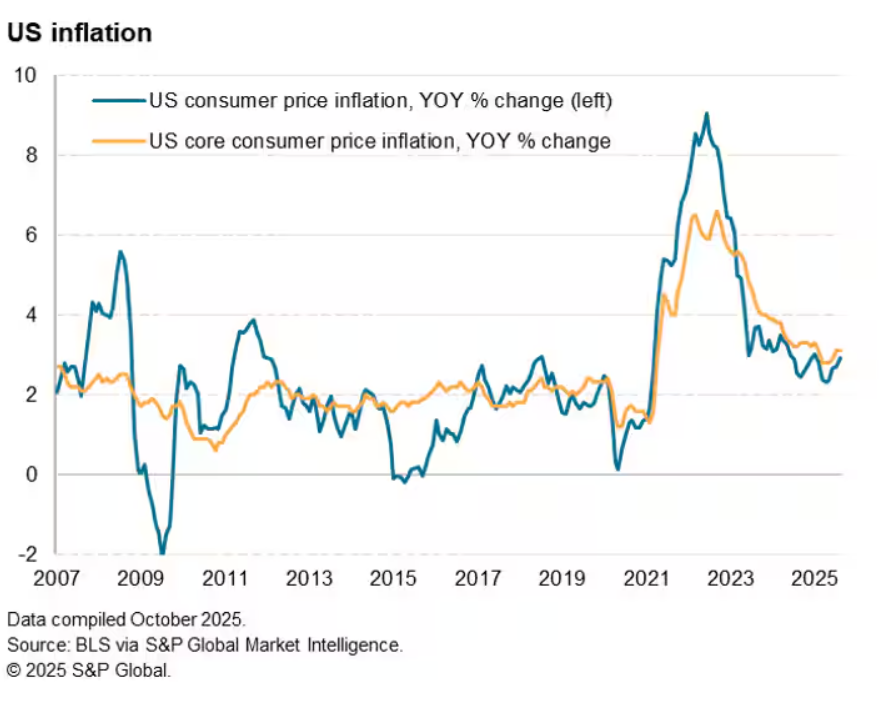 According to recent analyses, it is still too early to see the full impact of tariffs on consumer goods prices. However, if import pressures persist and demand remains weak, there is a possibility of further declines in inflation by the end of the year.
$4,000 Gold: A Historic Record Amid Global Inflation Fever and the Return of a Safe Haven Asset
The gold market witnessed a remarkable surge in a historic week, surpassing the $4,000 per ounce level for the first time after eight consecutive weeks of gains setting a new record in its trading history. This powerful rally occurred under the influence of rising inflation expectations, a weakening U.S. dollar, the ongoing U.S. federal government shutdown, and globally expansionary monetary policies. Although signs of temporary momentum slowdown and short term corrections appeared in the second half of the week, gold ultimately closed above the $4,000 mark, a move that once again strengthened investor confidence.
In the latest Kitco survey, the majority of analysts and retail traders have maintained their bullish outlook; however, overall market sentiment has shifted toward caution and an expectation of a correction. Experts such as Darin Newsom and Rich Cheken assess the uptrend as healthy and dynamic, believing that periodic pullbacks are merely necessary to maintain market balance; in contrast, analysts like Ole Hansen and Adrian Day warn that the recent rapid growth could lead to overbought conditions, making a consolidation phase inevitable.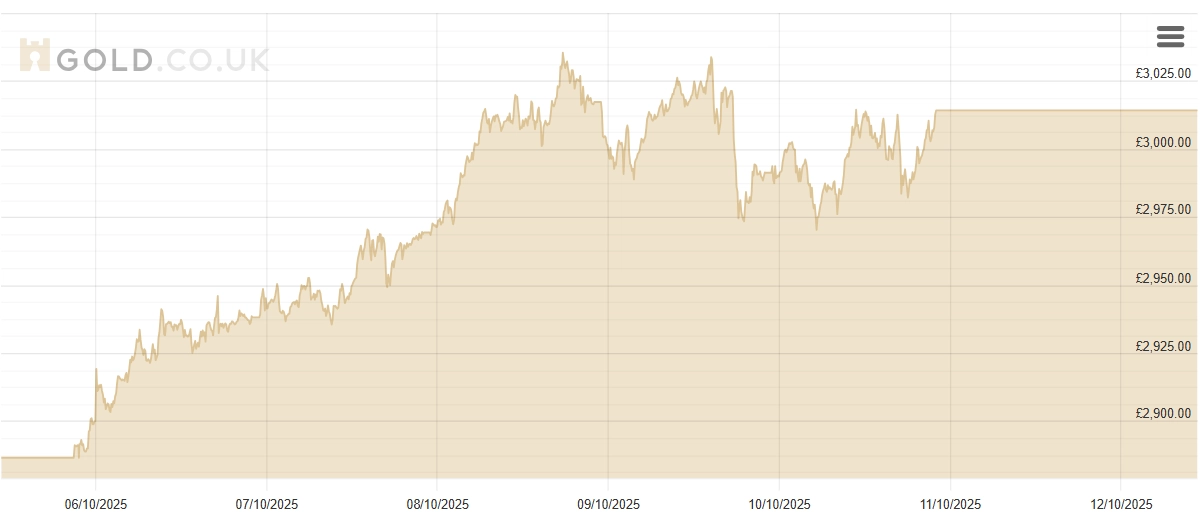 On a fundamental level, analysts believe that the main drivers behind gold’s rally lie in the declining value of fiat currencies, large scale central bank purchases, and rising geopolitical concerns. Experts such as Adam Button and Alex Kopitskevich emphasize that the global trend of reducing dependence on the U.S. dollar and increasing the share of gold in national foreign exchange reserves could further strengthen this bullish trend in the medium and even long term. Overall, the gold market is entering a new phase of consolidation and structural rebalancing, while its long term outlook remains bullish and fundamentally positive.
Silver and the Breaking of a 45 Year Record
The silver market has experienced one of the most dynamic and exciting periods in its history in recent weeks. Silver futures on the COMEX exchange settled at $48.99 per ounce on October 8, 2025 the highest closing level ever recorded for the metal. Just one day later, prices climbed close to the $50 mark, a level last reached in January 1980. According to Peter Krauth, author of The Great Silver Bull, breaking through this historic resistance after 45 years could represent one of the most significant technical breakouts in the history of the metals market. This level holds not only price significance but also considerable psychological importance, as many investors view a breakout above $50 as the beginning of a long term bullish phase.
Silver’s upward movement in 2025 has been driven primarily by gold’s remarkable rally and the return of investors to tangible assets. Gold has risen more than 50% this year, reaching a record high of $4,070 per ounce. Silver, meanwhile, has surged over 60% since the beginning of the year, accelerating along a similar trajectory. Analysts, including Nick Kaly from Solomon Global, believe this rally is fueled by a combination of falling U.S. bond yields, surging industrial demand, limited physical supply, and continued investor accumulation. According to him, the global silver market has faced a supply deficit relative to demand for the fifth consecutive year a situation that sets the stage for sustained price growth in the coming quarters.
However, experts warn that the market has entered a phase of heightened volatility and price discovery. The Relative Strength Index (RSI) for silver shows that the metal is in overbought territory, though it has not yet reached the extreme levels seen in 1980 or 2011 a signal that there is still potential for further upside from a technical perspective. Currently, some short term traders are taking profits, increasing the likelihood of a temporary correction. Nevertheless, analysts emphasize that such corrections could lay the groundwork for a more sustainable bullish trend. In fact, for long term investors, the current volatility may present attractive opportunities for re-entering the market provided they remain focused on the fundamental and structural factors driving this historic rally.
S&P 500 Falls 2% After Record Highs Amid Trump’s Tariff Threats
The S&P 500 index fell by 2% on Friday its first significant decline since April following two new record highs earlier in the week. This sharp volatility reflects growing investor concerns and a shift in market sentiment from optimism to caution. While the utilities sector was the only group to post positive returns, consumer discretionary stocks and small cap companies experienced the steepest losses.
Capital flowed out of riskier assets and into bonds, defensive stocks, and blockchain companies. Analysts interpret this move as a reaction to Donald Trump’s renewed tariff threats against China, which have darkened the outlook for global growth. However, some analysts believe that if tensions ease quickly, the market could enter a short-term relief rally. Still, the probability of a 10% 15% correction before the end of 2025 remains high.
Short Term Decline in Crypto Market Confidence Amid Intensifying Geopolitical Risks and the Return of a Trade War
Over the past week, the cryptocurrency market has shown clear signs of waning investor confidence and heightened emotional volatility. After several weeks of strong gains, new data indicate that major traders are gradually exiting their long positions a trend that has emerged alongside rising global risks, including renewed threats of a trade war between the United States and China.
Donald Trump’s remarks on October 10 marked the starting point of this shift in market tone. In response to Beijing’s new export restrictions on rare earth minerals and key components for chips and electric vehicles, the U.S. president adopted a harsh stance, calling the move an “economic invasion.” He announced plans to impose new tariffs on Chinese technology goods although no specific rates have yet been disclosed, it is worth recalling that during the previous phase of the trade war, tariffs rose as high as 200%.
These statements quickly intensified risk aversion in global financial markets, steering investors away from riskier assets, including cryptocurrencies, and toward safer havens such as the U.S. dollar, Treasury securities, and gold. In this environment, Bitcoin and other digital currencies have once again reverted to their traditional status as risk assets.
Declining Open Interest and Increased Selling Pressure
According to CryptoQuant data, Bitcoin’s open interest has fallen to around $43.1 billion; this decline, alongside the drop in BTC’s price, indicates that long positions are being closed. Part of this capital outflow stems from profit taking at recent highs, but the main driver is concern over the return of global risks, which has led to rapid liquidation of leveraged trades and intensified short term selling pressure.
Shifting Correlations: Bitcoin Through the Lens of Traditional Markets
Recent statistical analyses show that Bitcoin’s correlation with the DXY (U.S. Dollar Index) has nearly fallen to zero. This means Bitcoin no longer moves directly with the dollar’s trend, a positive sign of relative independence on the one hand; yet on the other, during periods of rising global risk, more stable assets such as the dollar and U.S. Treasuries become more attractive, drawing capital out of the crypto market.
In contrast, Bitcoin’s correlation with global equity benchmarks (the S&P 500 and Nasdaq) is increasing and is now estimated at around 0.5. This indicates that cryptocurrencies are behaving more like the stock market than before participating in upside during broad market advances, but declining in tandem during periods of uncertainty and selling pressure.
Rising Volatility and the Erosion of the Safe Haven Role
Over the past week, nearly all major cryptocurrencies experienced increased volatility. Only Ripple (XRP) and Cardano (ADA) managed to keep their volatility below the weekly average. In contrast, the U.S. 10 year Treasury note traded with greater stability, once again reinforcing its status as a safe haven during periods of stress.
This trend indicates that the crypto market is rapidly losing its temporary position as a “digital safe haven” and is reverting to its true nature: a high risk, highly volatile market dependent on global liquidity flows.
 Market Sentiment: From Greed to Distrust
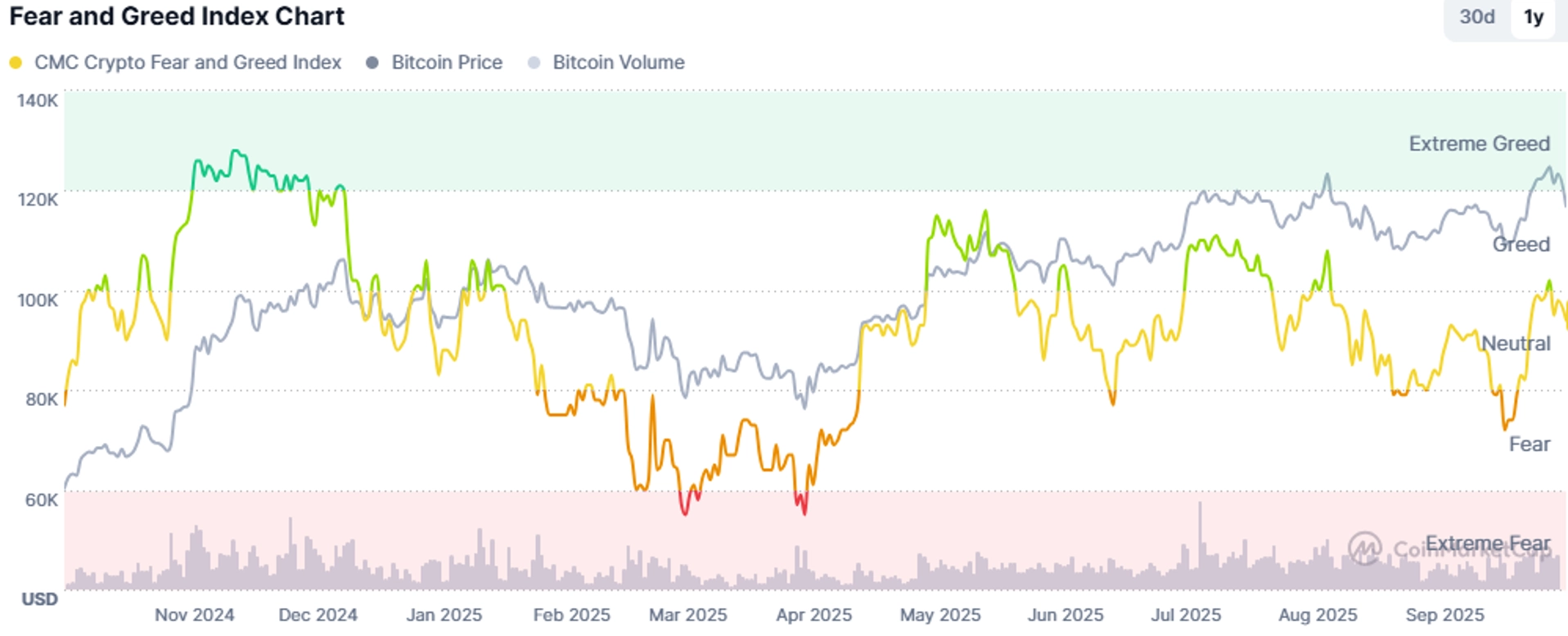
The Crypto Fear & Greed Index now stands at 54 lower than last week and in the neutral range. This figure indicates a steady decline in confidence and bullish enthusiasm in the market. If this index continues its downward trend and enters the “fear zone,” the likelihood of increased selling pressure and a sustained downward move in major cryptocurrencies, especially Bitcoin, will be very high.
In this environment, the crypto market is once again transitioning from excitement to caution. Retail investors prefer to wait for stability in macroeconomic conditions, while major market players are actively managing liquidity to seek entry opportunities at lower levels.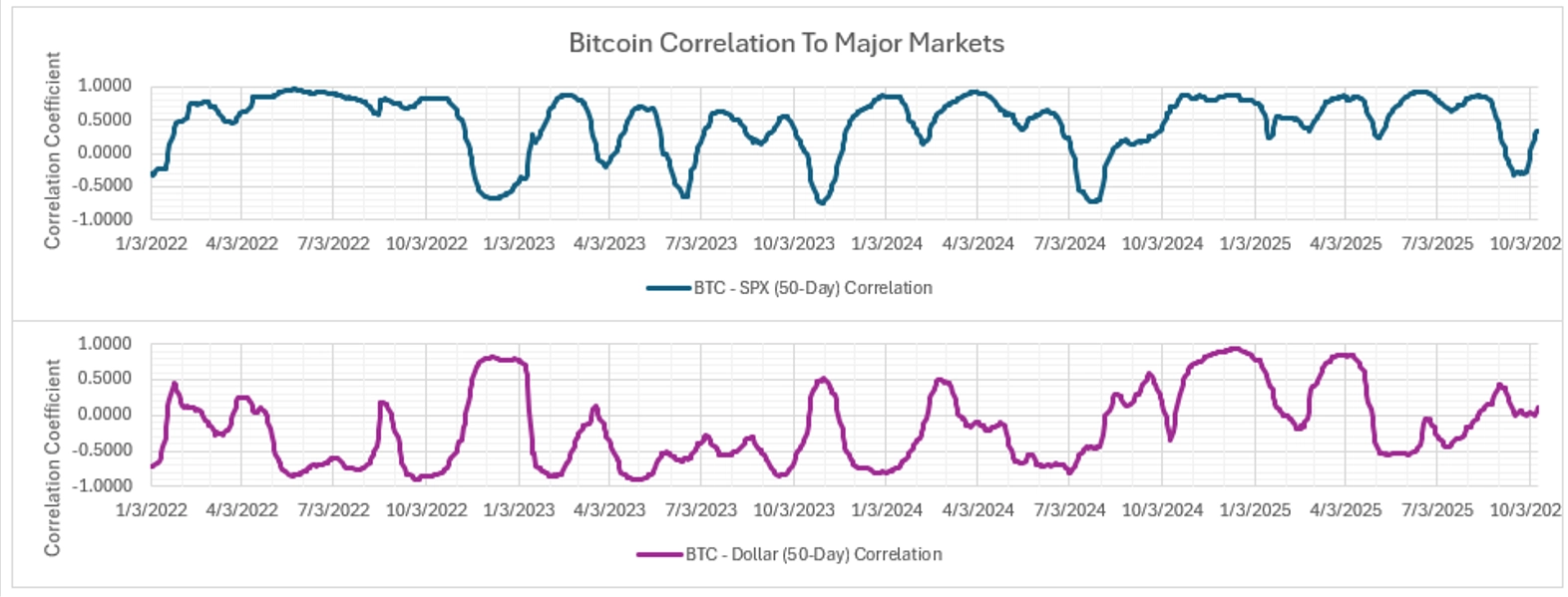
Trump’s Tariff Threat Pushes Oil to a Five Month Low
On Friday, the global oil market saw a significant drop, with Brent crude falling 3.82% to $62.73 and West Texas Intermediate (WTI) declining 4.24% to $58.90 per barrel the lowest levels since May. This sharp decline followed Donald Trump’s threat to impose new and broad tariffs on Chinese goods, an action that intensified concerns about global growth and energy demand. Analysts at UBS and Lipow Oil Associates emphasized that the plunge was driven by a combination of factors, including increased global supply, investor risk aversion, and easing geopolitical tensions.
On the other hand, the ceasefire between Israel and Hamas, brokered by the United States and Donald Trump, was one of the week’s most significant geopolitical developments. This agreement prompted the oil market previously concerned about supply disruptions due to the Middle East conflict to refocus on the risk of oversupply. As tensions eased, traders grew worried about increased output from OPEC and its allies (OPEC+), who are gradually rolling back their production curbs. Although OPEC approved only a limited increase for November at its latest meeting, even that amount has been enough to reinforce concerns about a saturated market.
Experts warn that the shutdown of the U.S. federal government could also negatively affect energy demand in the world’s largest oil consumer. Potential weakness in economic activity, along with a slowdown in the manufacturing and trade sectors, may put additional pressure on oil prices. At the same time, investors have shifted toward safer assets such as U.S. Treasuries and the dollar, which has further weighed on the energy market.
A combination of economic, political, and geopolitical factors pushed oil prices to a five month low. Trump’s tariff threat, rising OPEC supply, the ceasefire in Gaza, and concerns about a U.S. recession have collectively shifted the market’s focus from supply shortages to the risk of oversupply and weakening demand. Under current conditions, the short term outlook for oil is bearish, unless economic data or new OPEC decisions can restore balance to the market.
Conclusion
Overall, the outlook for the global economy and markets in the coming week presents a mix of opportunities and risks. The continued U.S. government shutdown and delays in publishing key data have increased uncertainty around the Federal Reserve’s future policy path, while Trump’s new tariffs against China have severely undermined global trade conditions and risk appetite. In commodities, gold and silver, after breaking historic records, have once again cemented their status as safe haven assets, though signs of short term corrections are also evident. By contrast, the oil market under pressure from oversupply concerns and weaker demand has fallen to multi month lows.
In financial markets, the S&P 500 has entered a corrective phase after consecutive gains, and cryptocurrencies, amid rising geopolitical risks and the potential return of a trade war, are seeing a decline in investor confidence. Collectively, these factors suggest that global markets are on the cusp of a phase of rebalancing and consolidation, one in which economic data, central bank decisions, and political developments will play a decisive role in shaping the final quarter of 2025.
Comments
Always a good Monday read, cheers.
Got caught in the GBP whipsaw last week with no idea a data release was due. Reading this on Sunday nights is my new routine.
These weekly posts are how I'm slowly learning what actually moves the market. The CPI explanation this week was especially clear, thanks.
Can you include a quick table of last month's actual vs forecast for the big releases? Context makes these previews much more useful.
Decent calendar rundown. Remember most of these releases are priced in within seconds — for retail traders, fading the initial spike often works better than chasing it.