
The Hidden War: From the Time of Abraham to the Apocalyptic Alliances
In the contemporary era, a clear line can no longer be drawn between politics, religious beliefs, and historical memory. Concepts that once appeared separate have become intertwined in today's world. Many of today's political and economic events reflect deeper layers of ancient beliefs and narratives.
Wars, sanctions, and market fluctuations are no longer limited merely to issues of power or interest; they have roots in enduring religious, historical, and identity based concepts.
Amid this complex entanglement, one of the long standing confrontations is an intellectual and civilizational tension between the Jewish tradition and the Islamic world. This conflict is not only visible on the battlefield or in the political arena but is also deeply rooted in the mental frameworks, religious narratives, and collective memory of both sides.
One of the modern manifestations of this confrontation can be seen in the face off between the Islamic Republic of Iran and the State of Israel. However, what is reported in the news through the language of threats, military power, or war is merely the outer layer of the issue. At the heart of this encounter, two historical ideological perspectives on humanity, power, and the destiny of nations are clashing. What is portrayed in the media with missiles and nuclear threats is, at a deeper level, a confrontation between two ancient views on mankind, salvation, power, and land.
This 20 part series is a journey into the heart of this confrontation: from the era of Abraham, the emergence of the Israelites and the Promised Land, to the rise of Zionism, the establishment of Israel, and its ideological challenge with post revolutionary Iran.
Along the way, we will attempt to address questions that often remain in the shadows:
•On what exact principles is Judaism founded?
•What is the place of the concept of the "chosen people" in Jewish texts?
•How did sacred texts become the foundation for political and military projects?
•What role do transregional powers like the United States, Britain, and secret institutions play in this conflict?
•Why does the Islamic world, and Iran in particular, consider the existence of Israel to be an ideological issue?
Episode One:
From Ur to the Nile: The Origins of the Israelite Nation
To understand the roots of the Iran Israel confrontation, one must journey deep into history to the time when the story of the Jewish people began in the land of Ur, and concepts such as the “Chosen People,” the “Promised Land,” and the “Divine Covenant” became central to their identity.
Yet this narrative does not belong exclusively to the Jews; parts of it are also reflected in the Qur’an and hold a significant place in Islamic thought, particularly in the perspective of the great prophets. Understanding today’s conflict is incomplete without revisiting this shared heritage.
1. Where Did the Narrative Begin?
To uncover the origins of this complex story, one must turn to its primary sources. In Jewish tradition, the Book of Genesis in the Torah outlines the earliest layers of this narrative from the birth of Abraham in the land of Ur, to his migration to Canaan, the birth of Isaac, and the emergence of Jacob’s lineage. These stories are further expanded in other books of the Hebrew Bible as well as in Talmudic and Midrashic interpretations. These sources often elevate the narrative from a historical account to a mythical, legal, and theological level.
In contrast, Islamic texts especially the Qur’an reinterpret this narrative with a theological and moral emphasis. Rather than focusing on ethnic identity, the Qur’an centers its message on monotheism, faith, and the spiritual lessons drawn from the lives of the prophets. Thus, in the Qur’an, Joseph is a symbol of wisdom and purity, not merely an economic advisor in Pharaoh’s court; and Abraham, before being an ancestral figure of a specific people, is presented as a leader for all nations.
This dual reflection in Jewish and Islamic texts leads us to an important truth: this story does not belong to a single people, but is part of the shared memory of the Abrahamic faiths. A narrative told by both traditions each in its own language, with its own goals and point of view.
2. Abraham (PBUH): A Man from the Land of Ur
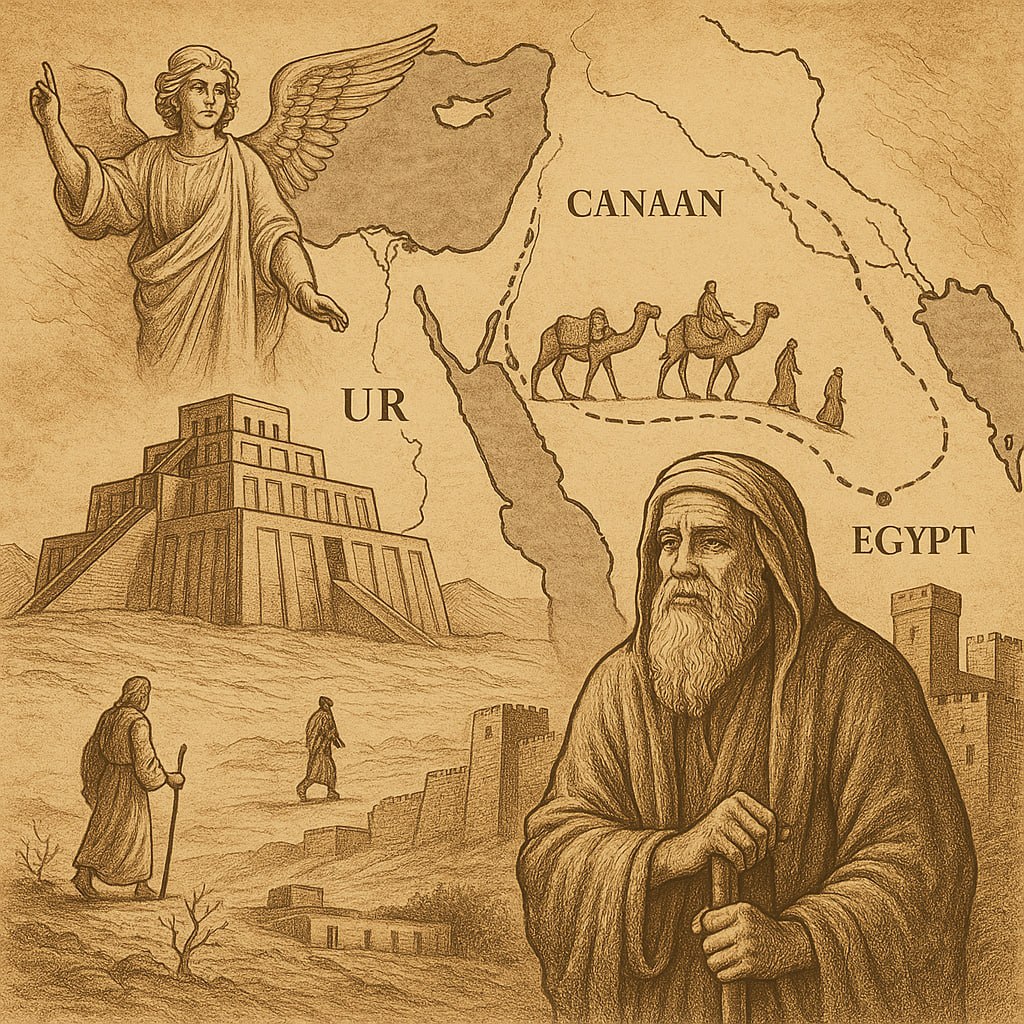
Abraham, a central figure in the tradition of the Abrahamic religions, arose from the ancient city of "Ur" in the region of Mesopotamia; a city with an advanced civilization that is now located in southern Iraq and is considered part of the historical foundation of the Sumerian civilization. He grew up in a cultural context deeply rooted in polytheism and a hierarchical class system. Therefore, his decision to break the idols and abandon the prevailing religion of his time was not merely a personal or mystical act; it was a kind of intellectual and social rebellion against the cultural and religious foundations of his environment.
According to the Torah narrative, Abraham received God's calling a voice that summoned him to leave his birthplace and family and go to a land that “I will give to you and your descendants”; namely, Canaan. But this migration was not just a geographical relocation. This journey marked the beginning of a great concept: the "Promised Land." A concept that was initially tied to a divine covenant, but over the course of history, transformed from a sacred meaning into a political, territorial, and even military instrument.
In recent centuries, this very idea the historical and divine right of the Israelites to the land of Palestine has become one of the pillars of Zionist discourse. Zionists, by referring to the promise stated in the Holy Scripture, have tried to present the occupation of the land of Palestine not merely as a political project, but as a “sacred return.” From this perspective, Abraham’s journey from Ur to Canaan is the first chapter of a narrative that reached its climax in the twentieth century with the establishment of the State of Israel.
However, in the Islamic view, the story of Abraham holds a different meaning. The Qur’an, in numerous verses, refers to him with respect and grandeur. It calls him an “Imam for the people,” a wise idol breaker and an independent believer who stood against the religious domination of Nimrod and found no path but the worship of God. In Islam, Abraham is the father of the prophetic lineages; from Ishmael, from whom the lineage of the Prophet of Islam descends, to Isaac, from whom Jacob and the Israelites emerged. Thus, Islam considers the two main branches of the Abrahamic religions not as rivals, but as brothers two branches of a single divine root.
A key point in the Islamic reading is that the divine covenant with Abraham is conditional upon purity of intention, monotheism, and righteous action. In other words, what renders generations worthy of spiritual inheritance is not race or ethnicity, but faith and piety. This stands in fundamental contrast to certain extremist interpretations of the Jewish tradition, where ethnic nationalism and lineage superiority are emphasized as central themes.
From the Qur’an’s perspective, Abraham is not the father of a specific nation, but a universal model of monotheism and resistance against idolatry. He is one who blended reason, intuition, and will to become a ḥanif that is, someone who, through innate inclination, turned away from the deviations of his time. Thus, the Qur’an, in numerous verses, calls upon Muslims to follow the “millah of Abraham,” not in the sense of replicating rituals, but in order to revive its monotheistic, moral, and independent spirit.
3. From Isaac to Jacob: The Birth of a Nation
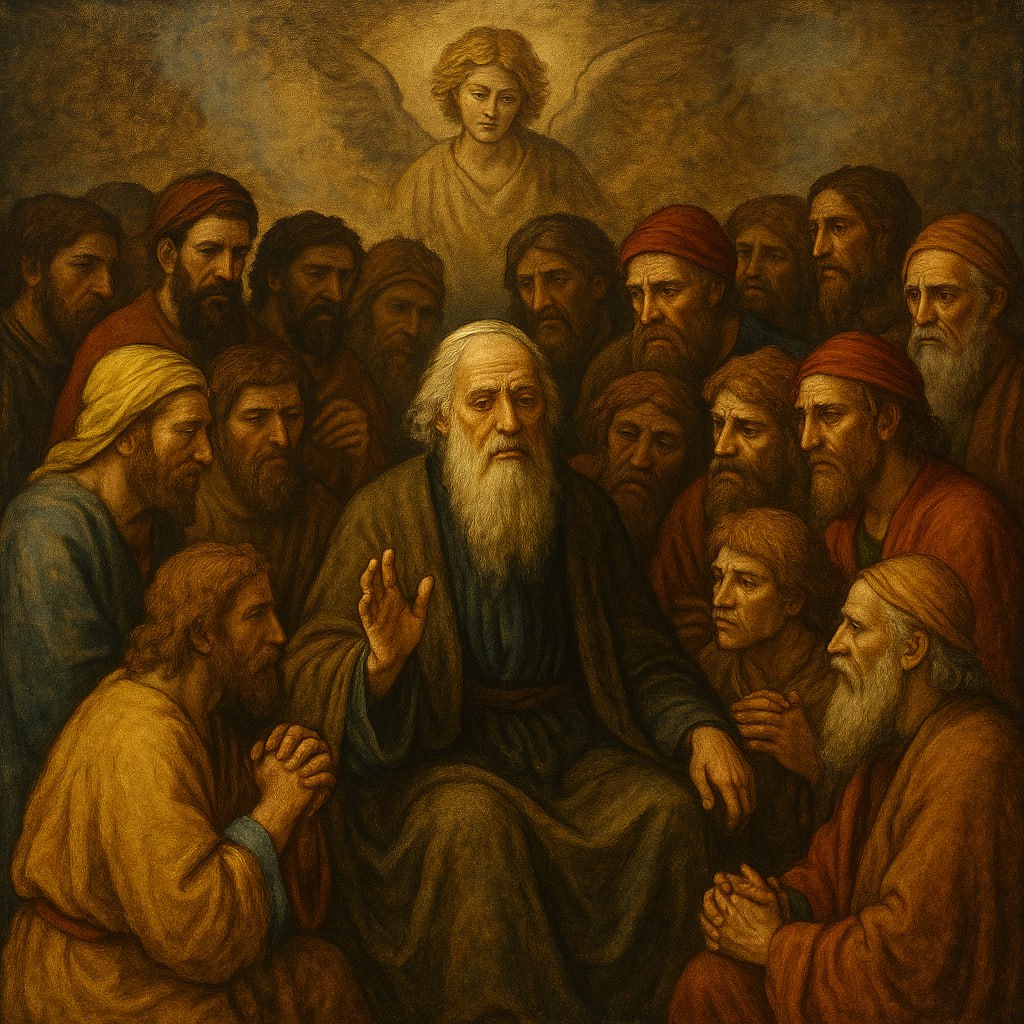
After Abraham, the divine covenant was passed on to his son Isaac and then to his grandson Jacob (PBUH). In Jewish traditions, Jacob holds a special place because he became the father of twelve sons who, according to the Jewish people, are the founders of the twelve tribes of Israel. These tribes formed the ethnic foundation that later, with the exodus from Egypt and entry into the land of Canaan, established their political religious identity.
In the Book of Genesis, one of the pivotal moments in Jacob’s life is his name being changed to “Israel” a story in which Jacob wrestles with an angel or a divine messenger, and after a night long struggle, he receives this new name as a spiritual triumph. In Jewish tradition, this moment symbolizes the perseverance of the soul, the continuation of the covenant, and the beginning of an independent identity for the Israelites. From this point, “Israel” transitions from the name of an individual to the designation of a people.
In the Qur’an as well, Jacob is portrayed as a compassionate and deeply faithful figure. He is presented not only as a prophet and father but also as a model of patience, wisdom, and unwavering faith in the face of severe trials. The Qur’an narrates Jacob’s prayers, his counsel to his sons to worship the One God, and his sorrow over Joseph’s absence with a tone full of human tenderness and spiritual depth. In contrast to the Torah’s emphasis on the founding of a nation, the Qur’anic perspective is more focused on ethics, monotheism, and devotion to God.
4. Joseph in Egypt: From Exile to Glory
If one were to choose the most beautiful and impactful chapter of this lineage, it would undoubtedly be the story of Joseph (PBUH). Joseph, who inherited faith, insight, and dignity from his father and forefathers, became a victim of his brothers’ jealousy and was sold into Egypt by their hands. Yet that very exile marked the beginning of his glory.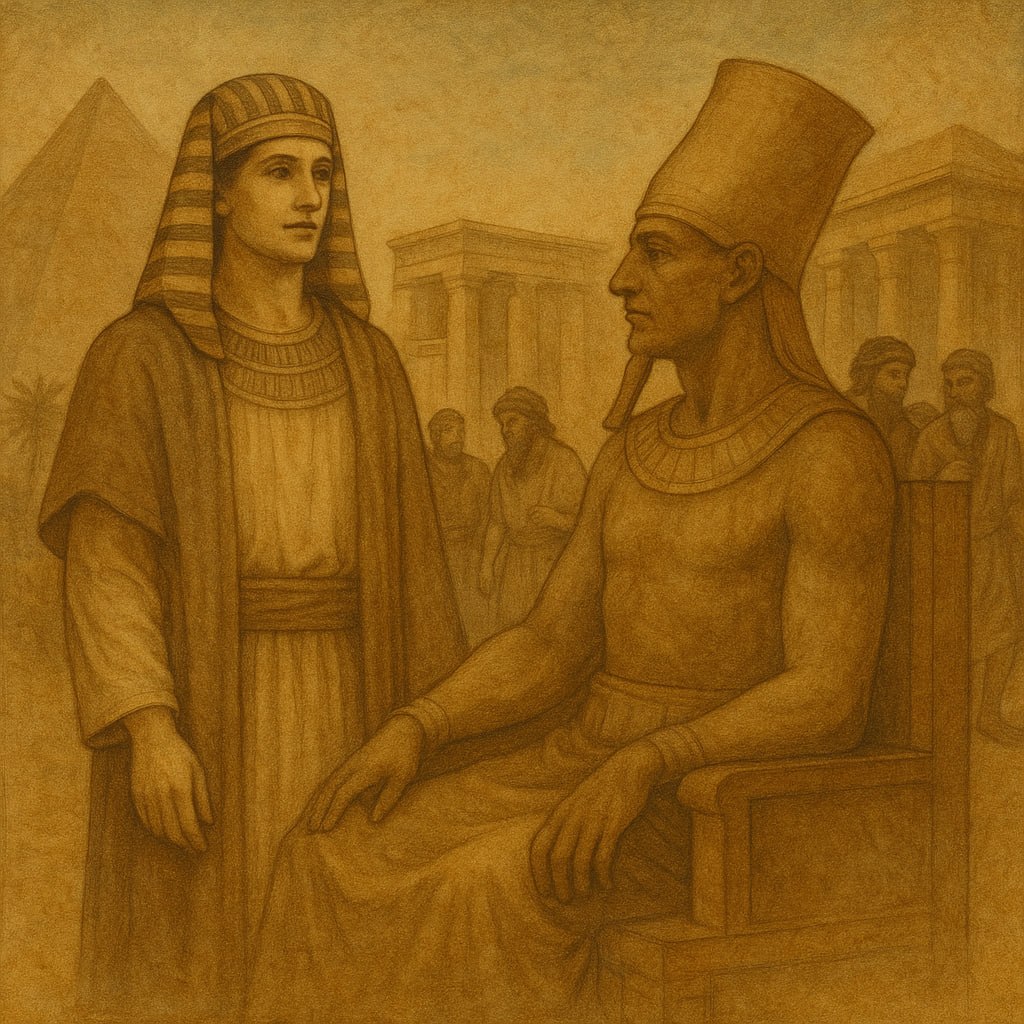
In the Torah, after enduring many hardships, Joseph is appointed as Pharaoh’s chief advisor and, through his economic foresight, saves Egypt from famine. In the Qur’an, Joseph is portrayed not only as a man of high rank but also as a model of both outer and inner beauty, honesty, chastity, and wisdom. His story is not merely a historical account it is an educational and moral paradigm for overcoming crises, mastering the self, and trusting in divine providence.
The Turning Point in Joseph’s Life was the reunion with his family when his elderly father, Jacob, migrated from Canaan to Egypt. This renewed union brought cohesion to the Israelites, who had been scattered. However, this period of prosperity did not last long. Over time, due to political shifts, the descendants of Jacob became a powerless minority within the Pharaoh’s regime. Those who had once entered Egypt with honor were, in later generations, reduced to slaves and disenfranchised laborers. This marked the beginning of a new chapter: an era of bondage and oppression that would eventually lead to the rise of Moses (PBUH).
Conclusion: One Story, Two Narratives, One Root
The lives of Abraham, Isaac, Jacob, and Joseph reveal the historical roots of the Jewish people but this is not just a Jewish story. It is a narrative intertwined with the Qur’an, with Islam, and with our shared historical consciousness.
The Israelites were initially bearers of monotheism. But the narrative of the “Chosen People” later evolved into a tool for political supremacy. Here is where history turns into politics, and myth becomes a tool of power.
InEpisode Two, we will explore the Exodus of the Israelites from Egypt, the revelation of Moses’ (PBUH) law, and the formation of a religious political nation.
Sources for Review and Reference:
- The Torah and the Old Testament
- A History of the Jews in Antiquity – Paul Johnson
- The History of the Jewish People – Arthur Herzog
- Iran and the Jews – Dr. Sarah Stern, Tel Aviv University
- The Old Testament – Book of Exodus, Chronicles, Midrash Rabbah
- The Holy Qur’an – Surahs Baqarah, Al Imran, Yusuf, An’am, Isra
- Comparative Studies of the Abrahamic Religions – University of Cambridge and Oxford
Comments
Engaging piece, though I'd push back a little — drawing straight lines from ancient history to modern geopolitics risks oversimplifying. Still, a thought-provoking angle you rarely see.
History isn't my strong suit, so I appreciated how the article traced today's alliances back step by step. Some of it went over my head but I learned a lot.
Would you consider a follow-up connecting these geopolitical fault lines to safe-haven flows — gold, CHF, oil? That's the practical angle for us traders.
Not the usual trading-blog fare. Genuinely interesting read.
I trade gold, and lately every headline out of the region moves the chart before I've finished reading it. Articles like this help me understand what's actually behind the noise.