
Is Forex Trading Real?
“Is Forex real, or is it just a big scam?” This is a question that occupies the minds of many people who hear the name of the Forex market for the first time. Exaggerated advertising, promises of astronomical profits, and the unsuccessful experiences of some traders have created a great deal of doubt about whether Forex trading is real. In such circumstances, it is natural for many people, before entering this market, to look for a clear, well documented, and reliable answer. The short answer to this question is “yes”; the Forex market is a real, international, and legal market in which trillions of dollars in capital are exchanged every day. However, misunderstandings, choosing unreliable brokers, and lacking sufficient knowledge have caused an incorrect image of this market to form in the minds of some people. In this article, by examining the nature of the Forex market, legal evidence, regulatory bodies, and its differences from betting, we will explore in a precise and impartial manner whether Forex trading is truly legitimate or not, and what factors lead to traders’ success or failure in this market.
A Brief Explanation of the Nature of the Forex Market
The Forex market is a real, international, and active market in the global economy, where the currencies of different countries are exchanged against one another. Unlike centralized markets such as stock exchanges, Forex is a decentralized market, and its transactions are carried out electronically through a broad network of banks, major financial institutions, multinational companies, and reputable brokers. This decentralized structure has made Forex one of the most transparent and liquid financial markets in the world.
The 24 hour operation of the Forex market five days a week is the result of the connection between the world’s major financial centers and the main trading sessions such as London, New York, Tokyo, and Sydney. This feature shows that Forex is a real and dynamic system that is directly connected to global trade, countries’ monetary policies, and international economic flows. The presence of major financial institutions and the massive volume of daily transactions clearly shows that Forex is not an artificial virtual environment, but an inseparable part of the global financial system.
Evidence and Reasons Proving That the Forex Market Is Real
There are several documented and credible reasons that confirm Forex is a real and legal market: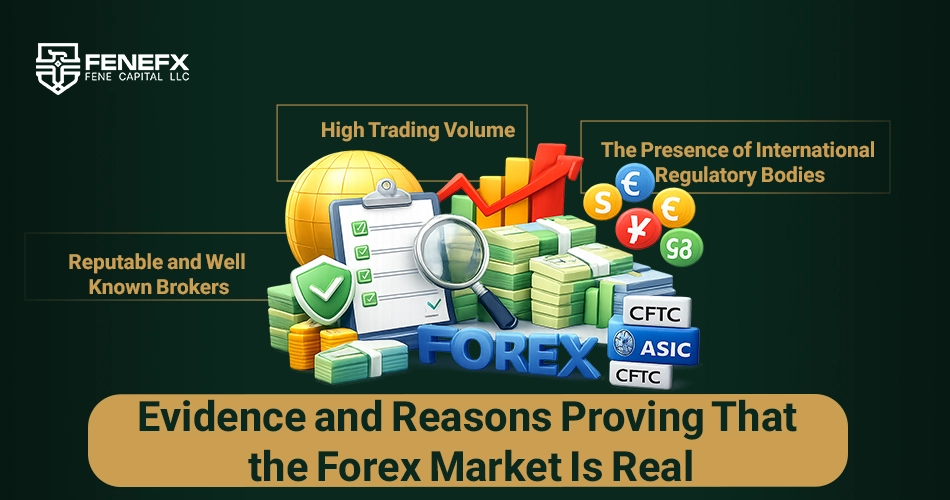
- High Trading Volume: The daily trading volume in Forex is more than 7 trillion dollars, which indicates the massive scale and extensive activity in this market. Such figures would not exist in an unreal market.
- The Presence of International Regulatory Bodies: The Forex market is overseen by major and reputable institutions that monitor the activities of brokers and financial institutions operating in this market.
- Reputable and Well Known Brokers: Many large and reputable brokers have been operating in the Forex market for years and provide their services within the framework of international regulations.
Regulatory and Legal Bodies That Oversee the Activities of Forex Brokers
One of the key signs for determining whether a Forex broker is genuine is its membership in reputable regulatory bodies. These institutions protect investors against violations and fraud by imposing strict rules and regulations.
Some of the most important regulatory bodies in the Forex market include:
- FCA (Financial Conduct Authority): The financial markets regulatory authority in the United Kingdom
- CySEC (Cyprus Securities and Exchange Commission): The Cyprus Securities and Exchange Commission
- ASIC (Australian Securities and Investments Commission): The Australian Securities and Investments Commission
- CFTC (Commodity Futures Trading Commission): The Commodity Futures Trading Commission in the United States
- NFA (National Futures Association): The National Futures Association in the United States
Traders should review a broker’s valid licenses before choosing one to ensure the credibility and legality of its operations.
Is Forex a Form of Betting?
One of the common questions many beginners in the Forex market ask is whether Forex trading is similar to betting. The short answer is: no, Forex is fundamentally different from betting. However, some people, due to a lack of sufficient knowledge or the use of incorrect methods, may make their activity in Forex appear similar to gambling. Below, we explain the key differences between Forex trading and betting.
Fundamental Differences Between Forex Trading and Betting
The process of trading in Forex and betting has notable differences:
- Logical Forecasting in Forex: In Forex, traders attempt to predict market movements by using analytical tools such as charts, price patterns, and economic indicators. This forecasting is based on logic and statistical data, not luck or chance.
- Risk Control: In Forex, traders can manage their risk by setting a stop loss (Stop Loss) and take profit (Take Profit). Such tools do not exist in betting, and the individual acts solely based on luck.
- Capital Management: In Forex trading, traders can put only a portion of their capital at risk and, by calculating the risk percentage, maintain greater control over their assets. But in betting, usually the entire wagered amount is either lost or doubled.
The Role of Technical and Fundamental Analysis in Market Forecasting
In Forex, unlike betting, forecasts are made based on real data and logical analysis. The two main methods for forecasting the market in Forex are:
- Technical Analysis: In this method, traders use price charts, price patterns, and indicators to try to predict the future movements of the market. Tools such as the Moving Average, support and resistance lines, and the RSI and MACD indicators are used in this method.
- Fundamental Analysis: In this method, traders examine the true value of currencies based on economic data, monetary policies, central bank decisions, and economic indicators. These analyses help traders identify long term market trends.
Combining these two methods can provide traders with a complete view of the market and increase the probability of success.
Explaining the Impact of Skill and Experience on Success in Forex
Unlike betting, which is largely dependent on luck, success in Forex depends heavily on the trader’s skill and experience. Key factors that contribute to success in Forex include:
- Capital Management: Professional traders limit their trading risk and, by determining an appropriate position size, prevent large losses.
- Mastery of Market Psychology: Success in Forex requires controlling emotions, avoiding impulsive decisions, and adhering to a trading strategy.
- Continuous Learning: Successful traders are always learning and improving their skills, and they update their strategies based on market changes.
Is It Possible to Earn Income in Forex?
Earning income in Forex is completely possible, but success in this market requires knowledge, skill, and experience. Contrary to what some people believe—that Forex is an easy way to get rich—success in this market requires continuous learning, capital management, and having a strong trading strategy.
Profitability in Forex and the Factors That Influence It
Profitability in Forex depends on various factors, and observing them can help increase your chances of success:
- Risk Management: The most successful traders in Forex are those who control their trading risk and never expose more than their capital can handle.
- Familiarity with Technical and Fundamental Analysis: Learning these methods helps you better predict market trends and make better decisions.
- Emotional Control: Excitement, fear, and greed are among the biggest causes of traders’ failure in Forex. Success in this market depends on staying calm and making logical decisions.
Introducing Successful Traders and Proven Strategies in Forex
Several famous traders worldwide have managed to achieve success in Forex by using intelligent strategies:
- George Soros: By predicting the collapse of the British pound in 1992, he achieved a one billion dollar profit.
- Stanley Druckenmiller: By focusing on macroeconomic events, he earned remarkable profits in the Forex market.
- Bill Lipschutz: With precise capital management and emotional control, he is recognized as one of the most successful Forex traders.
Reasons Why Many Traders Fail in This Market
Statistics show that a large number of traders experience failure in Forex. The main reasons for these failures include:
- Lack of a clear strategy and entering trades randomly
- Excessive use of leverage without proper management
- Emotional decision making and lack of emotional control
- Failure to pay attention to economic news and market conditions
Is Forex Trading Legal?
Another important question that occupies the minds of many people is whether activity in the Forex market is legal. The answer to this question depends on where you live, the laws of the relevant country, and also the broker you choose. Below, the legal status of Forex in different countries and how to choose legal brokers are explained.
Explaining the Legal Status of Forex in Different Countries
The legality of activity in the Forex market varies across countries:
- United States and the United Kingdom: Forex is completely legal in these countries and is conducted under the supervision of reputable financial authorities such as the FCA and CFTC.
- Europe: Forex activity is legal in many European countries and is regulated by bodies such as CySEC in Cyprus or BaFin in Germany.
- Australia: Forex in Australia is conducted under the supervision of ASIC, which is one of the strictest regulatory bodies in the world.
- Iran: Activity in the Forex market has not been directly approved or rejected by Iran’s domestic authorities, but many Iranians trade in this market through international brokers that operate outside Iran.
In general, Forex is legal in most countries around the world, but complying with local regulations and choosing reputable brokers is very important for safe activity.
The Role of Proprietary Trading in Real Forex Trading
One of the important pieces of evidence showing that Forex trading is a real and professional activity is the emergence and expansion of Prop Trading and prop firms in recent years. Prop firms are financial institutions that provide their own capital to talented traders so they can trade in real markets such as Forex. In this model, the trader, without needing a large amount of personal capital, receives a share of the profits from their real trades by following specific risk management and profitability rules. The existence of such a structure shows that Forex is not merely a speculative or betting environment, but rather a professional platform for skilled traders.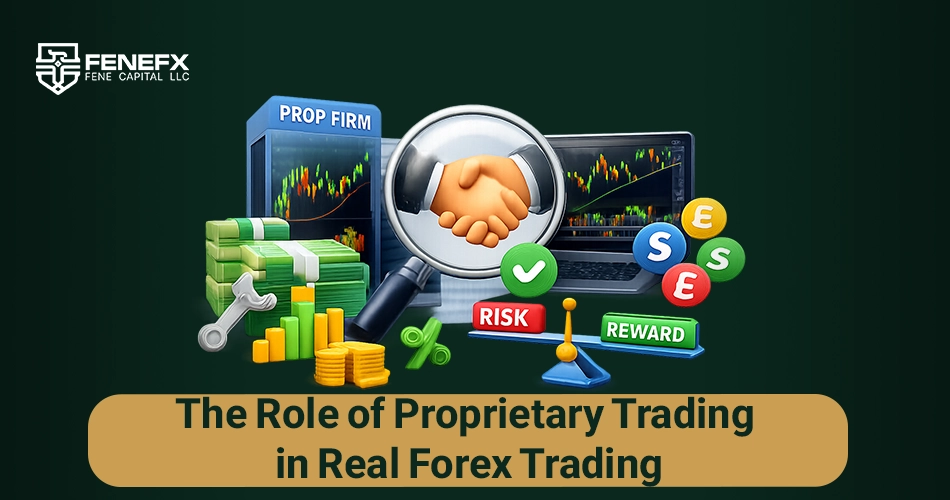
Among prop firms, those that offer transparent rules, reasonable conditions, and professional support play an important role in reducing traders’ risk and increasing their chances of success. Prop Fenefx is one of these options, which, by offering a variety of plans, understandable rules, and a focus on risk management, has smoothed the path for traders to enter the real Forex market. If you are looking to operate professionally in Forex without the need for heavy initial capital, you can take a more serious and informed step in your trading journey by reviewing the conditions and purchasing Prop Fenefx.
What Are the Risks of the Forex Market?
The Forex market is one of the most dynamic and largest financial markets in the world, and this very dynamism means that there are numerous risks in this market. Being aware of these risks and applying methods to manage them are considered key factors in capital preservation and success in Forex. In this section, we discuss the most important Forex risks and ways to manage them.
Market Volatility and Its Impact on Trading
Volatility in Forex refers to rapid and sudden price changes over short time periods. These fluctuations can occur as a result of economic events, political news, or even shifts in market sentiment. In conditions where the market experiences severe volatility, prices may undergo significant changes within a few minutes.
Market volatility provides an opportunity for profit for professional traders who have strong analytical skills. However, for beginner traders, these fluctuations can be dangerous and may even lead to the loss of their capital in a short period of time. Many major losses in Forex are the result of incorrect forecasting under volatile conditions.
Leverage Risk
Leverage is one of the common tools in Forex that allows traders to open larger positions with a small amount of capital. While leverage can multiply your profit, if the market moves in the opposite direction, your loss will also increase to the same extent. Using very high leverage without observing capital management typically leads to heavy losses.
News Risk
Economic news is one of the important factors that can quickly affect prices. Major reports such as employment figures, central bank decisions, or inflation data cause sudden volatility in the market. These fluctuations may trigger your stop losses or close your trades under unwanted conditions.
Liquidity Risk
Liquidity risk occurs when the market lacks sufficient buyers and sellers. This situation usually happens during low volume hours or in times of economic crises. In such cases, you may not be able to close your positions at a desirable price and may incur unwanted losses.
Ways to Reduce Risk in the Forex Market
To reduce risk in the Forex market, traders should apply a set of money management techniques and trading strategies. Setting a stop loss for each trade is one of the most important actions in risk management. A stop loss ensures that if the market moves in the opposite direction, your loss is limited to a specific amount.
Traders should also manage their capital properly and avoid committing a large percentage of their capital to a single trade. In addition, trading during the release of major news and periods of intense volatility is not recommended unless the trader has sufficient experience.
Practicing on a demo account and executing trading strategies under simulated conditions can help traders strengthen their skills without putting real capital at risk.
Is Forex Trading Suitable for Everyone?
Forex is a market that requires knowledge, experience, and specific personality traits. While some people can succeed in this market due to their personal characteristics and analytical abilities, others may fail because they lack these skills. Below, the most important factors for success in this market are discussed.
Skills Required for Success in Forex
Skill in technical and fundamental analysis is one of the most important factors for success in Forex. Successful traders are able to analyze price charts, identify market trends, and choose suitable entry and exit points for their trades.
In addition, capital management is also an essential skill in Forex. Professional traders always adjust their position size based on their account balance and never risk a large amount of capital on a single trade.
Alongside these skills, the ability to control emotions also plays a vital role. Traders must be able to stay calm in situations where the market moves against their expectations and avoid emotional decisions.
Reviewing the Personality Traits Suitable for Activity in This Market
The Forex market is not suitable for everyone. People who are patient, logical, and have strong decision making skills usually perform more successfully in Forex. Success in this market requires discipline, and traders who tend to consistently follow the rules of their strategy typically achieve better results.
Those who avoid rushed and emotional decisions and control their emotions when faced with sudden losses will have a greater chance of success in Forex.
Final Summary
Overall, Forex trading is a real, international, and legal activity in global financial markets that plays an important role in currency exchange and national economies. However, misunderstandings, exaggerated advertising, and the activities of some individuals and unreliable brokers have caused this market to appear suspicious or unreal to many people. Success in Forex does not depend on luck, but on knowledge, skill, risk management, and choosing a reputable broker. If traders enter this market with a realistic perspective, proper training, and by following money management rules, Forex can be a professional and transparent path for financial activity not a quick and guaranteed way to make profit.
Frequently Asked Questions
Are Forex trades legal?
Yes, Forex trading is legal in many countries around the world and is conducted under the supervision of reputable financial authorities, but its legal status depends on each country’s laws and the broker you choose.
Is Forex a quick way to get rich?
No, Forex is not a fast and guaranteed way to earn income, and success in it requires education, experience, risk management, and patience.
Why do some people lose money in Forex?
Most losses in Forex occur due to the lack of a trading strategy, improper use of leverage, emotional decision making, and poor capital management.
How can fraud in the Forex market be avoided?
By choosing brokers with valid licenses, increasing trading knowledge, avoiding promises of guaranteed profits, and using risk management, the likelihood of fraud can be significantly reduced.
Comments
Straightforward and honest, rare for this topic.
This answered exactly what I was googling at 2am. The part about how brokers actually make money from spreads instead of your losses was news to me.
My cousin lost money to a fake signal group and swore forex was a scam. Took me months to explain the difference between the market and the scammers around it.
The market's real, the 'mentors' selling $500 courses with rented Lambos are not. Ten years in and the only edge I've found is boring risk management.
How do you actually verify a broker's regulation claims though? Half of them display licenses that turn out to be from some island registry. A guide on checking regulators would be great.