




The Best Trader in the World
When we talk about the best trader in the world, most of us immediately think of those who made billions overnight. However, the truth is that the “best trader” isn’t just someone who recorded extraordinary profits—it’s the person who has maintained consistent performance for years through discipline, risk management, and a deep understanding of the market. Names like George Soros or Ken Griffin are only part of the answer, but to truly understand who stands at the top, we must look at the key factors that define greatness. In the following sections, we’ll explore and introduce the world’s top traders.
What Does “The Best Trader in the World” Really Mean? Historical vs. Modern Criteria
When we talk about “the best trader in the world”, it doesn’t simply refer to someone who made a single spectacular trade. Being the best in this field is defined by a combination of sustainable returns, risk management, capital size, and influence on the overall market. A trader may earn massive short term profits, but without consistency and proper risk control, they cannot be ranked among the true greats.
Defining “the Best”: Risk Adjusted Returns, Consistency, Capital Size, and Market Impact
The main benchmark for evaluating great traders is risk adjusted return. For example, achieving a 50% annual gain is meaningful only if it was earned with controlled risk and on a significant amount of capital. Consistency over years or even decades is another critical factor often overlooked by retail traders. The size of capital under management also matters: successfully managing billions of dollars with lower risk is a far greater achievement than generating small profits in personal accounts. Finally, influence on markets or even on economic theory is an essential part of defining who can truly be called the best trader.
A Combined Look at Historical Legends and Today’s Top Performers
To gain a comprehensive understanding of this title, we must consider two perspectives simultaneously:
- Historical Legends: Traders whose legendary trades have etched their names in history, such as George Soros in 1992 or Paul Tudor Jones in 1987.
- Today’s Champions: Individuals who, based on up to date data and reputable rankings such as the Institutional Investor Rich List 2025, have achieved the highest returns and earnings in recent years.
This combination provides a complete picture of what it means to be the best trader in the world by looking back at the legends of the past while also analyzing the performance of the present.
Legendary Names in Trading History: From George Soros to Paul Tudor Jones
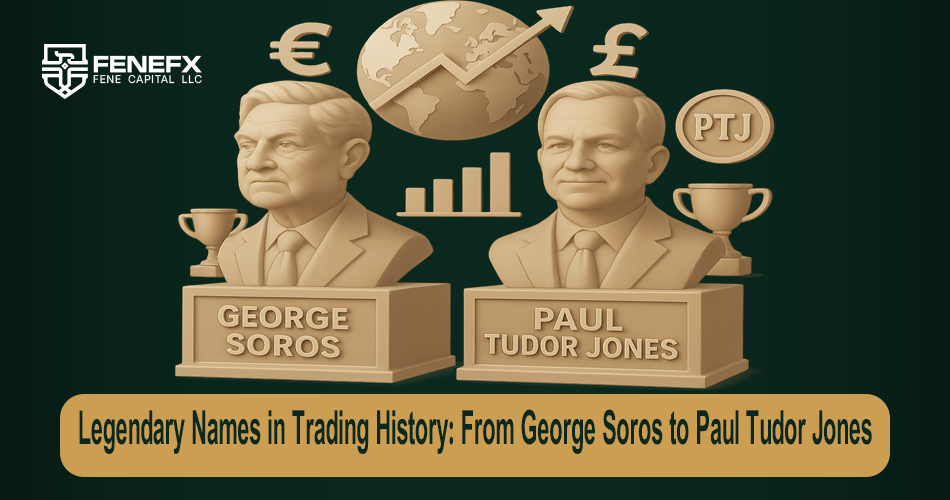
The history of financial markets is filled with names that became symbols of trading through one or more decisive trades.
George Soros and Black Wednesday 1992
George Soros is famously known as “the man who broke the Bank of England.” In September 1992, Soros predicted the collapse of the British pound and executed a trade that became known as Black Wednesday. He earned over $1 billion in profit, securing his place forever in trading history. The key elements behind this trade were his macroeconomic insight, bold risk taking, and precise timing.
Paul Tudor Jones and the 1987 Crash
Paul Tudor Jones is another legendary figure in the trading world. In 1987, he accurately predicted the U.S. stock market crash and profited massively through short positions. This success was so remarkable that it remains a classic example of a risk framework in trading education. The main lesson from this experience lies in the ability to spot major market imbalances and exploit asymmetric opportunities, where the potential reward far outweighs the risk.
The stories of Soros and Jones demonstrate that the best traders don’t rely solely on numbers and charts. They combine macroeconomic knowledge, strong risk management, and the courage to make bold decisions. These qualities make their achievements go beyond personal profit, leaving a lasting impact on global markets.
Top Contemporary Traders and Hedge Fund Managers (2025)
When identifying today’s best traders, we no longer rely solely on historical stories; instead, real and up to date data becomes the benchmark. One of the most reputable sources in this field is the annual Institutional Investor Rich List, which publishes the earnings of the highest paid hedge fund managers.
Israel Englander - The Top Earner of 2024
According to the 2025 list, Israel Englander, founder of Millennium Management, ranked first with an estimated $2.8 billion in earnings in 2024. His consistent performance in managing massive assets and employing multi strategy approaches has secured him a distinguished place among today’s champions.
Ken Griffin - Stability and the Power of Citadel
Ken Griffin, the head of Citadel, is another standout name in recent years. Through sophisticated strategies and advanced data analytics systems, he has delivered sustained returns for his investors. In 2024, Citadel was once again among the top performing funds, and Griffin secured second place on the Rich List.
David Tepper - Genius in Times of Crisis
David Tepper of Appaloosa Management is renowned for his ability to profit from financial crises. During the 2008 financial crisis, he generated extraordinary returns by purchasing high risk assets at precisely the right time. Tepper’s performance in recent years shows that he remains among the top traders and hedge fund managers today.
Steve Cohen - Point72 Asset Management
Steve Cohen is one of the most recognized hedge fund managers in the world. Through founding Point72 Asset Management and his earlier success with SAC Capital, he has maintained a leading position in the market. Cohen is known for his diverse strategies and his ability to identify opportunities even in volatile conditions. Recent reports show that Point72 has delivered strong returns, keeping Cohen among the highest earning managers of 2024.
Jim Simons - Renaissance Technologies
Although Jim Simons has retired in recent years, his legacy continues to make Renaissance Technologies one of the most successful quant funds in the world. The firm’s Medallion Fund has repeatedly broken records for annual returns and delivered exceptional profits even in challenging markets. Simons’ inclusion among the top figures today is largely due to his historic influence and the continued outstanding performance of his team in 2025.
The Distinction Between Traders and Hedge Fund Managers
It is important to note that many of the individuals who appear on today’s top lists are not merely personal traders, but rather hedge fund managers who lead large teams of analysts and traders. Therefore, when we talk about the “best trader today,” we are in fact referring to people who, in addition to their personal trading skills, also possess the organizational leadership and management abilities required to oversee billions of dollars in assets.
The Shared Toolkit of the Best: Strategy, Risk, Psychology, Data
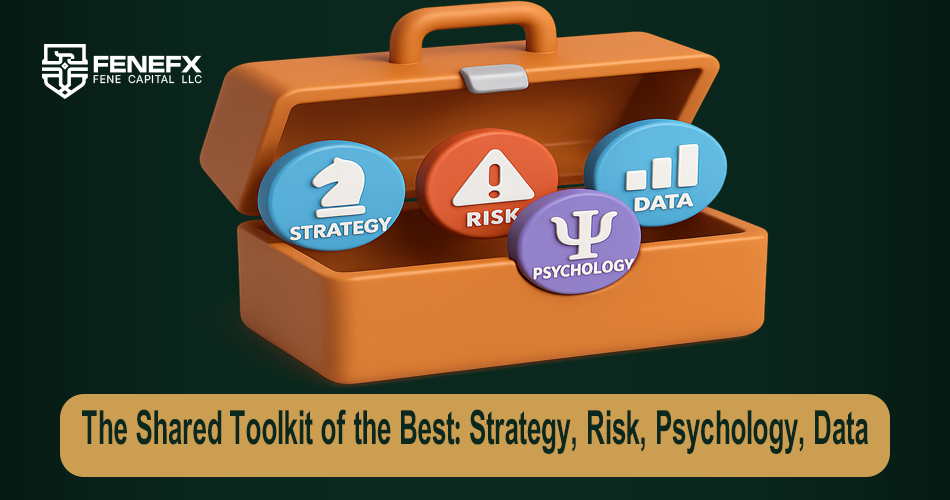
The world’s best traders regardless of which market they operate in share one thing in common: they never rely on luck or emotions. Instead, they build their trading on a set of professional tools and principles that serve as the backbone of their systems.
A Written Trading Plan - The Roadmap in Volatile Markets
Having a written plan is the first essential tool. This plan includes entry and exit rules, risk management guidelines, and even frameworks for reacting to special market conditions. For instance, Paul Tudor Jones always emphasized that he would never enter the market without a written scenario. This document helped him remain clear headed during the 1987 crash, enabling him to execute one of the greatest trades in history.
Stop Loss and Position Sizing - Protecting Capital
The second tool is the consistent use of stop losses. George Soros repeatedly stated in interviews that his secret to success was the ability to “accept being wrong” and cut losing trades quickly. Alongside stop losses, position sizing plays a crucial role. The best traders know that even a high probability trade should never risk excessive capital, since nothing in the market is ever certain.
Risk/Reward Ratio and Asymmetric Opportunities
The third tool is strict adherence to the risk/reward ratio. For example, Jones structured his strategies around opportunities where risking one unit could return three units of profit. This simple principle has proven, over the long run, to be a defining factor between a successful trader and an unsuccessful one.
Informational and Qualitative Edge
The fourth tool is having an informational or qualitative edge. This advantage can come from deep fundamental analysis, faster access to data, or even strong market psychology experience. David Tepper is a prime example: during the 2008 financial crisis, he entered trades based on his superior understanding of the real value of distressed assets positions that many others wouldn’t dare to approach.
Consistent Record Keeping and Review
The final shared tool is meticulous record keeping and continuous review. Many professionals maintain a detailed trading journal, which allows them to identify and correct recurring mistakes. At Citadel, Ken Griffin has entire teams dedicated solely to reviewing system performance and ensuring ongoing optimization.
Deadly Mistakes That Even the Best Never Ignore
Knowing common mistakes is just as important as mastering successful strategies. The best traders are fully aware of these pitfalls and have frameworks in place from the very beginning to avoid them.
Excessive Leverage - The Thin Line Between Profit and Ruin
One of the biggest mistakes beginner traders make is using too much leverage. While leverage can multiply profits, it can just as easily wipe out capital at lightning speed. History is filled with cases of talented traders who vanished from the market simply due to over leveraging. In contrast, professionals never use leverage beyond their personal risk tolerance thresholds.
Overcommitting to a Single Scenario
Another common error is betting everything on one prediction. Markets are inherently unpredictable, and even the most reliable analyses can turn out to be wrong. The best traders always keep multiple alternative scenarios in mind. This flexibility was exactly what allowed George Soros to navigate the shifting conditions of the European currency markets and make the right call.
Lack of Discipline After Wins or Losses
Emotions are the greatest killer of trading success. Many of the biggest failures have occurred when a trader, after a major win, fell into overconfidence or after a heavy loss, engaged in revenge trading. Professionals stick to their system rules whether they are in profit or loss. This discipline is what ensures their long term consistent returns.
Overfitting in Quantitative Systems
In today’s world of widespread algorithmic trading, the risk of overfitting is extremely high. A system that performs exceptionally well on historical data may completely fail in live market conditions. Funds such as Citadel or Millennium minimize this risk through extensive testing and multi stage validation filters. For independent traders, the key lesson is that no strategy should ever be considered reliable without being tested under real market conditions.
The Best Iranian Traders Alongside Global Giants (A Realistic Perspective)
The Iranian market cannot be directly compared with global markets in terms of transparency, data accessibility, and regulatory structure. While internationally, traders’ performances are published through audited and detailed reports, no such infrastructure currently exists in Iran. For this reason, discussions about the “best Iranian trader” are more cultural and local in nature rather than a true comparison with global names.
Data Limitations and Lack of Standardized Benchmarks
In Iran, traders’ performance is rarely made publicly available and is mostly shared through oral accounts or personal experiences. The lack of regulatory transparency and the shortage of documented reports eliminate the possibility of an objective evaluation. Therefore, although various names are recognized within the Persian-speaking trading community, it is not possible to discuss their standing with scientific or data driven certainty.
The Best Trader in Iran
Despite these limitations, within the Iranian trading community, Master Ahangari is often mentioned as one of the most well known figures. His educational contributions and influence in the Persian speaking space have earned him a special position among market enthusiasts. However, it must be emphasized that accurately evaluating his financial performance and comparing it with global legends such as George Soros or Ken Griffin would require transparent, audited, and verifiable data.
Future Outlook
With the growing interest in financial markets and the increasing availability of educational resources, the possibility of professional Iranian traders emerging in the future is real. However, until a proper legal framework and transparency are established, discussing the “best Iranian trader alongside global giants” remains more a matter of inspiration and motivation than a scientific comparison.
How to Start the Path Toward Becoming the Best? (An Actionable Checklist)
Reaching the position of a “top trader” does not happen overnight; it is the result of a consistent and disciplined process. Professionals follow a clear, repeatable path that can serve as a practical model for any trader.
1. Define Your Edge
The first step is to identify your trading edge, the factor that sets you apart from others. This could be a unique technical analysis method, macroeconomic insight, or even strong skills in market psychology. Without an edge, trading is nothing more than gambling.
2. Backtesting
The second step is to test your strategy on historical data (Backtesting). The best traders always validate their systems under past market conditions before committing real money, ensuring the stability and reliability of their approach.
3. Risk Management
No strategy can survive without proper risk management. Setting stop losses, maintaining appropriate position sizing, and adhering to a rational risk/reward ratio form the core of this step.
4. Trading Journal
Step 4: Keep a detailed trading journal. Every trade should be recorded as entry reason, exit reason, emotions during the trade, and the final outcome. This notebook becomes an invaluable resource for learning from mistakes.
5. Monthly Review
Step 5: Conduct regular reviews. Professionals analyze their trades at the end of each month, identify weaknesses, and make the necessary adjustments.
6. Strategy Health Indicators
Step 6: Use KPIs (Key Performance Indicators) such as the Sharpe Ratio, maximum drawdown, and win rate. These indicators help you understand the overall health and effectiveness of your trading system.
Conclusion
Ultimately, the best trader in the world isn’t merely the one with the highest profits, but the one who strikes the right balance between profitability, consistency, risk management, and influence. From George Soros and Paul Tudor Jones to Ken Griffin and Israel Englander, they’ve all proven that trading excellence is not a matter of luck, it’s the outcome of a systematic approach, discipline, and continuous learning. For Iranian traders, taking inspiration from these legends and applying their principles on a personal scale can mark the true beginning of professional trading.
Frequently Asked Questions
1. Who is the best trader in the world in 2025?
According to the latestInstitutional Investorranking, Israel Englander of Millennium Management tops the list with an annual income of around $2.8 billion.
2. What is the difference between a trader and a hedge fund manager?
A trader operates individually, while a hedge fund manager leads a team of traders and oversees the management of billions in assets.
3. Can traders in Iran reach the level of global professionals?
Currently, due to limited data and the absence of clear regulatory standards, precise comparison isn’t possible, but with proper education, discipline, and risk management, approaching global standards is achievable.
4. How can someone start the path to becoming a professional trader?
Developing a trading edge, performing thorough backtesting, managing risk, and maintaining a detailed trading journal are the first essential steps toward professional-level trading.
Comments
Reading about Livermore years ago is what got me into trading. Blew my first account exactly like he did too, ha. The lessons stick more than the glory stories.
Honestly thought successful trading was about secret indicators before reading this. The common thread of patience and risk control across all these traders was eye-opening.
Nice profiles, though survivorship bias deserves a mention — for every legend there are thousands who traded the same way and busted. Copy their discipline, not their trades.
Fun read, well put together. Enjoyed this.
Would be great to see a follow-up breaking down the actual risk management rules these traders use, not just their net worth.