




The Reason for Forex Market’s Popularity Among Traders
The Forex market’s around-the-clock operation and the wide variety of trading instruments—including currencies, commodities, and global indices—make it unrivaled. Professional technical analysis tools and risk management features enable traders to capitalize on market opportunities with precision and efficiency.
A Market with Low Commission
One of the main reasons for the Forex market’s popularity among traders is the absence of commissions for settlement, exchange fees, or brokerage costs. Most Forex brokers who provide a standard account to traders do not charge any separate commission, and brokers’ income comes from the spread.
For professional traders or those with high volumes who prefer lower spreads, there are "raw spread accounts" that charge a commission fee for each trade. This commission is usually a fixed amount per traded lot or a percentage of the trade volume.
Some brokers offer both types of accounts, allowing you to choose based on your preferences.
If you are a beginner or trade with low volumes, the standard account is usually simpler.
A Market Full of Volatility
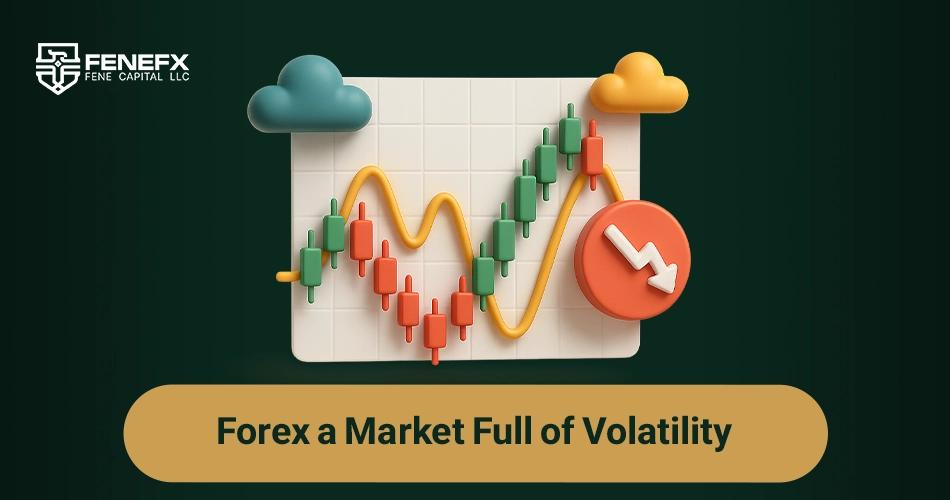 By combining these techniques with strategies tailored to current market conditions, it’s possible to harness Forex’s volatility for robust gains while keeping risk at manageable levels.
Reasons for Daily Volatility
With billions of dollars traded every second across currency pairs and derivative instruments, Forex ranks among the most volatile financial markets. Key drivers include macroeconomic data releases, geopolitical developments, central bank decisions, and breaking news—each capable of sending price swings in very short timeframes.
Opportunities Within Volatility
- High volatility creates large price movements over brief periods. Traders who correctly anticipate a market’s direction can capture significant profits. Common strategies suited to such conditions include:Scalping:Securing a few pips of profit in the shortest possible time
- Day Trading:Exploiting hourly moves triggered by news events
- Swing Trading:Holding positions for several days to target larger moves
Risks Posed by Volatility
However, alongside big profit potential, volatility brings substantial risk. A single misjudgment or sudden spike can inflict heavy losses. During unexpected news or low-liquidity periods (e.g., international holidays), a panic-driven stop-loss order may also suffer from slippage, resulting in worse execution than anticipated.
Risk-Management Strategies and Tools
- To protect capital in a volatile environment, traders typically employ:Stop-Loss Orders:Automatically exiting a trade before losses grow too large
- Take-Profit Levels:Locking in gains at predefined price points
- Trailing Stops:Dynamically moving the stop-loss as the market moves in your favor
- Position-Sizing Controls:Reducing trade size during periods of extreme volatility
- Portfolio Diversification:Spreading risk across multiple currency pairs or uncorrelated instruments
24 Hour Activity
The Forex market is open for trading 24 hours a day, five days a week. This feature allows traders to operate in the market at any hour of the day they wish. The Forex market is active in three main trading sessions: Asian, European, and American. Additionally, easy access for investors enables them to trade conveniently according to their schedules.
Diverse Currency Pairs
Due to the wide variety of currency pairs, the Forex market offers many opportunities for trading diversification. This diversity allows traders, based on their strategies and analyses, to find the best trading opportunities and increase their chances of making a profit. In addition to the well known currency pairs popular among traders, a variety of other pairs, including minor currency pairs, are available in the Forex market, enabling investors and traders to increase their trading risks.
CFD Contracts
Contracts for Difference, or CFDs, are a specific type of contract in the Forex market under which buyers and sellers agree to pay each other the difference between the opening and closing prices of a trading contract based on a specified underlying asset. In other words, this contract allows traders to profit from price changes.
In these contracts, traders do not have any actual ownership of the traded asset and only gain profit or incur loss from the price fluctuations occurring between the time of purchase and sale.
Using Leverage in Trading
Trading with leverage is one of the most attractive features in the Forex market. Leverage allows traders to participate in more profitable trades with less capital and increase their profits relative to the leverage ratio. For example, a trader can use leverage of 100 and with only $1,000 of capital, potentially earn $100,000 profit from a successful trade.
However, just as leverage can create greater profit opportunities, it can also cause equivalent losses. Therefore, to use leverage in the Forex market, one must acquire sufficient skill with this tool and apply strong analytical abilities along with appropriate trading strategies.
Activity from Anywhere in the World
The Forex market is accessible to traders from all around the world at any hour for trading, and anyone can participate simply by having access to an internet connection. This feature of Forex attracted a large number of people during periods such as the COVID 19 pandemic when quarantine policies were widely enforced.The Role of Lockdowns and Quarantine in Forex’s Appeal
During the COVID-19 pandemic, when many businesses were closed or restricted by quarantine measures, Forex emerged as a fully remote profession requiring no physical office. People stayed at home and—by opening demo or live accounts—could enter the market without special equipment and profit from price fluctuations.
Time Flexibility and Personal Schedule Management
- A key advantage of Forex is the ability to trade at any time you choose. This flexibility allows:Full-time workersto open or close positions outside regular working hours (for example, after office hours or on weekends).
- Students and those with irregular schedulesto deploy strategies via alerts or Expert Advisors without needing to monitor the market constantly.
- Travelers and digital nomadsto check and manage trades from anywhere with an internet connection.
This global access and personalized time-management make Forex an ideal choice for anyone seeking supplemental income, schedule diversity, and maximum operational freedom.Starting Without CapitalTo enter the Forex world without financial risk, simply open a demo account and trade with virtual funds in the exact same environment as the live market. You’ll have access to all the same tools, spreads, and price data, but with the freedom to hone your technical and fundamental analysis skills without fear of real losses. You can test various strategies under real market conditions, learn proper risk management, and, before switching to a live account, confirm both your readiness and enthusiasm for trading in this market..
Technology
Emerging technologies in the field of financial markets have rapidly found their way into financial markets, especially the Forex market, due to their increasing popularity.
Features such as expert advisors, various indicators, and even artificial intelligence applied in Forex trading utilizing machine learning, natural language processing, neural networks, and deep learning have continuously increased the appeal of working in the Forex market and facilitated trading activities.
The Forex Market Has No Owner
The Forex market is the largest financial market in the world, and unlike most markets, it is not owned or controlled by any single entity or corporation. This decentralized structure means that prices are determined not by one dominant player but by the real time interactions of millions of traders, banks, and institutions across the globe. The result is a dynamic, self regulating market that prevents any individual or group from manipulating prices over the long term.
Direct Trading and Price Transparency
In Forex, there are no multiple intermediaries or hidden fees; as a trader, you interact directly with market participants banks, financial institutions, or other retail traders. Orders are processed through broker servers and interbank networks, and pricing is made fully transparent to everyone. This model both reduces trading costs and ensures your confidence in fair pricing and instant order execution.High Volume of Liquidity and TransactionsUnprecedented liquidity and massive trading volume in the Forex market mean that thousands of buy and sell orders are submitted and processed every second around the globe. As a result, traders never face long queues or execution delays—orders are filled within fractions of a second, and with a single click you can open or close any position. This enormous flow of transactions drives spreads down and keeps trading costs to an absolute minimum. Moreover, by leveraging broker APIs and installing Expert Advisors (automated trading robots), you can fully automate your strategies—so even when you’re away, your system will manage entries and exits according to your predefined parameters. All of these features combine to make Forex an exceptionally fast, low-cost, and flexible market, capable of supporting any trading style or strategy with maximum efficiency.Strict Regulations in the Forex Market
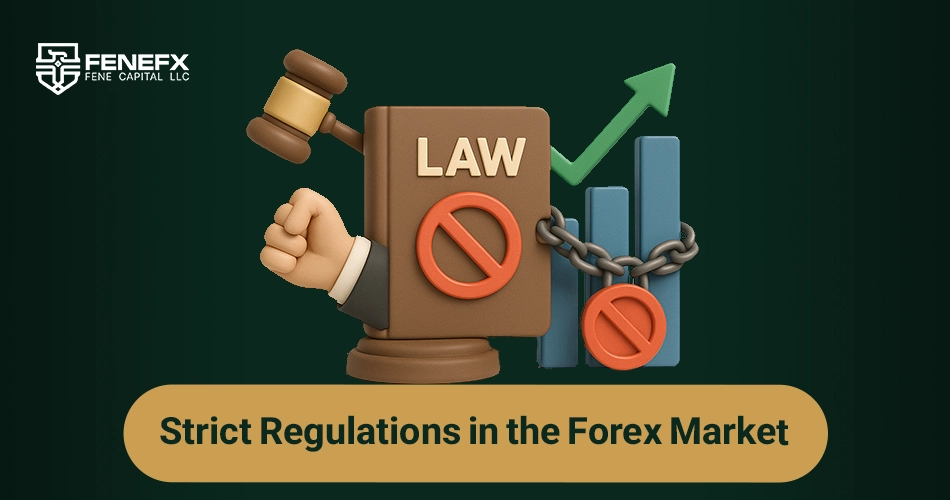
The Forex market operates under stringent regulations designed to ensure transparency, security, and stability in trading activities. Key regulatory bodies such as the UK’s Financial Conduct Authority (FCA), the U.S. Commodity Futures Trading Commission (CFTC), and their counterparts worldwide continuously review financial reports, live account data, and order execution methods to ensure brokers strictly adhere to investment guidelines, client fund segregation rules, and anti-money-laundering standards.
This legal framework not only prevents financial misconduct but also significantly reduces traders’ risks by enforcing limits on maximum leverage and demanding full transparency in fees and spreads. Additionally, investor protection schemes such as compensation funds and insurance mechanisms available in certain jurisdictions further bolster user confidence in the market.
Moreover, periodic reviews of regulations and the ongoing enhancement of supervisory standards in response to emerging technologies and new financial instruments keep the Forex market aligned with traders’ interests and uphold fairness in trading. These features have made Forex one of the most popular and reputable global investment options.
Comments
Just starting out and this answered the exact question I typed into Google. The liquidity part especially — I didn't know forex dwarfs the stock market in daily volume.
Good overview for anyone wondering why this market is so crowded.
Came over from stock trading mainly for the 24/5 hours — with a day job, being able to trade the New York session in my evening changed everything for me.
All true, but let's be honest: the same leverage and 24-hour access that make forex popular are exactly what blow up most retail accounts. Accessibility cuts both ways.
Would be curious to see a follow-up comparing forex vs crypto for a beginner — volatility, hours, costs. Which one's actually friendlier to start with?