
What is a Centralized Exchange?
Centralized exchanges (CEX) have been at the heart of the cryptocurrency market for years; however, analyses about them often remain limited to the most superficial technical or security concepts such as transaction speed, exchange wallets, mandatory authentication, or the risk of being hacked. Nevertheless, in a world where discussions around data sovereignty, concentration of power, and the role of intermediary institutions in digital architecture are becoming increasingly vital, our perspective on centralized exchanges must also change.
A centralized exchange is no longer merely a platform for trading; rather, it is a critical infrastructure in the new digital economic order that simultaneously plays three important roles: market maker, regulator, and sometimes even judge. This means that besides providing the marketplace for buying and selling (market maker), it supervises user behavior and activities (regulator), and in cases such as account blocking or halting trades, it issues judgments and decisions (judge). This combination of roles makes centralized exchanges not just trading tools but institutions with extensive power and influence.
From historic collapses like Mt. Gox and FTX to rises like Binance and Coinbase, what lies at the core of the matter is not just a crypto business but a structure of power and trust.
Etymology of Centralized Exchanges: From Classic Stock Markets to Blockchain
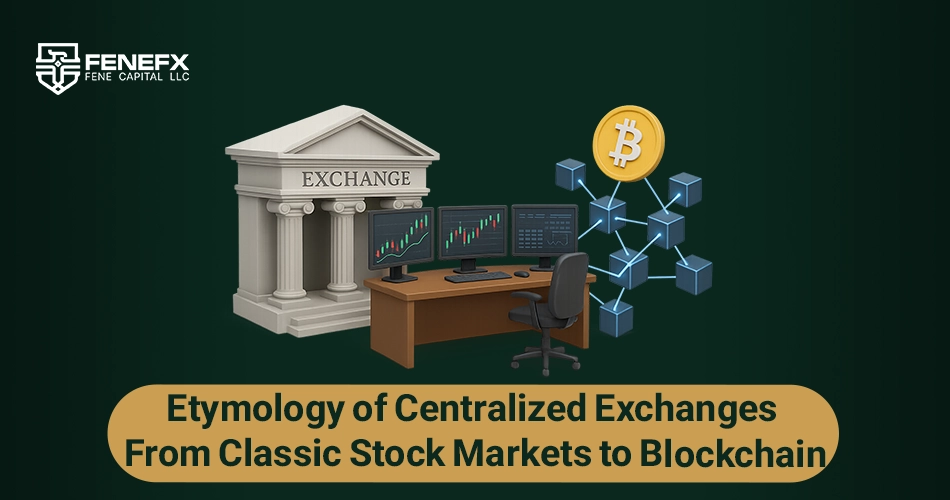
To better understand what a centralized exchange is and its importance in today’s trading world, we need to look at the history and formation of these platforms. Today’s centralized exchanges used for cryptocurrency services have their roots in traditional stock exchanges and old centralized markets; places where a central entity was responsible for collecting buy and sell orders and facilitating trades.
Traditional Stock Exchanges: The First Examples of Centralized Exchanges
The idea of a centralized exchange originated from old stock markets. Stock exchanges have long traded goods, stocks, and assets in a centralized manner. In this system, brokers and exchange institutions play the role of intermediaries and market makers. Although stock exchanges provide liquidity and transparency, the concentration of power, high costs, and limited access are among their drawbacks.
The Birth of Blockchain and Entry into the Cryptocurrency World
With the introduction of Bitcoin in 2009 and blockchain technology, the idea of eliminating centralized intermediaries was proposed. The goal was for users to manage and trade their digital assets without trusting a central authority. However, despite the promises of decentralization, there was still a need for exchanges that could easily facilitate the conversion and trading of cryptocurrency pairs as well as cryptocurrency/fiat currency pairs.
The Formation of Centralized Cryptocurrency Exchanges
Within this context, centralized cryptocurrency exchanges emerged platforms that operate similarly to traditional stock exchanges but focus on digital assets. These exchanges offered services such as “exchange wallets” for asset custody, “mandatory authentication” for security, and high liquidity, quickly becoming key players in the market.
Difference from Decentralized Exchanges (DEX)
Unlike decentralized exchanges, where transactions occur directly between users and control of private keys lies with the users themselves, in centralized exchanges, control of assets and private keys is held by the exchange. This presents advantages and disadvantages, which will be examined in the following sections.
Advantages and Disadvantages of Centralized Exchanges
Centralized exchanges remain the most common way for most users to buy and sell digital currencies. These exchanges offer a variety of features to users, but alongside the advantages, there are also disadvantages that need to be considered.
Advantages of Centralized Exchanges
- Ease of Use and User Centered Design
Centralized exchanges usually have simple user interfaces and clear environments. Even users with little experience in cryptocurrency can buy and sell their digital assets with just a few clicks.
- High Liquidity
One of the most important advantages of these platforms is the high trading volume. When trading volume is high, buy and sell orders are executed faster and prices are more stable. This feature helps reduce slippage and improves the trading experience.
- Ability to Purchase with Fiat Currencies
Unlike many decentralized exchanges, centralized exchanges allow the purchase of cryptocurrencies with fiat currencies such as the dollar, euro, or even local currencies like the rial (in some localized versions). This makes it easier for new users to enter the market.
- Access to Professional Tools
Professional traders usually access features such as leveraged trading, futures contracts, conditional orders (Limit and Stop), and advanced charting analysis on centralized exchanges features that are less common or more complex on decentralized platforms.
- Customer Support and Services
Centralized exchanges usually have support teams available via ticket systems or live chat. In cases like withdrawal errors or account verification issues, this support can be crucial.
Disadvantages of Centralized Exchanges
- Custody of Assets Held by the Exchange
In centralized exchanges, users’ assets are stored in custodial wallets. This means that users do not control their private keys, and the actual ownership of the assets technically resides with the exchange.
- Mandatory Identity Verification
Most centralized exchanges require users to complete the KYC (Know Your Customer) process to increase withdrawal limits or access certain services. This can be restrictive for users in sanctioned countries or those concerned about privacy.
- Concentration of Risk and Risk of Hacking
Experience has shown that even large exchanges are not immune to cyberattacks. Centralizing assets and information in one place increases the risk of attacks or loss of funds.
- Possibility of Account Freezing
Under certain circumstances, such as court orders or sanctions enforcement, exchanges can freeze user accounts. In such cases, users lose the ability to withdraw their assets.
- Complex Fee Structures
Some exchanges have variable fee structures that can be confusing for new users. These fees may vary based on trading volume, order type, or even the type of asset.
How Does a Centralized Exchange Work?
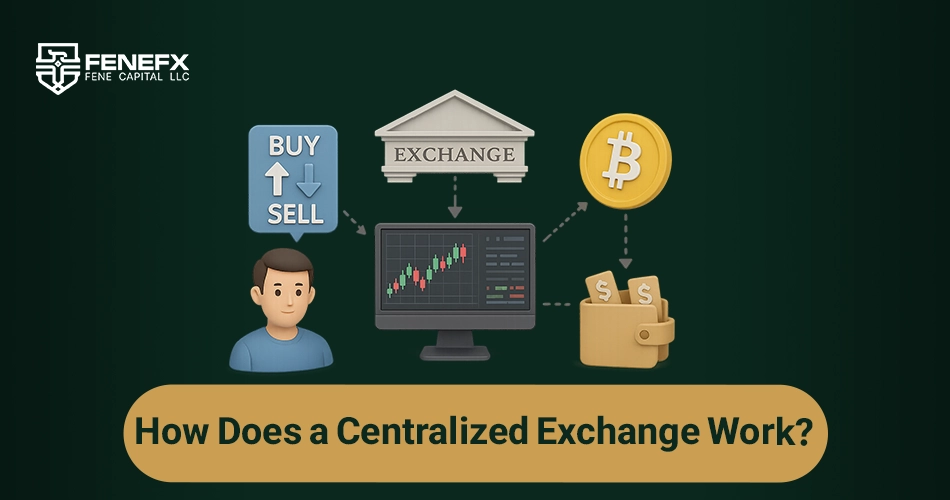
Just as a physical exchange must follow specific mechanisms for currency conversion and trading, centralized exchanges rely on several key systems to carry out financial processes such as buying, selling, and storing digital currencies. These mechanisms include:
Recording Customer Orders in the Order Book
Whenever you want to buy or sell cryptocurrency on a centralized exchange, this action is registered as a trading order in a list called the Order Book. This list contains the price, quantity of the order, and other trading and account information.
The exchange then reviews this list, and when it finds a buyer or seller at a matching price that is, when the buyer’s proposed price equals the seller’s proposed price the exchange automatically executes the contract.
Storing Assets in the Exchange Wallet
When you buy cryptocurrency through a centralized exchange, your assets are initially transferred to a wallet controlled and managed by the exchange. This type of custody is called custodial storage. This means the private key of the wallet the essential secret granting access to the digital assets is not in your possession but held by the exchange.
In the cryptocurrency world, the private key is what allows you to transfer or withdraw your assets. Therefore, when the private key is controlled by the exchange, you do not have direct technical control over your assets and can only access them through your account on the exchange. This situation is similar to bank deposits: the account balance is in your name, but ultimate control lies with the bank.
Exchanges usually store assets in two types of wallets:
Hot Wallet:Used for daily transactions and quick user withdrawals, it is always online.
Cold Wallet:Stored offline for long term holding and enhanced security.
This structure allows users to execute their trades quickly, but full ownership and ultimate control of the assets remain with the exchange.
Why Do Centralized Exchanges Keep Private Keys Themselves?
Simpler User Experience (User Friendly)
Most ordinary users lack the technical knowledge required to manage private keys and secure their wallets. If they lose their private keys, access to their assets is permanently lost with no way to recover them.
By holding the private keys, exchanges relieve users of this major responsibility and provide a banking like experience. For example, if a password is forgotten, recovery via email or identity verification is usually possible something not available with personal wallets. This approach attracts more users and reduces security concerns.
Ability to Manage Transactions Quickly and Seamlessly
To execute fast trades such as buying, selling, or withdrawals, exchanges must be able to swiftly move assets between accounts.
If private keys were controlled by users, exchanges couldn’t perform any transactions without direct permission, reducing the speed and efficiency of services. Having the private keys allows exchanges to execute orders faster, manage liquidity, and coordinate transactions seamlessly.
High Level Liquidity Management and Security
Centralized exchanges typically hold assets in aggregated form, meaning assets are stored in centralized wallets rather than scattered across multiple accounts. This improves liquidity management and facilitates payments.
Additionally, this model enables advanced security measures such as:
- Using multi signature wallets, which require multiple keys to approve a transaction, reducing the risk of theft.
- Cold storage, where the majority of assets are kept offline, protecting them from hacking attempts.
- 24/7 monitoring systems and fraud detection tools that ensure security.
Legal Compliance and Account Control in Special Circumstances
Exchanges must comply with local and international laws and usually operate under regulatory oversight.
If a user violates rules or authorities request account reviews, exchanges can freeze relevant accounts or hand over access to legal bodies.
This kind of control and accountability is only possible when the exchange holds the private keys because only they can manage and restrict transactions.
Comments
Clean explanation, no hype. Appreciated.
Reasonable summary. I'd stress that CEX risk isn't just hacks — withdrawal freezes and sudden ToS changes for certain countries are far more common in practice.
Could you do a piece on how to vet a CEX? Proof of reserves, regulation, that kind of thing. Hard to know what actually matters.
The custody part finally makes sense — I never realized the exchange technically holds your coins, not you. Explains all the 'not your keys' memes I kept seeing.
Had funds locked on a CEX during a 'maintenance pause' back in 2022. Everything came back eventually, but the stress taught me to keep long-term holdings in cold storage.