




How Many Traders Are There in the World?
In recent years, financial markets have witnessed an unprecedented increase in the number of active traders. According to reliable statistics, by the end of 2022, there were over 14 million online traders worldwide actively participating in markets such as forex, stock exchanges, and cryptocurrencies. This significant growth is the result of a combination of technological advancements, the expansion of digital infrastructure, and easier access to trading platforms, which have enabled more people from various backgrounds to enter these markets. In the past, trading required substantial capital, specialized knowledge, and limited access, but today, almost anyone with a smartphone and an internet connection can start their journey as a trader. This article addresses the key question: How many traders are there in the world, and who are they? It also explores the geographical distribution of traders, their age and gender demographics, preferred markets, popular trading platforms, and the challenges and opportunities they face. The goal of this analysis is to provide a comprehensive picture of the current state of traders globally and to understand the trends shaping the future of financial markets.
1. Global Growth of Traders: How Many Traders Are There in the World?
In recent years, the number of active traders in global financial markets has experienced a remarkable increase. According to published statistics, by 2022, there were over 14 million active online traders worldwide. This significant growth is the result of technological developments and the rise of online trading platforms, which have made accessing global markets easier for individuals.
Previously, entering financial markets required substantial investment and was typically accessible only to large financial institutions or individuals with substantial capital. However, with the expansion of the internet and the development of trading software, it has become possible for ordinary individuals to enter these markets.
This trend began in the 1970s and grew rapidly. While daily trading volumes increased from approximately $1.2 trillion in 1995 to over $5.1 trillion in 2016, making it the largest financial market globally. In fact, banks and large financial institutions contributed a significant portion to these trading volumes, but the development of online trading platforms has made it possible for everyday people to participate in this massive market.
The chart below shows the growth in the number of traders globally over the past few years:
2. Geography of Traders: Where Are Traders Located?
The geographical distribution of traders worldwide varies significantly. According to statistics, more than 4.6 million traders are active in Asia, 2.1 million in North America, and 1.8 million in Africa. This shows that Asia has the largest number of traders among the continents, with East Asian countries like China, India, and Japan leading the way.
In Europe and North America, the number of traders is almost equal, and overall, each continent holds a significant share of the global trading market. However, in regions such as South America and Oceania, the number of traders is considerably smaller.
One interesting point is that in some regions, the number of online traders exceeds the number of internet users. For example, in the Middle East, the ratio of traders to internet users is 1 to 152. This indicates a high level of interest and participation in financial markets in this region.
The table below shows the approximate number of traders in different continents:
Continent/Region | Approximate Number of Online Traders |
Asia | 4,630,400 |
North America | 2,170,500 |
Europe | 2,170,500 |
Africa | 1,881,100 |
Middle East | 1,403,590 |
South America | 868,200 |
Central America | 484,745 |
Oceania | 274,930 |
This data clearly shows the distribution of traders across different regions and highlights the importance of financial markets in these areas.
3. Age and Gender Distribution of Traders Globally
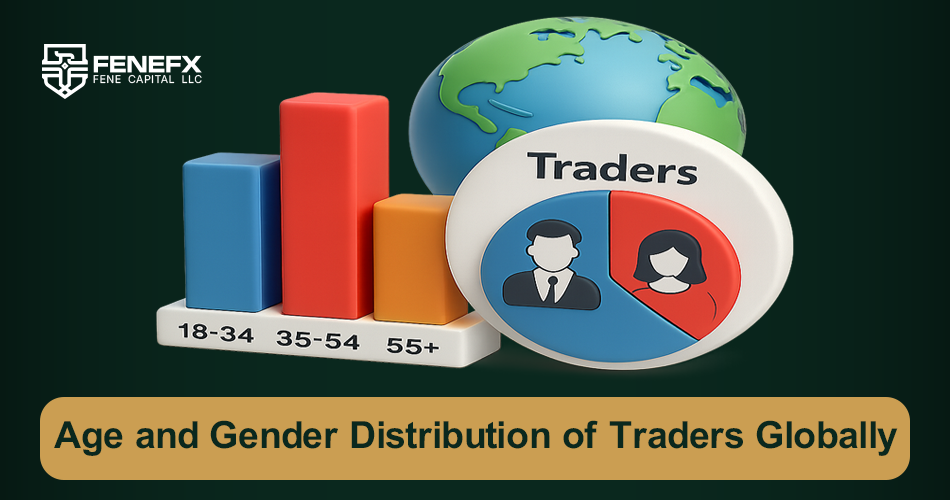
When analyzing the demographic characteristics of traders, statistics reveal that over 60% of active traders globally fall into the age group of 30 to 50 years. This suggests that individuals in middle adulthood are particularly inclined to participate in financial markets. Meanwhile, 28% of traders are between the ages of 20 and 30, and the remaining 12% are older than 50 years. Overall, financial markets seem to attract individuals who are looking for additional income or investment opportunities later in life.
In terms of gender, men still represent the majority of traders. Recent data shows that approximately 90% of traders worldwide are men, while only 10% are women. However, an interesting trend is that studies indicate women tend to make more profitable trades, as they often take a more cautious approach to risk. Moreover, the income gap between male and female traders shows that women tend to earn less than their male counterparts, reflecting a 10% gender pay gap.
This information helps readers gain a better understanding of the demographic characteristics of traders and highlights that, despite the smaller number of female traders, they often outperform men in many cases.
In the following sections, we can dive deeper into the age and gender breakdown of traders to provide further details about these demographic groups.
Certainly, Abbas! Here’s the translation of the second part of the article:
4. The Impact of Technology on the Growth of Online Traders
In recent years, technological advancements have had a major impact on the growth of traders worldwide. Before the advent of the internet and online platforms, accessing financial markets was complex and costly, typically limited to large financial institutions or individuals with significant investment capital. However, with the rise of the internet and trading software, it has become possible for ordinary individuals to enter these markets.
Today, most traders useonline platformsandmobile trading appsthat allow them to access markets from anywhere in the world. These platforms are often free or charge minimal fees and do not require complex equipment to use. As a result, individuals everywhere can now enter global financial markets as long as they have an internet connection.
On the other hand,user-friendly trading platformswith educational tools, especially for beginners, have made trading more accessible and less intimidating. These platforms usually offer step-by-step guidance, allowing anyone to start trading in various markets such as Forex, stocks, and cryptocurrencies. The simplicity of use and educational materials has made it easier for many people to start trading and participate in financial markets.
The impact of technology on the Forex markethas been particularly significant. In recent years, Forex has become the largest financial market globally, with a daily trading volume exceeding $5.1 trillion. This growth is largely due to easy access to markets and the use of online trading platforms, which allow even small investors to participate in this massive market.
Most modern trading platformsare accessible even throughmobile phones, which makes trading possible at any time and from anywhere. This feature, in particular, has allowed not only professional traders but also ordinary people to enter this field and capitalize on opportunities in financial markets.
5. Which Markets Do Traders Prefer? Forex, Stocks, or Cryptocurrencies?
One common question among both new and experienced traders is which market has the most interest and activity globally. The answer to this question reveals thatForexremains the largest and most popular financial market. Statistics show that approximately 85% of daily trading volumes in the Forex market are related to currency trading.
However, in recent years, thecryptocurrency markethas gained significant popularity due to its features, such as high profitability and independence from central financial systems. Traders in this market can easily buy and sell various cryptocurrencies like Bitcoin, Ethereum, and other altcoins. As a result, the cryptocurrency market has rapidly attracted new traders.
Thestock marketalso continues to be an attractive market for traders. Many traders are active in global stock exchanges like the New York Stock Exchange, Nasdaq, and the London Stock Exchange. Although stock markets are not open 24/7 like Forex and have more limited trading hours, they still offer great potential for profit due to the variety of stocks and industries available.
In this regard,Forexstill holds the position as the most attractive market for many traders because it offershigh liquidity,24-hour access, anda high volume of trades. These features are especially important for traders who wish to trade at different times throughout the day.
Meanwhile,cryptocurrency marketshave attracted significant attention due to theirextreme price volatility, which can lead to massive short-term profits. Cryptocurrencies, due to their unpredictability, present an exciting opportunity for traders who seek high-risk, high-reward opportunities.
The stock market, although having fewer fluctuations compared to Forex or cryptocurrencies, still remains an appealing choice for traders due to its diverse range of stocks and the potential for long-term investments.
The table below provides a comparison of the popularity of different markets among traders:
Market | Global Popularity Percentage |
Forex | 85% |
Stock Market | 10% |
Cryptocurrencies | 5% |
6. Most Popular Trading Platforms Among Traders Worldwide
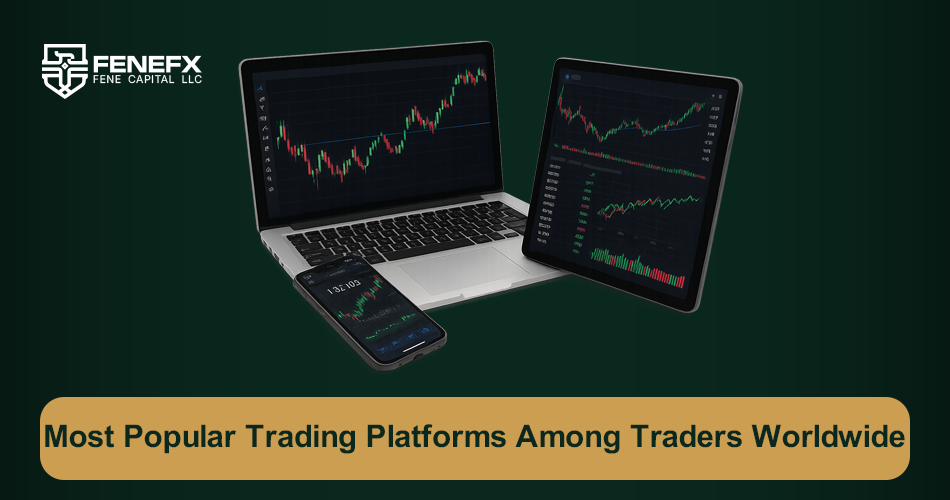
With the significant increase in the number of online traders globally, numerous trading platforms have emerged, each offering unique features and advantages. Popular trading platforms allow traders to easily access different financial markets and execute their trades online.
One of the most popular platforms globally isMetaTrader 4(MT4), which has been widely used by Forex traders for many years. This platform is favored for its ease of use, powerful analytical tools, and ability to execute automated trades. Additionally,MetaTrader 5is a more advanced version of this platform, offering additional features for traders.
Another platform particularly popular in the cryptocurrency market isBinance. This platform not only facilitates the buying and selling of cryptocurrencies but also offers complex tools such ascopy tradingandmargin tradingfor users.eTorois also a popular platform, allowing traders to copy the trades of successful traders, making it an attractive option for beginners.
Finally,Robinhoodis another platform popular in the United States, especially among beginner traders. Known for its simple interface and zero-commission trades, it allows users to easily access stock and cryptocurrency markets without incurring additional fees.
These platforms have earned the trust of traders worldwide due to theiruser-friendly interfaces,access to advanced analytical tools, andhigh security, allowing them to establish their positions in various financial markets.
Certainly, Abbas! Here’s the translation of the next part of the article:
7. Challenges and Opportunities for Traders Worldwide
Financial markets, including Forex and cryptocurrency markets, are always faced with numerous challenges and opportunities that active traders must consider. Despite the many benefits and opportunities these markets offer for making profits, entering these markets can still be challenging for many individuals. In this section, we will explore some of the challenges and opportunities in these markets.
Market Volatility
One of the biggest challenges for traders is the extreme volatility of markets. Prices in financial markets can change rapidly, especially in markets like cryptocurrencies where price fluctuations are highly volatile. These fluctuations can lead to traders losing capital, especially if they do not have effective risk management strategies in place. Many traders, when faced with high volatility, make emotional decisions, which can result in significant losses.
Access to Accurate Information and Analysis
Another common challenge for traders is having access to accurate and reliable information. Incorrect or incomplete information can lead to wrong decisions. For instance, incorrect market trends or economic predictions can mislead traders and ultimately cause them to make mistakes that result in losses.
Risk and Capital Management
Risk management is one of the essential skills for every trader. Many novice traders struggle with managing their risks and capital, making them more vulnerable to losing their investments. Traders must be able to respond to risks accurately and use tools likestop-lossandtake-profitorders effectively to manage their trades and limit losses.
8. Trader Earnings Around the World: Who Are the Most Successful?

Trader earnings in financial markets can vary greatly depending on experience, trading strategies, and the type of market being traded. Some traders earn substantial amounts from their trades, while others may face losses along the way. In this section, we will look into the income of traders worldwide and the factors that influence it.
Income Differences Between Beginner and Professional Traders
Beginner Traders
Beginners typically face a lot of challenges when starting out and often incur losses. Many of these traders, due to a lack of experience and improper trading strategies, may lose their capital. Generally, beginner traders earn significantly less compared to professional traders, and they need to invest time in learning and improving their skills.
Professional Traders
Professional traders, with their extensive experience and robust strategies, tend to earn much more. They understand how to use technical and fundamental analysis tools effectively and can predict market trends with greater accuracy. The earnings of professional traders depend on their risk tolerance and trading strategies, with some even earning millions from their trades.
Earnings in Different Markets
Trader earnings also vary depending on the market they are trading in. For instance, the Forex market, due to its high trading volume and liquidity, provides numerous opportunities for profit. On the other hand, the cryptocurrency market, with its extreme price volatility, can lead to significant short-term profits or massive losses. The stock market, although having less volatility, still offers great potential for long-term investment and profit.
Statistics indicate that professional Forex traders typically earn between 5% to 20% of their capital on a monthly basis. However, this income varies greatly depending on experience and trading strategies.
Geographic Variation in Trader Earnings
Trader income can also vary depending on geographic location. In developed countries, traders usually have access to more resources and advanced platforms for analysis and trading. This often leads to higher earnings. In contrast, traders in developing countries may face challenges due to limited access to resources and financial markets, resulting in relatively lower earnings.
Comments
Never realized how much Asia dominates the retail trading population. Genuinely learned something today, thanks.
Careful with these numbers — most count anyone who's ever opened an account. Active monthly traders is a fraction of the headline figure.
Any data on how many of these traders are actually profitable? Would make a great follow-up to this one.
Fun read, love a good stats piece on the FeneFX blog.
Half my group chat downloaded a trading app during the pandemic. Two of us still trade. Reading the retention stats here — apparently we ARE the statistic.