




U.S. October Jobs Report and Its Impact on Federal Reserve Interest Rates
The October job openings report will be released on Tuesday at 18:30 Iran time; a data point recognized as one of the influential indicators in the Federal Reserve’s decision making process. In recent months, the Federal Reserve has begun the process of lowering interest rates with the aim of improving labor market conditions and creating balance in the economy. The release of this report can provide new clues about the effectiveness of these policies and the future path they may take.
JOLTS; the determining indicator ahead of the Federal Reserve’s decision
Financial markets today are placing special focus on the U.S. Job Openings report data that can influence the Federal Reserve’s interest rate policy path. Estimates point to7.15 million job openings, a figure that has slightly decreased compared to the previous month. Since this indicator is considered one of the most important measures of labor market conditions, a notable decline could signal a cooling job market and support the continuation of the Fed’s accommodative policies.
Conversely, a higher than expected reading may increase the likelihood of more restrictive policy measures. For this reason, participants in the currency, gold, and bond markets are closely monitoring this report.
Markets Await Labor Data: What Will Happen to Interest Rates?
Markets are waiting with great sensitivity for the U.S. labor data a report that could play a decisive role in the Federal Reserve’s Wednesday decision.
- Weak labor market scenario:
If the report shows signs of declining labor demand and a cooling job market, this situation typically leads to a weaker dollar, stronger gold, and a positive reaction in equity indices. This scenario increases the likelihood of more accommodative policies and a 25 basis point rate cut.
- Strong labor market scenario:
If the data comes in higher than expected, the dollar strengthens, gold comes under pressure, and equities face a correction. This situation will likely push the Federal Reserve toward a more cautious approach and prevent any rate changes in the December meeting.
These two divergent paths have caused market sensitivity to the release of the Job Openings report to reach its peak.
Technical Analysis of the Dollar (DXY)
The Dollar Index (DXY) in the four-hour timeframe has reached the support zone at98.765after breaking downward from the ascending channel and has so far shown an initial reaction to this level.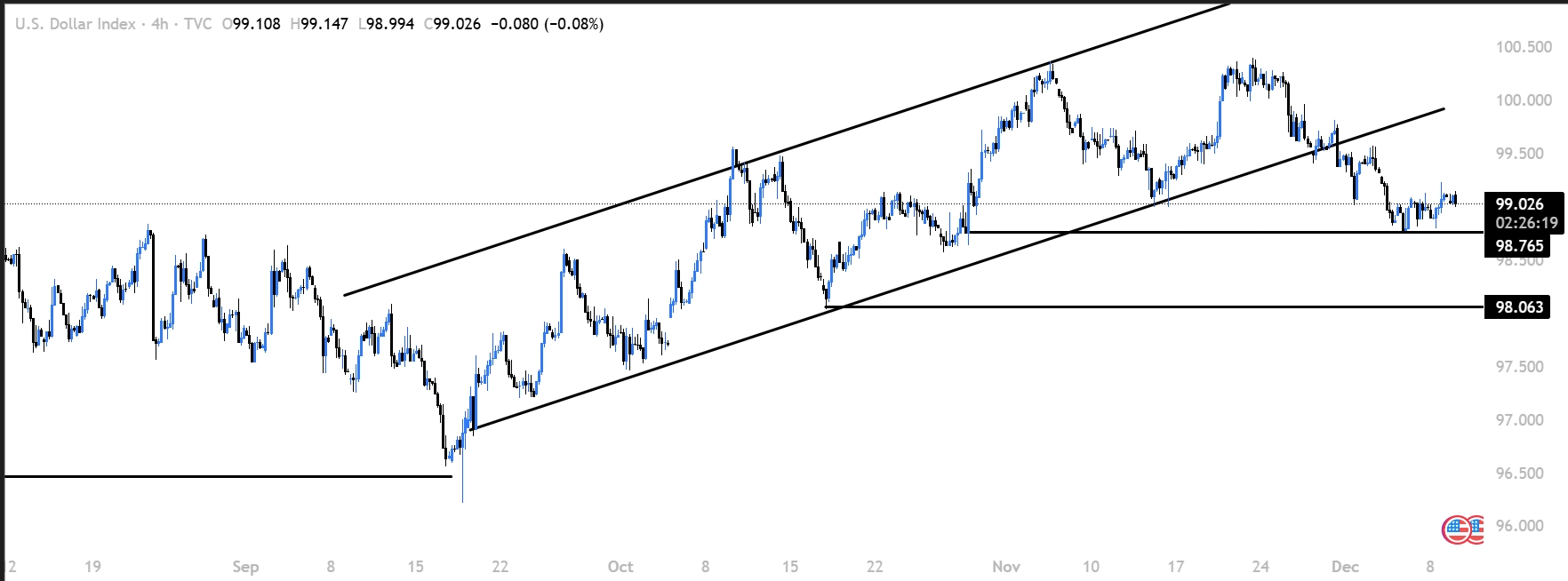
Likely scenario:
If the price manages to break below the98.765support, the probability of a phase shift from a bullish to a bearish trend increases. In this case, the next support level where buyers may react is located around98.063.
Less likely scenario:
If the Dollar Index encounters strong buying support at the98.765level, a price rebound from this zone and a resumption of the upward movement becomes possible, allowing the index to re-enter a bullish phase.
U.S. Dollar: Awaiting the Final Signal from the Labor Market
The short term outlook for the U.S. dollar is directly tied to today’s labor market data and the tone of the Federal Reserve during Wednesday’s meeting. If the JOLTS report and other labor indicators point to declining labor demand and easing wage pressures, expectations for a more dovish monetary policy will strengthen an outcome that could lead to a decrease in the Dollar Index (DXY) in the coming days. In such an environment, the likelihood of a 25-basis point rate cut increases, and the dollar may lose part of its recent strength.
Comments
Just started following the economic calendar and never got why everyone obsesses over US jobs data. The chain from employment to Fed policy to the dollar finally makes sense now. Thanks.
Appreciate the timely macro coverage, keep these coming.
Watched gold move $30 in a minute on this exact report. I was flat, thankfully — a friend of mine wasn't and it wiped out his week.
Could you write a follow-up on actually trading the jobs report release itself? Or is staying flat the smarter play for most of us?
Worth emphasizing that markets react to the deviation from forecasts, not the headline number itself. A 'good' NFP that misses expectations still sinks the dollar — catches new traders out every time.