
What is a Limit in Forex?
A limit or limit order in the Forex market refers to a specific type of trading order that allows a trader to buy or sell an asset only at a particular price. For example, suppose a trader wants to buy or sell a currency pair such as USD/EUR but only wishes to do so when the price reaches a specific level. In this case, the trader places a limit order at the desired price, and when the price reaches that level, the trader's trade is automatically executed. A limit order gives the trader more control over their entry and exit prices and helps prevent entering the market at undesirable or unintended prices. This feature makes limit orders a useful tool for those who want to execute their trades at specific and favorable price levels. Overall, using a limit order allows traders to act more precisely in the Forex market and implement their strategies in the best possible way.
How to Use a Limit in Forex
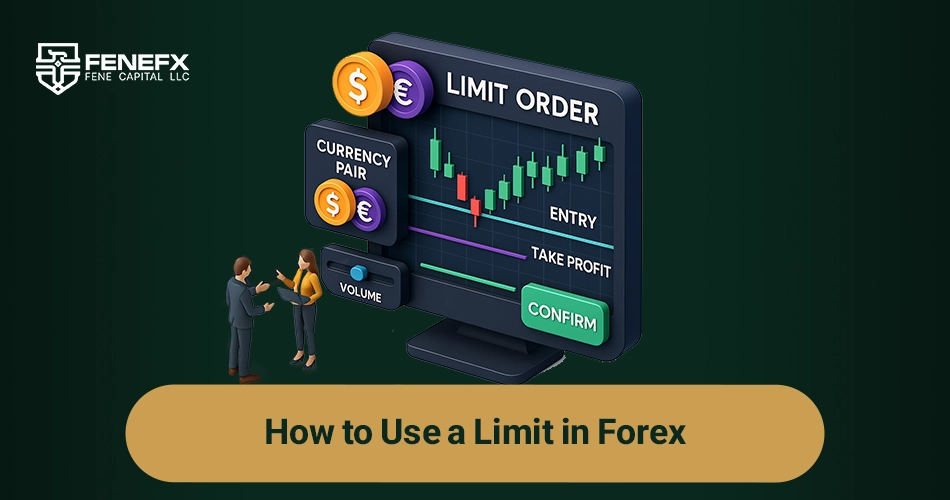
As mentioned, a limit in Forex is an important trading tool that allows traders to automatically execute their trades within specific ranges. However, incorrect use or lack of proficiency in using orders can lead to greater losses and asset depletion. Therefore, it is necessary to follow specific guidelines when using limit orders. These guidelines include:
Choosing a Currency Pair or Trading Asset
Firstly, you need to know that the choice of currency pair or trading asset depends on your level of experience, trading strategies, and your analysis of the market.
To select a currency pair, you should use the list of available instruments in your trading platform (such as MetaTrader 4 or 5). These platforms provide you with all the tradable currency pairs. If you are looking for a more detailed analysis and specific strategies, the selection of the currency pair should be based on both fundamental and technical analysis.
Choosing the Type of Trading Order
There are many types of orders available in Forex, such as limit orders, market orders, and more. A limit order allows you to set your desired price to enter and exit trades at a specific position, whereas a market order is used to buy or sell at the current market price.
Therefore, in this step, you will choose the limit order (Limit Order) option, as your goal is to execute trades at a specific price.
Setting the Target Price
Setting the target price is one of the key steps in using a limit in Forex. The main goal of setting a price is to have full control over your entry or exit price and to seize more favorable opportunities in the constantly moving and changing Forex market.
To set the target price in a limit order, you must first conduct a thorough analysis of the market and the currency pair or asset of interest. This analysis can be based on technical analysis, fundamental analysis, or a combination of both.
Determining Trade Volume
Determining the trade volume or lot size in Forex is important because the position size directly affects the risk and profit in each trade, meaning that with larger lot sizes, you may experience large profits or losses in response to market fluctuations.
To properly determine your trade volume, you must have a solid understanding of risk management. Professional traders, to maintain mental comfort and avoid burnout, often select smaller volumes when using limits in Forex. In addition to risk management, when calculating the trade volume (or lot size), factors such as pip size and entry and exit points.
Confirming and Sending the Order
Finally, the order is ready to be placed and sent. At this stage, it is important to double-check all the entered information and ensure its accuracy. This includes: the type of order, target price, trade volume, and stop-loss and take-profit levels.
After confirming the details by clicking on the confirmation or place order option, you submit your order to the trading platform's system, where it will be queued until the price reaches the level you set.
During this period, your order will change between statuses: pending, executed, or canceled, and you can monitor its status on your platform. If you need to edit or cancel it, you can apply the necessary changes.
Advantages and Disadvantages of Limit in Forex
A limit order allows traders to enter or exit the market only at specific prices, which is particularly useful for entering at strategic points such as support or resistance levels. Additionally, this type of order helps reduce risk because the target price is set before entering the trade. Since limit orders are executed automatically, traders do not need to constantly monitor the market. This feature is also suitable for long-term strategies, as it allows traders to enter the market at specific times without worrying about constant fluctuations.
On the other hand, one of the disadvantages of limit orders in Forex is the potential for missed opportunities. If the price does not reach the set level, any opportunities that may have arisen in the meantime could be lost. Additionally, limit orders may only remain active for a limited time, and in volatile markets, rapid price changes may cause the order not to be executed or to be partially executed. These factors can lead to missed trading opportunities and incorrect order executions.
Types of Limits in Forex
In general, there are two main types of limits in Forex that traders use according to their need to manage their positions. These two limit orders are:
Buy Limit
A buy limit order is used when traders want to purchase a currency pair or asset at a price lower than the current market price.
This means traders expect prices to decrease and be traded at a lower level. Buy limit orders are used when the market is bearish, allowing traders to enter the market at better prices.
Sell Limit
A sell limit order is the opposite of a buy limit order, meaning traders want to sell a currency or asset at a price higher than the current market price. The functionality of this order is similar to the buy limit, allowing traders to take advantage of market price increases and sell their currency or asset at the best point. In summary, this order helps traders capitalize on market fluctuations and sell at favorable prices.
Difference Between Limit and Stop Limit
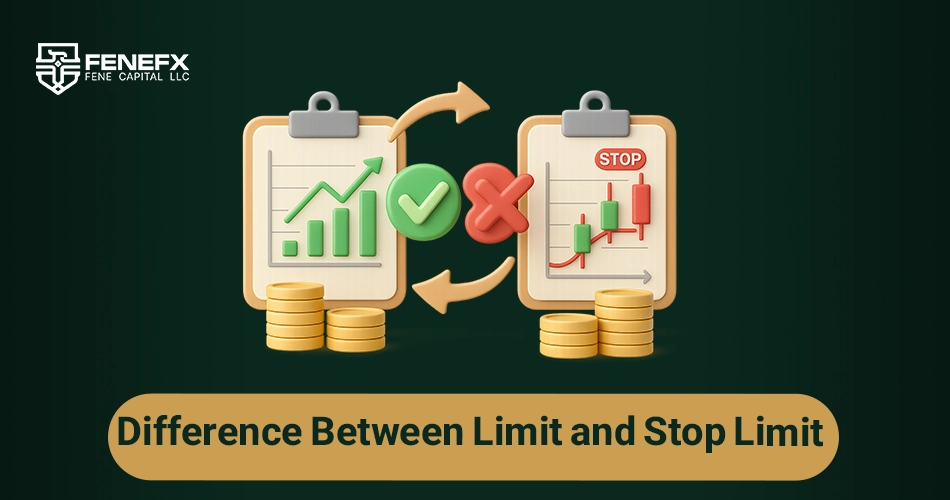
The main difference between a limit and a stop limit order is in how these orders are activated and executed. A limit order is used when you want to execute a trade only at a specific price or better. In other words, you specify that the trade will only occur when the price reaches your desired level or goes lower/higher. On the other hand, a stop limit order is a combination of two orders. First, a stop order is activated when the price reaches a certain level, and then a limit order is placed to execute the trade at a specific price. This method helps prevent fast price movements and ensures the trade is only executed when the price reaches the desired range. Simply put, a stop limit not only activates the order at a specific price but also prevents it from being executed at worse prices.
Comments
Worth adding that in fast markets limit orders can simply never fill and you miss the whole move. Sometimes paying the spread with a market order is the better trade-off.
Can you cover limit vs stop-limit orders next? Still not sure when a stop-limit actually makes sense in forex.
Kept mixing up buy limits and buy stops for months. The way you framed it — a limit waits for a better price — finally made it stick. Thanks!
Nice clear explainer, cheers.
I once fat-fingered a buy limit above price and it filled instantly like a market order. That's how I really learned the difference, lol.