

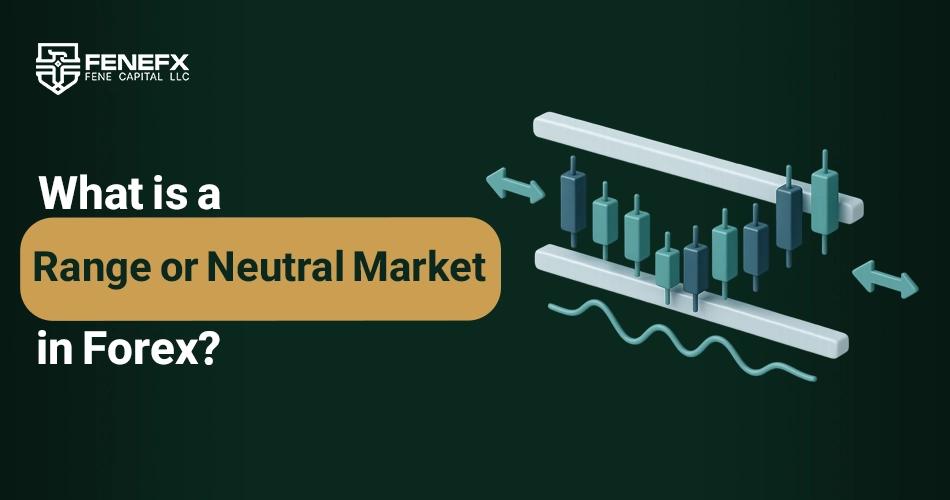
What is a Range or Neutral Market in Forex?
A range market or neutral market refers to a situation in the foreign exchange (Forex) market where the price of a currency or currency pair moves within a specific and limited price range without showing a clear directional trend. In this condition, the forces of supply and demand are in perfect balance, and prices repeatedly approach support and resistance levels but never manage to decisively break through any of these levels. This phenomenon causes the market to remain within a defined price range, with no significant upward or downward movement.
Characteristics of a Range or Neutral Market
In this section, we will examine the key characteristics of a range market in Forex, enabling traders to apply more effective strategies by better understanding this condition:
Lack of a Clear Trend
In this type of market, prices move laterally within a specific price range, with no obvious upward or downward trend. This condition reflects a balance between buyers and sellers, where neither side has managed to gain full control of the market.
The Ability to Identify Support and Resistance Levels
Support and resistance levels in a range market are clearly identifiable. The support level is the point at which buying demand increases, and the price bounces off this level, while the resistance level is where supply increases, and the price decreases. These levels serve as the primary boundaries for price movement, and traders use them to determine the optimal times for entry and exit.
Limited Price Volatility
Price volatility in a range market is significantly lower than in trending markets. This limited volatility allows traders to look for trading opportunities between support and resistance levels. Despite the lower volatility, trades are executed with less risk, providing better management of capital.
Balance in Trading Volume
Another fundamental feature of the range market is the balance in trading volume. In this market, the volume of buy and sell transactions is balanced, and neither side has a significant advantage. This balance causes prices to remain within a defined range, preventing extreme fluctuations.
Use of Technical Analysis Tools
Due to the specific characteristics of the range market, using technical analysis tools is essential. Tools such as Fibonacci, Bollinger Bands, and the Relative Strength Index (RSI) can help traders identify optimal entry and exit points. Additionally, chart patterns like rectangles and triangles are also highly effective in analyzing this type of market.
Numerous Trading Opportunities
The range market, especially with limited volatility, offers multiple trading opportunities for traders. In this market, whenever the price approaches the support zones, the probability of buying increases for traders, and when the price nears resistance levels, the conditions for selling are set. This repetitive cycle allows traders to capitalize on fluctuations continuously and can lead to consistent profits.
Easier Risk Management
Moreover, risk management in the range market is simpler than in trending markets. In this type of market, traders can define their stop loss and take profit levels with greater clarity based on support and resistance levels. This feature enables them to manage their risks precisely and avoid potential losses.
Need for Discipline and Patience
One of the key points in the range market is the need for high levels of patience and discipline in the trading process. Traders must avoid entering trades driven by emotions and stay loyal to their trading strategies. Patience to wait for the price to reach support and resistance levels and strictly following the trading plan is of paramount importance.
Strategies for Trading in a Range Market
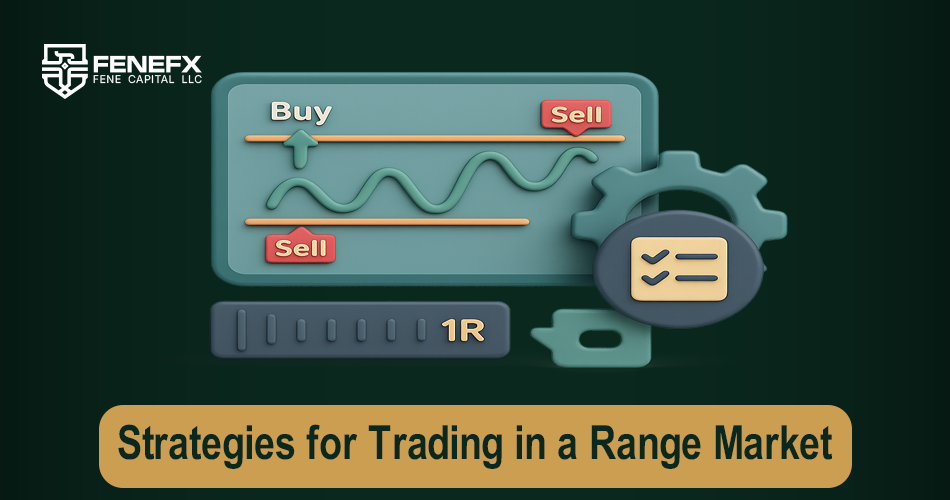
Below are practical strategies for profiting from a range market:
Trading at Support and Resistance Levels
This method is based on identifying key points where price reacts and avoids breaking through them. To implement this strategy, the following steps are essential:
- First, identify support and resistance levels using technical analysis tools such as trend lines, Fibonacci, and chart patterns.
- Then, at the entry point, consider buying when the price approaches the support level, and when the price approaches the resistance level, it's better to consider selling.
Additionally, to manage risk and protect capital, it's crucial to set stop loss and take profit levels based on the distance between support and resistance levels.
Using Technical Indicators
Utilizing technical indicators can also help confirm trading signals and simplify the decision making process.
Some recommended indicators
- RSI (Relative Strength Index): It is useful for identifying overbought or oversold conditions and potential price reversal points.
- MACD (Moving Average Convergence/Divergence): It is useful for detecting changes in trends and confirming price fluctuations.
- Bollinger Bands: These can help identify price volatility and locate potential support and resistance levels.
Trading Based on Chart Patterns
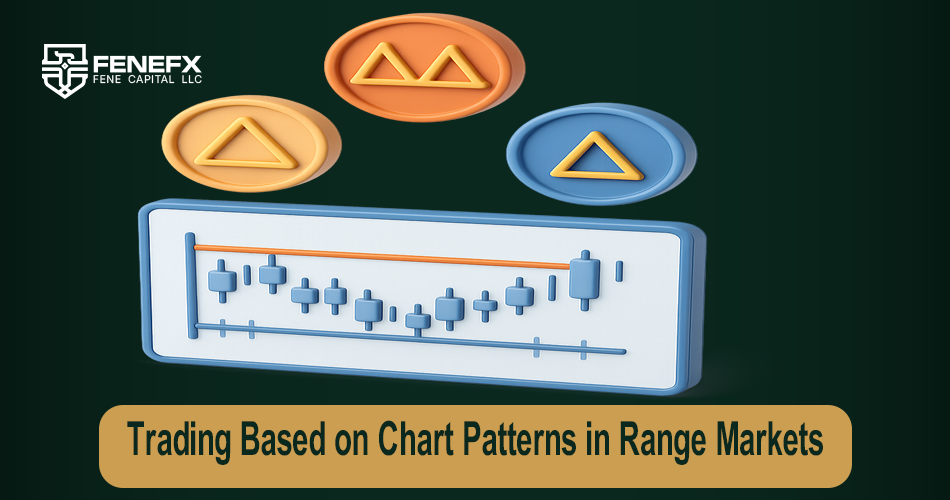
Chart patterns are one of the key tools in analyzing a range market. These patterns can help traders identify optimal entry and exit points and improve their trading decisions. Below are some recommended chart patterns:
Rectangle Pattern
The rectangle pattern represents a balance between buyers and sellers. In this pattern, the price moves within a specific price range, providing opportunities for multiple trades within this range.
Triangle Pattern
The triangle pattern indicates a gathering of market forces and readiness for a breakout from either the support or resistance level. This pattern can provide traders with signals for entering new trades or exiting current positions. A precise analysis of these patterns can help predict the next price direction.
Head and Shoulders Pattern
This pattern is commonly seen as an indicator of the end of an uptrend and the beginning of a downtrend, or vice versa. Traders can use this pattern to predict price reversal points and adjust their trades accordingly.
Using Oscillators
Oscillators are tools that help traders identify optimal entry and exit points in a range market. These tools tend to perform better in range bound conditions and can provide more accurate signals.
a) Stochastic Oscillator
The Stochastic Oscillator is used to identify overbought and oversold conditions and price reversal points. This indicator can show traders how far the price is from its typical range, indicating the potential for a reversal.
b) Commodity Channel Index (CCI)
CCI is used to identify price fluctuations and determine optimal entry and exit points. This indicator assists traders in better understanding price volatility and adjusting their trading decisions accordingly.
c) Average Directional Index (ADX)
ADX is used to measure the strength of a trend and confirm range markets. This indicator helps traders assess whether the market is currently in a strong trending state or in a neutral and range condition.
Hedging Strategy
The hedging strategy is one of the effective methods for reducing potential risks resulting from the failure of support or resistance levels in a range market. This strategy allows traders to manage the market in unexpected conditions and avoid significant losses.
Steps to Implement the Hedging Strategy
1.Opening Two Contradictory Trades: For example, simultaneously buying and selling a currency pair near support and resistance levels.
2.Setting Exit Points: Closing one of the trades when the price reaches a specific level to reduce risk and lock in profits.
Using Multiple Timeframes
Analyzing the market in multiple timeframes can help identify patterns and important levels, improving trading decisions. Using diverse timeframes enables traders to have a more comprehensive view of the market and optimize their strategies.
Advantages and Disadvantages of Trading in a Range Market
Trading in a range market, like any other type of trading, has its advantages and disadvantages:
Advantages
1.Higher Predictability
One of the biggest advantages of trading in a range market is the high predictability of prices. By accurately identifying support and resistance levels, traders can determine optimal entry and exit points, making more confident trading decisions. This feature helps increase accuracy in trades and reduce unnecessary risks.
2.Numerous Trading Opportunities
In a range market, every time the price approaches a support level, there is an opportunity to buy, and every time it approaches a resistance level, an opportunity to sell arises. This repetitive cycle of trades provides the potential for consistent profits and increases the number of successful trades. Traders can leverage these opportunities to increase trade volume and improve profitability.
3.Easier Risk Management
In a range market, setting stop loss and taking profit levels based on support and resistance is easier. This allows traders to manage their risks more precisely and avoid significant losses. By using technical analysis tools, traders can easily identify the best points to set stop loss and take profit orders.
4.Limited Volatility
Lower volatility in a range market allows traders to trade with lower risk. This limitation in price movement can help preserve capital and reduce psychological pressure on traders. Traders can take advantage of small market fluctuations using appropriate strategies and generate stable, consistent profits.
5.Suitable for Various Strategies
Due to its unique characteristics, a range market is ideal for using various strategies such as trading at support and resistance levels, employing technical indicators, and chart patterns. This variety of strategies allows traders to choose the best method based on market conditions and their trading style, offering greater flexibility.
Disadvantages of Trading in a Range Market
1.Risk of Breaking Support and Resistance Levels
One of the main disadvantages of trading in a range market is the potential for support and resistance levels to break. If the price suddenly moves past one of these levels, it may enter a new trend, which could lead to significant losses for traders. This requires careful monitoring of the market and the use of strong risk management tools.
2.Lower Volatility May Limit Profitability
While limited volatility can have advantages, it can sometimes reduce the profitability of trades. Traders may need to execute more trades to achieve the desired profit, which can lead to higher transaction costs. Additionally, the costs associated with each trade may negatively affect overall profitability.
3.Need for High Patience and Discipline
Trading in a range market requires high levels of patience and discipline. Traders must avoid emotional trading and follow their strategies carefully. This requires strong focus and emotional control, which can be challenging for some traders. Maintaining trading discipline is key to success in this type of market.
4.Complexity in Accurately Identifying Support and Resistance Levels
Accurately identifying support and resistance levels can be complex and time consuming. Mistakes in determining these levels may result in incorrect trading decisions and financial losses. Traders need to use advanced technical analysis tools and have enough experience to identify these levels correctly.
5.Need for Advanced Technical Analysis Tools
To effectively capitalize on a range market, the use of advanced technical analysis tools is essential. Traders need to be familiar with various indicators and patterns and have the ability to analyze price charts accurately, which requires training and experience. Without these tools and skills, taking advantage of range market opportunities can be difficult.
Comments
Nicely explained, no fluff. Bookmarked.
Can you write a follow-up on fake breakouts from ranges? That's where I keep getting trapped.
I once sat through a full week of EURUSD chop trying to force breakout trades. Lost more in that week than the previous month. Range recognition is a skill on its own.
Good piece. I'd push back slightly on trading every range though — if the range is tighter than 2x spread plus average slippage, it's just not worth it. Skip the small ones.
This explained why my trend-following strategy kept losing on quiet days. I honestly had no idea markets spend this much time ranging. Thank you!