




What is Ethereum?
Imagine an empty land that has been given to you, and with all the tools you need such as water, electricity, maps, etc., you are allowed to build anything you want, without the presence of central overseers, only following the construction rules. At this point, we call this empty land a platform. Ethereum can also be considered as this empty land, which we have called a platform. Ethereum is a digital platform based on blockchain technology that allows the creation and execution of applications known as smart contracts. These contracts work like automated machines and execute themselves without human intervention if the conditions specified in them are met. For this reason, Ethereum is not only a cryptocurrency but also an infrastructure for building a decentralized future on the internet.
The Concept of Smart Contracts on the Ethereum Platform
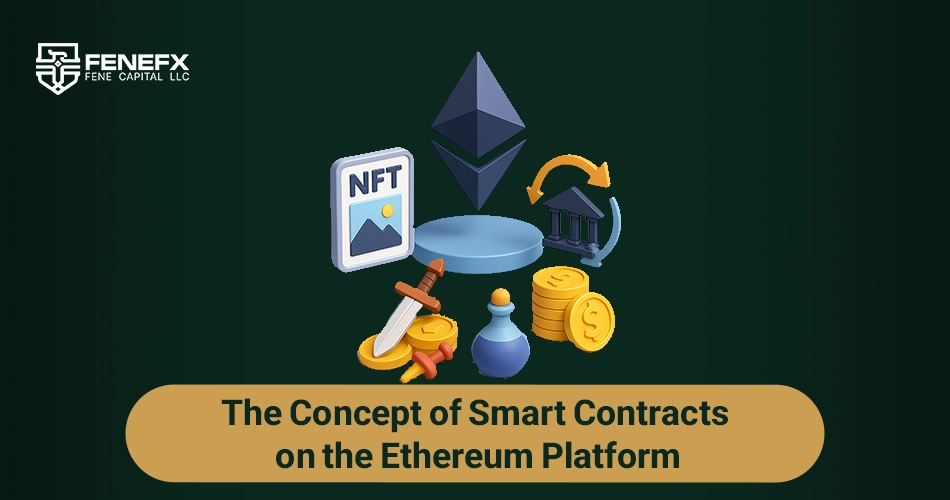
The best example of the concept of smart contracts in the real world can be referenced from ATM machines. In these machines, by inserting a bank card and entering a password, you can perform your financial operations quickly and automatically, without the need for any bank employee's intervention.
Just as the ATM machine operates solely based on the input data and specific conditions defined for it, smart contracts on the Ethereum platform also execute precisely according to the instructions written for them in advance. To better understand the concept of smart contracts, consider this example.
Just as an ATM machine operates solely based on the rules that have been predefined for it, a smart contract on Ethereum also executes exactly according to the instructions that the programmer has written from the beginning. You cannot change the machine’s decision or force it to dispense more money at the moment it is supposed to give cash. Even the bank itself cannot intervene in the process during its execution.
The same is true for smart contracts on the Ethereum platform:when the specified conditions in the contract (such as depositing an amount, reaching a date, or recording a specific event) are met, the blockchain comes into play, and the execution process occurs exactly as per the pre written code automatically, definitively, and without the need for intermediaries.
This means that if it has been agreed that a digital asset will be transferred upon receiving a certain amount of money, this transfer will happen, even if one of the parties wants to back out, because the contract is not controlled by any individual or institution.
Also, just like the ATM machine, which cannot be hacked or altered at the moment of use, in smart contracts, once they are recorded on the blockchain, no one neither the code writer, nor the user, nor governments can change or stop them.
This is the principle oftrustlessness; you do not trust the other party, nor an intermediary like a bank or government, but you trust only the code and the network that executes it, and this trust is based on mathematics and transparency, not promises and paper contracts.
Applications of Ethereum in Smart Contracts
Ethereum was able to create a revolution in building trust for digital transactions by providing a platform for executing contracts in a short period of time. This is why Ethereum is now very popular in organizations that have decentralized financial systems. Ethereum is used in blockchain based games, art, finance, and nearly every business sector. Some of the most well known examples of Ethereum's applications in smart contracts include:
NFT
Marketplaces such as OpenSea execute contracts on Ethereum that allow the creation, buying, and selling of digital art. The smart contract on this platform ensures that only the true owner can transfer the artwork, and the royalties go to the original creator.
Blockchain Games such as: Axie Infinity
In these games, ownership of in game items or characters is managed by smart contracts. Players can sell or lend items, and all these transactions are automatically, securely, and transparently recorded.
DeFi (Decentralized Finance) Services
Projects like Uniswap, Aave, and Compound use smart contracts to execute services such as lending, trading, depositing, and insurance without the need for banks or financial institutions.
For example, when you borrow from Aave, the smart contract checks whether your collateral is sufficient. If it is, the loan is sent to your digital wallet without any human correspondence or signature.
What is Ethereum Cryptocurrency?
Ethereum is one of the most important projects in the blockchain world, launched in 2015 by Vitalik Buterin and his team. Unlike Bitcoin, which was designed solely as a digital currency, Ethereum is an open source platform for executing smart contracts and building decentralized applications (DApps). This capability has made Ethereum a key infrastructure for various projects in the fields of DeFi (decentralized finance), NFTs, blockchain games, and other innovative applications.
The native cryptocurrency of the Ethereum network is Ether (ETH). Ether is used to pay for transaction fees and execute smart contracts on the Ethereum network, functioning similarly to "fuel" within this ecosystem. With the growing applications of Ethereum, ETH has become one of the most widely used and valuable cryptocurrencies in the market.
How to Buy Ethereum? A Complete Guide for Iranian Investors
For Iranian users who intend to buy Ether, the buying process may seem complicated at first, but in practice, it can be done by following a few simple steps.
Step 1: Choose the Right Exchange
Domestic exchanges such as Nobitex, ArzPay, Wallex, and Bitpin offer the ability to buy Ethereum with a bank card. First, you need to register on one of these exchanges and complete the identity verification process (by submitting a picture of your national ID and banking information).
Step 2: Deposit Rial
After identity verification, you can fund your account using your bank card and get ready to buy.
Step 3: Buy Ether
In the market section (Ethereum/Rial), enter the desired amount and place your buy order. By doing this, the equivalent amount in Rial will be deducted from your account, and the Ethereum amount will be added to your internal wallet on the exchange.
Step 4: Transfer to Wallet
For extra security, it is recommended to transfer the purchased Ethereum to a personal wallet such as Trust Wallet or MetaMask.
Important Note
When transferring, make sure to select the appropriate network (such as ERC 20) and carefully enter the wallet address. A mistake in this step may result in the complete loss of your assets.
Unknown Facts About Ethereum
By now, you probably understand that Ethereum is not just a cryptocurrency, and it has numerous applications in the world of digital transactions, with these applications increasing and becoming more widespread every day. Some important facts you should know about Ethereum include:
Ethereum Smart Contracts Are Immutable After Execution
Once a smart contract is registered on the Ethereum blockchain, it cannot be edited or deleted. This feature ensures that everything is transparent and executed without the possibility of fraud. If you want to make any changes, you must release a new version.
Ethereum does not have a supply limit.
Unlike Bitcoin, which has a supply cap of 21 million units, Ethereum does not have a fixed supply limit. However, with the EIP 1559 update, a portion of Ethereum is burned and destroyed in each transaction, which helps control network inflation. Some analysts consider this process anti inflationary.
Ethereum Is No Longer Mineable
Ethereum had mining capabilities until 2022, similar to Bitcoin. However, with the major Merge update, the consensus algorithm was changed to Proof of Stake.
Variable Fees Dependent on Network Traffic
There is no fixed transaction fee in Ethereum, and a simple transfer can cost several thousand dollars in fees. However, to reduce these costs, second layer projects like Arbitrum and Optimism have been developed. Due to the lack of user familiarity and insufficient knowledge to use them, many users still incur high Gas Fees.
Ethereum and Bitcoin; Two Giants of the Cryptocurrency World
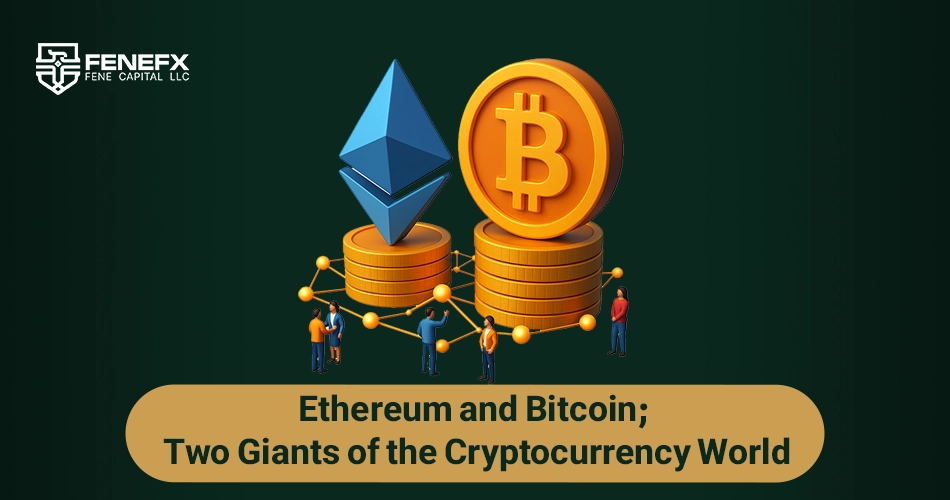
Both Ethereum and Bitcoin are digital currencies, but their goals, use cases, and technical structures have fundamental differences. Bitcoin is known in digital financial markets as "digital gold," whereas Ethereum, in addition to functioning as a currency, serves as infrastructure for smart digital applications.
Bitcoin is used for storing wealth and transferring money, while Ethereum is used to build applications in the world of decentralized transactions. Therefore, the differences between these two cryptocurrencies can be defined as follows: If Bitcoin is considered a gold bar for holding and converting capital, Ether can be likened to electricity, which not only has high value but also enables various activities on the Ethereum platform, from running different applications to facilitating digital voting.
Comments
I never got the difference between Ethereum and Bitcoin beyond 'they're both crypto'. Smart contracts finally make sense to me now, thank you!
Bought ETH in 2021 without understanding gas fees, then paid $40 to move $100. An article like this would've saved me some pride and some money.
Finally an ETH explainer that doesn't assume I'm a developer.
Good article but calling ETH 'digital oil' undersells the fee burn since EIP-1559. The supply dynamics are half the investment case now, imo.
Nice intro. Any chance of a follow-up comparing Ethereum staking vs just holding? Trying to figure out if the yield is worth the lock-up.