




Choosing the Right Leverage in Forex
Leverage is one of the most crucial concepts that every trader in the Forex market must fully understand, as choosing it correctly or incorrectly can be the difference between long term success and the loss of capital. This powerful tool allows traders to execute large trades with a small amount of capital, but at the same time, it significantly increases the risk of trades. Therefore, having a precise understanding of how leverage works, how it affects risk management, and choosing the appropriate level based on trading style and experience plays an important role in the long term success of traders. In this article, all important aspects of leverage from how to choose it to its relationship with margin call, broker regulations, and common mistakes made by traders are examined to provide a comprehensive guide for the intelligent use of this tool.
Choosing the Right Leverage Based on Experience and Trading Style
Choosing leverage depends on the trader’s experience, trading style, initial capital, and risk management strategy.
Traders who are new to the Forex market usually do not have sufficient familiarity with risk management and often lack a proper understanding of how leverage affects their trades. For this group, it is recommended to use low leverages such as 1:10 or 1:20. This level of leverage allows them to benefit from increased buying power while avoiding the severe risks caused by major market fluctuations.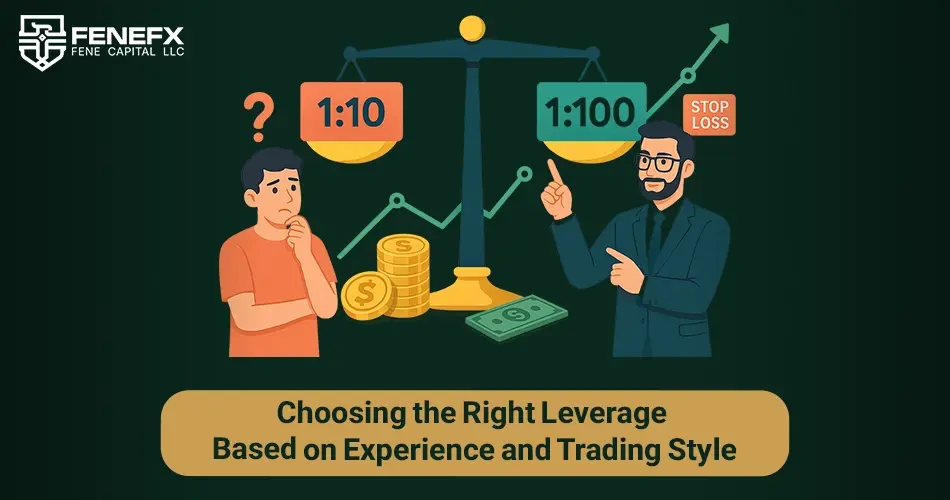
In contrast, professional traders with more experience in market analysis and capital management can use higher leverages such as 1:50 or 1:100. These individuals typically rely on strong capital management strategies and know how to use stop loss orders to control risk.
Some brokers offer very high leverages such as 1:500 or even 1:1000, but using such leverages is recommended only under specific conditions, such as scalping, and with strict adherence to capital management principles. Otherwise, improper use of high leverage can lead to the complete loss of the trading account’s capital.
Overall, if you are a conservative trader, using low leverage is recommended. If you seek higher profits and have strong risk management capabilities, you can use medium leverage. However, using extremely high leverage will only be logical if you have precise trading strategies and sufficient experience.
What Is Leverage and How Does It Work?
Leverage in Forex allows traders to execute large trades with a small amount of capital. Essentially, the broker permits the trader to enter the market with several times the balance of their account, increasing their potential profit. However, at the same time, potential losses also increase proportionally.
For example, suppose a trader has $1,000 in capital and uses a leverage of 1:100. This means they can execute a trade worth $100,000. But it must be noted that even small price fluctuations will have a greater impact on the trading account.
Leverage is directly related to the amount of margin required to open a trade. The higher the leverage, the lower the margin needed to enter a trade. However, at the same time, the level of risk increases. If the market moves against the trade, the trader may lose their capital in a short period of time.
Therefore, understanding how leverage works and how it affects capital management is essential. Intelligent use of leverage can increase profitability, while improper use of it can lead to significant losses.
Advantages and Disadvantages of Using Leverage in Forex
Leverage is a powerful tool that, if used correctly, can multiply a trader’s profits. However, if used without proper understanding, it can wipe out the trader’s entire capital.
One of the main advantages of leverage is that it allows traders to execute larger trades with a small amount of capital. This is especially appealing for traders with limited funds. Additionally, leverage increases the ability to seize market opportunities and allows traders to profit even from small price fluctuations.
On the other hand, improper use of leverage can expose the trader to severe losses. The higher the leverage, the lower the margin required, but the risk of margin call and stop out increases. If the market moves against the trade, the trader may lose their entire capital in a short period of time.
Furthermore, excessive use of leverage may cause the trader to enter trades based solely on greed, without paying attention to fundamental and technical analysis. This can lead to poor decision making and ultimately heavy losses.
How to Choose the Right Leverage for Yourself
Choosing the right leverage depends on several key factors that every trader should consider before entering the Forex market.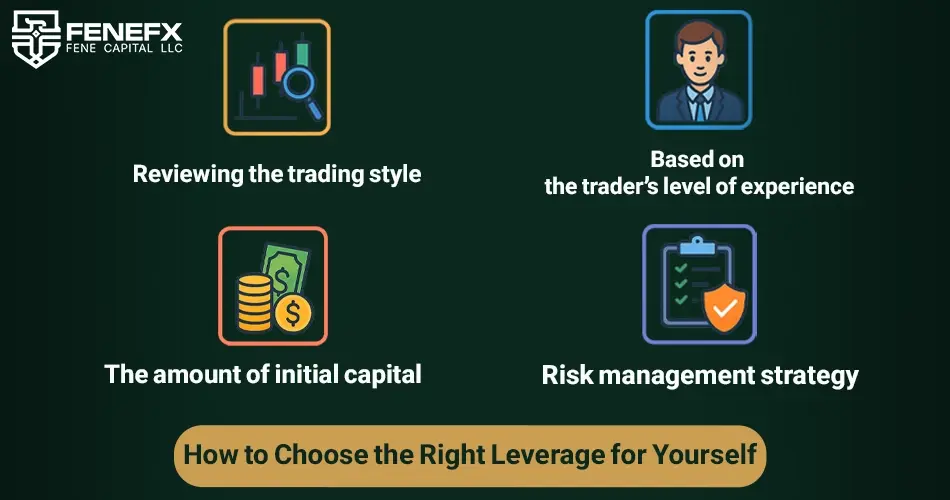
The first factor is the trader’s level of experience.
If you are a beginner, it is better to use lower leverages such as 1:10 or 1:20. This helps you gain sufficient market experience without taking on excessive risk. Professional traders who have developed a deep understanding of technical and fundamental analysis can use higher leverages such as 1:50 or 1:100.
The second factor is your trading style.
Day traders and scalpers usually use high leverage because their trades are short term and they need substantial buying power to execute a large number of trades. In contrast, long term traders who keep their positions open for extended periods typically use lower leverage to protect themselves from major market fluctuations.
The third factor is the amount of your initial capital.
If you have a small amount of capital, you may be tempted to use high leverage. However, this often leads to heavy losses. If you have more capital available, you can use medium leverage to establish a suitable balance between risk and profitability.
The fourth factor is the risk management strategy.
If you use high leverage, you must set a clear stop loss level and avoid risking too much on a single trade. Traders who use high leverage without proper risk management usually lose their capital in a short period of time.
Ultimately, choosing leverage must be based on a proper understanding of risk and capital management. Intelligent use of leverage can enhance your profitability, while improper use of it can lead to the destruction of your capital.
Broker Regulations and Restrictions on Providing Leverage
Leverage is an attractive tool in Forex trading, but due to the high level of risk it carries, many regulatory bodies around the world have imposed limitations on its amount to protect retail investors. These restrictions vary depending on the geographical region and local regulations, and traders must be aware of them before choosing a broker.
Leverage Limitations in Different Regions
In some regions, such as Europe and the United States, regulatory authorities have set a specific cap on leverage, which is usually lower for major currency pairs and even lower for assets such as commodities and cryptocurrencies. These regulations have been implemented to reduce potential risks for retail investors and prevent heavy losses.
In regions like Australia and some Asian countries, similar restrictions have been applied, yet there are still diverse options available for professional traders. On the other hand, some countries and jurisdictions operate outside these frameworks, and brokers registered in such areas typically offer much higher leverage. Although this option may seem appealing to traders, trading on these platforms may involve greater risks, including lack of transparency and liquidity issues.
The Importance of Choosing a Reliable Broker
Leverage limitations are only one of the criteria for selecting a broker. In addition to the amount of leverage offered, traders should also consider the broker’s regulatory status, fund security, and the quality of customer support services. Registering with brokers that are regulated by reputable authorities minimizes the risks associated with fraud and misuse.
The Impact of Choosing Leverage on Margin Call and Stop Out
Leverage directly affects the amount of margin required to enter trades. The higher the leverage, the less margin you need to keep in your account, but this is a double edged sword, as small market movements can have a significant impact on your trading account.
How Do Margin Call and Stop Out Occur?
When traders use high leverage, their account balance is considered collateral for larger trades. If the market moves against the trader’s position and the loss exceeds a certain level, the broker issues a margin call. This warning means that the trader must add more funds to their account or close some of their positions.
If the trader ignores this warning and the losses continue to increase, their margin level will fall below the minimum set by the broker, and their positions will be closed automatically. This point is known as stop out and often results in traders losing a significant portion of their capital.
Leverage and the Likelihood of Margin Call
Using high leverage means that even small market fluctuations can bring the trader’s account close to the margin call level. On the other hand, using lower leverage allows the trader to trade with a greater safety margin and be more resilient against market volatility.
Best Risk Management Strategies When Using Leverage
Leverage by itself is not a dangerous tool; rather, the way it is used determines the level of risk. For traders who want to benefit from leverage, having a proper risk management strategy is essential.
Risk Control Through Stop Loss and Proper Position Sizing
One of the most effective ways to manage risk is setting a stop loss for each trade. This ensures that if the market moves in an unfavorable direction, the loss is controlled and severe losses are prevented.
Additionally, choosing the appropriate position size based on capital and risk tolerance is highly important. Traders must keep in mind that trade volume should not exceed their financial capacity.
Maintaining the Risk to Reward Ratio in Trades
Before entering any trade, traders should evaluate the risk to reward ratio. This ratio shows whether the risk of taking a trade is reasonable compared to its potential profit or not. Using a reasonable ratio, such as aiming for two or three times the reward relative to the risk, can help ensure that even with some losing trades, the trading account remains on a growth path.
Avoiding Overtrading and Emotional Decision Making
One of the most common mistakes traders make is executing too many trades in a short period of time, often driven by excitement or fear of missing out. Using high leverage can intensify this behavior and lead to consecutive losses. Adhering to a consistent trading plan and having a clear strategy can help prevent this mistake.
Common Mistakes in Choosing and Using Leverage
Leverage is a tool that can help increase traders’ profitability, but improper use of it can lead to heavy losses. Many traders, especially beginners, make mistakes that may result in losing their capital.
Choosing Excessively High Leverage Without Risk Management
One of the most common mistakes traders make is using high leverage without having a clear risk management strategy. They assume that high leverage will automatically increase profits, while in reality, this tool can also multiply losses.
Not Setting a Stop Loss in Trades
Another common mistake is not setting a stop loss. Traders who enter trades without proper planning usually become shocked when facing large losses and do not know when they should exit the market. This causes small losses to turn into major ones.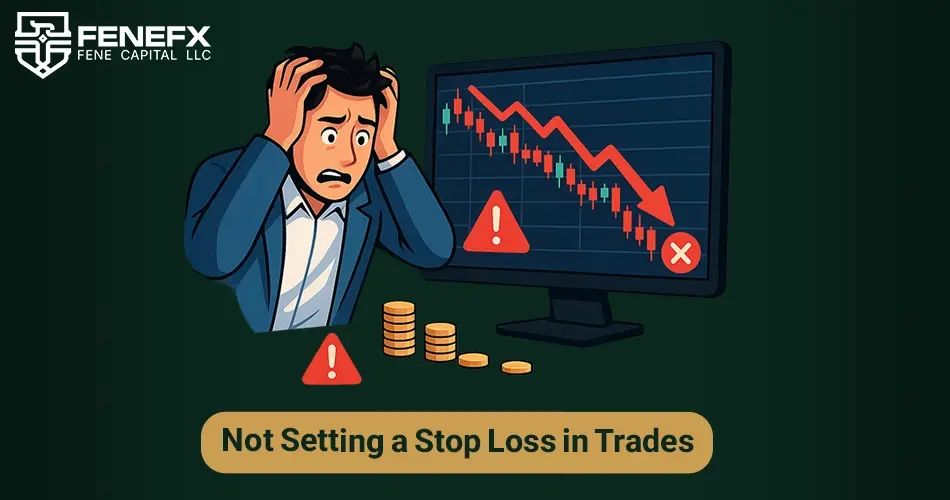
Excessive Focus on Leverage and Ignoring the Trading Strategy
Some traders place their entire focus on the amount of leverage and overlook other important aspects of trading, such as technical and fundamental analysis. This approach leads to trade decisions based on excitement and emotions rather than real market data.
Ignoring Broker Regulatory Rules
Some traders, attracted by high leverage offers, register on platforms without checking the broker’s credibility and regulatory oversight. This can expose them to various risks, such as withdrawal delays, abnormal price fluctuations, and even losing their entire capital.
Prop Fenefx is one of the most popular prop trading firms among professional traders, as it provides an ideal environment for growth and profitability by offering appropriate leverage, transparent trading conditions, and fair rules. With its precise multi stage structure and standard risk management tools, this company helps traders demonstrate their real capabilities in the market while benefiting from substantial financial support. If, after reading this article, you have realized the importance of choosing the right leverage and managing risk, Prop Fenefx can be a smart choice for starting your professional journey. To take advantage of powerful trading conditions and begin working with one of the most reputable prop firms, we recommend proceeding through the Prop Fenefx purchase link.
Final Conclusion
Leverage is neither inherently good nor bad; rather, the way a trader uses it determines the level of risk and profitability. Choosing the right leverage should be based on experience, capital, trading style, and risk management strategy, and ignoring these factors can lead to irreversible losses. Successful traders are those who use leverage as a complementary tool to enhance returns, not as a means of gambling on market fluctuations. With a precise understanding of leverage and adherence to capital management principles, one can benefit from the advantages of this tool while minimizing its risks.
Frequently Asked Questions
What is leverage in Forex?
Leverage is a tool that allows traders to execute trades larger than their actual capital.
What leverage is suitable for beginners?
Usually, low leverages such as 1:10 or 1:20 are suitable for starting.
Is high leverage always dangerous?
Yes, because small market fluctuations can multiply losses unless precise risk management is applied.
Does leverage affect margin call?
Yes, the higher the leverage, the greater the likelihood of reaching a margin call.
Comments
Honestly, leverage itself doesn't blow accounts — position size does. You can run 1:500 safely if you size by risk per trade. The ratio just changes your margin, not your risk.
One of the better leverage explainers I've come across, nicely done.
Thank you, this finally cleared up the difference between leverage and margin for me. I'd been treating high leverage as 'free money' without realizing it cuts both ways.
1:500 leverage blew up my first account in three weeks. Dropped to 1:30 after that and suddenly I could actually hold trades through normal pullbacks. Learned it the expensive way.
How does this apply to prop challenge accounts where leverage is fixed? Would love a piece on adjusting position sizing when you can't choose the leverage yourself.