
The Promised Land and the Emergence of Religious Zionism
The concept of the "Promised Land" is one of the most profound elements in the formation of Jewish religious and political identity. This idea has played a fundamental role not only in sacred texts but also in the history, rituals, and contemporary political developments of Judaism. From the time of Abraham to modern Zionism, the Promised Land has always symbolized the connection between the people, God, and the land; however, this connection has been interpreted differently in each era and has had far reaching consequences for human and political relations.
The Promise of the Land in Sacred Texts
One of the most fundamental elements in the formation of the religious and ethnic identity of the Children of Israel is the idea of the "Promised Land." This concept is not merely a physical geography but a spiritual, political, and soteriological compass within the structure of Judaism. In fact, the relationship between Yahweh and the Israelites was, from the very beginning, based on the promise of the land.
The first explicit references to this covenant appear in the Book of Genesis, where God promises Abraham:
"All the land that you see I will give to you and your offspring forever." (Genesis 13:15)
and later emphasizes:
"To your descendants I give this land, from the river of Egypt to the great river, the Euphrates." (Genesis 15:18)
This promise essentially forms the triadic structure of "People - Land - God": Yahweh chooses a specific people and grants them a specific land, conditional upon their fidelity to the law. This "tripartite covenant" is repeatedly reiterated in Exodus, Deuteronomy, and Leviticus, and sits at the heart of the Israelite worldview.
As a result, the land is not considered a mere privilege, but rather the outcome of adherence to the law and loyalty to the covenant. Sin and disobedience bring with them the threat of expulsion from the land, as stated in the Torah:
"If you turn away from my statutes... I will drive you out of the land I have given you." (Leviticus 26)
However, what sets this concept apart from other ethnic myths is the sanctification of geography.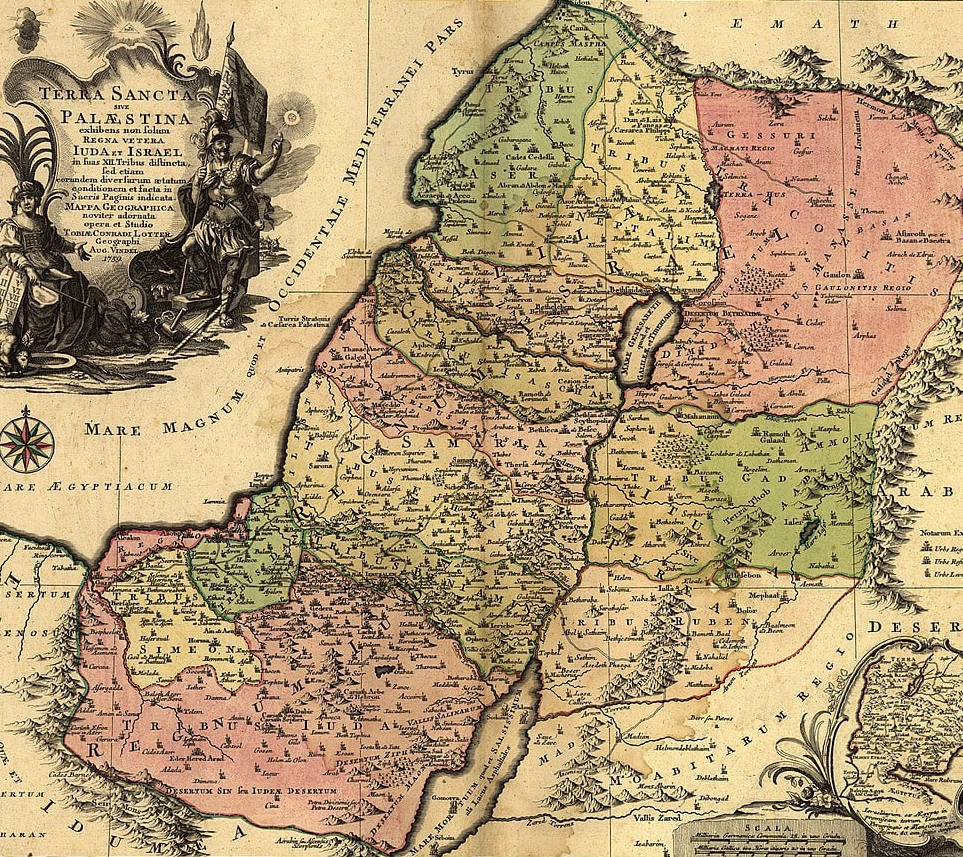
Jerusalem, Mount Zion, and the Land of Canaan in Jewish consciousness are not merely historical locations, but cosmic and ritual points that bridge the earth and the heavens. In rituals, prayers, and sacred texts, they are manifested as the meeting place of Yahweh and His people.
In this view, the Promised Land is not a terrestrial possession but a divine mission; possessing it is not a natural right, but the outcome of obedience to Yahweh’s laws. And it was precisely this perspective that later particularly during the period of exile became a tool of resistance, and in the age of Zionism, the seed of territorial legitimacy.
In sum, the concept of the "Promised Land" in the sacred texts is not merely a geographic promise, but a deep identity forming force that intertwines people, religion, law, and land a concept that remains, to this day, the focal point of many spiritual and political conflicts.
From Exile to the Expectation of Return
The Memory of the Land: The Temple’s Remnant in Exile
With the collapse of the First Temple in 586 BCE and the exile of the Jews to Babylon, the dream of the Promised Land entered a dark phase. The Children of Israel lost not only the sacred land but also their religious, political structure, and even the center of divine presence. However, what was not destroyed was the memory of the land a memory that continued to live on through prayer, law, rituals, and the Talmud, laying the groundwork for the emergence of the concept of "return."
During the exile, Judaism entered a phase in which divine presence was no longer tied to a place (the Temple), but manifested in texts, interpretation, and rabbinic religious practice. Yet at the same time, the memory of the land was not removed from the core of religion, but rather transformed into the center of longing and ultimate aspiration. Jerusalem turned from a physical city into a utopia of prayer; in daily prayers, on the fast of the Ninth of Av, in marriage ceremonies, mourning, and even in the final words before death, return to Zion was invoked as a religious and identity driven horizon.
This preservation of memory without political tools was made possible through the religious language and interpretive work of the rabbis. As stated in the Talmud:
"Whoever does not dwell in Jerusalem is in exile even if he is at ease."
In post exilic literature, exile is defined not only as a geographic reality but also as a spiritual condition. This view paved the way for a key concept: return to the land as the ultimate fulfillment of salvation.
During this period, the ideal of return was cultivated in two distinct forms:
- Messianic Return: possible and legitimate only in the era of the appearance of the Messiah (Mashiach). This conservative, tradition based view rejects any political return prior to the Messiah.
- Gradual Return (historic religious): some interpretive traditions regarded the physical return to the land as a precursor to the arrival of the Messiah and the fulfillment of the divine promise.
These two interpretations later formed the foundation of two differing currents within religious Zionism and religious anti Zionism.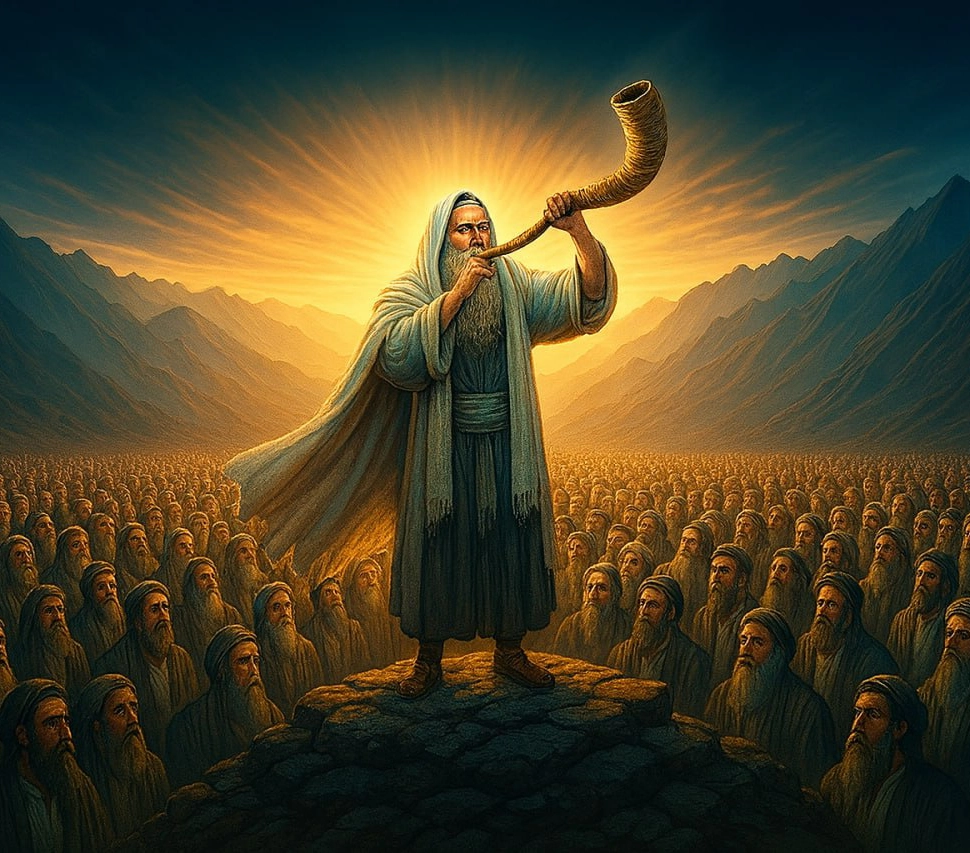
Thus, the concept of returning to the land during exile transformed from a historical nostalgia into a spiritual duty. The land was no longer merely a geography; its memory remained alive within rituals, prayers, and Jewish consciousness, and gradually became a driving force behind return and even occupation in the modern era.
The Birth of Religious Zionism: Theology in Service of the Land
From Prayer for Zion to the Conquest of Zion; From Expectation to Action
Until the nineteenth century, the return to the Promised Land remained within an eschatological and messianic framework in the minds of traditional Jews. But with the advent of modernity, the rise of anti Jewish pressures in Europe, and the emergence of nationalist movements, a segment of Jews sought to reinterpret this ancient expectation in a pragmatic, political, and even military form. It was in this context that Religious Zionism was born a synthesis of divine covenant, holy land, and the project of rebuilding the Jewish state.
The key role in this transformation must be attributed to the ideas of Rabbi Abraham Isaac HaKohen Kook. He was the first Ashkenazi Chief Rabbi of Jews in Palestine and the most important theoretician of Religious Zionism. Unlike traditional rabbis who considered return to the land dependent on the coming of the Messiah, Kook regarded even secular Zionists as part of the “divine plan” to fulfill the promise of the Promised Land.
In his view:
“The hands of the secularists too can be instruments for the execution of God's will.”
On this basis, conquering the land, working it, building settlements, and even fighting to preserve it were all considered acts of worship. This radical interpretation of the concept of covenant, especially among Kook’s disciples who later founded the Gush Emunim (Bloc of the Faithful) movement became the core ideology of Religious Zionism.
In this discourse, the political borders of Israel were intertwined with the biblical borders. The occupied territories, such as Judea and Samaria (modern day West Bank), were not considered disputed lands, but part of the divine inheritance of the Jewish people.
Religious Zionism was therefore distinct from and more dangerous than secular Zionism because:
- It had theological backing.
- It viewed occupation and settlement building not merely as political expediency, but as religious obligation.
- It linked the concept of the “Chosen People” with the “Holy Land”, and used that as a tool of legitimacy for all forms of domination.
Thus, the theology of the covenant was translated from the language of prayer into the language of the gun. And the land that for centuries had been imagined in Jewish consciousness as a reward for faithfulness was now transformed into an object of conquest and military politics.
From Myth to Geography: Israel’s Land Centered Policies
Turning the Sacred Text into a Map of Occupation
With the establishment of the State of Israel in 1948, the idea of the Promised Land, for the first time, moved from the pages of sacred texts into official borders. Yet what was formed with the birth of this state was not merely a national government, but a political structure that placed the theology of covenant and land at the heart of its decision making.
Before 1967, many biblical regions including Bethlehem, Hebron, Nablus, and East Jerusalem were not within Israeli territory. But after the Six Day War, with the occupation of the West Bank, Gaza, the Golan Heights, and Sinai, a wave of religious national fervor swept through Religious Zionist movements:
The land of the covenant is now in our hands; return to the “Holy Land” was no longer just in prayer, but on the ground.
Accordingly, religious national movements such as Gush Emunim and its offshoots began establishing settlements in the occupied territories. Citing the Torah, they referred to the regions of Judea and Samaria as “the edges of the Jewish soul” and considered presence there a religious obligation.
Within this framework, a set of land centered policies were established:
- Organized settlement building, supported by the state and the military, at the heart of Palestinian territories
- Development of infrastructure(roads, schools, military security) for religious settlers
- Use of religious languageto justify occupation: “God gave us this land”
- Demographic and geographic restructuringin favor of Jews in areas with an Arab majority
In effect, covenantal theology was turned into an urban planning map, an immigration policy, a security agenda, and a foreign policy platform. In this way, belief in the holy land was transformed from a spiritual inspiration into the foundation of ethnic engineering and territorial dominance.
In this phase, the “Promised Land” was no longer merely a matter of faith, but a tool of power. Biblical borders became the borders of policymaking; occupation was cloaked in sanctity, and Palestinian resistance was portrayed as opposition to divine will.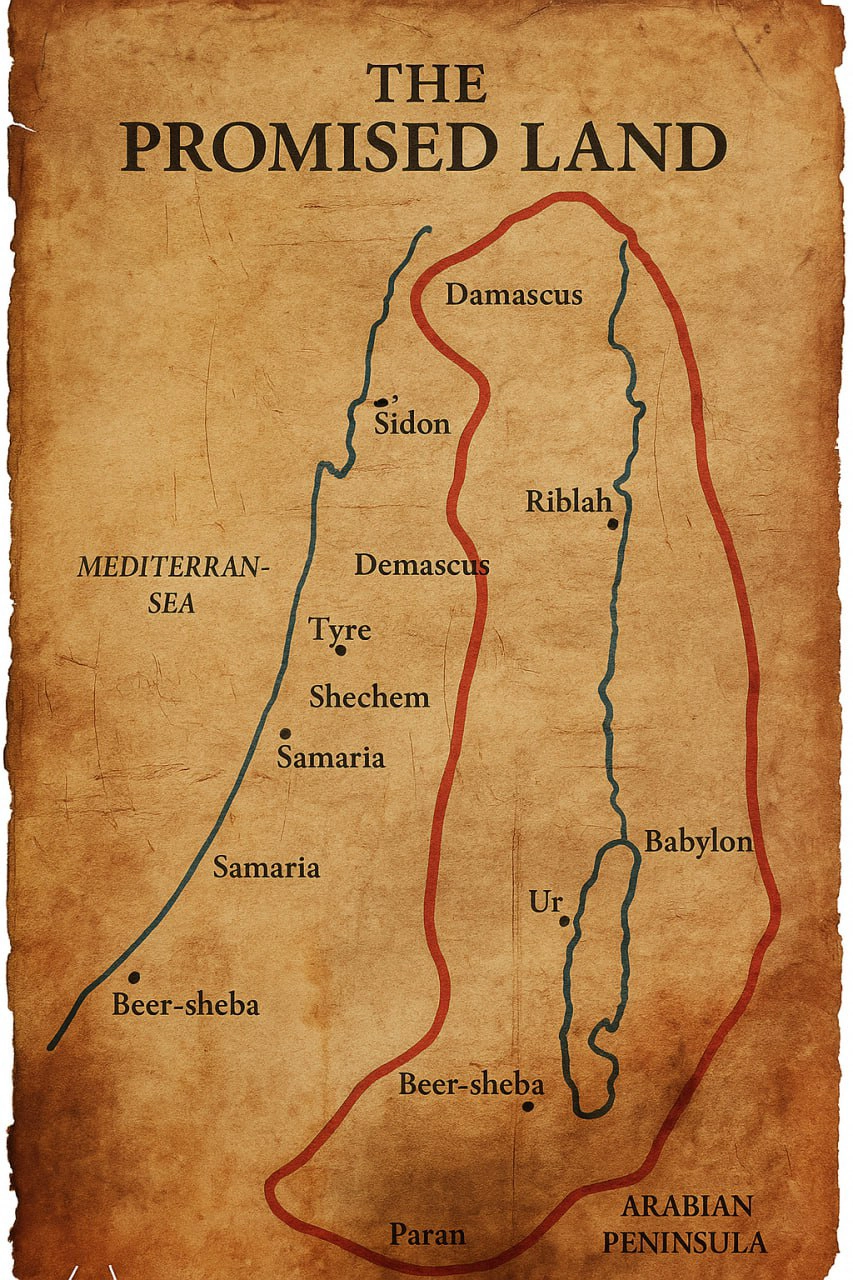
The Battle of Narratives: Intra Religious Critiques and Opposition to the Zionist Perspective
The Promised Land for whom, and at what cost?
While Religious Zionism celebrated the occupation of Palestinian territories as the fulfillment of a divine promise, other Jewish currents both within religious tradition and modern thought strongly opposed this interpretation. The central question was:
Can sacred texts be turned into tools of occupation, discrimination, and the denial of others' rights?
Within the Jewish tradition, anti Zionist religious groups such as Neturei Karta and segments of Orthodox Judaism remained committed to the principle that the return to the Promised Land must only occur with the coming of the Messiah. In their view, any human effort to establish a Jewish state before the appearance of the Redeemer is a form of “rebellion against God.”
From this perspective, the State of Israel is not the fulfillment of the covenant, but its violation.
On the other hand, secular Jews, leftists, and Jewish intellectuals have also criticized the policies of Religious Zionism. Thinkers such as Amos Oz, Ilan Pappé, Gideon Levy, and Noam Chomsky have repeatedly warned that the use of religious texts to justify occupation will only lead to extremism, hatred, and religious conflict.
Among all these voices, perhaps the most significant protest comes from the victims themselves: the Palestinians. For them, the “Promised Land” has become, not the realization of a divine ideal, but a symbol of dispossession, discrimination, home demolitions, settlement building, and perpetual war.
The land deemed “holy” has, in practice, become a battlefield of control, domination, and death.
The struggle between these narratives is not merely a conflict between two peoples or two religions; it is a clash between two conceptions of God, land, and humanity:
One a God who makes promises by depriving others;
The other is a God who sees the covenant as a call for justice, peace, and human dignity.
Conclusion
The “Promised Land” has been transformed from a spiritual promise into a political ideal one that, across different periods, has served either as a source of faith and resilience or as a justification for occupation and violence. Within the sacred texts, one finds both a call to justice and responsibility, as well as narratives of ethnic superiority.
Today, the conflict over this land is no longer just a political dispute it has become a battle of narratives about justice, spirituality, and human rights.
The central question remains:
For what ideal, and at what cost, should the promise of the land be fulfilled?
Comments
Fair overview, but the messianic dimension deserves more weight. For many early religious thinkers the return wasn't just territorial, it was eschatological — that distinction matters.
I always assumed Zionism started as a purely political project. The religious backstory here was completely new to me — thanks for laying it out so clearly.
I studied a bit of this at university and it was refreshing to see it presented without the usual polemics. My old professor would've approved of the sourcing.
Could you expand on how religious and secular Zionism diverged later on? That transition felt a bit rushed in the last section.
Genuinely one of the better summaries of this topic I've read online.