




Techniques to Calm Your Mind While Trading
If you want to succeed in the financial markets, the first step is managing your mind and emotions. Trading without emotional control, even with the best strategies, will lead you to losses. This article introduces you to practical techniques for calming the mind, controlling stress, and using emotions as a positive force, so you can make decisions with greater confidence and focus and achieve sustainable results.
The Importance of Mind and Emotional Control in Trading
Trading is one of the most stressful activities, as it is directly associated with financial and psychological risk. In this process, rational decision making and risk management play a fundamental role. However, when emotions overpower a trader, these decisions tend to shift toward mistakes.
Emotions such as anger, fear, or greed can cause you to make decisions that lack logic and analysis. Controlling your mind and emotions helps you execute your strategies correctly, manage risks more effectively, and avoid common trading mistakes.
The Impact of Trading Psychology on Traders’ Performance
Trading psychology refers to understanding and managing the mental and emotional influences on decision making in the financial markets. Research has shown that traders’ performance depends more on their mental and psychological state than on their trading strategies. A calm and focused mind helps you stay away from emotional reactions and analyze the market with greater confidence. In contrast, a mind affected by stress or excitement pushes you toward impulsive decisions, unplanned trades, and ultimately losses.
The Impact of Emotions on Decision Making in Trading
Emotions, especially fear and greed, can play a decisive role in a trader’s success or failure. Managing these emotions alongside logical analysis is the key to maintaining consistency and making sound decisions in the financial markets.
The Role of Emotions in Trading: From Fear to Greed
Emotions in trading are unavoidable. The two main emotions most commonly referred to in trading are fear and greed. Fear can prevent you from entering suitable trades or cause you to exit a position prematurely. On the other hand, greed can push you to stay in a trade longer than necessary or take irrational risks. If not managed properly, these emotions can quickly overshadow logic and analysis.
How Can Emotions Disrupt Logic?
Emotions, especially under high pressure conditions, can cause logical, analysis based decision making to take a back seat. For example, when the market is moving rapidly, the fear of missing an opportunity may force you into hasty decisions. Likewise, after a significant loss, anger and frustration can lead to revenge trading. These emotions disrupt rational thinking and prevent you from properly executing your trading plan.
The Impact of FOMO (Fear of Missing Out) and Risky Behaviors
FOMO, or “fear of missing out,” is one of the most common emotions among traders. When an asset is rising rapidly, many traders enter trades without proper analysis, hoping not to miss potential profits. This feeling can lead to buying at high prices or entering irrational trades. Risky behaviors driven by FOMO often result in significant losses, as decisions are made based on emotion rather than analysis.
Understanding the Principles of Trading Psychology
Trading psychology refers to understanding the impact of emotions and mindset on decision making and performance in the markets. This branch of psychology helps you identify your emotions, accept them, and learn ways to manage them. The importance of trading psychology lies in turning you into a consistent and balanced trader, someone who can make rational decisions in highly volatile market conditions and remain committed to their strategy.
The Relationship Between Mind, Emotions, and Decision Making
The mind and emotions have a strong influence on decision making. Research shows that human decision making is largely emotional and is later justified by logic. In trading, this means that if your mind is affected by negative emotions such as fear or anger, you are likely to make poor decisions. Understanding this relationship helps you manage your emotions in critical moments and make better decisions.
Why Is Theoretical Knowledge Alone Not Enough?
Many traders believe that having extensive knowledge of technical and fundamental analysis is sufficient for success. However, in practice, theoretical knowledge is only useful when you can apply it in real, high pressure conditions. Without emotional management, even the best strategies fail. Trading psychology helps you apply your knowledge correctly during difficult moments and prevents emotionally driven decision making.
Common Mistakes in Managing Emotions While Trading
Emotional management is one of the main challenges traders face, and common mistakes can lead to significant losses. From revenge trading to becoming overly attached to a specific position, recognizing these mistakes can help you respond more effectively to your emotions.
Revenge Trading: Why You Should Not Act Out of Anger
One of the most common mistakes among traders is revenge trading. This usually occurs after a major loss, when a trader tries to recover losses quickly. Anger caused by the loss leads the trader to enter new trades without sufficient analysis. This type of trading not only fails to recover losses but often results in even greater losses. The best solution is to take a temporary break from trading and return to your trading plan.
Over Attachment to a Position: The Danger of Unfounded Hope
Some traders become excessively attached to a particular trade, hoping that the market will eventually move in their favor. This mindset can cause traders to incur larger losses, as instead of closing a losing position, they continue to hold on in the hope that conditions will change. In such cases, sticking to your strategy and using tools such as a stop loss can help prevent further losses.
Obsessing Over Profit and Loss: How This Habit Leads to Losses
Some traders develop the habit of constantly calculating their profits and losses. This obsession can increase stress and lead to emotionally driven decisions. Instead of focusing on short term profit and loss, it is better to stay committed to your long term strategy and review results only at the end of your trading period.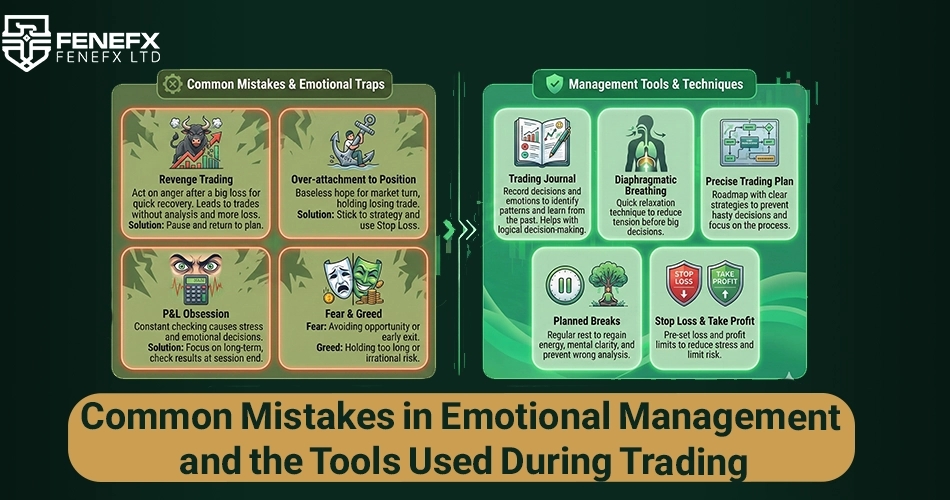 Psychological Traps Driven by Fear and Greed
Fear and greed are two powerful forces that can significantly influence a trader’s psychology. Fear can cause a trader to avoid valid opportunities or exit trades prematurely. In contrast, greed can push a trader to stay in a trade too long or take irrational risks. Recognizing these traps and creating a well defined trading plan can help reduce their impact.
Tools and Techniques for Managing Emotions in Trading
Emotional management in trading is achieved through various tools and techniques. From keeping a trading journal to using diaphragmatic breathing, these methods help you make logical and controlled decisions under high pressure conditions.
The Role of a Trading Journal in Mind Management
A trading journal is one of the most essential tools for managing emotions in trading. This journal includes notes on decisions, emotions, and the outcomes of each trade. By reviewing their journal, traders can identify recurring behavioral patterns and learn from past mistakes. A journal helps you rely on logical analysis rather than emotional reactions by providing a clear history of your trades. Whenever emotions start to take over, reviewing your journal can help recalibrate your perspective and guide you back on track.
Learning Diaphragmatic Breathing for Rapid Calmness
Diaphragmatic breathing is a simple and effective technique for reducing tension and stress. This type of breathing allows more oxygen to reach the brain and helps calm the nervous system. To practice this technique, inhale deeply through your nose, expand your abdomen, and slowly exhale through your mouth. This exercise is especially useful during high stress moments before making major decisions, as it helps restore mental balance and clarity.
Creating and Using a Precise Trading Plan
A well defined trading plan can function as a roadmap and prevent impulsive decision making. This plan includes entry and exit strategies, risk management rules, and profit targets. By adhering to this plan, traders can better control their emotions and execute trades in a systematic manner. A trading plan also allows you to focus on the process rather than short term results.
The Importance of Planned Breaks in Trading
Trading without breaks can lead to flawed analysis and emotionally driven decisions. Scheduling regular breaks between trading sessions gives your mind time to rest and regain clarity. These breaks may include calming activities such as walking or meditation, which help restore energy and mental balance.
Using Stop Loss and Take Profit Tools to Reduce Stress
Stop Loss and Take Profit tools help you define your risk and profit limits before entering a trade. These tools limit potential losses and prevent emotional decision making during critical moments. Setting these tools not only reduces stress but also brings greater discipline and structure to your trading activities.
How to Build a Successful Trader’s Mindset
Building a successful trading mindset requires accepting realities and making fundamental shifts in perspective. From accepting losses and focusing on the process to developing strong beliefs and managing probabilities, these steps help shape a trader with a professional mindset.
Accepting Losses: Why Failure Is Part of Success
One of the core steps in developing a successful mindset is accepting the fact that losses are an inevitable part of trading. Instead of trying to avoid losses entirely, you should focus on learning from mistakes. Losses provide an opportunity to analyze performance and improve your trading strategies, preparing you for better decision making in the future.
Focusing on the Process, Not the Outcome
Successful traders place greater importance on the quality of the trading process rather than immediate results. Focusing on the process helps you make more rational decisions and avoid emotional traps. By continuously evaluating your performance and refining your decision making processes, you can move closer to your long term goals.
Building Strong Beliefs to Manage Uncertainty
Trading involves a high level of uncertainty, but strong beliefs help you manage these challenges. Believing in your abilities and trusting your trading strategies allows you to remain calm when facing unexpected conditions. These beliefs should be built on practical experience and logical analysis.
Shifting the Mindset from “Controlling Outcomes” to “Managing Probabilities”
Successful traders understand that having complete control over outcomes is impossible. Instead of trying to predict the future with precision, they focus on managing probabilities and reducing risk. This shift in mindset allows you to make decisions free from fear and greed, leading to more consistent performance.
These approaches and techniques provide a solid foundation for strengthening trading psychology and achieving long term success.
The Impact of Rest on Mind Control in Trading
Regular breaks during trading days are essential for maintaining mental calmness and preventing emotionally driven decisions. These breaks help traders return to the markets with a refreshed and clear mindset after periods of psychological pressure.
Why Are Regular Breaks During the Trading Day Essential?
Trading is an intense and complex mental activity that can create significant psychological and physical stress. Regular breaks throughout the trading day give the mind an opportunity to step away from pressure and excessive focus, allowing it to recover energy. Without these breaks, traders are more likely to make hasty and emotional decisions. Short but well planned breaks help traders return to trading with a calmer and more open mindset, resulting in more rational decision making.
Strategies for Mental Recovery After a High Stress Trade
After a high stress trade, restoring mental balance is critically important. One effective approach is engaging in activities that mentally distance you from the market. Walking in nature, doing light stretching exercises, or even listening to calming music can be helpful. In addition, breathing exercises and meditation can reduce tension and give traders a greater sense of control. These techniques are particularly effective after large trades or financial losses.
The Importance of Stepping Away from the Screen After a Loss or a Losing Streak
Stepping away from the screen after a loss or a series of losses is one of the most important recommendations for maintaining psychological well being in trading. Repeated losses can intensify negative emotions such as anger, frustration, and the desire for revenge. By distancing yourself from the screen and focusing on other activities, you can break out of the negative cycle of emotionally driven decision making. This time away allows you to reassess your strategy and return to the market with a more rational and balanced perspective.
Practical Exercises to Strengthen Trading Psychology
These approaches help traders improve their mental well being and their ability to make rational decisions in volatile markets, ultimately leading to sustainable success.
Exercises to Reduce Physical and Mental Tension
One effective way to reduce physical and mental tension is through simple yet impactful physical exercises. Stretching routines, yoga, and diaphragmatic breathing can ease physical tension and bring the mind back to a state of calm. To reduce mental tension, you can write down your thoughts or use positive visualization techniques. These practices help you better manage trading related stress and experience a greater sense of calm.
Focus and Meditation Techniques for Traders
Meditation and concentration exercises are essential tools for traders who aim to strengthen their psychological resilience. Even a few minutes of daily meditation can help improve your ability to cope with stress and manage emotions. Practices such as focusing on your breath, visualizing a calm environment, or listening to meditation music can help traders maintain composure when facing market volatility.
How Can We Turn Emotions into a Positive Force in Trading?
Emotions are not always negative; when managed correctly, they can be transformed into a positive force. For example, fear can serve as a warning to be more cautious, while excitement can motivate you to conduct deeper research. The key to successful emotional management lies in recognizing and accepting emotions. By observing and analyzing your emotions, you can use their energy to strengthen your decision making and improve your overall performance.
Mind Control in Prop Trading for Traders with Limited Capital
Prop trading is recognized as one of the best trading methods for individuals with limited capital, as it allows you to develop your experience and skills using proprietary trading firms’ capital without risking your own money. However, success in prop trading does not depend solely on strategies and market analysis; mind control and emotional management play a decisive role. Traders who cannot manage fear, greed, or momentary emotional impulses will quickly incur losses, even with access to sufficient capital and proper tools.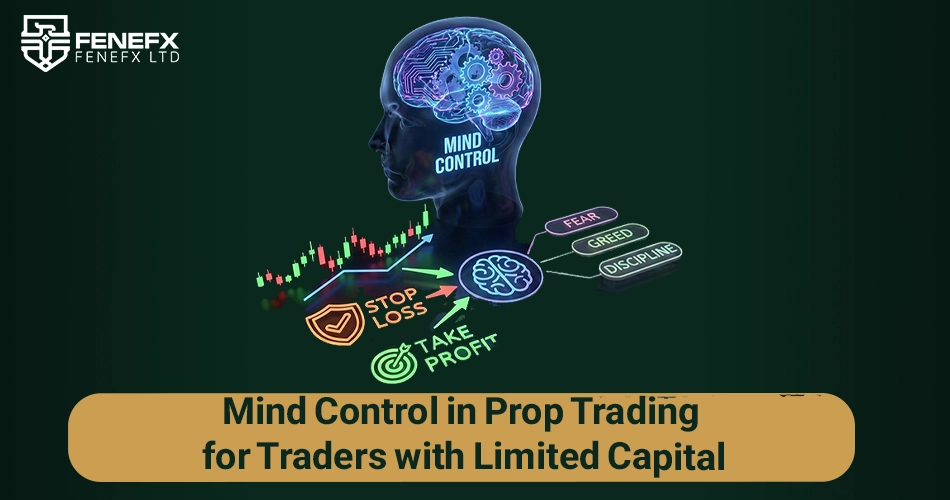 Mind control in prop trading includes the ability to adhere to a trading plan, use tools such as Stop Loss and Take Profit, and practice calming techniques like meditation and diaphragmatic breathing. These skills ensure that your decisions are logical and analysis based rather than driven by emotion. If you are looking to strengthen your trading psychology and increase your chances of success in prop trading, Prop Fenex provides an excellent opportunity to get started. To take advantage of these tools and access optimal trading conditions, start your professional journey today by purchasing Prop Fenefx.
Conclusion
Mind control and emotional management in trading are not optional, they are essential. By using techniques such as journaling, diaphragmatic breathing, planned breaks, and meditation practice, you can keep your mind calm and focused and make more rational decisions in the market. Accepting losses, focusing on the process, and managing probabilities free you from the trap of negative emotions and create a solid foundation for long term success in trading.
Frequently Asked Questions
Why is emotional control important in trading?Because negative emotions such as fear and greed can disrupt logical decision making and lead to financial losses.How does a trading journal help?By recording decisions and emotions, you can identify behavioral patterns and learn from past mistakes.How are breaks during the trading day beneficial?Short breaks refresh the mind and help prevent emotionally driven decisions.How can fear and excitement be turned into positive forces?By accepting and analyzing them, their energy can be used for greater caution or more thorough research.
Comments
More trading psychology content like this please, the FeneFX blog is quietly becoming my favorite read.
Any tips for staying calm specifically after a big loss? That's when I make my worst revenge trades. Would love a dedicated article on loss recovery routines.
All good techniques, but the best mind-calmer I've found in 8 years is simply cutting position size. When the money at risk stops mattering emotionally, the anxiety mostly disappears on its own.
Didn't expect a trading site to cover this. Tried the 5-minute pre-session routine today and I hesitated way less on my entries. Thank you.
After a losing streak last winter I couldn't even open the charts without my chest tightening. The breathing exercise here is almost identical to what my therapist suggested, and it genuinely works.